

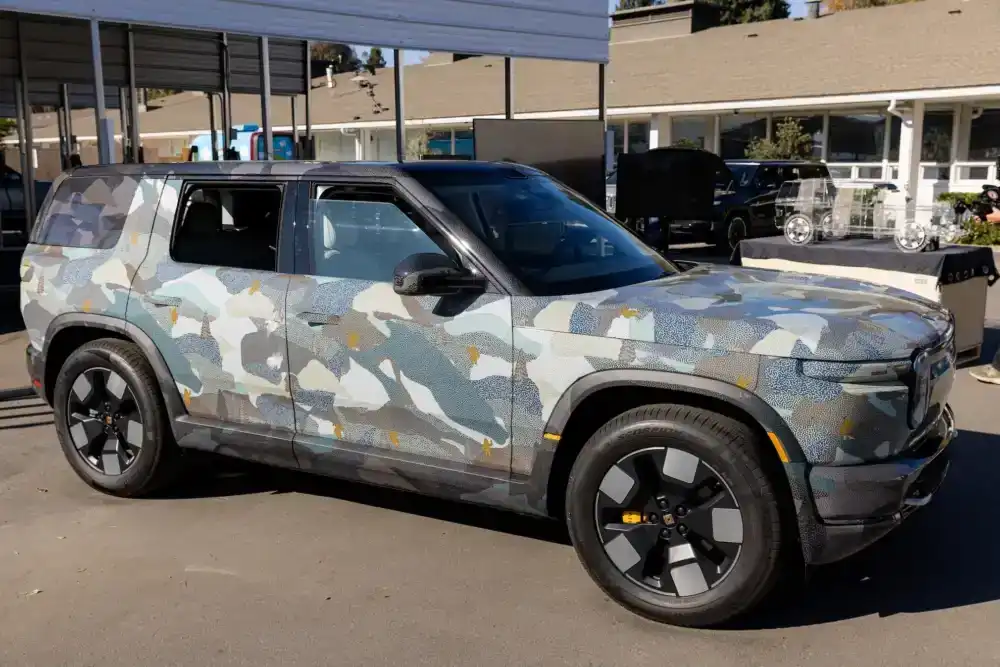
The electric vehicle industry is currently navigating a period of profound transition, moving away from the early-adopter phase toward a competitive, volume-driven market. At the center of this shift is Rivian, a company that has successfully established itself as a premium brand with its R1T and R1S models but now faces its most critical test to date: the launch of the R2 SUV. This vehicle is not merely another addition to the product lineup; it represents a strategic pivot toward the mass market, carrying with it the weight of the company’s long-term financial viability.
Rivian’s roadmap for the R2 is among the most aggressive in the history of the American automotive sector. The company has signaled its intent to begin customer deliveries in June 2026, aiming to sell between 20,000 and 25,000 units by the end of that calendar year. To appreciate the magnitude of this goal, one must look at the historical trajectory of other electric vehicles. Reaching a sales volume of 20,000 units within a single six-month window is a feat that few have achieved. Aside from the Tesla Model Y, which currently dominates the mid-size electric SUV segment, no other vehicle priced under the $60,000 threshold has scaled at this velocity.
The stakes for Rivian are compounded by the current macroeconomic environment. High interest rates and a cooling of the initial EV frenzy have forced manufacturers to focus on efficiency and margin rather than just raw growth. For Rivian, the R2 is the vehicle designed to unlock economies of scale. However, the tactical execution of this launch remains the subject of intense industry scrutiny. Simply relying on existing brand loyalty or "pent-up demand" will likely be insufficient to meet such lofty targets. Industry analysts expect Rivian to deploy a sophisticated multi-channel marketing strategy, potentially leveraging high-profile culture and technology events like SXSW in Austin to bridge the gap between niche enthusiast interest and mainstream consumer adoption.

The leadership behind this push, including Rivian CFO Claire McDonough, is increasingly focused on the intersection of innovation and legacy industry transformation. As Rivian prepares to share full details of the R2 line, the conversation is shifting from "can they build it?" to "can they sell it at scale?" The company’s ability to navigate the logistical hurdles of production while simultaneously stimulating demand in a crowded market will define the next decade of its existence.
While Rivian focuses on the hardware of the future, the software layer of the mobility revolution is seeing its own seismic shifts, highlighted by the massive $1.2 billion capital raise by the London-based startup Wayve. This investment, which could climb to $1.5 billion based on performance milestones linked to Uber, underscores a fundamental change in how the industry views automated driving. Valued at approximately $8.6 billion, Wayve is pioneering an "embodied AI" approach that deviates significantly from the traditional robotics-heavy methods used by early pioneers.
Unlike competitors that rely on expensive, high-definition maps and rigid, rule-based coding, Wayve utilizes an end-to-end neural network. This self-learning system processes visual data much like a human driver, allowing it to navigate environments it has never seen before without the need for pre-mapped digital infrastructure. This hardware-agnostic philosophy is particularly attractive to legacy automakers like Mercedes-Benz, Nissan, and Stellantis, all of whom have backed the startup. These manufacturers are looking for a software solution that can be integrated across diverse vehicle platforms, from luxury sedans to commercial vans, without requiring a complete redesign of the vehicle’s sensor suite. Wayve’s model suggests a future where autonomous driving is a licensed service—a "driver in a box"—rather than a proprietary system locked to a single fleet operator.
This trend of consolidation and strategic investment is rippling through the entire automotive supply chain. In Japan, Denso, a major supplier closely tied to Toyota, has made a significant takeover bid for chipmaker Rohm. This move is emblematic of a broader "fortress strategy" where major automotive players are seeking to vertically integrate their supply chains, particularly regarding semiconductors. As vehicles become essentially computers on wheels, securing the pipeline for power electronics and silicon carbide chips is no longer an option; it is a necessity for survival.

Similarly, Toyota has increased its offer for Toyota Industries to $30 billion, further consolidating its group structure. These moves by the world’s largest automakers suggest they are preparing for a protracted battle for dominance in the electric and autonomous era, ensuring that they control the core technologies that will define vehicle performance and reliability.
The freight and logistics sector is also seeing renewed investment. Swedish startup Einride recently secured $113 million in a private investment in public equity (PIPE) round as it prepares for its public debut in early 2026. Einride’s approach, which combines electric heavy-duty trucks with cab-less autonomous "pods," targets the middle-mile logistics market—a sector often cited as the most viable early use case for autonomous technology due to the predictable nature of highway driving and hub-to-hub routes.
In the realm of passenger transport and urban mobility, the Chinese market continues to be a primary engine of innovation and capital. Momenta, an autonomous vehicle developer backed by General Motors and Tencent, has filed for an IPO in Hong Kong, seeking to raise at least $1 billion. This move comes at a time when Chinese automakers are aggressively expanding their global footprint. BYD, for instance, recently unveiled a battery pack capable of a "flash charge" from 10% to 70% in just five minutes. While this technology requires specific high-power charging infrastructure that is not yet widely available, it sets a new benchmark for the industry and addresses one of the primary barriers to EV adoption: range and charging anxiety.
However, this rapid technological advancement is not occurring in a vacuum. Geopolitical tensions are increasingly casting a shadow over the global automotive market. Analysts have noted that the ongoing conflict in the Middle East poses a significant risk to manufacturers like Hyundai, Toyota, and Chery, for whom the region represents a vital growth corridor. Supply chain disruptions in the Red Sea and shifting diplomatic alliances are forcing companies to rethink their global distribution strategies, potentially leading to a more regionalized approach to manufacturing and sales.

As the technology matures, the friction between innovation and public safety is becoming more visible. A recent incident in Austin involving a Waymo robotaxi that blocked an ambulance responding to a mass shooting has reignited the debate over the readiness of autonomous fleets. While an officer was able to move the vehicle according to established protocols, the event serves as a stark reminder that "edge cases" in the real world involve life-and-death consequences. This incident is precisely why the National Highway Traffic Safety Administration (NHTSA) is convening a high-level forum on autonomous vehicle safety. Leaders from Waymo, Aurora, and Zoox are expected to face tough questions regarding how their systems interact with first responders and whether the current regulatory framework is sufficient to protect the public.
The European market, meanwhile, is celebrating its own milestones. The Volkswagen Group announced it has delivered 4 million all-electric vehicles since 2013. While half of these sales are attributed to the core Volkswagen brand, the contribution from subsidiaries like Porsche, Audi, and Škoda highlights the group’s multi-brand strategy. This milestone is significant, but it also serves as a reminder of the scale required to compete. As VW moves toward its next generation of EVs, it faces the same pressure as Rivian: the need to transition from low-volume, high-cost models to a mass-market reality where margins are thin and competition from Chinese manufacturers is fierce.
Innovative solutions are also emerging in developing markets, where the challenges of electrification are often more acute. In Africa, the startup Zeno recently raised $25 million to expand its battery-swap network for electric motorcycles. In regions where the power grid may be unstable and the upfront cost of an EV is prohibitive, battery swapping offers a pragmatic path forward. By decoupling the cost of the battery from the vehicle and providing a "refueling" experience that mirrors the speed of gasoline, Zeno is creating a blueprint for electrification in emerging economies.
From Rivian’s high-stakes R2 launch to Wayve’s neural-network breakthroughs and the complex dance of global trade and regulation, the mobility sector is in a state of constant flux. The next 24 months will likely determine which companies emerge as the architects of the new transportation landscape and which ones will be relegated to the history books. The common thread among the survivors will be the ability to balance visionary technology with the cold, hard realities of industrial scaling and public trust. As the industry moves forward, the focus will remain on whether these "gambits" can transform into sustainable, profitable, and safe realities for the global consumer.