


The digital photography landscape has long been dominated by a handful of monolithic cloud providers, chief among them Google Photos. Its seamless synchronization, intuitive interface, and powerful machine learning features set an industry benchmark that few competitors—let alone self-hosted alternatives—have managed to approach. For years, the convenience of Google Photos served as a significant barrier for users strongly committed to data sovereignty and the principles of self-hosting. This commitment, often driven by concerns over privacy, escalating subscription costs (like Google One), or a general desire to control one’s digital assets, creates a perpetual tension between ease-of-use and autonomy.
The migration away from centralized services is not merely a technical choice; it is a philosophical one. Many tech-savvy individuals, myself included, maintain robust infrastructure—such as multi-terabyte Network Attached Storage (NAS) arrays or dedicated mini-servers—specifically to repatriate services that have been outsourced to the cloud. While predecessors like PhotoPrism offer excellent archival capabilities, they often fall short on the feature parity necessary to fully displace a polished consumer product like Google Photos, especially when managing the shared digital memories of an entire household.
The emergence of Immich, which recently achieved its first stable release milestone toward the close of 2025, signals a potential inflection point in this dynamic. This project explicitly targets the feature set and aesthetic familiarity of its cloud counterpart while firmly rooting the infrastructure within the user’s control. Having integrated Immich into my existing infrastructure, the following analysis details the deployment process, feature comparison, administrative nuances, and the overall viability of this system as a true replacement for the ubiquitous Google Photos experience.
The Foundation: Deployment Strategies and Hardware Considerations
The initial hurdle for any serious self-hosting endeavor is establishing the hosting environment. Unlike proprietary cloud solutions, Immich requires the user to provide the computational backbone and the storage medium. This choice heavily influences the long-term success and performance of the system.
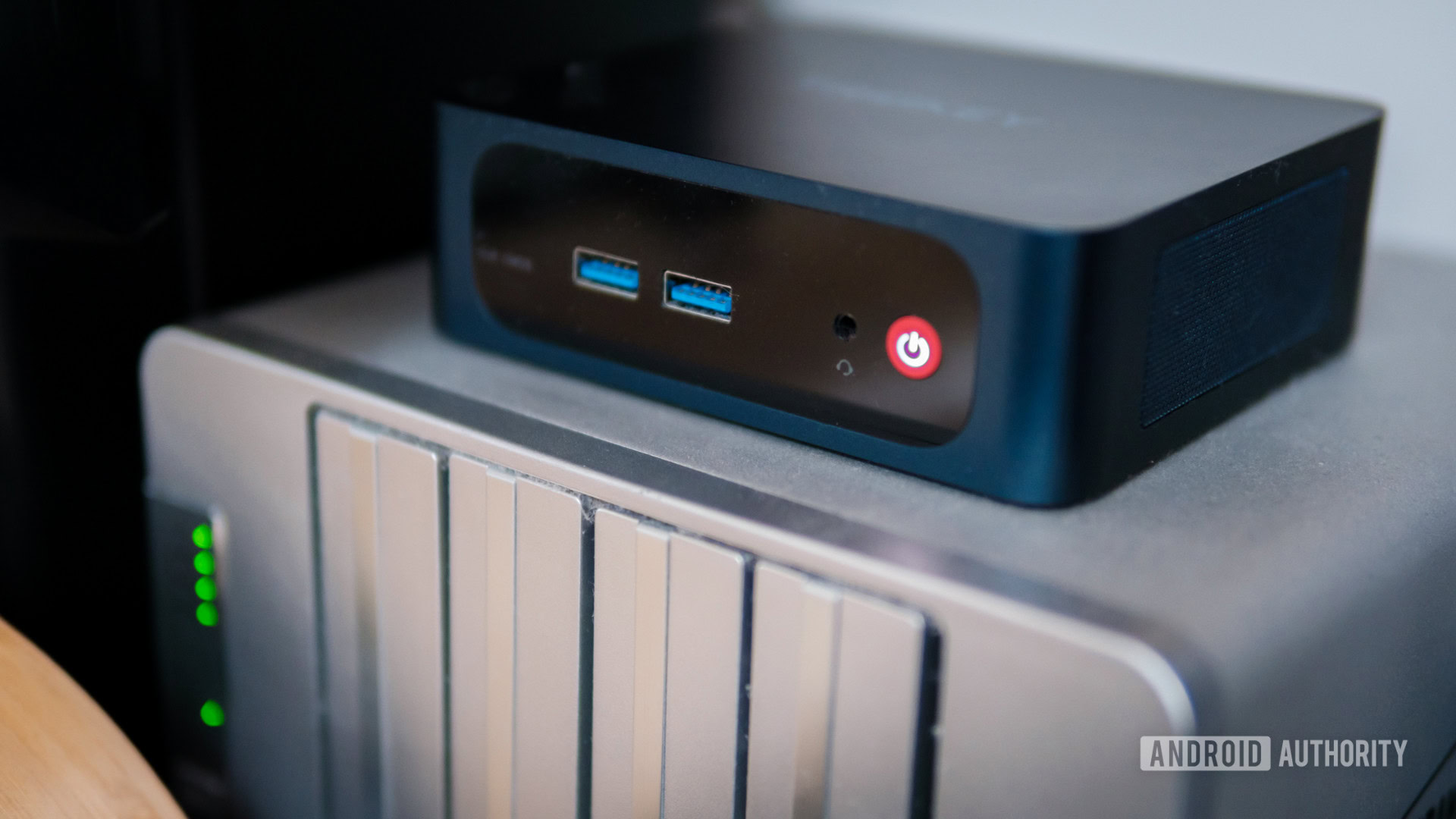
For those already invested in personal data centers, a pre-existing NAS (from vendors like Synology or QNAP) or a custom-built solution (often utilizing low-power hardware like Intel NUCs or similar Single Board Computers) provides a natural platform. The primary advantage here is leveraging existing hardware investment and maintaining data locality within the home network. Conversely, for users prioritizing accessibility over storage cost optimization, a Virtual Private Server (VPS) hosted by providers like DigitalOcean or Vultr is an option. However, a critical economic analysis reveals that the recurring monthly cost of a powerful VPS combined with significant external storage volumes can quickly eclipse the predictable annual fee of a Google One subscription. Therefore, the VPS route is largely justifiable only for users whose primary motivation is absolute data separation from major commercial entities, rather than pure cost savings.
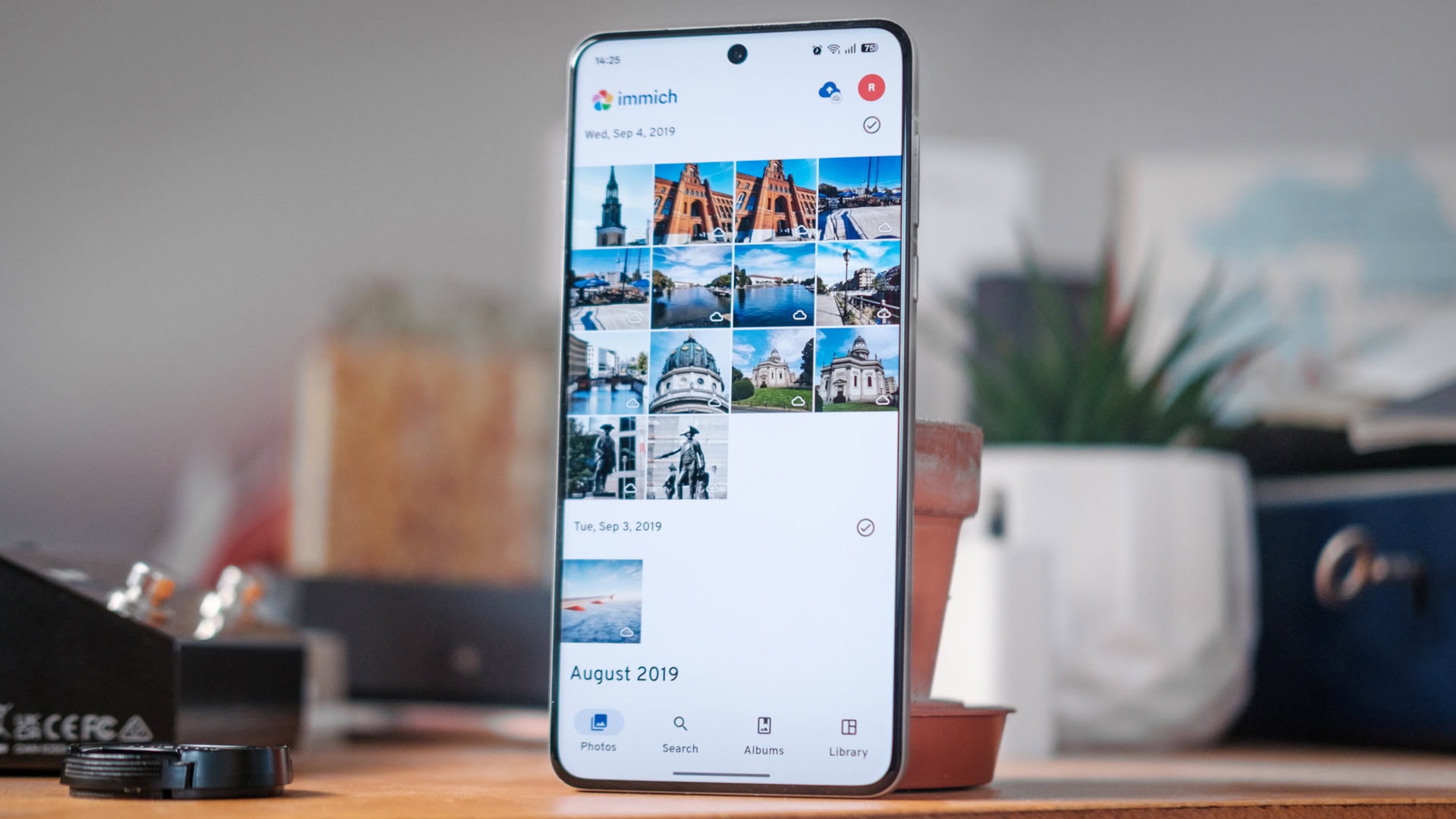
Immich excels by abstracting much of this complexity through comprehensive deployment guides. The project offers streamlined, often one-click, installation pathways tailored for popular environments, including Docker Compose setups, which I personally favored due to their declarative nature and ease of management within containerized environments. The availability of specific integration scripts for platforms like TruNAS, Unraid, and major VPS providers significantly lowers the technical threshold for adoption.
The second crucial component is client synchronization. A photo management system is useless without reliable ingestion. Immich addresses this with dedicated, feature-rich mobile applications available for both Android and iOS. These apps effectively replicate the "set-it-and-forget-it" automatic backup functionality inherent to Google Photos, offering granular control over backup triggers (e.g., Wi-Fi only, battery status). Crucially, these mobile clients are offered free of charge, supported through voluntary contributions, which starkly contrasts with proprietary ecosystem lock-ins.
A significant consideration for external access—essential for sharing via URL or accessing media while traveling—is the decision to expose the server to the public internet. While Immich supports configuration for secure external access (often involving reverse proxies and domain management), this introduces inherent security responsibilities. For users content with local access, the system intelligently caches data, allowing mobile devices to operate offline and synchronize upon re-entering the home Wi-Fi perimeter, a functional compromise that satisfies immediate data safety requirements without demanding complex firewall configurations.
Feature Parity: Bridging the Cloud-Self-Hosted Divide
The true test of any Google Photos replacement lies in its feature parity, particularly its ability to handle complex, multi-user archival needs. Immich distinguishes itself by focusing heavily on administration and shared user environments, areas where many open-source solutions traditionally lag.
Immich is architecturally designed not just as a repository but as a multi-tenant environment. User creation is straightforward, requiring only basic credentials, granting each member a distinct, private library space. A notable feature mirroring high-end security expectations is the per-user "Locked Folder," providing cryptographic privacy for sensitive media, independent of the main library access.
For household utility, the collaborative album sharing mechanism is transformative. Unlike simply sharing a link to a folder of files, Immich allows seamless, native sharing between defined users on the same instance. Furthermore, the ability to designate a "partner account" for full library synchronization across primary users streamlines the process of consolidating shared family memories. This user-centric design is perhaps Immich’s most compelling differentiator against single-user archival tools.
Administrative oversight is also robust yet accessible. The dashboard provides immediate telemetry on storage utilization, media type breakdown (photo vs. video), and overall system health. While not overwhelming, this metric suite allows proactive management of storage quotas—a necessity when relying on finite local drive capacity rather than an abstract cloud limit. Advanced configuration options, such as implementing OAuth for single sign-on or setting up time-limited public sharing links, are available but require deeper technical engagement, suggesting a layered architecture catering to both novice users and advanced system administrators.
From the end-user perspective, the feature set borrows heavily from the established Google Photos vernacular:
- Geospatial Organization: A map view allows for intuitive browsing of media based on geotags, facilitating global recollection.
- AI-Driven Curation: The system incorporates machine learning for generating "Memories" (curated slideshows of past events) and powers its search functionality. This includes recognition of people, general object categorization (e.g., "beach," "car," "food"), and location tagging. While the sophistication of Google’s decade-plus investment in visual AI is difficult to match exactly, Immich’s current capability is surprisingly effective for a rapidly developing open-source project.
- Format Support: Inclusion of support for motion photos and native playback of HDR video codecs signals an alignment with modern mobile capture standards.
These features suggest Immich aims not just to store files, but to replicate the experience of interacting with media that users have become accustomed to through proprietary platforms.
The Roadblocks: Editing Deficiencies and File Management Philosophy
Despite its strengths, the transition reveals clear gaps where the cloud ecosystem maintains a significant lead. The most pronounced functional deficit is in integrated photo editing. While the mobile application offers rudimentary tools—primarily cropping, rotation, and a selection of filters—the web interface currently lacks any substantive editing suite. For users reliant on sophisticated in-app processing, such as the advanced generative tools found in Google’s Magic Editor, Immich necessitates an external workflow, usually involving post-processing on the device or utilizing desktop-grade software before re-uploading. This fragmentation of the editing pipeline is a notable departure from the unified experience offered by centralized platforms.
A more fundamental philosophical difference emerges in file system management. Many established self-hosted media servers (like Plex, Jellyfin, or even competitors like PhotoPrism) operate under a principle of "directory agnosticism." They scan and index an existing, user-defined folder structure, allowing the user to manage media files via standard network shares (SMB/NFS) directly from their operating system.
Immich deviates significantly from this standard. Driven by the necessity of managing distinct user data, thumbnails, metadata caches, and potentially video transcodes, the application imposes its own internal directory hierarchy upon uploads. All file operations, including initial ingestion and subsequent modification, are strongly encouraged to flow through the Immich application interface. Any direct manipulation of the underlying storage folders risks system inconsistency or data loss, as the application’s internal database may become desynchronized from the physical file locations.

This structure presents a genuine friction point for users accustomed to a hybrid workflow—for instance, ingesting smartphone photos via the app while simultaneously dropping edited images from a dedicated camera into a networked photo directory from a desktop workstation. While the system permits an "import" function for existing external libraries, integrating new, non-mobile-sourced files cleanly into the established, user-managed timeline without breaking the application’s internal conventions requires adherence to Immich’s strict API pathway. This is a necessary trade-off for the robust multi-user management, but it represents a significant adjustment for long-time proponents of directory-based media organization.
Industry Implications and Future Trajectories
The maturation of tools like Immich has profound implications for the cloud storage industry. As awareness grows regarding data ownership and the true cost of "free" services, the demand for viable, high-fidelity self-hosted alternatives intensifies. Immich’s rapid development pace, characterized by frequent updates addressing performance (like optimizing initial library processing on lower-power hardware) and feature expansion (evidenced by its public roadmap), suggests a trajectory toward true feature parity.
The success of Immich hinges on its ability to continually improve its machine learning performance. Visual search and automated memory generation are core value propositions that keep users tethered to Google. If Immich can successfully integrate hardware acceleration for tasks like video transcoding and facial recognition indexing—a process that currently strains lower-TDP hardware like my N100 setup—it will significantly enhance the practical usability for users with massive legacy libraries.
Furthermore, the emphasis on collaborative, secure multi-user management positions Immich uniquely. It transforms the self-hosted solution from a niche tool for the technically inclined individual into a viable family data utility. This democratization of private cloud infrastructure challenges the bundling strategy employed by hyperscalers, who monetize photo storage by forcing users into broad subscription tiers.
In conclusion, my preliminary assessment confirms that Immich represents the most potent, user-friendly, and feature-complete self-hosted ecosystem currently available to supplant Google Photos. While the mandated shift away from direct file system manipulation is an administrative adjustment, the benefits—unparalleled control over user access, data privacy, and the elimination of perpetual subscription dependency—are substantial. The commitment to refining the user experience while maintaining deep administrative control suggests that Immich is not merely a stopgap solution but a sustainable, long-term architecture for personal digital preservation. Full migration remains the objective, predicated on the continued evolution of its integrated utilities.