

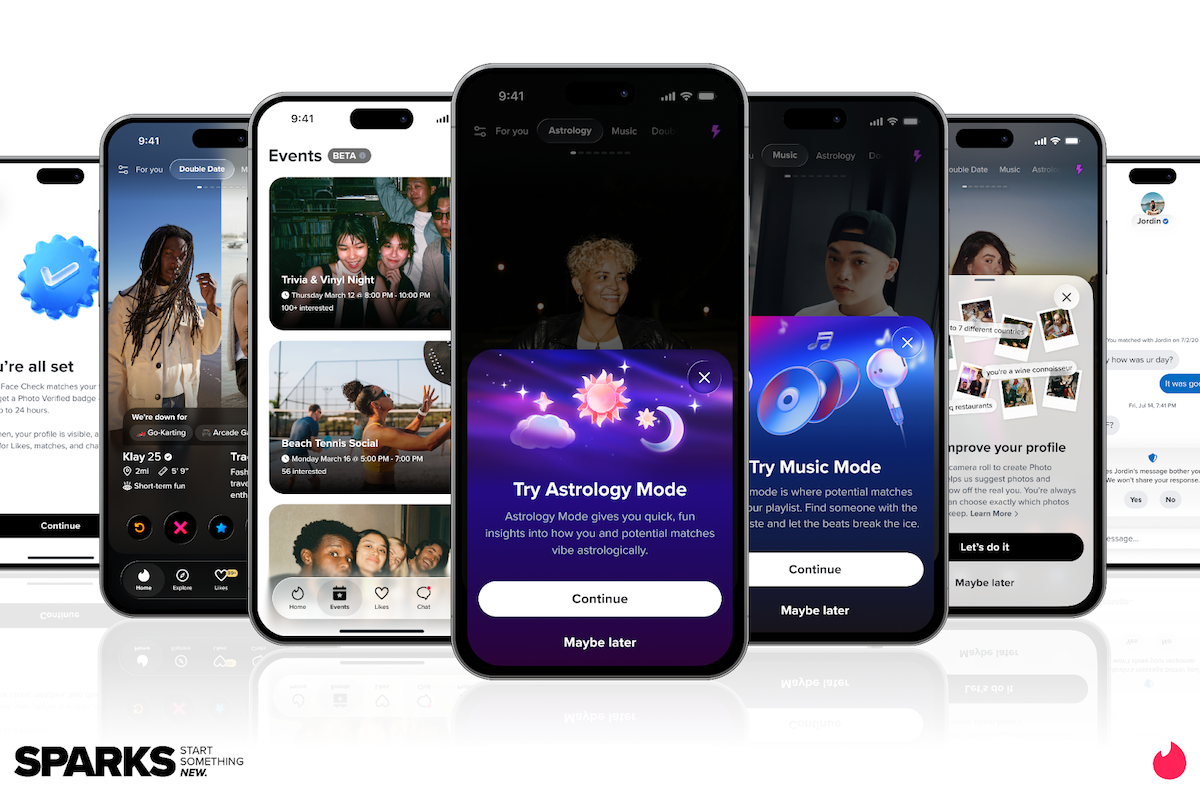
The era of the "swipe factory" may be coming to a close, replaced by a more nuanced, hybrid approach to human connection. Tinder, the application that arguably defined the digital dating landscape for over a decade, is currently undergoing its most significant metamorphosis since its inception. At its inaugural product keynote, the company unveiled a sprawling roadmap of features that signal a pivot away from the binary "left-or-right" mechanic toward a model that prioritizes in-real-life (IRL) experiences, sophisticated artificial intelligence, and a holistic social ecosystem. This strategic shift is fueled by a $50 million investment from parent company Match Group, a move necessitated by a shifting cultural tide where younger users—specifically Gen Z—are increasingly vocal about their "dating app burnout."
The centerpiece of this new strategy is a direct acknowledgement that digital-only interactions have hit a ceiling of diminishing returns. To combat this, Tinder is introducing an "Events" tab, currently slated for a beta launch in Los Angeles in late spring. This feature represents a fundamental change in the app’s utility; it is no longer just a tool to find a date, but a curated discovery platform for local social life. By partnering with venues to host or highlight speakeasies, bowling nights, raves, and pottery classes, Tinder is attempting to position itself as a "social community first" experience. The goal, according to Hillary Payne, Tinder’s Senior Vice President of Product, is to eliminate the friction between one’s dating life and one’s social life, blending the two into a seamless lifestyle choice.

This "IRL" pivot is not merely a creative whim; it is a defensive maneuver against a rising tide of "analog" dating movements. Platforms like Thursday, which only functions one day a week and focuses on physical meetups, and Timeleft, which organizes dinners for strangers, have successfully tapped into a profound desire for authentic, unmediated encounters. Tinder’s response is to integrate these offline opportunities back into its digital framework. Notably, the app will offer a "Missed Connections" style feature, allowing attendees of these events to browse the profiles of other participants after the fact. This provides a digital safety net for those who may have lacked the courage to approach a stranger in person, effectively using the app as a post-event bridge rather than just an initial gateway.
While the physical world is one pillar of the new Tinder, the digital architecture is being reinforced with heavy-duty artificial intelligence. The most ambitious of these is the "Chemistry" feature. Moving beyond simple bios and interests, Chemistry utilizes AI to build a deeper psychological and aesthetic profile of the user. With explicit permission, the system can analyze a user’s camera roll to understand their lifestyle, hobbies, and visual preferences. This data is then used to curate a "Daily Match" list, designed to bypass the traditional "swipe fatigue" by presenting only the most compatible options. In an age of data privacy concerns, this move is a calculated risk, betting that users will trade access to their personal media for a more efficient, less exhausting path to connection.
Complementing this is "Learning Mode," a technical overhaul of how Tinder’s algorithm processes new users. Traditionally, dating apps require a significant "burn-in" period—days or weeks of swiping—to gather enough signals to understand a user’s "type." Learning Mode aims to shorten this window to a single session. By presenting more diverse and relevant matches immediately, the system adapts in real-time to the user’s selections, attempting to prove its value from the very first minute of interaction. This is a critical retention strategy; in a market where the cost of user acquisition is rising, ensuring that a new user finds value before they delete the app is paramount.

Safety, a perennial concern for Match Group, is also receiving an AI-driven upgrade. The platform is leveraging Large Language Models (LLMs) to enhance its "Does This Bother You?" and "Are You Sure?" features. These systems are now capable of detecting nuance, sarcasm, and subtle forms of harassment that previous, keyword-based filters might have missed. By auto-blurring potentially disrespectful content and prompting users to reconsider aggressive messages before they are sent, Tinder is attempting to cultivate a more "civilized" digital environment. This is not just a moral imperative but a business one; a safer environment leads to higher female user retention, which is the lifeblood of any heterosexual dating ecosystem.
The visual identity of the app is also being refreshed to reflect this "premium social" direction. The new "Liquid Glass" aesthetic, characterized by edge-to-edge photos and subtle blur effects, seeks to move the app away from its "game-like" roots toward a more sophisticated, editorial feel. Furthermore, the introduction of niche "Modes"—such as Music Mode (integrating up to 20 Spotify tracks) and Astrology Mode (providing compatibility charts)—suggests that Tinder is moving toward a "super-app" model for identity expression. By allowing users to signal their personality through varied lenses, the app becomes a more comprehensive digital avatar.
However, these innovations come at a time of significant financial pressure for Match Group. Despite reporting Q4 2025 revenues of $878 million, the company has seen several consecutive quarters of declining paying subscribers. The "gamification" of dating, which Tinder pioneered, appears to be reaching its expiration date. Modern daters are increasingly skeptical of "freemium" models that feel designed to keep them on the app rather than help them leave it. The challenge for Tinder is to monetize these new IRL and AI features without alienating a user base that is already wary of "subscription creep."

Industry analysts suggest that Tinder’s pivot reflects a broader "de-commodification" of dating. For years, the industry focused on volume—more users, more swipes, more matches. This led to the "paradox of choice," where users felt overwhelmed and dissatisfied regardless of the number of matches they received. The new roadmap focuses on quality and context. By moving into the "event" space, Tinder is effectively trying to own the entire dating funnel—from the initial discovery and the "vibe check" (via its new three-minute video speed dating pilot) to the actual physical meeting.
The video speed dating feature is particularly interesting given the historical context. During the pandemic, Tinder’s "Face-to-Face" video feature saw initial interest that eventually cratered as "Zoom fatigue" set in. The new iteration, being tested in Los Angeles, attempts to reframe video not as a replacement for a date, but as a low-stakes "pre-filter." By limiting these chats to three minutes and requiring verified photos, Tinder is trying to solve the "catfishing" problem while providing a quick way to gauge chemistry before anyone spends money on a drink or dinner.
Ultimately, Tinder’s massive overhaul is an admission that the "swipe" is no longer enough to sustain the brand’s dominance. The competition is no longer just other dating apps; it is TikTok, Instagram, and the local bar. To remain relevant to Gen Z, Tinder must prove that it can be a useful tool for navigating the complexities of modern social life, rather than just a digital catalog of faces. Whether these features can restore investor confidence and stop the subscriber bleed remains to be seen, but the company is clearly betting that the future of dating lies in a more intelligent, safer, and—most importantly—more physical world. The success of this pivot will likely determine whether Tinder remains the "front door" of the dating world or becomes a relic of a specific era of digital history.