

The global automotive landscape is currently witnessing one of the most significant strategic pivots in recent history as Stellantis, the world’s fourth-largest automaker, grapples with a staggering $26.5 billion write-down. This financial calamity, centered on a massive overestimation of electric vehicle (EV) adoption rates, has sent shockwaves through the markets and ignited a fierce debate over the future of the company’s sprawling portfolio of 14 distinct brands. As investors attempt to steady their nerves following a dramatic share price collapse, the focus has shifted from growth at all costs to a ruthless rationalization of assets that could lead to a historic brand purge.
The crisis reached a boiling point last week when Stellantis shares plummeted, dropping from nearly €9 to just over €6 in a single trading session. Although the stock saw a marginal recovery on Monday, closing at €6.19 in European markets, the underlying numbers remain grim. The company has officially signaled an expected loss of $22.6 billion for the second half of 2025, a figure that reflects the painful reality of realigning an entire product ecosystem to match a consumer demand for EVs that has failed to materialize at the projected pace. To shore up its balance sheet, the company is preparing to issue €5 billion (approximately $6 billion) in bonds, a move necessitated by a forecasted low single-digit operating margin for 2026.

At the heart of this turmoil is a fundamental miscalculation of the "energy transition." Antonio Filosa, the newly minted CEO who took the reins in December 2024 following the departure of Carlos Tavares, has been forced into a "kitchen-sinking" exercise—accounting for all possible losses at once to clear the decks for a new direction. Filosa has admitted that the group over-estimated how quickly the market would shift away from internal combustion engines. This misstep is not unique to Stellantis; industry titans like Ford, General Motors, and Volkswagen’s Porsche have all recently scaled back their EV ambitions. However, the scale of the Stellantis write-down is particularly jarring given the company’s complex structure.
Stellantis was born in 2019 from the high-stakes merger of Fiat Chrysler Automobiles (FCA) and the PSA Group. The logic at the time was clear: scale was the only way to survive the capital-intensive shift to electrification and autonomous driving. By combining forces, the two groups hoped to share platforms, engines, and R&D costs across a massive volume of vehicles. Yet, five years later, the "house of brands" strategy is under intense scrutiny. The group currently manages a dizzying array of names: Jeep, Ram, Dodge, and Chrysler in North America; Peugeot, Citroen, Fiat, Opel, and Vauxhall in the European mass market; and a premium-to-luxury tier consisting of Alfa Romeo, Lancia, DS, Abarth, and Maserati.
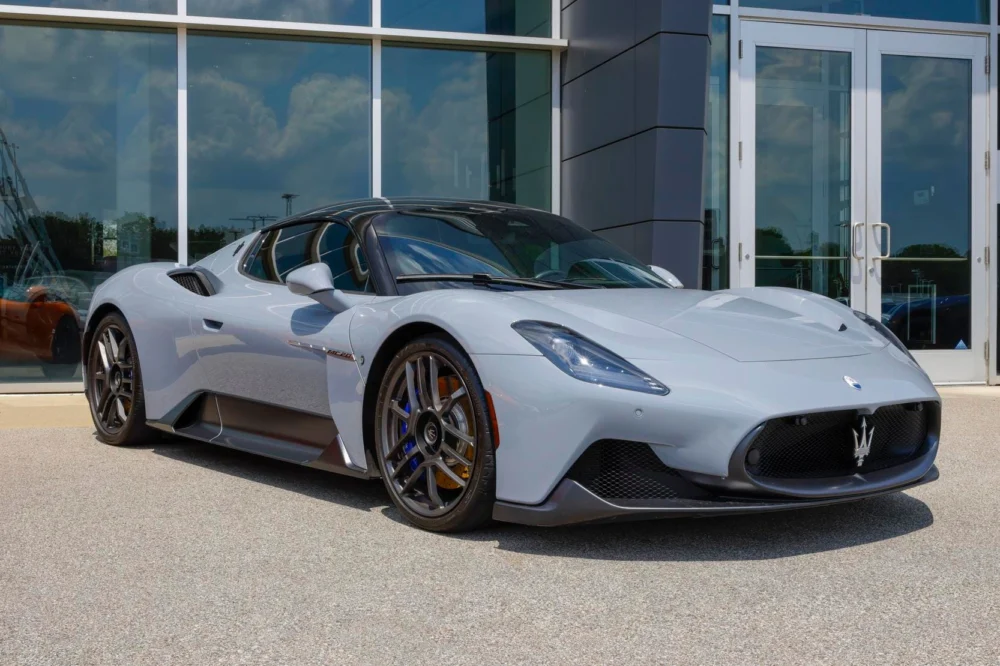
Industry analysts, including Felipe Munoz of Car Industry Analysis, argue that the overlap between these brands has become a liability. In Europe, the distinction between a Citroen and a Fiat, or an Opel and a Peugeot, has blurred to the point of consumer confusion. The "premium hub" has been particularly problematic. Maserati, the group’s sole true luxury performer, continues to struggle for consistent profitability, while Alfa Romeo’s long-promised resurgence remains stalled. The decision to revive Lancia—a brand that had been reduced to selling a single model in Italy—as a premium player has raised eyebrows across the sector. As Munoz pointed out, the logic of reviving a dormant brand while two existing premium brands are already struggling is difficult to justify in a climate of declining profits.

The pressure on Filosa to act is immense. When the merger was first consummated, Carlos Tavares famously gave each brand a 10-year window to prove its viability. That window appears to have been slammed shut by the $26.5 billion write-down. The upcoming strategic plan, set to be presented on May 21, is expected to outline which brands will be "integrated, sold, or simply killed." The market consensus is that Stellantis must return to its core competencies: light trucks and large SUVs for the North American market (via Ram and Jeep), and affordable small cars and vans for Europe and South America (via Fiat and Peugeot).
The North American market remains the company’s most vital profit engine, yet even there, the transition has been rocky. The cancellation of certain fully electric models, such as the initial plans for the RAM 1500 pickup, and the delay of Alfa Romeo EV projects in Europe, highlight a tactical retreat. Investors are looking for "execution and clarity," as noted by researchers at Jefferies. While some see the current stock price as a "classic cyclical opportunity," others, like HSBC Global Investment Research, warn that the road to recovery will be slow. The "weak operating leverage" and "slow product ramps" suggest that the worst may be over operationally in the U.S., but the international business remains a question mark.
Adding another layer of complexity to the Stellantis narrative is its 21% stake in the Chinese EV manufacturer Leapmotor. This partnership was intended to give Stellantis a foothold in the low-cost EV segment and a window into Chinese battery technology. However, as trade tensions between the West and China escalate and tariffs on Chinese-made vehicles rise, the Leapmotor strategy may require its own set of adjustments. It represents a hedge against the very energy transition that Stellantis misjudged, yet it also risks cannibalizing the group’s own European brands if not managed with surgical precision.

The broader implications for the European auto industry are profound. Volkswagen remains the dominant force, holding a 26.9% market share with 3.6 million sales in 2025 across its Audi, Skoda, and VW brands. Stellantis sits in a distant second place with roughly 16%. To close that gap—or even to maintain its current position—Stellantis cannot afford to carry "zombie brands" that drain R&D resources without delivering market share. The challenge for Filosa is to maintain the "synergies" promised during the merger while creating distinct identities for the survivors.
For instance, the Jeep brand remains a "privileged" asset with global recognition in the SUV space, but it requires an accelerated product plan to stay competitive against both traditional rivals and new electric entrants. Similarly, Ram needs to solidify its pickup lineup to defend its high-margin territory in the U.S. from Ford’s F-Series and GM’s Silverado. In contrast, the future of Chrysler—now down to a very limited product range—and the niche DS brand seems increasingly precarious.
As the May 21 meeting approaches, the automotive world is braced for a "Great Contraction." The previous goals set in 2022—which included doubling sales by 2030 and achieving 100% EV sales in Europe—now seem like artifacts of a different era. The reality of 2026 and beyond will likely be characterized by a "multi-energy" approach, where internal combustion, hybrid, and electric powertrains co-exist for much longer than previously anticipated.

The $26.5 billion debacle is a sobering reminder that the path to a green future is paved with financial landmines. For Stellantis, the lesson is clear: size provides scale, but it also creates complexity that can be fatal in a volatile market. The upcoming "brand purge" will not just be about cutting costs; it will be about defining what Stellantis actually stands for in a post-transition world. Whether Filosa can navigate this minefield and restore the group to its former double-digit operating margins remains the most critical question in the industry. For now, the "kitchen-sinking" of 2025 serves as a painful but necessary admission that the old roadmap is broken, and a new, leaner path must be forged.