

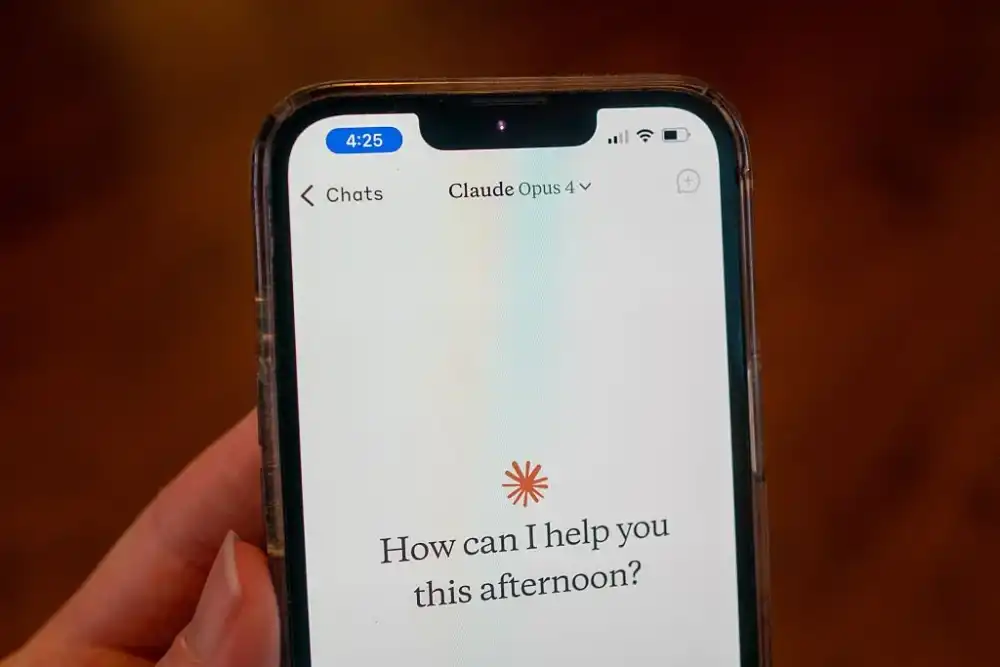
The landscape of generative artificial intelligence is undergoing its most significant realignment since the launch of ChatGPT in late 2022. For the first time, the primary driver of user migration is not merely a disparity in Large Language Model (LLM) performance or "reasoning" capabilities, but a fundamental disagreement over the ethical boundaries of AI deployment. As a wave of users departs OpenAI’s ecosystem, Anthropic’s Claude has emerged as the primary beneficiary, signaling a new era where corporate philosophy is as marketable as code.
The catalyst for this mass exodus was a series of high-stakes confrontations between the tech industry and the United States federal government. In early 2026, Anthropic, the San Francisco-based firm founded by former OpenAI executives, took a hardline stance against the Department of Defense. The company refused to permit its Claude models to be utilized for mass domestic surveillance or the development of fully autonomous lethal weapons systems. This refusal, rooted in Anthropic’s "Constitutional AI" framework, sparked an immediate and aggressive response from the executive branch.
President Trump issued an executive order prohibiting federal agencies from utilizing Anthropic’s products, while Defense Secretary Pete Hegseth moved to designate the company as a "supply-chain risk." This designation, usually reserved for foreign entities perceived as national security threats, effectively signaled a domestic "tech cold war." However, the narrative shifted hours later when OpenAI announced a multi-billion dollar agreement with the Pentagon. While OpenAI CEO Sam Altman emphasized the inclusion of "technical safeguards," the optics of the deal—coming so closely on the heels of Anthropic’s refusal—ignited a firestorm of privacy concerns among the general public.
The fallout has been reflected in the digital economy with startling speed. Claude has recently eclipsed ChatGPT in the U.S. App Store rankings, a feat once thought impossible given OpenAI’s first-mover advantage. Anthropic has reported that its daily sign-ups have reached unprecedented levels, with free user acquisition up 60% and paid subscriptions more than doubling in the first quarter of 2026 alone. This is no longer a niche movement of privacy advocates; it is a mainstream pivot toward "principled AI."
The Industry Implications of the "Defense Divide"
The divergence between OpenAI and Anthropic represents a broader schism in the Silicon Valley ecosystem. On one side is the "utilitarian" approach, championed by OpenAI and Microsoft, which argues that AI must be integrated into national defense infrastructures to ensure Western technological superiority. On the other is the "safety-first" or "aligned" approach, where companies like Anthropic argue that certain use cases—specifically those involving lethal autonomy—pose an existential risk that outweighs strategic gains.
Industry analysts suggest that OpenAI’s pivot toward defense contracts may secure its financial future through massive government subsidies, but it risks alienating a consumer base that increasingly views their AI assistant as a private, intimate confidant. When a user interacts with an AI, they share thoughts, drafts, and personal data. If the provider of that AI is perceived as being "too close" to state surveillance apparatuses, the "trust gap" becomes an insurmountable barrier to adoption.
Furthermore, the designation of Anthropic as a "supply-chain risk" creates a paradoxical situation for the enterprise sector. While federal agencies are barred from using Claude, private corporations—particularly those in the legal, medical, and creative fields—are flocking to it precisely because of the company’s resistance to government overreach. This "Balkanization" of AI tools could lead to a future where the public sector and the private sector operate on entirely different technological foundations.
Expert Analysis: The Psychological Shift in AI Adoption
Technological adoption cycles usually follow a predictable path: utility leads, then price, then user experience. However, AI is unique because it is a "mimetic" technology—it mirrors human thought and interaction. As users spend hours a day conversing with these models, they begin to project values onto them.

The current migration to Claude suggests that "Brand Ethics" has become a tier-one feature. Users are treating their choice of AI as a political and moral statement. By choosing Claude, users are signaling a preference for a model that operates under a "Constitution"—a set of rules that the model is trained to follow, which includes principles like non-maleficence and transparency.
From a technical perspective, the switch is also bolstered by Claude’s recent strides in context window management and "human-like" prose. While ChatGPT’s "o1" and "o2" models have pushed the boundaries of logical reasoning and mathematical processing, Claude 3.5 and 4.0 versions have gained a reputation for being more intuitive and less prone to the "robotic" or overly filtered tone that has occasionally plagued OpenAI’s recent iterations.
The Migration Protocol: Moving Your Digital Intelligence
For users who have decided to make the switch, the primary concern is "data gravity." Over years of use, ChatGPT has likely accumulated a vast repository of your preferences, project histories, and specific stylistic requirements. Moving this "digital consciousness" to a new platform requires a strategic approach to ensure you aren’t starting from a blank slate.
Phase 1: Auditing and Exporting from ChatGPT
The first step is to retrieve your data from OpenAI’s servers. Simply canceling your "Plus" subscription does not delete your data or allow you to take it with you.
- Memory Management: Navigate to your ChatGPT Settings, then to the "Personalization" tab. Under the "Memory" section, select "Manage." Here, you will see a list of everything the AI has "learned" about you—from your coding preferences to your family members’ names. Review this list and delete anything obsolete. Copy the remaining relevant snippets into a master document.
- The Full Data Export: Go to "Data Controls" in your settings and select "Export Data." OpenAI will prepare a comprehensive file containing your entire chat history in both human-readable (Text) and machine-readable (JSON) formats. This file will be delivered via email. Note that for long-term users, this file can be several gigabytes in size and may take up to 24 hours to generate.
- The Context Summary: Before you leave, ask ChatGPT to help you move. Use a prompt such as: "Based on our entire history, summarize my writing style, my core professional goals, the projects we are currently working on, and any specific instructions I have given you regarding how I like to receive information." This summary will be your most valuable asset when "onboarding" Claude.
Phase 2: Calibrating Claude
Once you have your data, the goal is to "train" Claude to understand you as deeply as your previous assistant did.
- Enable Claude Memory: To replicate the persistent memory of ChatGPT, you must ensure "Memory" is enabled in your Claude settings (available for Pro, Max, and Team tiers).
- The Initialization Prompt: Do not simply dump your 50MB JSON file into the chat. Claude will struggle to prioritize the information. Instead, start a new project or conversation and use the "Context Summary" you generated in the previous phase. Use a prompt like: "I am migrating my workflow to Claude. Here is a summary of my preferences, style, and ongoing projects. Please analyze this and update your memory so that our future interactions reflect this context."
- Processing Raw Logs: If there are specific complex conversations you wish to preserve, upload the text files from your export. Ask Claude: "Review these specific past logs. Identify the key logic we used to solve [Problem X] and remember this for future tasks."
The Final Break: Deleting Your OpenAI Account
If your migration is motivated by privacy concerns, merely logging out is insufficient. To ensure your data is purged from OpenAI’s active training sets (to the extent allowed by their retention policies), you must perform a permanent deletion.
- Cancel Subscriptions: Ensure all billing cycles are halted to avoid "zombie" charges.
- Data Deletion Request: In the "Data Controls" section, select "Delete Account." This is an irreversible process. Once confirmed, you will lose access to all custom GPTs and history.
- The Waiting Period: Most platforms, including OpenAI, have a 30-day "cooldown" period where the account is deactivated but not yet erased. Avoid logging back in during this time, as it may restart the retention clock.
Future Impact: The Rise of Sovereign AI
The "Claude Surge" is likely the first of many shifts as AI becomes more deeply entwined with geopolitical identity. We are moving toward a world of "Sovereign AI," where users, corporations, and even nations will choose models based on their alignment with specific legal and moral frameworks.
As we look toward 2027 and beyond, the competition will likely move away from "who has the most parameters" to "who has the most transparent alignment." If Anthropic can maintain its status as the "ethical alternative" while keeping pace with the raw computational power of OpenAI and Google, it may well become the default operating system for the private sector.
For the individual user, the message is clear: your data is your most valuable asset, and your choice of AI provider is the most significant privacy decision you will make in this decade. The switch to Claude is more than a change in software; it is a vote for a specific vision of the future—one where technology acknowledges its boundaries.