

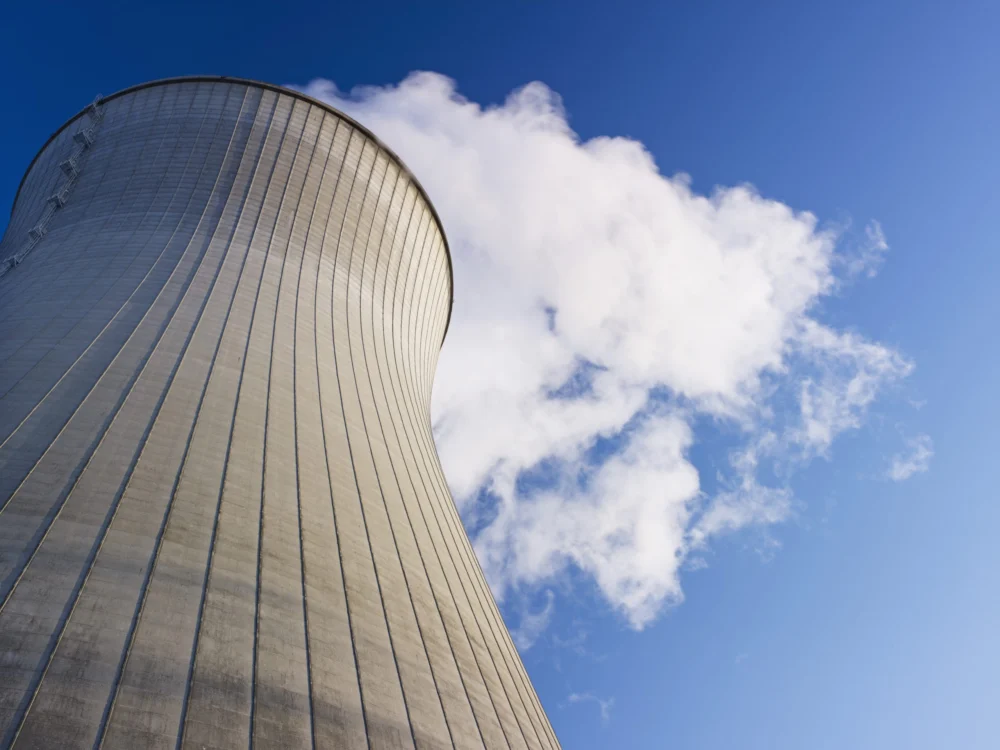
Meta, the technology titan driving expansive AI and metaverse ambitions, has formally announced a landmark, multi-faceted strategy to secure over six gigawatts (GW) of carbon-free, always-on electricity through strategic agreements with three distinct nuclear power providers. This massive procurement effort—one of the largest corporate nuclear power initiatives ever disclosed—involves a diversified approach: leveraging immediate capacity from an established utility, Vistra, while simultaneously providing critical capital and market validation to two pioneering small modular reactor (SMR) startups, Oklo and TerraPower. This commitment underscores the profound realization across Silicon Valley that the computational demands of generative artificial intelligence cannot be reliably met without robust, high-density baseload power sources, effectively placing nuclear energy at the center of the technological infrastructure arms race.
The AI Imperative and the Search for Baseload Power
The surge in demand for high-performance computing necessary to train and operate large language models (LLMs) has fundamentally altered the energy consumption profile of the technology sector. Data centers, once considered merely large consumers of electricity, are rapidly evolving into energy megaliths, requiring continuous, predictable power supply measured in gigawatts rather than megawatts. Traditional renewable energy sources, while vital for decarbonization, suffer from intermittency issues that pose significant operational challenges for hyperscale data centers that must run 24 hours a day, seven days a week, regardless of solar irradiation or wind speed.
This necessity for unwavering reliability, coupled with aggressive corporate decarbonization goals, has propelled nuclear energy back into the spotlight. Existing nuclear reactors offer the highest capacity factors of any energy source, making them the most cost-effective source of non-intermittent, emissions-free power available on the grid today. However, the limited availability of existing operational capacity, coupled with the decades-long lead time and immense capital expenditure required for building traditional gigawatt-scale nuclear facilities, necessitates a shift toward next-generation technologies. Meta’s three-pronged strategy expertly navigates this landscape, blending immediate operational security with crucial long-term technological investment.
Immediate Capacity: The Vistra Agreement and PJM Grid Dominance
The most immediate impact on Meta’s energy portfolio will stem from the 20-year Power Purchase Agreement (PPA) with Vistra, a major integrated energy company. This deal secures a substantial 2.1 GW of existing nuclear generation capacity, sourced primarily from Vistra’s operational plants, specifically the Perry and Davis-Besse facilities located in Ohio. This instant injection of power capacity is crucial for Meta’s near-term data center expansion plans, particularly within the Mid-Atlantic and Midwestern regions.
Furthermore, the Vistra agreement extends beyond simple procurement. It includes provisions for strategic capacity upgrades at the existing Ohio facilities, as well as the Beaver Valley power plant in Pennsylvania. These targeted upgrades are projected to yield an additional 433 megawatts (MW) of output, scheduled to come online in the early 2030s. This hybrid approach—securing existing, low-cost baseload power while funding incremental capacity expansion—provides Meta with a stable foundation to manage the exponential growth of its AI infrastructure.
The geographical location of these assets is highly strategic. The new power will flow directly into the PJM Interconnection, one of the largest electric transmission organizations in North America, covering 13 states and the District of Columbia. The PJM territory has experienced unprecedented strain due to the high concentration of data center development, particularly in Northern Virginia and adjacent Midwestern states. By securing substantial capacity within the PJM footprint, Meta mitigates the financial and logistical risks associated with transmission constraints and grid saturation, ensuring that power can be delivered efficiently to its rapidly expanding regional facilities.
Validation of Next-Generation Fission: The SMR Bet
While the Vistra deal provides stability, the agreements with Oklo and TerraPower represent a high-stakes, multi-billion-dollar bet on the commercial viability and scalability of Small Modular Reactor (SMR) technology. These contracts are not merely power purchases; they are market signals that could accelerate the entire advanced nuclear sector globally.
The core premise of SMRs—building standardized, smaller reactors (typically under 300 MW) that can be mass-manufactured in factories rather than custom-built on site—is that standardized production will drastically reduce costs and deployment timelines, a phenomenon known as "learning by doing." Meta’s demand provides the crucial first order volume needed to begin testing this economic hypothesis.
Oklo: Pioneering Micro-Reactors
Meta has committed to purchasing 1.2 GW of electricity from Oklo, a startup focused on micro-reactors. Oklo’s Aurora Powerhouse design is intended to be highly compact, with each unit producing approximately 75 MW of electrical power. To meet Meta’s order, Oklo would need to deploy more than a dozen of these units, potentially clustered in Pike County, Ohio, with a target operational date beginning as early as 2030.
Oklo’s journey highlights the regulatory friction inherent in deploying novel nuclear technology. While the company, which went public via a SPAC merger in 2023, has secured other major procurement agreements (such as with data center operator Switch), it has faced significant hurdles in obtaining final design approval from the U.S. Nuclear Regulatory Commission (NRC). The Meta deal, however, provides tremendous leverage and financial incentive to overcome these regulatory bottlenecks. Securing a corporate customer of this magnitude demonstrates undeniable market demand, which can influence both regulatory priority and investor confidence.
TerraPower: Advanced Design and Integrated Storage
The agreement with TerraPower, the advanced nuclear firm co-founded by Bill Gates, is even more expansive and technologically ambitious. Meta has secured the rights to purchase up to 2.8 GW of nuclear capacity, alongside 1.2 GW of integrated energy storage capacity, with initial power delivery targeted for 2032.
TerraPower’s flagship technology, the Natrium reactor, is a sophisticated, non-light water design that utilizes molten sodium as a coolant to transfer heat from the reactor core to the generator. The Natrium design is rated at 345 MW of electricity and features a revolutionary, cost-effective energy storage system. This system allows the superheated molten salt to be stored in large, insulated vats, functioning as a thermal battery. When electricity demand spikes—a common occurrence in the dynamic operations of AI clusters—the stored heat can be rapidly dispatched to generate an additional 100 MW to 500 MW of power for periods exceeding five hours.
This integration of thermal storage is a paradigm shift for nuclear power and is uniquely appealing to hyperscale operators. It effectively transforms a baseload energy source into a highly flexible, load-following resource, capable of responding instantly to the unpredictable and rapid fluctuations inherent in AI workloads. TerraPower has demonstrated smoother navigation of the NRC process than some competitors, and it is currently working with industry partner GE Hitachi to construct its first demonstration plant in Wyoming. For Meta, the initial deployment will involve two Natrium units providing 690 MW, with options for six additional units to reach the full contracted capacity.
Economic Analysis: The Quest for Competitive Cost Curves
While the immediate Vistra purchase benefits from the established low operating costs of existing reactors, the economic success of the SMR deals hinges entirely on the ability of Oklo and TerraPower to achieve aggressive cost targets through standardization and mass production.
Currently, the levelized cost of electricity (LCOE) from established, large-scale nuclear plants is highly competitive, often placing it among the cheapest sources of reliable, baseload power. SMR developers, however, are promising future LCOEs that challenge even the lowest figures seen today. TerraPower has publicly stated a target LCOE of $50 to $60 per megawatt-hour (MWh) for subsequent plants, once the manufacturing ecosystem matures. Oklo has a slightly higher target range, aiming for $80 to $130 per MWh.
These figures are crucial. If achieved, they would position advanced nuclear power not just as a decarbonization tool, but as a compelling economic choice for industrial power users. However, these targets pertain to the Nth plant—the reactors built after the initial, more expensive demonstration units. The cost of the first few reactors deployed for Meta is almost certain to be higher, reflecting the immense engineering, regulatory, and supply chain maturity costs. Meta’s willingness to absorb these initial costs signals that the strategic value of long-term, carbon-free power security outweighs the short-term premium. The financial terms of these massive agreements, though undisclosed, represent a massive capital injection necessary to move SMR technology from the demonstration phase to commercial viability.
Industry Implications and Future Trends
Meta’s nuclear procurement spree marks a pivotal moment in the energy transition and corporate sustainability. It solidifies the trend that began with similar exploratory moves by peers like Microsoft and Google: AI requires a fundamentally new approach to energy procurement that renewables alone cannot satisfy.
1. Market De-Risking for SMRs: These contracts provide the "anchor tenant" validation that SMR technology has desperately needed. Banks and traditional energy investors have historically been hesitant to fund novel nuclear designs due to high regulatory risk and uncertainty regarding market demand. By providing massive, long-term PPAs, Meta effectively de-risks the market, making it easier for these startups to secure debt financing and expand their manufacturing supply chains.
2. A Shift in Corporate Power Strategy: This move signals a significant departure from the traditional model where tech companies relied primarily on utility-scale solar and wind farms located far from their data centers, often relying on complex virtual PPAs. Meta is now actively engaging in the physical infrastructure build-out of its energy supply, moving closer to the model of an independent power producer for its own operations. This direct involvement is necessary given the sheer scale of the power required; the 6 GW Meta has secured is equivalent to powering millions of homes.
3. Revitalization of the Nuclear Supply Chain: The manufacturing requirements for dozens of new SMR units will spur significant investment in nuclear-grade component manufacturing, specialized fuel enrichment (particularly High-Assay Low-Enriched Uranium, or HALEU), and skilled labor. This procurement volume ensures that the nascent SMR supply chain begins to scale rapidly, benefiting all advanced nuclear developers.
4. Regulatory Pressure and Innovation: The urgency imposed by major corporate customers like Meta will undoubtedly increase pressure on the NRC and international regulatory bodies to streamline the licensing and approval processes for advanced reactor designs. While safety remains paramount, the need for rapid decarbonization and grid stability, backed by industrial giants, adds a new impetus for regulatory efficiency.
In conclusion, Meta’s extensive nuclear power agreements are far more than routine energy purchases; they are transformative infrastructure investments. By coupling the low-cost certainty of existing reactor capacity with high-risk, high-reward bets on revolutionary SMR technologies from Oklo and TerraPower, Meta is not only securing its future AI operational capacity but is also effectively acting as the foundational customer base needed to commercialize the next generation of global nuclear power. The implications extend far beyond Silicon Valley, promising to reshape the utility sector, redefine energy security, and accelerate the viability of emissions-free baseload power in the global energy mix.