

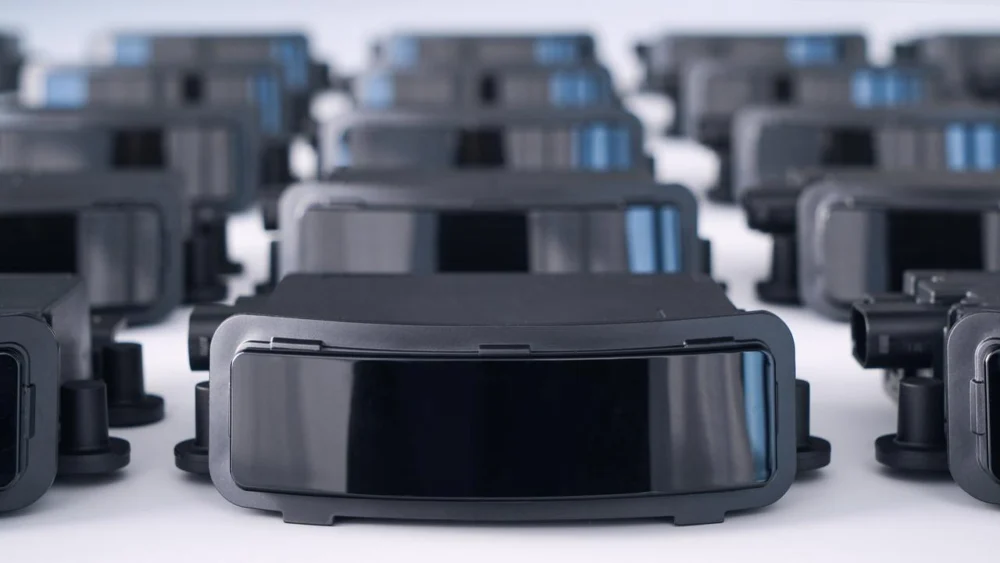
The global light detection and ranging (lidar) market, a foundational technology for advanced autonomy, is undergoing a profound and violent structural consolidation, defined by the aggressive scaling of Chinese manufacturing power colliding with the financial instability of pioneering Western firms. At the forefront of this shift is Hesai Technology, the Shanghai-based lidar giant, which recently unveiled ambitious plans to double its annual production capacity from 2 million units to a staggering 4 million units. This massive scaling effort, announced amidst accelerating demand signals from both the automotive and robotics sectors, cements Hesai’s position not merely as a leading competitor, but as the likely architect of the industry’s future cost structure and supply chain architecture. This expansion, representing a fourfold increase in volume compared to the 1-million-plus units produced in 2025, is a direct strategic maneuver aimed at capturing and dominating the global sensor market.
Hesai’s aggressive move comes at a moment of acute distress for its erstwhile American rivals. Just weeks prior to Hesai’s announcement, Luminar Technologies, once heralded as the standard-bearer for U.S. lidar innovation, initiated Chapter 11 bankruptcy proceedings. Luminar’s downfall is emblematic of the systemic financial fragility plaguing the Western lidar sector, which was largely built on high valuations derived from the SPAC (Special Purpose Acquisition Company) boom of the early 2020s. While Luminar is exploring the sale of its core intellectual property and assets, its operational demise underscores the critical challenge that Western firms face: the inability to transition from high-cost, R&D-intensive development to high-volume, cost-competitive manufacturing at the requisite speed.
The Lidar Price Floor and the Geopolitical Chasm
The central tension defining this industry shakeout is the relentless erosion of the average selling price (ASP) for lidar units. Hesai has publicly claimed responsibility for driving down the cost of these complex laser-based sensors by an astonishing 99.5% over the past eight years. This cost compression has been devastating to companies like Luminar. Bankruptcy filings submitted by the U.S. firm explicitly identified "pressure to reduce costs due to lower price points of China-based competitors" as a major contributing factor in its inability to establish a sustainable business model.
The divergence between the Chinese and Western approaches to lidar commercialization is stark. Western companies, often focusing on advanced proprietary technologies (such as specific wavelength lasers or custom ASIC chips), pursued a strategy predicated on securing large, long-term contracts with premium automakers at high ASPs. Luminar, for instance, secured highly publicized integration deals with major European automakers, including Volvo, Polestar, and Mercedes-Benz. Yet, these ambitious plans repeatedly failed to materialize into stable, high-volume revenue streams. The most notable example involves Volvo, which had committed to purchasing 1.1 million lidar sensors. Due to protracted delays in new vehicle program launches and unexpected cost overruns within Volvo’s own development cycle, the Swedish manufacturer ultimately curtailed its order drastically, procuring only approximately 10,000 units. This underscores the fickle nature of the automotive market, where the introduction of new perception technology is often the first element to be sacrificed in cost-cutting or timeline revisions.
Conversely, Chinese firms like Hesai have leveraged the massive, rapidly scaling domestic electric vehicle (EV) market as a launching pad for mass production. This strategy relies on superior economies of scale and deep integration within the highly efficient, low-cost Asian electronics supply chain. The sheer volume achieved allows Hesai to amortize fixed costs rapidly, creating a cost structure that is virtually insurmountable for competitors relying on lower volumes and geographically dispersed supply chains.
The Chinese Automotive Catalyst
The success of Hesai in the immediate term is intrinsically tied to the strategic policy and competitive landscape within China’s domestic automotive sector. Unlike the more cautious, camera-centric approach favored by some Western leaders (most notably Tesla), Chinese EV manufacturers have aggressively embraced lidar as a necessary component for achieving Level 3 (L3) and Level 4 (L4) autonomous capabilities.
Hesai reports that lidar sensors are now integrated into approximately 25% of all new electric vehicles sold in China. More significantly, the emerging design standard in the Chinese market calls for complex sensor suites. Instead of a single, forward-facing sensor, many new vehicles are expected to integrate between three to six lidar sensors per car. This exponential increase in per-vehicle sensor count dramatically expands Hesai’s addressable market and accelerates the path to mass-production scale.
The company currently boasts a roster of 24 automotive customers globally, including a major, yet unnamed, "top European" automaker. This diversification indicates that Hesai is successfully exporting its cost advantage and high-volume reliability outside of its home market. The backlog of 4 million confirmed orders for its newest ATX lidar sensor is a testament to the market’s confidence in Hesai’s ability to deliver automotive-grade quality at competitive pricing points—a capability that proved elusive for many Western firms.
Technical and Strategic Implications of Scale
The doubling of Hesai’s production capacity signals a critical shift in the technological landscape: the complete commoditization of basic lidar hardware. Historically, lidar was synonymous with expensive, bulky mechanical scanning units. Hesai’s success is largely predicated on its ability to transition to highly integrated, solid-state or hybrid solid-state architectures, specifically its ATX series, which utilizes sophisticated micro-electro-mechanical systems (MEMS) technology or similar low-profile methods.
Achieving 4 million units annually demands not just factory floor space, but perfected vertical integration and manufacturing precision. This scale allows Hesai to command better pricing from sub-component suppliers (e.g., laser diodes, detectors, custom optics) and invest heavily in automated production lines, further reducing the variable cost per unit. This self-reinforcing loop—volume driving down cost, which drives more customer adoption—is the core mechanism that has allowed Hesai to effectively box out its competition on price.
For the surviving Western firms, such as San Francisco-based Ouster, which acquired rival Velodyne in 2023 in an earlier phase of industry consolidation, the challenge is clear: specialization or retreat. Ouster’s consolidation move aimed to combine patent portfolios and manufacturing expertise to better compete, yet it still faces the sheer output volume of its Chinese counterparts.
The Strategic Pivot to Robotics and Non-Automotive Verticals
Recognizing that the automotive market, particularly for fully autonomous Level 4 robotaxis, remains highly cyclical and capital-intensive, leading lidar players are increasingly pivoting toward industrial, mapping, and robotics applications. This diversification offers more immediate, reliable revenue streams outside the prolonged validation cycles of major automakers.
Ouster, for example, estimates the robotics market opportunity alone to be worth $14 billion. This encompasses a wide range of uses far beyond passenger vehicles, including military applications, high-definition mapping, logistics automation, and last-mile delivery robots. The demand characteristics in these sectors—often requiring ruggedness, reliability, and specific field-of-view capabilities—can sometimes allow for higher ASPs than the fiercely competitive consumer auto market.
Hesai showcased its commitment to these adjacent markets at the Consumer Electronics Show (CES) in Las Vegas, demonstrating its JT series lidar sensor integrated into devices like a robotic lawnmower and a robotic dog. Furthermore, the company hinted at partnerships involving humanoid robotics, a rapidly emerging field demanding high-resolution, reliable 3D perception. Hesai has also solidified its position within the autonomous vehicle ecosystem by securing deals with prominent autonomous driving technology firms, including Pony AI, Motional, WeRide, and Baidu. These partnerships ensure that even as the automotive market outside China remains fragmented, Hesai remains embedded in the software stacks of major global players.
Geopolitical Friction and Future Risks
Hesai’s global expansion is not proceeding without significant geopolitical friction. Despite its successful listing on both the Nasdaq and the Hong Kong stock exchanges—critical for accessing international capital—the company has been embroiled in an ongoing dispute with the U.S. government. Washington has accused Hesai of having close ties to the Chinese military industry, resulting in its inclusion on certain U.S. government blacklists. While Hesai has aggressively challenged these accusations in court, the regulatory scrutiny creates substantial operational complexity and risk, particularly when dealing with sensitive military or critical infrastructure contracts in Western nations.
This regulatory environment introduces long-term strategic risks for global supply chains. As Chinese manufacturers increasingly dominate the production of core components like lidar, Western policymakers must grapple with the potential dependence on technology sourced from a geopolitical rival for critical autonomous systems—ranging from self-driving logistics vehicles to military drones and automated security systems.
Expert analysis suggests that the lidar industry is rapidly converging toward an oligopoly, dominated by highly capitalized firms capable of sustaining aggressive pricing wars while simultaneously maintaining significant R&D budgets. The success of Hesai hinges on its ability to leverage its cost advantage into enduring market share before competitors can innovate a truly disruptive, non-lidar-based perception solution (like advanced camera-only or radar-fusion systems).
The long-term outlook points toward a bifurcated market. High-volume, cost-sensitive applications (especially L2+/L3 passenger vehicles) will likely be serviced by Chinese manufacturers due to their unparalleled scale. Meanwhile, niche, high-performance, or defense-sensitive applications may sustain smaller, specialized Western firms like Ouster, which can focus on proprietary software and sensor fusion capabilities rather than competing on hardware price alone.
Ultimately, Hesai’s decision to double its capacity is more than a simple production increase; it is a declaration of intent. It signals the final phase of the lidar industry shakeout, one where financial muscle, manufacturing scale, and favorable domestic market conditions are proving decisive over pioneering technological innovation. The geopolitical contest over the fundamental sensors of autonomy is being won on the factory floor, and for now, the advantage firmly resides in the East.