

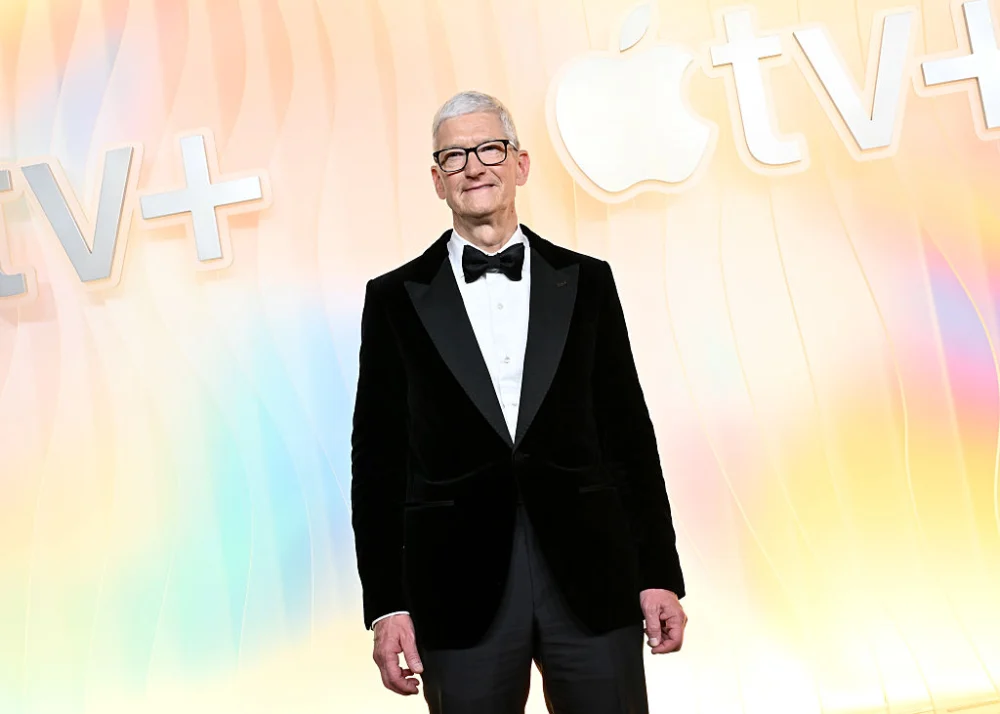
Apple’s latest quarterly earnings announcement delivered the customary affirmation of its financial dominance, reporting revenues that comfortably surpassed analyst expectations and showcasing robust 16% year-over-year growth to reach $143.8 billion. The sheer scale of these figures often serves as a powerful shield, deflecting rigorous scrutiny during the subsequent earnings call. Yet, amidst the predictable procession of congratulatory inquiries and relatively soft "softball" questions directed at CEO Tim Cook, a solitary analyst from Morgan Stanley, Erik Woodring, dared to introduce a strain of pragmatic skepticism that cut through the celebratory atmosphere. Woodring articulated the core financial dilemma currently plaguing the entire technology sector: the massive, visible costs associated with the generative artificial intelligence arms race versus the profoundly unclear path to recouping those investments.
The analyst framed the query pointedly: "When I think about your AI initiatives, you know, it’s clear there are added costs associated with that… Many of your competitors have already integrated AI into their devices, and it’s just not clear yet what incremental monetization they’re seeing because of AI.” He then crystallized the underlying anxiety of institutional investors: "So, how do you monetize AI?"
This question, simple in its phrasing but seismic in its implications, represents the elephant in the data center for Big Tech. The response provided by Cook, while characteristically smooth and positive, offered little substantive reassurance to those tasked with assessing fiduciary risk. Cook emphasized the integration of intelligence "across the operating system in a personal and private way," asserting that this process "creates great value" and thereby "opens up a range of opportunities across our products and services."
The linguistic gymnastics—translating a direct financial inquiry into an abstract value proposition—highlights the epistemological void currently surrounding AI profitability. For investors demanding clarity on return on invested capital (ROIC), "creating great value" and "opening up opportunities" are insufficient metrics. They are placeholders for a monetization strategy that, even within the most sophisticated companies, remains nebulous, perhaps deliberately so. The expectation that a company reporting over a hundred billion dollars in revenue could articulate a clearer financial model for its most critical future investment underscores the depth of the industry’s shared uncertainty.
The Great AI Capital Expenditure Paradox
The hesitancy to define AI monetization is not exclusive to Apple; it is a systemic issue driven by the economics of large language model (LLM) development and deployment. The current AI boom is founded upon unprecedented capital expenditure (CapEx). Companies like Microsoft, Google, and Meta are locked in a relentless contest for computational supremacy, primarily through the acquisition and deployment of high-performance GPUs, particularly those manufactured by Nvidia. This infrastructure investment runs into the tens of billions of dollars annually, creating immense upfront costs.
Consider the landscape surrounding core AI players like OpenAI. Despite its cultural prominence and the successful integration of products like ChatGPT into daily professional and personal life, the company’s financial runway relies heavily on ongoing massive capital injections. Reports indicating that OpenAI might not achieve sustained profitability until the latter half of the decade, potentially requiring hundreds of billions in further funding, illustrate a model based on future potential rather than current financial viability. This “growth at any cost” mentality, reminiscent of the dot-com era, is sustainable only as long as investor confidence remains anchored to the promise of eventual, revolutionary market capture. For publicly traded companies like Apple, which operate under intense quarterly scrutiny, this "vibes-driven approach," as some critics term it, is inherently problematic.
Apple’s Strategic Imperative and Defensive AI
Apple’s engagement with AI is fundamentally different from that of its competitors, who often rely on cloud-based processing and subscription models (e.g., Microsoft Copilot, Google Gemini Advanced). For Apple, AI is primarily a defensive expenditure necessary to maintain the premium positioning of its hardware ecosystem. The company’s core business model is centered on selling high-margin devices—the iPhone, iPad, and Mac—and monetizing the resulting captive user base through its Services division (App Store commissions, subscriptions, licensing).
Integrating advanced AI capabilities, especially those focused on privacy-centric, on-device processing (edge computing), serves two critical functions for Apple:
- Driving Upgrade Cycles: Sophisticated AI features, particularly those requiring specialized hardware like Neural Processing Units (NPUs) or increased RAM, mandate the purchase of the newest generation of devices. This artificial obsolescence based on intelligent features ensures the steady flow of premium hardware revenue, which remains Apple’s primary financial engine.
- Bolstering the Services Tier: Cook’s vague reference to "products and services" suggests that the true monetization path lies in embedding AI into exclusive, high-value service offerings. This could include professional-grade features within iCloud+, enhanced productivity tools within the iWork suite, or sophisticated creative capabilities restricted to Apple Music or Final Cut Pro subscriptions.
The challenge for Apple is threading the needle between providing "value-added" AI features that justify a high price point, and preventing those features from becoming so ubiquitous that they are merely expected, thus eroding their premium appeal. If core, useful generative features are simply integrated into the existing operating system (iOS, macOS) for free, the company absorbs the immense development cost without an incremental revenue stream.
The Monetization Blueprint: Tiering and Ecosystem Lock-in
Expert analysis suggests that Apple’s eventual AI monetization strategy will likely revolve around sophisticated tiering, leveraging its unique control over both hardware and software. This approach avoids the direct, transactional subscription model currently employed by many competitors, opting instead for integrated, implicit pricing mechanisms:
1. Hardware Premium and NPU Dependence
The immediate return on AI investment for Apple is bundled into the hardware price. By making the most powerful and seamless AI experiences dependent on the latest A-series or M-series chips, Apple effectively charges a premium for "AI readiness." This is a continuation of its long-standing strategy of selling performance and seamless integration, now simply rebranded as "intelligence." The cost of the underlying foundational models and infrastructure is implicitly amortized across the sale of millions of premium devices.
2. Services Upselling and Professional Features
The Services segment, already a formidable financial pillar, is the most likely target for explicit monetization. Imagine an "Apple Intelligence Pro" tier, possibly bundled with the highest-level iCloud subscription or Apple One, offering features that exceed the standard, free on-device capabilities. These features might include:
- Enhanced Contextual Memory: AI models with deeper, persistent memory across applications.
- Complex Multi-Step Automation: Advanced scripting and automation capabilities driven by natural language prompts.
- High-Fidelity Content Generation: Premium, faster, or higher-quality image and text generation compared to the free baseline.
This model allows Apple to capitalize on the massive lifetime value of its existing customer base without alienating the vast majority of users who expect basic AI functionality to be free.
3. Developer Ecosystem Fees
Historically, the App Store has been the primary monetization engine for third-party software. As Apple rolls out comprehensive AI frameworks and APIs for developers (potentially including access to their foundational models or specialized inference engines), the company could introduce new fee structures. Developers utilizing Apple’s proprietary AI stack for powerful features might face usage-based charges or an increased commission rate for apps that derive significant value from these underlying intelligent capabilities. This creates a secondary revenue stream that leverages the network effects of the App Store ecosystem.
The Broader Industry Reckoning
Apple’s guarded response reflects a widespread economic apprehension across Silicon Valley. The pressure is mounting on all AI giants to transition from the current phase of immense investment and technology demonstration to quantifiable profitability.
Google, for instance, faces the immense challenge of integrating generative AI into its core search product without cannibalizing its lucrative ad revenue model. If AI provides direct, synthesized answers, users may spend less time clicking on sponsored links, undermining the financial foundation of the entire organization. Their monetization path relies heavily on cloud services (GCP) offering AI tools and on higher-tier consumer subscriptions for advanced features.
Similarly, Microsoft has clearly established an enterprise-first monetization strategy with Copilot, charging significant per-user, per-month fees for integration into the 365 productivity suite. This B2B model offers clearer ROI—improved employee efficiency—which justifies the subscription cost. However, the scalability of high-cost enterprise subscriptions is finite, and the consumer-facing AI products remain largely subsidized by the cloud infrastructure division (Azure).
The consensus among financial analysts is that the current CapEx spending spree is unsustainable without a demonstrable profit mechanism emerging within the next 24 to 36 months. If the incremental revenue generated by AI features (through subscriptions, hardware uplifts, or developer fees) does not substantially exceed the exponentially increasing costs of training, inference, and infrastructure, the market valuation of these technology leaders will face a severe correction.
Future Trajectories: The Long Game of Utility
The ultimate profitability of generative AI may not stem from novel, standalone products, but from the systemic enhancement of existing utility. The "great value" Cook referenced might be a precursor to a future where AI features become so deeply integrated into workflows that they transition from a novelty to a necessity.
This transition allows companies like Apple to raise the perceived value—and therefore the price—of the entire product stack. The future iPhone is not just a phone; it is a highly personalized, context-aware digital assistant capable of managing life’s complexities autonomously. Paying a premium for this level of indispensable utility is the long-term goal.
The true challenge for Apple and the wider industry is to manage investor expectations during this costly transition phase. While the market often rewards revolutionary vision, it eventually demands quantifiable returns. Tim Cook’s evasive response during the earnings call was perhaps less a sign of ignorance and more an acknowledgement that the definitive financial model for the AI revolution has yet to be finalized, calculated, or, crucially, publicly disclosed. Until that happens, the profitability chasm will remain the defining uncertainty hanging over the otherwise dazzling ascent of artificial intelligence. The market is waiting for the precise calculus that turns billions in infrastructure investment into sustainable, long-term profit margins.