

The countdown has officially begun for a significant segment of the wearable technology community. In a move that marks the final chapter of a multi-year transition, Google has established a definitive cutoff date for legacy Fitbit accounts. Users who have not yet migrated their historical health and fitness data to a Google-managed account face the permanent deletion of their records. By February 2, 2026, the traditional Fitbit login system will be decommissioned entirely. For those who have spent years tracking their sleep cycles, heart rate variability, and step counts within the Fitbit ecosystem, the stakes are high: act now or lose a decade of personal biological insights.
This transition is the culmination of a process that began in January 2021, when Google finalized its $2.1 billion acquisition of Fitbit. At the time, the deal was scrutinized by regulators globally, particularly in the European Union and the United States, over concerns regarding data privacy and the potential for Google to leverage health data for advertising purposes. To appease these concerns, Google made legally binding commitments to keep Fitbit user data siloed from its primary advertising business. However, the technical infrastructure of the two companies remained separate for several years. That separation is now reaching its end-of-life stage as Google seeks to streamline its services under a single, unified authentication framework.
The migration mandate is not entirely new. Since 2023, anyone setting up a new Fitbit device or signing up for the service for the first time has been required to use a Google account. The company has also been consistently nudging existing users through app notifications and emails to make the switch. Yet, a significant number of "ghost users"—individuals who may have used a Fitbit in the past but have since moved to competitors like Garmin, Apple, or Oura—remain at risk. These users may not be checking their Fitbit apps regularly, but they may still value their historical data for long-term health trends. If these accounts are not migrated by the February 2026 deadline, the data will effectively cease to exist, purged from the servers as the legacy infrastructure is dismantled.
From a technical and security perspective, Google’s push for account unification is a logical evolution. Managing two distinct authentication systems is a costly and complex endeavor that increases the "attack surface" for potential cybersecurity threats. By moving Fitbit users into the Google account ecosystem, the company can provide more robust security features, such as advanced two-factor authentication (2FA), passkey support, and centralized privacy controls. Furthermore, it allows for a more seamless integration across Google’s suite of products, including the Google Home ecosystem and the Pixel Watch lineup.
However, the industry implications of this move go far beyond simple account management. This transition signifies the total absorption of the Fitbit brand into the Google machine. In the years following the acquisition, we have witnessed the gradual "Google-fication" of the Fitbit experience. The Fitbit web dashboard, once a favorite for power users who wanted to analyze their data on a large screen, was recently deprecated in favor of a simplified mobile-only experience. Similarly, the hardware strategy has shifted dramatically.
During its heyday, Fitbit was the undisputed king of the wearable market, offering a wide range of devices from the entry-level Inspire to the feature-rich Sense and Versa smartwatches. Today, the landscape looks very different. The Fitbit Versa 4 and Sense 2, released in late 2022, were criticized for stripping away features found in their predecessors—such as third-party app support and music storage—presumably to avoid competing with Google’s flagship Pixel Watch. It has become increasingly clear that Google views the Pixel Watch as its premium smartwatch offering, while Fitbit is being repositioned as a specialized brand for fitness trackers and entry-level health monitoring.

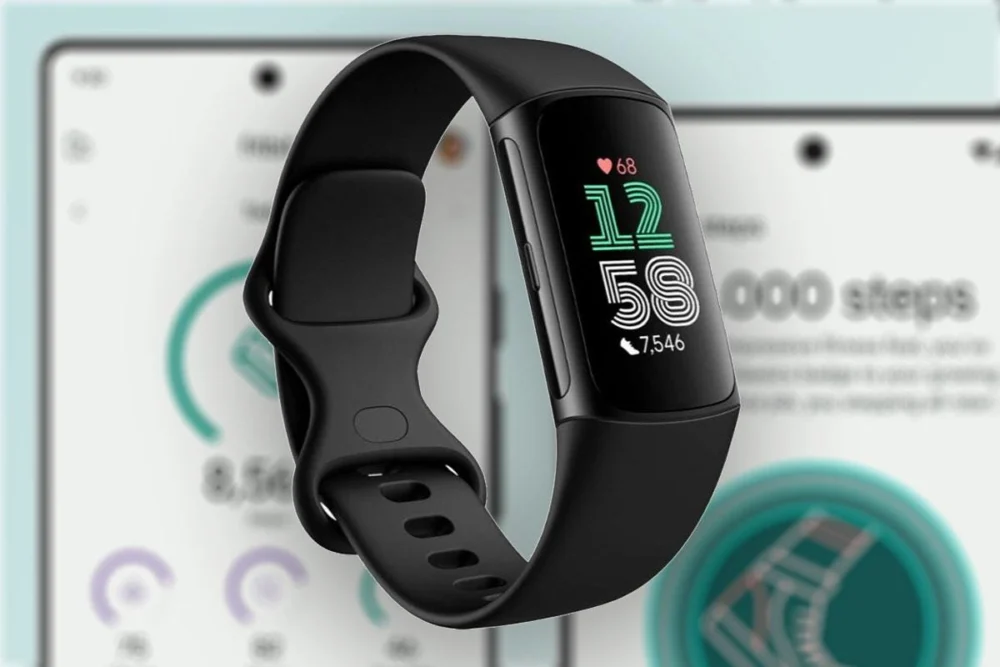
Expert analysis suggests that this "two-tier" strategy is a response to the fierce competition in the wearables market. Apple dominates the premium smartwatch segment, while Garmin has captured the high-end fitness and outdoor enthusiast market. By focusing the Fitbit brand on sleek, long-battery-life trackers like the Charge 6, Google can target a demographic that finds smartwatches too bulky or complex. The Fitbit Charge 6, released in late 2023, represented a return to form, integrating Google services like Maps and Wallet into a slim form factor. Speculation within the tech community suggests that an "upgrade" or a successor to the Charge 6 is likely the primary focus for the 2026 hardware cycle that Google has hinted at.
Despite the hardware shifts, the real value of the Fitbit acquisition lies in the data. For over a decade, Fitbit has collected one of the world’s largest datasets on human activity, sleep, and heart health. In the age of artificial intelligence, this data is invaluable. Google is already leveraging this information to develop sophisticated health AI. In late 2025, the company began rolling out "Fitbit Labs" features, which use the Gemini large language model (LLM) to provide users with deeper insights into their health data. For instance, instead of just seeing a poor sleep score, a user could ask the AI, "How did my late-night workout affect my REM sleep?" and receive a personalized analysis based on their historical trends. This level of insight is only possible if the data is centralized and accessible within the Google AI ecosystem.
For the privacy-conscious user, the migration brings a mix of apprehension and clarity. While Google has maintained its pledge not to use Fitbit health data for ad targeting, the integration into a Google account means that health data is now part of a much larger digital profile. Users are encouraged to review their "Data & Privacy" settings within their Google Account to understand exactly what is being shared and how it is being used. Google has provided a dedicated support page and video tutorials to guide users through the migration process, which generally involves a few taps within the Fitbit app settings.
The future of Fitbit as a standalone brand remains a topic of intense debate among industry observers. While Google has explicitly stated that the brand is not going away, the "deconstruction" of its original identity is undeniable. The Fitbit Ace LTE, a kids’ watch released in 2024, showed that Google is willing to use the Fitbit name for experimental, niche products. However, the fact that Fitbit devices are now sold primarily through the Google Store, rather than a dedicated Fitbit website, suggests that the brand is becoming a sub-label rather than an independent entity.
As the February 2026 deadline approaches, the window for action is closing. For current users, the migration is a necessary step to continue using their devices. For former users, it is a final opportunity to archive their digital health history. The loss of this data would not just be a loss of personal records, but a loss of a digital "time capsule" that tracks the evolution of wearable technology and personal wellness over the last 15 years.
Looking ahead to 2026 and beyond, we can expect the Fitbit name to be synonymous with "AI-powered fitness tracking." The hardware will likely become more minimalist, focusing on sensors and battery efficiency, while the heavy lifting—data analysis and user interaction—will be handled by Google’s cloud-based AI. This transition from a hardware-first company to a data-and-AI-first service is the ultimate goal of Google’s acquisition. The deletion of legacy accounts is simply the final housekeeping chore required to clear the path for this new era.
In conclusion, the looming deadline is more than just a technical requirement; it is a symbolic milestone. It marks the end of the "Old Fitbit" and the total integration of health tracking into the world’s most powerful data ecosystem. Users who value their longitudinal health data should prioritize this migration immediately. The process is brief, but the consequences of inaction are permanent. As we move closer to the February 2026 cutoff, the message from Mountain View is clear: the future of Fitbit is Google, and the past will only be preserved for those who make the move.