

The recent, high-profile flight of technology billionaires and venture capital firms from California has often been framed simplistically as a reaction to the state’s already high tax burden or the headline-grabbing 5% rate proposed in the new ballot initiative. While the general atmosphere of escalating taxation certainly contributes to the exodus, the specific, visceral panic currently coursing through Silicon Valley’s elite is rooted in an obscure yet devastating technical detail within the proposed wealth tax legislation: the methodology used to calculate the value of founder holdings. This subtle, almost bureaucratic adjustment to the tax code threatens not just realized gains, but the very mechanism of founder control essential to the architecture of modern technology companies, demanding immediate tax payment on paper wealth that is both illiquid and derived from non-economic voting power.
The Technical Nightmare of Voting Shares
The core of the conflict revolves around how the proposed one-time 5% levy—aimed at Californians with a net worth exceeding $1 billion—defines the taxable base. Traditional tax regimes focus on economic equity and realized capital gains, taxing wealth when it is liquidated or sold. This proposal, however, attempts to value and tax private assets annually based on complex formulas, specifically targeting a founder’s voting control rather than their actual economic ownership share.
This distinction is critical, particularly in technology companies that rely heavily on dual-class stock structures. Dual-class equity grants founders and early insiders super-voting shares (often 10:1 voting rights) to ensure they retain strategic control and can execute long-term visions without being vulnerable to short-term pressures from public markets or activist investors.
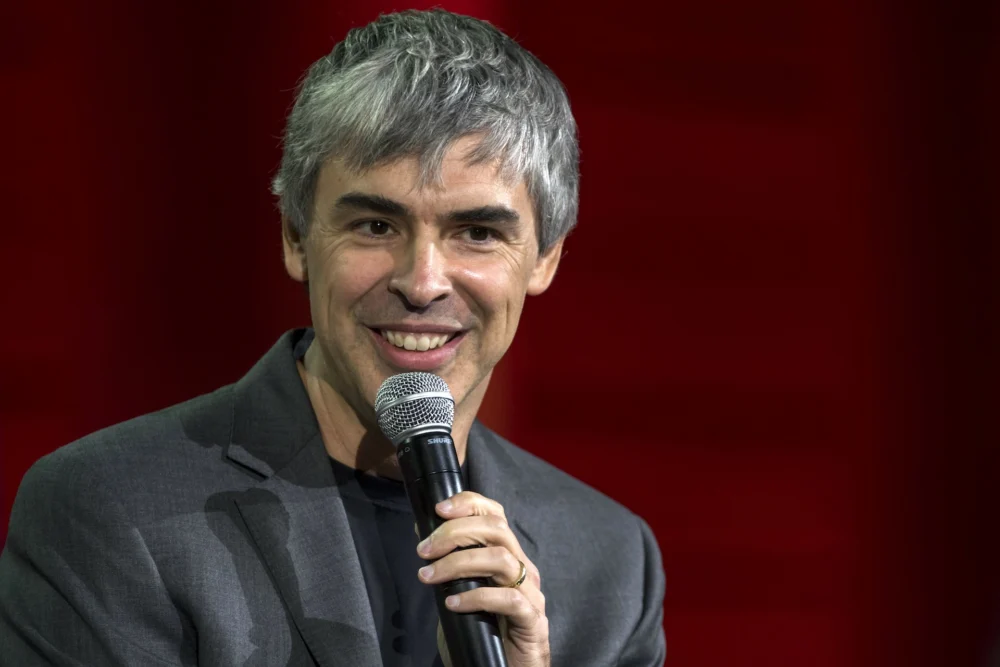
Consider the paradigmatic example of Google co-founder Larry Page, who, while owning a relatively small economic stake (approximately 3%) in Alphabet, wields commanding influence through dual-class stock that grants him roughly 30% of the company’s total voting power. Under the proposed tax framework, Page would not be taxed on his 3% economic ownership; instead, he would be assessed a 5% tax based on the valuation of 30% of the multi-hundred-billion-dollar enterprise. This transforms the 5% levy from a manageable, albeit large, bill on equity into an immediate, crushing tax liability on an asset—voting control—that is neither liquid nor designed to represent full economic value.
For an individual whose primary wealth is tied up in these super-voting, non-tradable shares, the resulting tax assessment could amount to tens or even hundreds of millions of dollars annually, payable in cash, forcing founders to choose between mass liquidation of their common shares, taking on massive debt, or, most commonly, relocating entirely to avoid the jurisdiction. This structural flaw fundamentally challenges the concept of unrealized gains, effectively treating founder control as a taxable, liquid asset.
The Chilling Effect on Early-Stage Startups
The implications of this valuation mechanism extend far beyond the established tech titans like Alphabet and Meta. The most devastating impact is reserved for founders of high-growth, private companies still far from an IPO or acquisition.
A founder who has successfully raised a Series B or Series C round may have a company valuation in the hundreds of millions, yet possess virtually zero liquid capital personally. Their wealth is entirely on paper, locked in illiquid stock. The original reports highlighted a case involving a founder, formerly associated with SpaceX, who is currently building grid technology. Facing a Series B valuation, the calculation based on his control shares would reportedly generate a tax bill so large it would exceed the entirety of his personal holdings.
This situation presents an existential crisis for the startup ecosystem:
- Forced Liquidity Events: To pay the unexpected tax bill, founders would be compelled to sell shares prematurely, disrupting the company’s capital structure and potentially violating vesting agreements or investor covenants.
- Dilution and Capital Misallocation: If a founder must sell shares back to the company or raise a new round purely to cover personal tax liabilities, it dilutes existing investors and misallocates scarce capital that should be dedicated to research, development, and scaling operations.
- Disincentivizing Innovation: The proposal shifts the financial risk profile of founding a company in California. Founders must now factor in the probability of paying a massive tax on a non-liquid asset before any profit is realized. This creates a powerful disincentive for highly successful entrepreneurs to remain domiciled in the state during the crucial growth phases. The incentive shifts from maximizing long-term shareholder value to minimizing personal exposure to an unrealized tax liability, likely through early exit or relocation.
The Legal and Valuation Minefield
In defense of the proposal, its architects, such as University of Missouri law professor David Gamage, argue that the alarm bells ringing in Silicon Valley are premature and exaggerated. Gamage maintains that founders would not be forced into fire sales. He points to built-in mechanisms designed to mitigate the liquidity crunch, primarily the option to open a "deferral account" for private assets. Under this system, the 5% levy would not be paid immediately but would be deferred until the shares are eventually sold, at which point California would claim its share. Furthermore, Gamage suggests that if a startup ultimately fails, the founder pays nothing, positioning the tax as a form of state participation in the venture gamble.
He also stresses that founders are not necessarily stuck with the voting-control formula for valuation. They possess the option to submit alternative appraisals from certified, third-party appraisers, reflecting what the shares could actually sell for (i.e., their economic value), rather than their inflated control value.
However, the consensus among tax law experts and wealth managers is that these mitigating measures offer little comfort in practice. Jared Walczak, a prominent tax policy expert, articulated the core difficulty: calculating the valuation of non-public, high-growth technology companies is inherently complex and subjective. These assets are illiquid, and their worth is based on highly speculative future projections, leading to wildly divergent, yet honest, conclusions regarding fair market value.
The regulatory regime surrounding these appraisals exacerbates the risk. If the state tax authority disagrees with the submitted alternative valuation—even if the appraiser acted in good faith—the penalties are severe and extend beyond the founder. The state can penalize the certified appraiser personally, placing immense pressure on professionals to avoid issuing aggressive valuations that favor the taxpayer. This regulatory environment effectively mandates ultra-conservative valuations, trapping founders between an impossible voting-control formula and a high-risk appraisal process, all while facing enormous tax bills on paper wealth that cannot be accessed. The complexity and punitive nature of the compliance process alone introduce a level of regulatory friction that many founders are simply unwilling to tolerate.
Political Backlash and the Tech Diaspora
The political resistance to the measure is fierce, bipartisan, and highly organized, underscoring the deep economic threat perceived by California’s influential tech and investment class.
High-profile Silicon Valley figures, encompassing both liberal mega-donors (like Chris Larsen) and staunch conservatives (like David Sacks, often associated with the Trump administration), have coalesced in a private "Save California" Signal chat, labeling the proposal everything from "poorly defined" to outright "Communism." This ideological unity against the tax highlights a fundamental belief that the initiative undermines the foundational principles of American innovation—rewarding risk and protecting property rights until wealth is realized.
Even California Governor Gavin Newsom, a Democrat whose political base often supports wealth redistribution measures, has strongly opposed the initiative. Newsom publicly vowed that the measure "will be defeated," confirming he has been "relentlessly working behind the scenes" to ensure its failure, recognizing that the tax poses a genuine threat to the state’s primary economic engine. Newsom’s opposition is a pragmatic acknowledgment that driving out the state’s highest net-worth individuals and capital allocators could severely destabilize the state budget and future tax base, creating a long-term fiscal deficit far greater than the $100 billion the union expects to raise.
Meanwhile, the proactive relocation of key players signals that the exodus is accelerating from theoretical discussion to concrete action. Larry Page’s recent acquisition of two Miami waterfront properties totaling $173.4 million, completed across the span of a single month, serves as a high-voltage demonstration of capital flight. Similarly, Peter Thiel’s firm leasing significant office space in Miami, publicized through an uncharacteristically formal press release, was widely interpreted as a clear message about shifting capital and talent away from California’s jurisdiction.
The Union’s Rationale and the Future of California’s Competitiveness
The proponents of the tax, primarily a powerful healthcare union, argue that the initiative is a necessary emergency measure. They assert that the $100 billion expected to be raised from approximately 200 billionaires is essential to offset severe cuts to healthcare funding, including slashes to Medicaid and Affordable Care Act (ACA) subsidies resulting from federal legislation signed the previous year. For the union, the ethical imperative is clear: use the state’s concentrated wealth to maintain vital public services, keep emergency rooms operational, and save patient lives. They frame the resistance and subsequent departures as evidence of "outrageously greedy" behavior by those unwilling to contribute a small fraction of their wealth during a public health crisis.
The proposal, which requires 875,000 signatures to qualify for the November ballot, represents a high-stakes showdown over California’s economic future and its social contract. If passed by a simple majority, the retroactivity clause—applying the tax to anyone domiciled in California as of January 1, 2026—only heightens the urgency for high-net-worth individuals to establish residency elsewhere immediately.
The long-term impact on California’s competitive standing is perhaps the most significant concern. For decades, Silicon Valley’s dominance was assured by an unparalleled concentration of talent, capital, research universities, and a deeply entrenched culture of risk-taking. However, the rise of competing tech hubs in tax-friendly states like Texas (Austin) and Florida (Miami) has already begun to challenge this hegemony. A wealth tax structured to penalize founder control and unrealized gains acts as a potent accelerant to this decentralization trend.
Venture capitalists are fundamentally rational actors; if the regulatory and tax environment introduces unnecessary and catastrophic liquidity risks, capital will flow to jurisdictions that offer more stability and clearer pathways to monetization. The perception that California is actively hostile to the mechanisms that create its wealth—specifically dual-class stock structures and the long runway required for private company growth—will lead to a sustained erosion of the state’s innovation base. New startups will incorporate elsewhere, new VCs will domicile their funds in friendly states, and the state will lose not just a one-time 5% levy, but the compounding benefits of future economic activity and realized capital gains over the coming decades.
The debate is therefore not merely about tax rates; it is about the structural integrity of the tech economy, the financial viability of private company founders, and the willingness of the state to maintain a regulatory environment that fosters the creation of the next generation of global technology giants. The technical fine print, which values control over economic reality, is the true engine driving the current wave of technological flight.