

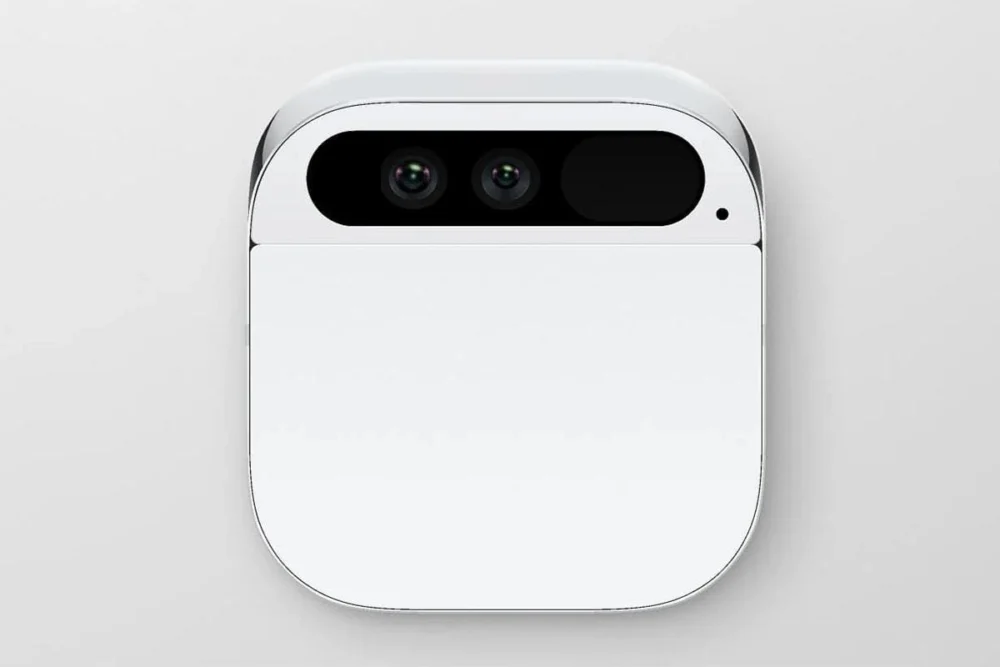
The landscape of personal technology is currently undergoing a seismic shift, moving away from the glowing rectangles in our pockets and toward a more integrated, "ambient" form of computing. At the center of this transition is a burgeoning interest in wearable artificial intelligence—devices designed to act as digital companions that perceive the world alongside their users. Recent industry insights suggest that Apple, a company that rarely enters a product category first but often defines it, is deep in the development of a wearable AI pin. This device, rumored for a potential 2027 debut, represents more than just a new accessory; it is a fundamental play for the future of "Apple Intelligence" and a direct challenge to the current paradigms of human-computer interaction.
The proposed device is described as a high-end, button-like wearable, drawing design inspiration from the minimalist aesthetic of the AirTag but elevated through the use of premium materials like glass and polished metal. However, unlike the AirTag, which serves as a passive beacon for the Find My network, this AI pin is envisioned as an active sensory node. According to internal design specifications, the device is expected to be slightly thicker than a standard tracking tag to accommodate a sophisticated array of sensors. This includes a dual-camera system—featuring one standard lens and one ultra-wide-angle lens—and a triple-microphone array designed to isolate the user’s voice from environmental noise. These components are intended to serve as the "eyes and ears" of a virtual assistant, allowing the AI to understand context by seeing what the user sees and hearing what they hear in real-time.
For Apple, the move into wearable AI hardware is a logical, albeit risky, extension of its existing ecosystem. The company has spent the last decade perfecting the Apple Watch and the AirPods, two devices that have conditioned consumers to accept technology that sits on or near the body. Yet, the AI pin represents a different category of utility. It is not a fitness tracker or a communication hub in the traditional sense; it is a multimodal interface. By including a physical button for tactile feedback and gestural shortcuts, Apple is signaling that this device is intended for high-frequency interaction. Whether it is used to capture a "point-of-view" photograph or to trigger a complex Siri command, the hardware is built to minimize the friction between a thought and its digital execution.
The context of this development is particularly striking when viewed through the lens of recent industry failures. The tech world still feels the aftershocks of the Humane AI Pin, a highly publicized device that attempted to replace the smartphone but ultimately faltered due to thermal issues, poor battery life, and a lack of software depth. Humane’s product became a cautionary tale when its servers were reportedly shuttered less than a year after launch, effectively rendering the $700 hardware useless. Apple, ever the pragmatist, appears to be learning from these mistakes. Rather than positioning its AI pin as a standalone "iPhone killer," Cupertino is reportedly developing the device as a companion peripheral. By offloading the heavy computational lifting to a paired iPhone, Apple can maintain a slim, wearable form factor without the thermal and battery constraints that doomed standalone competitors.
This "companion" strategy also aligns with Apple’s broader software roadmap. The company’s recent unveiling of "Apple Intelligence" marked a turning point in its approach to generative AI. Historically, Apple has been criticized for being slow to adopt the large language model (LLM) trends that have propelled companies like OpenAI and Google to new heights. To bridge this gap, Apple recently entered into a landmark partnership with Google, integrating Gemini as a foundational layer for its more complex AI tasks. This collaboration is a rare admission from Cupertino that, in the fast-moving world of generative models, even a trillion-dollar titan needs external expertise. The AI pin would serve as the physical manifestation of this partnership—a vessel for Google’s processing power and Apple’s hardware refinement.

However, the hardware is only half of the equation. The true hurdle for an Apple AI pin lies in the realm of privacy and social etiquette. A device equipped with dual cameras and "always-listening" microphones raises significant ethical questions. Apple has long marketed itself as the "privacy-first" tech giant, emphasizing on-device processing and data encryption. Integrating these values into a wearable that records the public environment is a delicate balancing act. To address this, Apple is expected to leverage its custom silicon to ensure that as much data as possible is processed locally. By using a "small" on-device AI model for routine tasks and only pinging the cloud for complex queries, Apple hopes to maintain its reputation for security while providing the low-latency response times required for a wearable assistant to feel truly helpful.
From an industry perspective, the 2027 timeline for this device is significant. It suggests that Apple believes the current "AI hype cycle" will have matured into a "utility cycle" by the end of the decade. By then, the novelty of chatting with a bot will have worn off, and the demand will shift toward proactive AI—systems that can anticipate needs based on visual and auditory cues. If a user is looking at a grocery shelf, the AI pin might cross-reference the visual data with the user’s health goals or refrigerator inventory, offering suggestions via a small speaker or a paired set of AirPods. This is the promise of "Spatial Intelligence," a concept Apple introduced with the Vision Pro and is now looking to miniaturize for everyday wear.
The competition in this space is already fierce. Meta has seen surprising success with its Ray-Ban smart glasses, which focus on a "camera-first" AI experience. Meanwhile, startups like Rabbit are experimenting with "Large Action Models" that can navigate apps on a user’s behalf. Apple’s entry into this market would likely consolidate these disparate ideas into a single, cohesive experience. Unlike Meta, which relies on social media integration, or startups that lack hardware scale, Apple possesses the "full stack"—the silicon, the operating system, the retail presence, and the trust of a billion users.
As we look toward the 2027 horizon, the implications of an Apple AI pin extend into the very fabric of social interaction. If these devices become as ubiquitous as the Apple Watch, we may see a shift in how we document our lives and interact with our surroundings. The "screen-less" future has been promised for years, but it has always lacked a hardware anchor that people actually want to wear. If Apple can solve the design challenges of heat dissipation and battery longevity while maintaining a premium aesthetic, the AI pin could become the definitive interface for the post-smartphone era.
The roadmap for Apple Intelligence is clearly a marathon, not a sprint. The integration of Google’s Gemini technology provides the necessary cognitive horsepower, while the rumored AI pin provides the sensory input. Together, they form a system that doesn’t just respond to prompts, but actively participates in the user’s world. This move represents a bold bet: that the future of technology is not something we look at, but something that looks out at the world with us. While the challenges are immense—ranging from the technical limitations of miniaturization to the social complexities of wearable cameras—Apple’s track record suggests that if anyone can turn a niche wearable into a cultural staple, it is the team in Cupertino. The 2027 release date may seem distant, but in the world of high-stakes hardware engineering, it is just around the corner, marking the beginning of a new chapter in the relationship between humans and their digital extensions.