

Match Group, the global conglomerate presiding over some of the world’s most pervasive online dating platforms—including Tinder, Match.com, Hinge, OkCupid, and Meetic—has publicly acknowledged a significant cybersecurity event resulting in the compromise of user data. This incident, while framed by the company as involving a "limited amount of user data," underscores the precarious reliance modern enterprises place on centralized identity management systems, specifically Single Sign-On (SSO) solutions.
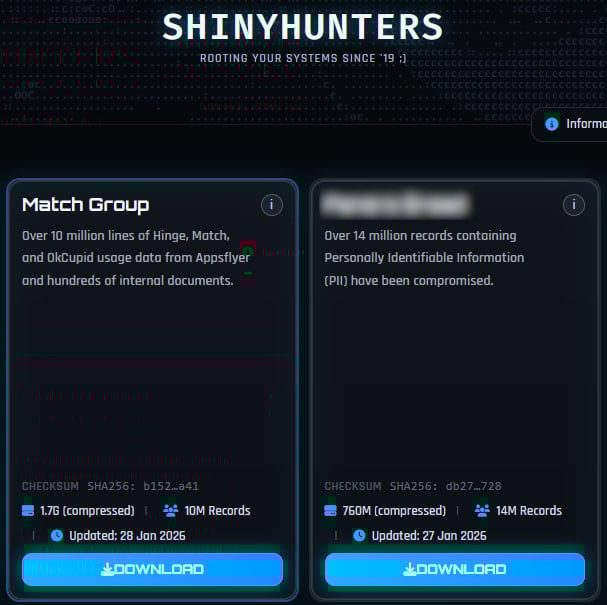
The initial disclosure stemmed from online claims by the threat actor group known as ShinyHunters, who advertised the availability of a substantial data cache—reportedly 1.7 GB of compressed files. These files allegedly encompass approximately 10 million user records sourced from Hinge, Match, and OkCupid, alongside sensitive internal corporate documentation. A representative for Match Group subsequently confirmed awareness of the situation to technology journalists, issuing a statement affirming that "Match Group takes the safety and security of our users seriously and acted quickly to terminate the unauthorized access."
This incident is particularly alarming given Match Group’s immense scale. The organization commands an estimated user base exceeding 80 million active users across its portfolio, driving annual revenues near $3.5 billion. When entities of this magnitude experience a breach, the implications ripple far beyond immediate data loss, affecting consumer confidence in digital trust mechanisms across the entire digital dating ecosystem.
The Vector: A Targeted Social Engineering Campaign
Analysis of the breach trajectory reveals a sophisticated, targeted attack methodology rather than a zero-day vulnerability within the dating applications themselves. The compromise was rooted in the exploitation of the corporate access layer: specifically, a successful breach of an Okta SSO account utilized by Match Group personnel.
This points directly to the ongoing and escalating threat landscape surrounding social engineering, particularly voice phishing (vishing). The ShinyHunters collective has been aggressively employing these tactics against numerous high-value targets, attempting to compromise SSO accounts managed by providers like Okta, Microsoft, and Google. The methodology involves directing employees towards meticulously crafted, counterfeit internal login portals, often using deceptive links designed to mimic legitimate company infrastructure.
In the specific case of Match Group, evidence suggests the attackers leveraged a convincing phishing domain, reportedly matchinternal.com, to trick an employee into surrendering their credentials for the Okta SSO environment. Once control of this centralized identity nexus was achieved, the threat actors were able to pivot laterally across the enterprise infrastructure. The attackers reportedly accessed critical cloud resources, including the company’s AppsFlyer marketing analytics instance, as well as vital data repositories residing within Google Drive and Dropbox accounts.
Match Group’s internal assessment, while ongoing with the assistance of external forensic experts, has provided some reassurance regarding the most sensitive categories of data. The company maintains that there is currently no evidence suggesting the exfiltration of user login credentials, payment card information, or direct private correspondence. However, the compromised data reportedly includes Personally Identifiable Information (PII) and, critically, extensive tracking and analytics data. Even if direct passwords were not stolen, the exposure of PII coupled with marketing/behavioral data creates significant risk for future targeted spear-phishing attacks against the user base.
Industry Implications: The Weakest Link in the Identity Chain
The Match Group incident serves as a stark case study illustrating the fundamental security challenge presented by modern cloud environments: the centralization of access via SSO tools, while optimizing user experience and IT management, simultaneously creates a single, high-value target for threat actors.
When an SSO provider’s credentials are compromised, the attacker gains the "keys to the kingdom." This is precisely what occurred here. The breach did not originate from a weakness in Tinder’s database encryption but from a failure in the human element securing the gateway to corporate systems. This dynamic shifts the security burden from application-layer defenses to identity and access management (IAM) protocols.

For the technology sector, especially platforms dealing with vast amounts of sensitive personal data like dating services, this event reinforces several emerging imperatives:
- The Insufficiency of Standard MFA: Traditional Multi-Factor Authentication (MFA) methods, particularly those relying on SMS codes or push notifications, are increasingly susceptible to sophisticated social engineering tactics like MFA fatigue attacks or prompt bombing. The ShinyHunters campaign’s success through vishing highlights that if an attacker can convince a user to authorize a login attempt during a convincing phone call, MFA is bypassed.
- Cloud Sprawl Risk: The breach demonstrates the danger of uncontrolled data sprawl across disparate cloud services (Google Drive, Dropbox, marketing platforms). A single compromised SSO account can grant access across multiple, sometimes siloed, SaaS environments, each potentially holding different tiers of sensitive data.
Expert Analysis: Moving Beyond Traditional MFA
Security experts are universally emphasizing the need for a generational shift in authentication technology to counteract the rising tide of human-centric attacks. Charles Carmakal, Chief Technology Officer at Mandiant, articulated this necessity clearly: "While this is not the result of a security vulnerability in vendors’ products or infrastructure, we strongly recommend moving toward phishing-resistant MFA, such as FIDO2 security keys or passkeys where possible, as these protections are resistant to social engineering attacks in ways that push-based or SMS authentication are not."
FIDO2 standards and emerging passkey technologies offer cryptographic verification that is inherently resistant to the man-in-the-middle interception or coerced authorization that characterizes vishing and traditional phishing. By relying on device-bound private keys rather than easily manipulated one-time codes, the success rate of these social engineering exploits plummets.
Furthermore, operational security hygiene must evolve in tandem with authentication strength. Carmakal also stressed the importance of rigorous administrative oversight: "Administrators should also implement strict app authorization policies and monitor logs for anomalous API activity or unauthorized device enrollments." This speaks to the need for continuous monitoring and least-privilege enforcement within the IAM system itself, ensuring that even if an account is compromised, the blast radius is contained.
Moussa Diallo, a threat researcher at Okta Threat Intelligence, echoed this focus on layered defense. He noted that for organizations utilizing Okta for workforce authentication, the immediate defensive posture should involve mandating phishing-resistant methods like Okta FastPass or passkeys, ideally used redundantly.
Diallo further proposed proactive network controls as a crucial deterrent: "Social engineering actors can also be frustrated by setting network zones or tenant access control lists that deny access via the anonymizing services favoured by threat actors. The key is to know where your legitimate requests come from, and allowlist those networks." By restricting access based on trusted IP ranges or geographical locations, organizations can effectively blind attackers utilizing VPNs or proxy services common in threat actor toolkits.
Future Impact and Emerging Trends in Verification
The fallout from incidents like the Match Group compromise will inevitably accelerate the adoption of higher-assurance verification methods across the enterprise landscape, moving beyond the consumer-grade security often favored for convenience.
The concept of "live caller checks," currently being piloted by forward-thinking financial institutions such as Monzo Bank and Crypto.com, represents a potential future standard for high-stakes interactions. These systems allow a user who receives a suspicious phone call—claiming to be from the company—to verify the legitimacy of the call directly within the official, secure mobile application. If the request or identity cannot be verified cryptographically within the app, the user knows the caller is an impostor. Scaling this kind of secure, in-band verification to enterprise IT support and access requests could significantly disrupt the effectiveness of vishing campaigns targeting IT help desks or SSO administrators.
For consumer-facing platforms like those owned by Match Group, the long-term impact extends to regulatory scrutiny and liability. While the company states that core financial data was untouched, the exposure of PII and behavioral tracking data—even if characterized as "limited"—is sufficient to trigger notification requirements in numerous jurisdictions and erode the core value proposition of these services: the secure maintenance of personal profiles.
Ultimately, the Match Group data exposure driven by a social engineering attack against an SSO provider is a clear indicator that the current cybersecurity paradigm is undergoing a fundamental shift. Defense is no longer solely about building higher digital walls around databases; it is about hardening the human endpoint and ensuring that the digital identity layer—the SSO—is secured with the strongest, phishing-resistant cryptographic guarantees available. Failure to adopt these advanced authentication mechanisms will leave even the most technologically sophisticated organizations vulnerable to basic, human-exploiting tactics orchestrated by groups like ShinyHunters.