


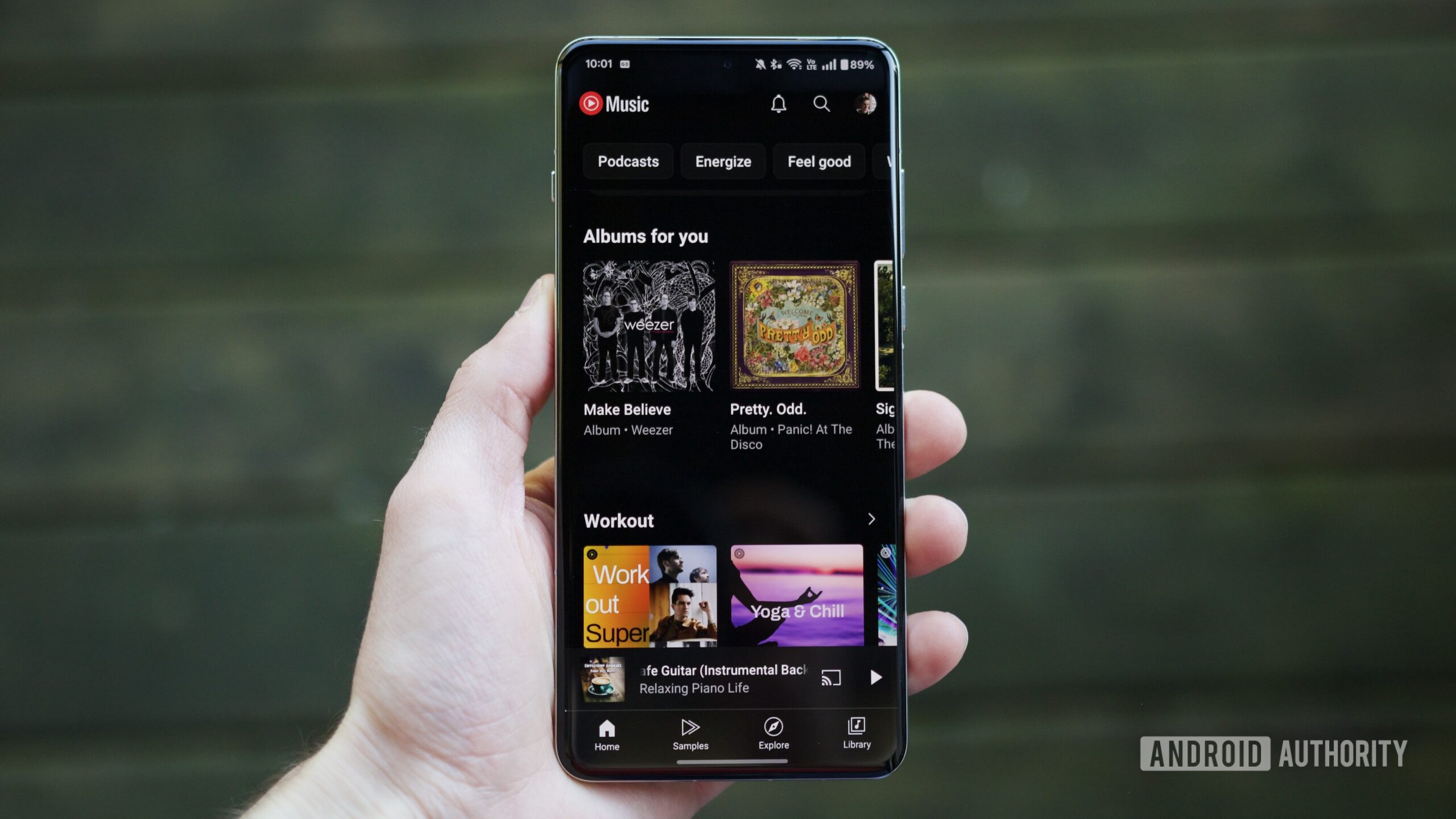
The core value proposition of paid music streaming services has always resided in the promise of high-quality, personalized discovery. Subscribers invest monthly fees expecting algorithms to filter the vastness of the digital audio landscape into a refined, enjoyable sonic tapestry tailored to their tastes. However, the ecosystem powering YouTube Music appears to be undergoing a significant—and deeply unpopular—infestation: an overwhelming proliferation of low-effort, algorithmically generated audio, often termed "AI slop," which is actively degrading the premium user experience and sparking considerable subscriber discontent.
This emerging crisis strikes at the very heart of user satisfaction. For many, the primary utility beyond basic catalog access is the service’s ability to surface relevant music, whether through curated playlists, radio features, or personalized mixes. When this personalized layer is contaminated by an endless stream of synthetic tracks—often originating from nebulous, high-volume uploaders utilizing generative AI tools—the perceived return on investment plummets. Reports surfacing across community forums, particularly within dedicated Reddit channels for YouTube Music users, illustrate a tangible shift: users are finding that sections of their home screens and suggested queues are being aggressively populated by music lacking human artistic nuance or genuine emotional resonance.
The Digital Deluge: Understanding the Scale of the Problem
The specific nature of the encroaching content is critical to understanding the user frustration. These AI-generated tracks are frequently characterized by generic, computer-generated titles and are uploaded by entities that seem intent on maximizing catalog volume rather than artistic merit. They operate within the boundaries of platform upload guidelines but bypass the qualitative standards users implicitly expect when paying for a curated service.
A central frustration point highlighted by affected subscribers is the apparent inefficacy of feedback mechanisms. Standard digital music hygiene involves signaling disinterest—using the "thumbs down" or "Not interested" functions—to refine future algorithmic outputs. Yet, in these specific instances involving mass-uploaded synthetic content, these tools seem to offer only a temporary, localized reprieve. Removing one synthetic track often results in another, nearly identical piece taking its place almost immediately in subsequent listening sessions or autoplay sequences. This suggests that the system either lacks the sophistication to identify the source or type of content causing the issue, or that the sheer volume of these uploads overwhelms the negative feedback loop.
For a long-term, paying subscriber, this persistent saturation feels like a breach of contract. They are paying for an elevated experience, yet the platform is effectively prioritizing the ingestion of low-cost, high-volume digital filler over genuine musical curation. This dynamic fundamentally alters the relationship between the user and the recommendation engine, transforming it from a helpful guide into a source of constant friction.
Industry Context: AI’s Double-Edged Sword in Music Streaming
To appreciate the gravity of the situation for YouTube Music, one must examine the broader context of artificial intelligence adoption within the music industry. Generative AI has democratized music creation to an unprecedented degree. Where professional production once required significant capital, time, and skill, models capable of generating passable instrumental tracks, soundscapes, or even vocal approximations are now accessible to nearly anyone.
This accessibility creates an immediate supply-side shock for digital distributors like YouTube Music. If an artist or content farm can use AI to generate 100 tracks in the time it takes a human artist to produce one, the platform’s ingestion pipelines—designed to index and categorize massive amounts of data—become prime targets for saturation strategies. The goal, presumably, is not artistic fame but monetization via micro-streams or simply occupying digital shelf space.
This problem is not unique to Google’s music arm, but the response across the industry reveals divergent philosophies regarding content governance. Platforms are currently struggling to establish clear demarcation lines: where does legitimate, algorithmically assisted creation end, and where does manipulative, low-value audio spam begin?
Competitive Landscape and Governance Failures
A comparative analysis of YouTube Music’s competitors reveals a growing divergence in approach to managing this AI-driven content surge.
Spotify, while also facing reports of similar issues—particularly concerning alleged "fake artists" exploiting playlist algorithms—has generally maintained a more aggressive stance on actively removing or quarantining clearly fraudulent uploads, though enforcement consistency remains a point of debate among power users.
Apple Music, often perceived as the platform catering to a more discerning, curated audience, appears to have maintained tighter initial controls, although it is not entirely immune. Its focus tends to lean toward established catalogs and official releases, potentially creating a higher barrier to entry for purely synthetic material.
Perhaps the most instructive contrast comes from services like Deezer. In response to the growing prevalence of AI-assisted content, Deezer has publicly implemented—or is actively testing—mechanisms for clear identification and categorization. By tagging tracks explicitly as AI-generated, they offer the user the agency to filter, ignore, or selectively engage with that content. This approach respects the user’s choice while acknowledging the reality of new production methods.
YouTube Music’s current perceived weakness lies in this very lack of transparent filtering or robust preemptive culling. Because YouTube’s backend is inherently integrated with the vastness of YouTube video content—a platform notorious for hosting low-quality, high-volume uploads—the Music division seems to be inheriting the challenge of managing sheer digital noise without adequate tools for premium separation.
Expert Analysis: The Algorithmic Blind Spot
From an algorithmic standpoint, this influx presents a fascinating, if problematic, case study. Recommendation engines thrive on behavioral signals: plays, skips, saves, and explicit feedback. If a user consistently skips a certain genre but continues to listen passively to an AI-generated background track (perhaps while working or driving), the algorithm may incorrectly interpret this passive exposure as preference.
Furthermore, the sheer numerical advantage of AI uploads creates a self-fulfilling prophecy. If a user’s initial feed is 20% AI content, they are statistically more likely to encounter and potentially engage with it, feeding the loop further. Experts in machine learning suggest that for the system to correct this, Google would need to implement metadata-based filtering specifically designed to identify the characteristics of mass-generated content—perhaps flagging excessive catalog size tied to single, anonymous uploaders, or analyzing spectral characteristics that deviate from established human production norms. The current system appears optimized for indexing rather than quality policing in this new audio domain.
This situation highlights a critical flaw in scaling personalized services: unchecked supply can overwhelm the filtering mechanism designed to ensure quality. The machine learning model is being fed pollution, and it is learning to output pollution efficiently.
Future Implications: User Exodus and Platform Identity
The current dissatisfaction among paying subscribers carries significant implications for YouTube Music’s long-term trajectory. Music streaming is a highly competitive, low-switching-cost market. When a core feature—personalized listening—is perceived as broken, users do not hesitate to explore alternatives.
If YouTube Music fails to implement definitive solutions—such as mandatory AI disclosure labels, robust user-side filters, or aggressive demotion of suspected synthetic spam—it risks two primary outcomes:
- Subscription Churn: Dedicated users, particularly those who value deep catalog exploration, may migrate to competitors perceived as offering a cleaner, more human-centric listening environment, like Apple Music or even a refocused Spotify.
- Dilution of Platform Identity: YouTube Music risks solidifying an identity as the "catch-all" service that indexes everything but masters nothing. This is especially damaging given its integration with the broader YouTube ecosystem, which already struggles with content moderation perception. Users paying a premium want differentiation, not an audio version of the main YouTube comment section.
The necessary evolution for YouTube Music involves a strategic pivot from mere content aggregation to active content stewardship. This stewardship requires making difficult decisions about which content, regardless of its compliance with upload rules, genuinely contributes value to the paid user experience. The solution is not just technical; it is philosophical. Until the platform prioritizes the quality of curation over the quantity of indexed audio, the frustration currently bubbling on forums will inevitably translate into tangible financial losses as subscribers vote with their wallets, seeking refuge from the digital noise. The battle against the AI flood is fast becoming a defining moment for the service’s credibility.