

The intersection of ambitious biotechnology and high-profile technological endorsement has culminated in a watershed moment for longevity research: the imminent launch of the first targeted clinical trial seeking to actively reverse cellular aging in human subjects. This pivotal development, centered on a radical approach known as epigenetic reprogramming, has moved from theoretical possibility to regulatory reality, securing approval from the Food and Drug Administration (FDA) for a Phase I study.
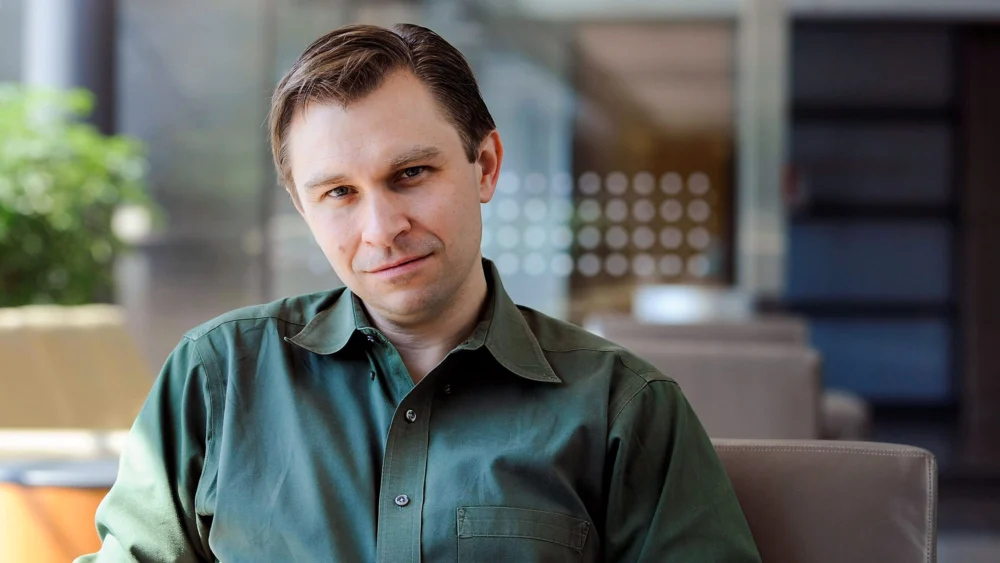
The specific treatment, operating under the codename ER-100, is the intellectual property of Life Biosciences, a Boston-based startup co-founded by Harvard geneticist and influential life-extension proponent, David Sinclair. This milestone was recently highlighted through an unusual channel: a public social media exchange that followed tech titan Elon Musk’s comments at the World Economic Forum in Davos. Musk, when asked about the possibility of reversing aging, suggested it was "very solvable" and that the core mechanism would likely be "obvious" once discovered. Sinclair quickly concurred online, asserting that aging has a "relatively simple explanation and is apparently reversible," before confirming that clinical trials were beginning shortly, specifically referencing the ER-100 program.
The Mechanism: Reprogramming the Genome’s Operating System
The technology underlying ER-100 is arguably the most significant breakthrough in regenerative medicine since the turn of the century. It is founded upon the Nobel Prize-winning work on induced pluripotent stem cells (iPSCs), a process discovered roughly two decades ago. This initial discovery showed that specialized adult cells (somatic cells) could be reverted entirely to an embryonic, stem-cell-like state by introducing a specific cocktail of four transcription factors—Oct4, Sox2, Klf4, and c-Myc—collectively known as Yamanaka factors. These factors essentially act as a "factory reset" button, wiping the cell’s identity and conferring developmental amnesia.
While revolutionary, complete cellular reprogramming is inherently dangerous in a living organism, as the uncontrolled proliferation of iPSCs leads directly to the formation of teratomas, a type of aggressive tumor. The challenge for longevity scientists has been harnessing this potent rejuvenating power without incurring catastrophic oncogenic risks.
This led to the concept of partial or transient reprogramming. Instead of driving the cell back to a state of total pluripotency, researchers aim to induce the rejuvenating factors for only a short period, or utilize a subset of the factors—often omitting the highly oncogenic c-Myc—to rewind the cell’s age without erasing its specialized function. The goal is not to create a tumor, but to restore a youthful gene expression pattern.
Sinclair, the primary evangelist for this approach, has long posited the Epigenetic Information Theory of Aging. This theory suggests that aging is not primarily caused by genetic mutations or telomere shortening, but by a progressive loss of the correct epigenetic information—the instructional tags and switches (methyl groups, histone modifications) that dictate which genes are turned on or off. Over time, this epigenetic "noise" accumulates, causing cells to function improperly, leading to disease and senescence. Partial reprogramming, therefore, attempts to restore the clarity of this genetic instruction manual, effectively resetting the cellular clock.
The Clinical Blueprint: Targeting the Optic Nerve
Life Biosciences is strategically deploying ER-100 to address ocular disease, specifically glaucoma, a condition characterized by damage to the optic nerve, often leading to irreversible blindness. This choice of indication is deliberate and calculated. The eye is an immune-privileged organ, meaning it is relatively sequestered from the systemic immune response, offering a contained environment to test novel gene therapies. Furthermore, if the treatment encounters unexpected complications, the systemic risk to the patient is minimized, a crucial consideration for a Phase I safety trial.
The trial protocol, detailed in publicly available registries, involves administering the treatment to approximately a dozen patients. The therapy utilizes adeno-associated virus (AAV) vectors to deliver three specific Yamanaka factors (OSK: Oct4, Sox2, and Klf4) into one eye of each participant. AAV vectors are a standard delivery mechanism in gene therapy, prized for their low immunogenicity and ability to effectively transduce non-dividing cells, such as neurons.
Crucially, the success and safety of ER-100 hinge upon a complex, yet elegant, genetic fail-safe mechanism: an externally controlled gene switch. The reprogramming genes are engineered to be activated only when the patient consumes a low dose of the common antibiotic, doxycycline. This allows the researchers to precisely control the duration of the rejuvenation signal. Initial plans call for patients to take the antibiotic for approximately two months while the effects—and potential adverse reactions—are meticulously monitored.
This inducible system is essential because while partial reprogramming has shown immense promise in preclinical models—Sinclair’s team demonstrated in 2020 that transient OSK induction could restore vision and even regenerate damaged optic nerves in mice—the power of these factors remains inherently dangerous. The ability to switch the rejuvenating process off at will provides a critical layer of safety that differentiates this clinical attempt from earlier, riskier gene therapy concepts.
However, the use of this antibiotic-dependent switching mechanism is not without its own risks. It is a system commonly employed in laboratory animals but untested in humans for this purpose. Scientists note that the genetic components of the switch, derived partially from E. coli bacteria and the herpes virus, introduce a potential for an immune response in human patients. While the eye’s immune-privileged status may mitigate some risk, the possibility of the body rejecting or reacting adversely to these foreign genetic elements remains a significant concern for the initial safety phases.
The Race for the Fountain of Youth: Industry Dynamics
Life Biosciences’ rapid advance into human trials has positioned it ahead of numerous well-funded competitors in the longevity sector. Longevity research, particularly epigenetic reprogramming, has become the "AI of the bio world," attracting hundreds of millions of dollars from some of the biggest names in technology and finance.
Massive capital has flowed into rival ventures such as Altos Labs, which boasts funding from high-profile investors like Jeff Bezos and Yuri Milner; New Limit, co-founded by Coinbase CEO Brian Armstrong; and Retro Biosciences, backed by Sam Altman. These companies are aggressively pursuing cellular rejuvenation, yet their strategies differ significantly from Life Biosciences’ speed-to-clinic approach.
Rivals often focus heavily on identifying novel, safer, or more targeted reprogramming factors—moving beyond the classic, high-risk OSK combination. New Limit, for instance, has embarked on an exhaustive screening process to discover unique gene combinations that might achieve time reversal with minimized side effects, projecting readiness for human trials only in two years or more. Similarly, Shift Bioscience, a UK startup, is still in the early stages of animal experimentation.
Industry analysts acknowledge that while Life Biosciences may not possess the "best" or safest factor combination, their ability to navigate the regulatory pathway and secure FDA approval for ER-100 grants them a crucial first-mover advantage. As Daniel Ives, CEO of Shift Bioscience, remarked, Life Biosciences has found a viable route forward by utilizing the eye—a "nice self-contained system"—that mitigates risk and allows for an initial, contained proof of concept.
Expert Analysis and Skepticism
While the enthusiasm from company executives is palpable—with Life Biosciences Chief Operating Officer Michael Ringel calling the trial a "starting bell for a new era of age reversal"—the scientific community maintains a degree of measured skepticism.
First, there is ongoing debate about the interpretation of "age reversal." While partial reprogramming can restore markers of youthful gene expression and functional capacity in specific cells, whether this constitutes true reversal of the complex, systemic biological processes of aging is still contested. The theory of aging is multifaceted, involving mitochondrial dysfunction, cellular senescence, and proteostasis decline, among other hallmarks.
Second, David Sinclair himself is a controversial figure within the scientific community. While his work on sirtuins and epigenetic regulation has been foundational, critics have long argued that he often exaggerates the clinical applicability and proven benefits of his championed molecules, such as resveratrol. This skepticism reached a head in 2024 when major publications questioned the commercial viability and track record of several of his associated companies.
The technical complexity of ER-100 also warrants caution. The use of the three OSK factors, even transiently, is a calculated risk. While partial exposure aims to avoid pluripotency, the factors are known to activate hundreds of other genes simultaneously. In certain cellular contexts, this can still trigger a reversion to a very primitive, stem-cell-like state, raising fears of unexpected tumor formation, even if initial animal safety tests were successful.
Moreover, the challenge of scaling such a therapy is immense. Even if the ER-100 trial successfully restores optic nerve function in glaucoma patients, translating this localized gene therapy into a safe, systemic treatment for generalized aging is a monumental leap.
Future Trajectory and Systemic Implications
For now, the optimistic case for ER-100 is focused and pragmatic: if successful, it will provide a novel treatment for currently untreatable forms of blindness and validate the fundamental premise that epigenetic age reversal is feasible in humans. This validation would unlock massive investment and accelerate research into other indications.
Life Biosciences has openly discussed the eventual possibility of applying reprogramming to other complex organs, including the brain, where neurodegenerative diseases like Alzheimer’s represent massive unmet needs linked to aging. Ringel and Sinclair have both entertained the idea of eventual whole-body rejuvenation, though investors remain grounded. As investor Karl Pfleger cautions, "The optimistic case is this solves some blindness for certain people and catalyzes work in other indications. It’s not like your doctor will be writing a prescription for a pill that will rejuvenate you."
The path forward for reprogramming is likely to involve refining the factors (perhaps using only two, or developing entirely synthetic, small-molecule factors) and perfecting the inducible control mechanisms to eliminate immunogenicity and maximize safety. The long-term vision—a universal "fountain of youth"—remains firmly in the realm of science fiction, but the immediate reality is that the quest for targeted, disease-specific age reversal has officially begun. The ER-100 trial represents not just a gene therapy study, but the first empirical test of whether humanity can truly turn back the clock on biological wear and tear.