

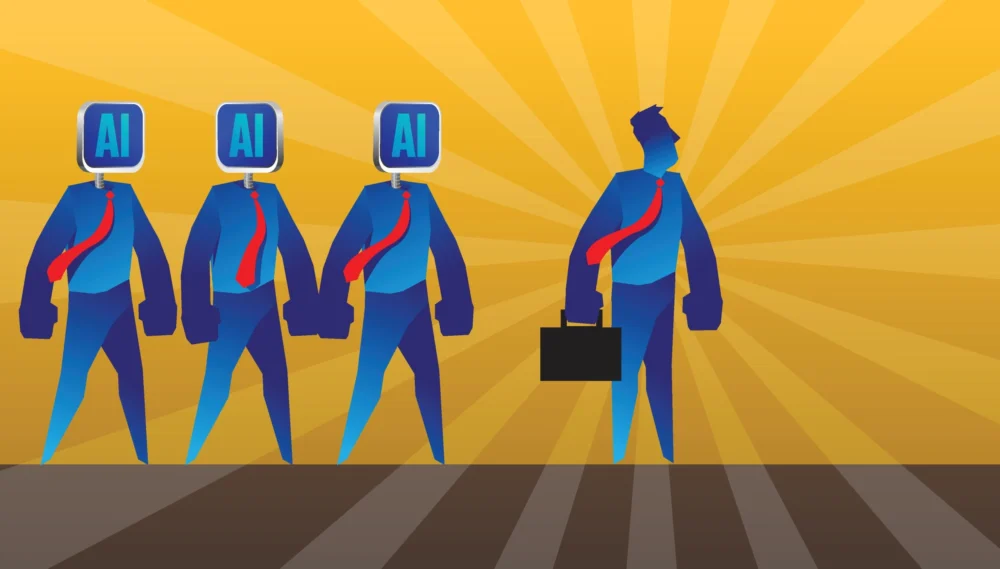
The traditional blueprint for building a technology company is undergoing its most radical transformation since the advent of the internet. For decades, the strength of a startup was measured by the caliber and size of its headcount—a "moat" built of human capital, where raising venture debt or equity was primarily a means to hire the engineers, designers, and marketers necessary to manifest a product. This era of "people-first" scaling is being systematically dismantled by the rise of generative artificial intelligence and the emergence of what industry insiders call "vibe coding."
The seismic nature of this shift was punctuated last year by a transaction that sent shockwaves through Silicon Valley: Wix’s $80 million acquisition of Base44. On the surface, it was a standard exit. Beneath the hood, it represented a new paradigm. Base44 was essentially a solo-owned venture, built not through the arduous process of managing dozens of developers, but through the high-leverage application of AI-driven development. It was a "vibe-coded" startup—a company where the founder’s vision and prompts were the primary drivers of the codebase. Prior to late 2022, the idea of a single-person entity commanding an $80 million valuation based on proprietary software would have been dismissed as a statistical impossibility. Today, it is a harbinger of a new corporate reality.
The Democratization of Execution
In the legacy model of company building, the "execution gap" was the primary barrier to entry. Even with a brilliant idea, a founder needed to navigate the "expensive and slow path" of recruitment and retention. You needed a CTO to build the MVP, a product lead to refine the user experience, and a marketing team to find the "north star" metric. This created a predictable, if inefficient, trajectory: raise capital, hire talent, build product, find market.
AI has flipped this equation. We are entering an era where software that once required an army of specialists can be synthesized by parallelized AI systems. These systems do not merely "assist"; they operate across the entire stack, handling market research, UI/UX design, back-end engineering, and cloud deployment simultaneously. For the modern founder, the choice is no longer just about which talent to hire, but about how to direct an ensemble of AI agents to perform the work faster and at a fraction of the traditional cost.
However, this democratization of technical capability introduces a paradox. As the cost of building software approaches zero, the competitive advantage inherent in "having a product" evaporates. When anyone can ship a functional app in a weekend, the industry must grapple with a new question: What defines the "edge" of a company when execution is no longer a scarce resource?
Navigating the Prototype Trap
While the speed of AI-assisted development is intoxicating, it has given rise to a phenomenon that Alex Wu, founder and CEO of Atoms AI, calls the "Prototype Trap." Atoms AI, which recently secured $31 million in funding, operates at the intersection of this transition, helping entrepreneurs turn raw ideas into viable businesses through integrated workflows. Wu has observed a recurring failure point among the new wave of AI-native founders: the inability to bridge the gap between a flashy demo and a robust production environment.
"A demo can ignore authorization, rollback, and persistent data at scale," Wu notes. "Production can’t."
The current landscape of AI coding tools is excellent at generating "snippets"—isolated fragments of logic that perform a specific task. However, a company is not a collection of snippets; it is a complex organism of interconnected systems. Most AI tools today struggle with the "boring" but essential parts of a business: user authentication, secure payment processing, error handling, and data integrity. When these systems are built in isolation by AI, they often collapse the moment they encounter real-world users and edge cases.
Furthermore, the traditional organizational structure provided a natural system of checks and balances. In a legacy firm, work passes from Product to Engineering to QA. Each handoff is a filter for quality. In the AI-driven model, these roles are often compressed into a single operator using multiple tools. The friction hasn’t disappeared; it has simply moved. Instead of waiting for a human colleague, founders are often stuck managing a "Frankenstein’s Monster" of disconnected AI outputs that don’t communicate with one another.
The Shift from Doing to Deciding
If execution is being commoditized, then the value of the human founder is shifting from "doing" to "deciding." Wu argues that the most critical components of a successful company remain stubbornly human: judgment and strategy.
While AI can run a structured competitive analysis or generate a thousand lines of clean Python, it cannot tell a founder which problem is actually worth solving. It cannot intuit the subtle emotional needs of a customer base or decide when to pivot in the face of an ambiguous market signal. Building an enduring architecture in the age of AI requires a symbiotic relationship where, as Wu puts it, "AI runs the team and humans run the story."

This "story" is the strategic narrative that gives a company its purpose and its "moat." It involves making the hard calls: choosing whether to prioritize speed over security, or whether to build a bespoke solution versus using an off-the-shelf integration. These are judgment calls that require a holistic understanding of risk, compliance, and long-term vision—areas where AI agents, for all their speed, remain profoundly limited.
New Metrics for a New Era
As the definition of a company changes, so too must the metrics we use to evaluate success. In the previous era, venture capitalists looked at "burn rate" and "headcount growth" as proxies for progress. In the AI era, these are increasingly viewed as "vanity metrics."
Wu suggests that counting lines of code or measuring the speed of mockups is useless in a world of automated generation. Instead, the industry is shifting toward "production readiness" and "time to first revenue." The focus is moving toward defect rates post-launch and the marginal cost of experimentation.
"Quality means the system can actually run, generate value, and be maintained by a small team," Wu asserts. "If it can’t, the demo doesn’t matter."
This transition mirrors the evolution of cloud computing. When AWS and Azure normalized "infrastructure as code," the advantage shifted away from those who owned physical servers to those who could design the most resilient and scalable digital architectures. AI is now doing for the "labor" layer what the cloud did for the "server" layer. The new winners will be those who can design resilient "organizational architectures" that leverage AI without becoming slaves to its hallucinations or technical debt.
The Economic Collapse of Entry Barriers
The financial incentives for this shift are undeniable. Reports indicate that the cost of accessing top-tier AI models, such as those from OpenAI, has dropped by approximately 90% over the last year. Simultaneously, the rise of powerful open-source models like Meta’s Llama and DeepSeek’s specialized architectures has allowed startups to run sophisticated intelligence locally, virtually eliminating the "AI tax" for many applications.
The result is a collapse in the capital requirements for innovation. Recent data suggests that AI-native startups are reaching "product-market fit" with 60% less capital than their predecessors required just twelve months ago. This "capital efficiency" is rewriting the rules of venture capital, favoring smaller, more agile teams over the bloated, "blitzscaling" organizations of the mid-2010s.
The Risks of the Invisible Enterprise
However, the transition to the AI-defined company is not without peril. As execution becomes easier, the risks associated with security, reliability, and accountability become more acute. When an AI agent handles customer data or executes financial transactions, the "line of responsibility" can become dangerously blurred.
Organizations are still learning how to manage the "black box" nature of AI-generated workflows. A company built by one founder and ten AI agents might be efficient, but it is also fragile. If the AI makes a compliance error or introduces a subtle security vulnerability, there is no middle management layer to catch the mistake. This places an unprecedented burden of responsibility on the "human orchestrator."
Furthermore, as the "headcount moat" disappears, brand and distribution become the only defensible assets. If any competitor can replicate your software features in a week using AI, your only protection is the trust you have built with your audience and the proprietary data you hold.
Conclusion: The Future of the Firm
AI is not merely a tool for making companies more efficient; it is a fundamental reorganization of what a company is. We are moving away from the "industrial" model of the firm—characterized by large hierarchies and specialized labor—toward a "biological" or "agentic" model, where a small core of human intelligence directs a vast, flexible network of automated capabilities.
Success in this new era will not be defined by who can generate the most code or who can hire the most engineers. It will be defined by those who can maintain a "clear line of responsibility" in an automated world. The goal is no longer to make building effortless; it is to make the human element more impactful. As the mechanics of execution are handed over to the machines, the human capacity for vision, ethics, and accountability has never been more valuable. The company of the future may look smaller on an organizational chart, but its impact, powered by the synergy of human judgment and machine speed, will be larger than anything we have seen before.