

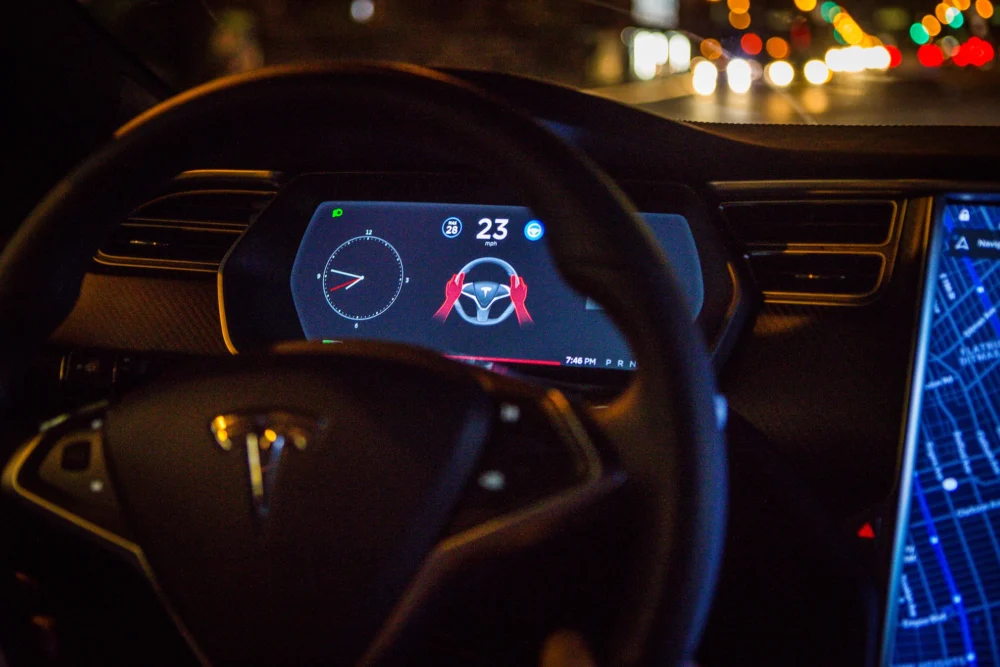
The California Department of Motor Vehicles (DMV) has officially rescinded its threat to suspend Tesla’s manufacturing and sales licenses for a 30-day period, marking the conclusion of a high-stakes regulatory standoff that has loomed over the electric vehicle giant for nearly three years. The resolution comes after Tesla implemented significant changes to its marketing vernacular within the state, most notably abandoning the long-standing and controversial "Autopilot" branding that had become synonymous with its driver-assistance technology. This settlement, finalized in late Tuesday rulings, ensures that Tesla’s operations in its most critical U.S. market remain uninterrupted, while simultaneously signaling a broader shift in how the industry must communicate the capabilities of semi-autonomous systems to the public.
For years, the tension between Tesla’s Silicon Valley "move fast and break things" ethos and the rigid safety-first framework of state regulators has centered on a single word: Autopilot. The California DMV’s initial complaint, filed in November 2023, alleged that Tesla’s use of the terms "Autopilot" and "Full Self-Driving" (FSD) constituted deceptive marketing. The regulator argued that these names—and the promotional language surrounding them—misled consumers into believing that the vehicles were capable of autonomous operation, when in reality, they remain Level 2 driver-assistance systems requiring constant human supervision.
The legal jeopardy for Tesla escalated significantly in December when an administrative law judge at the California Office of Administrative Hearings sided with the DMV. The judge’s recommendation was severe: a 30-day suspension of Tesla’s licenses to sell and manufacture vehicles in California. For a company that considers California not just its spiritual home but its largest domestic market and a central hub for global production at the Fremont factory, such a suspension would have been catastrophic. However, the DMV offered a 60-day window for "corrective action," a strategic pause that allowed Tesla to recalibrate its branding strategy rather than face a total operational freeze.
Tesla’s response was a masterclass in pragmatic retreat. The company first addressed the "Full Self-Driving" moniker, appending the word "Supervised" to the title. This semantic addition was designed to satisfy the DMV’s requirement that the software’s limitations be explicitly stated in its name. By rebranding the flagship software as "Full Self-Driving (Supervised)," Tesla effectively moved the goalposts, acknowledging that the system is an aid rather than a replacement for a human pilot.
The more difficult hurdle was "Autopilot," a brand name that CEO Elon Musk has championed for over a decade. Despite initial resistance, Tesla eventually capitulated, stripping the term from its California marketing materials and, in a broader strategic move this January, discontinuing the Autopilot tier entirely in the United States and Canada. This maneuver did more than just satisfy the DMV; it streamlined Tesla’s product lineup and removed the ambiguity that had fueled years of consumer confusion and legal scrutiny.
The DMV’s confirmation that Tesla is now in compliance marks the end of this specific legal chapter, but the implications for the automotive industry are profound. The case sets a precedent for how "advanced driver assistance systems" (ADAS) must be marketed. Regulators are no longer willing to tolerate aspirational naming conventions that might encourage driver inattentiveness. As other manufacturers like Mercedes-Benz, Ford, and General Motors roll out their own hands-free systems—such as Drive Pilot, BlueCruise, and Super Cruise—they are doing so under the shadow of Tesla’s regulatory battle, ensuring their marketing emphasizes the "assistive" nature of the technology rather than its autonomy.
Beyond the legal ramifications, Tesla’s decision to retire the Autopilot brand and pivot toward "FSD (Supervised)" reflects a shift in the company’s business model. For years, Autopilot was the "standard" suite included with every Tesla, while FSD was a high-priced optional upgrade. By removing the mid-tier Autopilot and pushing users toward a subscription-based FSD model, Tesla is attempting to transition from a hardware-centric manufacturer to a software-as-a-service (SaaS) powerhouse.
As of mid-February, the pricing structure for FSD (Supervised) has been radically overhauled. The previous $8,000 one-time purchase price has been largely eclipsed by a $99-per-month subscription model. This lower barrier to entry is a calculated move to increase the "attach rate" of the software. Elon Musk has been vocal about his belief that Tesla’s long-term valuation is tied almost exclusively to its success in solving autonomous driving. By getting more drivers on the $99 monthly plan, Tesla not only generates high-margin recurring revenue but also gathers massive amounts of real-world driving data to train its neural networks. This data is the lifeblood of Tesla’s "v12" software architecture, which utilizes end-to-end AI to mimic human driving behavior rather than relying on thousands of lines of hard-coded rules.
However, the transition to a "supervised" autonomy model creates a new set of challenges for Tesla. The company must now balance the aggressive promotion of its AI capabilities with the sobering reality of regulatory oversight. The DMV’s victory in this case underscores the power of state regulators to dictate the terms of engagement for tech companies. While the federal government, via the National Highway Traffic Safety Administration (NHTSA), focuses on the mechanical safety and recall aspects of Tesla’s software, state-level agencies like the DMV are increasingly focused on the "human-machine interface"—the way drivers perceive and interact with the technology.
Industry analysts suggest that Tesla’s compliance in California may be a harbinger of a more conciliatory relationship with regulators. In the past, Musk’s public persona was often one of defiance toward government agencies. Yet, the reality of the EV market has changed. Competition from Chinese manufacturers and established European marques is intensifying, and Tesla can no longer afford the distraction of existential legal battles in its primary markets. By settling with the DMV, Tesla has secured its right to operate in the world’s fifth-largest economy, allowing it to focus on the upcoming launch of its "Robotaxi" platform and the continued refinement of its humanoid robot, Optimus.
The future of autonomous driving in California remains a complex landscape. The state is currently a laboratory for various levels of automation, from Waymo’s fully driverless Level 4 taxis in San Francisco and Los Angeles to the Level 2 systems found in consumer vehicles. The DMV’s insistence on clear nomenclature is part of a broader effort to prevent "autonomy bias"—a psychological phenomenon where humans over-trust automated systems, leading to accidents caused by inattention. By forcing Tesla to drop the "Autopilot" name, the DMV is attempting to recalibrate the driver’s mental model, reinforcing the idea that the person in the seat is still the one legally and practically responsible for the vehicle’s path.
Looking forward, the "Supervised" tag on Tesla’s software may only be a temporary measure. Musk’s stated goal remains Level 5 autonomy—a vehicle that requires no steering wheel or pedals. If and when Tesla achieves a technical breakthrough that allows for true driverless operation, the company will likely return to the DMV to petition for a new category of licensing. For now, however, the industry has a clear signal: the era of using evocative, pilot-inspired terminology for driver aids is over.
The resolution of this case also provides a moment of reflection on the power of branding. "Autopilot" was more than a feature; it was a core part of the Tesla mythos, promising a future of effortless travel. Removing it is a significant concession, but it is one that allows Tesla to live to fight another day. As the company continues to iterate on its AI, the focus will shift from what the system is called to how it actually performs in the chaotic environments of California’s highways.
In the immediate term, Tesla owners in California will notice a shift in the digital interface and marketing collateral, but the underlying technology remains as ambitious as ever. The $99 subscription fee is expected to rise as the software achieves new milestones, a strategy Musk has defended as necessary to reflect the increasing value of the system. For the California DMV, the settlement represents a successful defense of consumer protection laws. For Tesla, it is a strategic retreat that preserves its most vital sales pipeline. For the rest of the automotive world, it is a reminder that in the race toward the future, the words we use to describe our destination matter just as much as the technology that gets us there.