

The protracted development cycle of the device tentatively known as the "Trump Phone," now being positioned under a banner of American-centric marketing, has long been characterized by ambiguity and iterative refinement—or perhaps, repeated strategic pivots. For months, the project existed more as a digital promise than a tangible piece of hardware, cycling through design concepts and geopolitical positioning. Early narratives centered on a device purportedly "made in America," a claim that has since softened into the more pragmatic "made for America," reflecting the inevitable realities of the globalized electronics supply chain. However, recent disclosures from the team behind Trump Mobile suggest a significant step forward: the unveiling of near-final product imagery and a consolidated set of hardware specifications, albeit after numerous adjustments to the initial blueprint.
Executives Don Hendrickson and Eric Thomas of Trump Mobile provided an exclusive interview that offered the first substantial look at the hardware as it currently stands. This latest iteration appears substantially different from the initial conceptual renderings that circulated. The executives openly acknowledged that the trajectory of the device has shifted, driven by market feedback and the desire to integrate more contemporary hardware standards. This recalibration, they noted, inherently impacts the final retail cost, moving the pricing structure into a potentially higher bracket than initially advertised to early supporters.
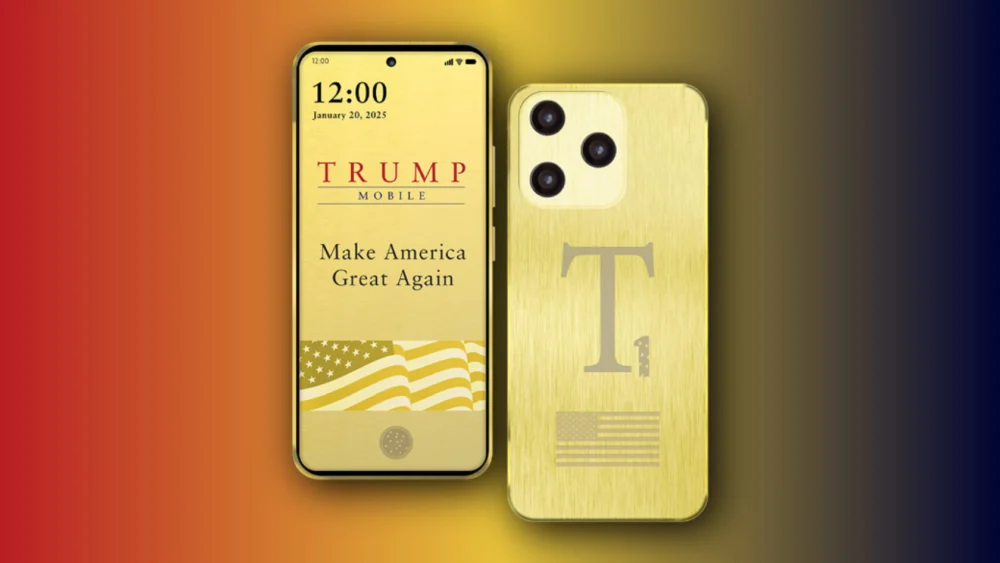
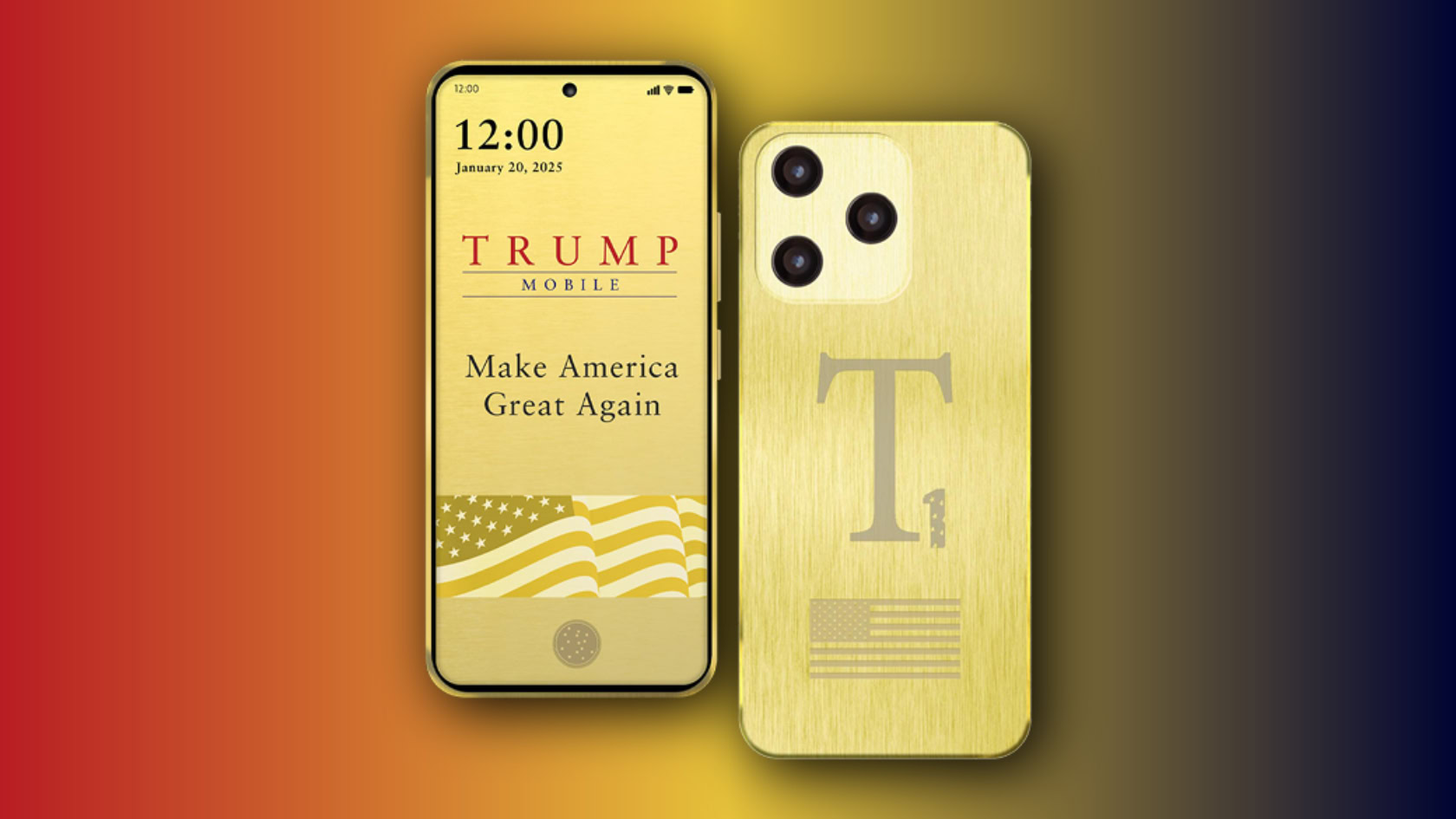
Visually, the device captured in the new imagery presents a departure from the stark, monolithic designs favored by many current flagship manufacturers. The rear chassis suggests a subtle curvature, a design choice that echoes certain aesthetics from manufacturers like Motorola in recent years, contrasting sharply with the pervasive trend toward flat-sided slabs. A defining visual element remains the ostentatious golden finish, a nod to the brand identity, complemented by an embedded American flag motif. Perhaps the most telling design refinement is the reported excision of the prominent "T1" logo that featured heavily in earlier mock-ups. This suggests a subtle but important move toward a more understated, even if still distinctive, presentation for the final market release.
The camera array, a critical component in modern smartphone valuation, has been detailed. The physical configuration appears to feature a triple-lens setup on the rear. More concretely, executives confirmed that both the primary rear sensor and the front-facing selfie camera utilize high-resolution 50-megapixel sensors. While the specific functions of the secondary rear lenses were not fully elaborated upon in the initial report, interface previews seen by third-party observers strongly suggest the inclusion of dedicated ultrawide and telephoto capabilities, aligning the device with standard premium mid-range or near-flagship photographic expectations.
The front-facing experience remains partially obscured in the physical mock-ups, but the display technology has been clarified. The initial speculation surrounding a punch-hole cutout for the selfie camera appears to have been superseded by the description of a "waterfall" display. In contemporary smartphone parlance, this typically implies a display that curves significantly over the side edges, often necessitating a small, centralized notch rather than a punch-hole for the camera module. Furthermore, the screen size has stabilized around 6.78 inches, resolving earlier discrepancies where a smaller 6.25-inch dimension had been cited in revised specification sheets. This larger screen footprint aligns more closely with the physical dimensions suggested by the device’s overall chassis size.
Under the hood, the technical specifications reflect a conscious effort to elevate the device above entry-level status, justifying the increased component costs. The processing unit is slated to be a Qualcomm Snapdragon 7-series chipset. While this positions the device firmly in the upper-midrange segment rather than the bleeding-edge flagship tier defined by the latest 8-series chips, it still promises robust performance for most consumer applications. Powering this system will be a substantial 5,000mAh battery, indicating a strong emphasis on endurance. Storage capacity has also seen an upgrade: the base configuration is now specified at 512GB of internal flash memory, doubling the initially promised 256GB. Crucially, the device is confirmed to retain support for external memory expansion via microSD cards, supporting capacities up to 1TB—a feature increasingly omitted from major manufacturer flagships.
The rationale provided by the Trump Mobile leadership for these continuous enhancements centers on market responsiveness. They assert that the high level of initial interest and reservation demand necessitated an upgrade to the internal architecture to ensure the product’s longevity and relevance in a rapidly evolving tech landscape. This commitment to specification upgrades is being partially subsidized for early adopters. Those who previously placed a $100 deposit to reserve the device are reportedly only required to pay an additional $499 to complete the purchase. For newcomers entering the market now, the price point is expected to be set "less than $1,000," though the precise figure remains confidential pending final retail configuration locks.
Regulatory milestones are also reportedly being met, which lends a degree of tangible progress to the project. The device is understood to have secured its necessary Federal Communications Commission (FCC) certification, a mandatory step for market entry in the United States. Furthermore, the team is reportedly on track to secure T-Mobile carrier certification by the middle of March, a crucial step for broad commercial availability within a major U.S. network ecosystem. The official product page on the Trump Mobile website is anticipated to be updated shortly with these final visual and technical disclosures.
Background Context: The Politics of Personal Tech
The concept of a politically branded smartphone is not entirely novel, but it typically manifests as a heavily customized software skin layered atop existing, commercially available hardware. What distinguishes the Trump Mobile T1 endeavor is the stated intention to engineer a bespoke physical product, however reliant it may be on third-party component sourcing (like the Snapdragon chipset). The initial allure was intrinsically tied to the political identity of its namesake, targeting a demographic seeking technological representation aligned with their political affiliations, often viewing mainstream technology companies with suspicion regarding potential censorship or data handling practices.
This project enters a market saturated with options where brand loyalty is fierce and hardware differentiation is increasingly incremental. For a device reliant on a specific political identity to carve out market share, the hardware itself must offer compelling value, especially given the price point hovering near established premium competitors. The evolution from "Made in America" to "Made for America" underscores a broader challenge for any venture attempting to repatriate significant aspects of electronics manufacturing: the sheer scale and efficiency of existing Asian manufacturing hubs make domestic production prohibitively expensive for consumer electronics unless substantial government subsidies or massive price premiums are accepted by the consumer base. The current specifications, while respectable, suggest a strategic decision to compete on features and aesthetic differentiation rather than raw, bleeding-edge performance, recognizing the constraints of their production model.
Industry Implications: Niche Branding in the Smartphone Wars
The existence and potential launch of the T1 device present a microcosm of modern market segmentation. In an industry dominated by giants like Apple, Samsung, and a handful of aggressive Chinese manufacturers, success often hinges on deep vertical integration or hyper-efficient economies of scale. Trump Mobile is attempting to succeed through the third pathway: niche identity marketing.
If the T1 achieves modest success, it validates the theory that a dedicated, politically engaged segment of the consumer base is willing to pay a premium or accept slightly delayed technology if the product strongly resonates with their worldview. This could signal to other political or cultural movements that there is a viable, albeit smaller, market for technologically tailored devices that promise alignment, security, or exclusivity.
However, the constant shifts in specifications—screen type, storage capacity, camera setup—pose significant risks. In the technology sector, prolonged periods between announcement and delivery erode consumer trust and allow competitors to launch superior alternatives. The industry operates on rapid iteration; a phone revealed today must be competitive against phones launching in six months. If the T1 is perceived as leveraging outdated internal architecture (e.g., a mid-range 7-series chip when the market is standardizing on the latest 8-series successors), the "patriotism premium" may evaporate, leaving only a device that is expensive for what it offers technically.
Expert-Level Analysis: Component Choices and Market Positioning
The choice of a Snapdragon 7-series processor, rather than the flagship 8-series, is perhaps the most telling technical detail. The 7-series chips are highly capable, often offering excellent thermal management and respectable power efficiency. This choice suggests a deliberate trade-off: prioritizing battery life and component cost control over peak benchmark performance. For the target demographic, which may prioritize general usability, battery life, and perhaps specific security features (though security details remain vague), this positioning might be acceptable. It positions the T1 as a high-end alternative to standard mid-range offerings, but deliberately undercuts the true flagship segment.
The 50MP camera sensors, while offering high resolution, do not guarantee superior imaging. Modern computational photography, heavily reliant on software algorithms and image signal processing (ISP) performance, often dictates the final quality. If the software stack powering the T1’s camera experience is less mature than that of major OEMs, the high megapixel count might be more of a marketing metric than a functional advantage.
Furthermore, the shift toward a waterfall display, while visually appealing, reintroduces usability challenges such as accidental touches and difficulties in applying standard screen protectors—issues that most major brands have moved away from. This aesthetic choice reinforces the idea that differentiation, even if functionally detrimental, is prioritized in the branding strategy. The decision to ultimately drop the large T1 logo suggests a late-stage realization that overt branding can sometimes hinder broader appeal, perhaps acknowledging that a significant portion of potential buyers might prefer discretion alongside their affiliation.
Future Impact and Trends: The Convergence of Identity and Hardware
The fate of the T1 will serve as a case study in the viability of identity-driven hardware manufacturing in the contemporary smartphone ecosystem. If the device successfully navigates certification and launches with the promised specifications, it opens a potential new avenue for niche technology ventures. It suggests that political or cultural alignment can substitute, to some degree, for established brand equity or cutting-edge performance metrics.
However, the enduring trend in the broader tech industry is toward homogenization of features, driven by supply chain efficiencies and consumer familiarity. Any successful identity-driven phone must eventually reconcile these two forces: maintaining its unique selling proposition (the identity) while adopting industry-standard performance metrics to prevent rapid obsolescence.
The announcement of a future, more premium "T1 Ultra" further complicates the narrative. This suggests that the current model is a strategic entry point, designed to generate revenue and gather early data, while the true flagship offering is still in deep development. The challenge for Trump Mobile will be maintaining momentum and consumer interest through the development of the Ultra model, especially if the standard T1 launch suffers from typical early adopter hurdles, such as software bugs or supply chain inconsistencies. Ultimately, the T1 represents an attempt to build a technological fortress around a specific consumer base, testing the limits of whether political affiliation can truly drive hardware adoption against the overwhelming inertia of the global tech market. The coming months, pending regulatory approvals and the final release, will reveal whether this ambitious undertaking translates into genuine market presence or remains another high-profile, yet ultimately ephemeral, piece of tech commentary.