

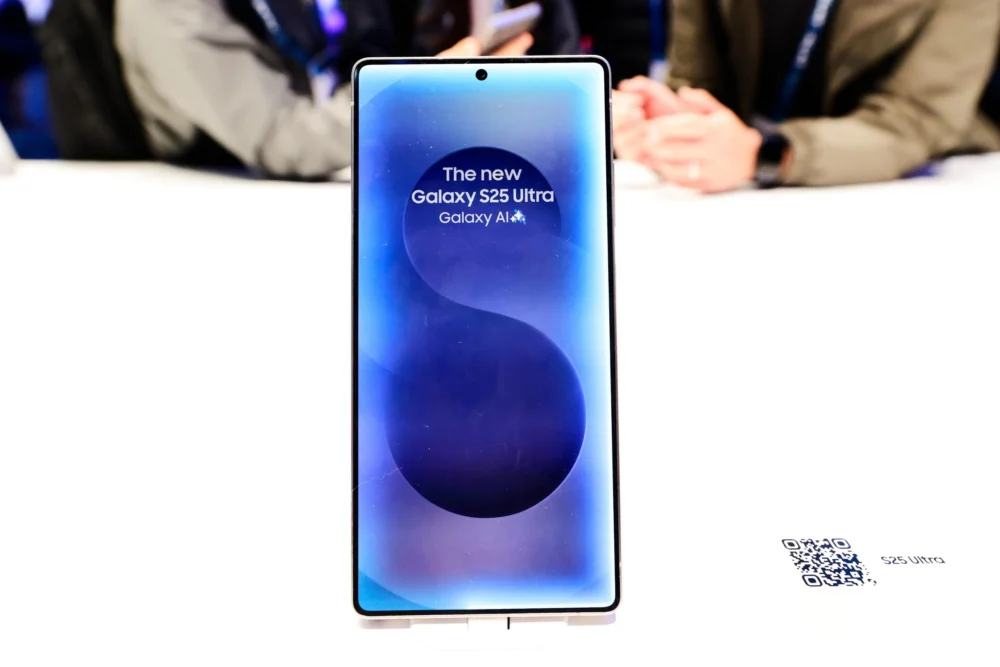
The global smartphone market has reached a critical inflection point where the sheer cost of cutting-edge hardware is beginning to clash violently with consumer price sensitivity. As Samsung prepares for the highly anticipated unveiling of its Galaxy S26 series next month, the South Korean conglomerate find itself trapped between a rock and a hard place: the skyrocketing price of semiconductor components and the psychological barrier of the $1,400 price tag. Recent intelligence suggests that Samsung is currently engaged in a high-stakes internal debate regarding the final MSRP of its flagship lineup, particularly the top-tier Galaxy S26 Ultra, as it seeks to maintain its market dominance without alienating its core user base.
At the heart of this fiscal tension is a report indicating that Samsung is making every effort to keep the Galaxy S26 Ultra’s price below the 2-million-won threshold in its home market. While 2 million won converts to roughly $1,357, the figure represents more than just a currency conversion; it is a symbolic ceiling for the premium segment. For perspective, the preceding Galaxy S25 Ultra entered the market at a starting price of $1,299. If Samsung is forced to breach the $1,350 mark, it would signal one of the most significant year-over-year price jumps in the history of the S-series, potentially pushing the "Ultra" model into a luxury bracket that rivals the most expensive folding phones.
The impetus behind these potential price hikes is not corporate greed, but rather a volatile global supply chain. The technology sector is currently grappling with a dramatic surge in memory prices, impacting both DRAM and NAND flash storage. This is compounded by a persistent global chip shortage that has shifted the power dynamic toward component manufacturers. Samsung Electronics co-CEO TM Roh recently addressed these pressures, noting that no manufacturer is immune to the "inevitable" rising costs of production. When the raw materials required to build a flagship—specifically the high-performance RAM needed to power increasingly complex on-device AI—become more expensive, the manufacturer must either absorb those costs, reducing their profit margins, or pass them on to the end consumer.
To avoid the latter, Samsung is reportedly exploring "creative" solutions to offset production costs without explicitly raising the sticker price. One such strategy involves a radical rethinking of its promotional calendar. For years, Samsung has incentivized early adopters with a "double storage" pre-order deal, where consumers could purchase a 512GB model for the price of a 256GB unit. In an era of cheap memory, this was a highly effective marketing tool. However, in 2026, the cost of doubling storage has become a significant liability. Industry insiders suggest that this beloved promotion may be scaled back or eliminated entirely for the S26 cycle.
Furthermore, consumers may see a reduction in the aggressive trade-in subsidies that have become a hallmark of the Galaxy ecosystem. Samsung has traditionally offered "enhanced" trade-in values that often exceed the actual market value of the used device, effectively acting as a hidden discount. By adjusting these compensation sales subsidies and reducing overall marketing expenditures, Samsung hopes to maintain the $1,299 starting price for the Ultra model, even if it means "bearing the burden of exchange rates" and tightened margins.
While the financial logistics remain fluid, the hardware roadmap for the S26 series has become significantly clearer due to an administrative slip-up. A promotional document briefly published by Samsung’s Colombian subsidiary has confirmed that the lineup will consist of three distinct models: the Galaxy S26, the Galaxy S26 Plus, and the Galaxy S26 Ultra. This confirmation is particularly noteworthy because it puts to rest months of speculation regarding a potential rebranding effort. Earlier rumors had suggested that Samsung might adopt a "Pro" moniker for its base model or revive the "Edge" branding for the mid-tier device.

The decision to stick with the "Plus" branding for the S26+ is reportedly a reaction to market data. While internal discussions briefly favored a Galaxy S26 Edge to differentiate the middle child of the family, the historic reception of "Edge" branded devices and the stable, albeit modest, sales of the Plus series convinced executives to maintain the status quo. However, the Galaxy S26 Plus is not without its changes. Technical specifications suggest a slight shift in form factor, with the device expected to feature a 6.66-inch display. This is a marginal reduction from the 6.7-inch panel found on the S25 Plus. Analysts suggest this move was a result of Samsung opting for a refined version of an existing OLED panel rather than investing in a completely new display architecture for a model that occupies a difficult middle ground between the compact base model and the feature-heavy Ultra.
The timing of the launch has also been solidified. The Galaxy Unpacked event is scheduled for February 25th, 2026, with a global retail release set for March 11th. This schedule represents a slight departure from Samsung’s traditional Friday release window, as March 11th falls on a Wednesday. This shift is likely a ripple effect of the internal delays caused by the late-stage decision to scrap the "Edge" rebranding and revert to the "Plus" designation. Despite these minor logistical pivots, the February-to-March window remains Samsung’s preferred timeframe to capture the market before the mid-year cycle of competitive releases.
Looking at the broader industry implications, Samsung’s pricing struggle highlights a growing trend of "premiumization" in the smartphone industry. As the gap between mid-range and flagship devices narrows in terms of basic functionality, manufacturers are forced to pack their top-tier phones with increasingly expensive "hero" features—such as periscope zoom lenses, titanium frames, and massive neural processing units—to justify the high cost. However, the cost of these components is rising faster than the average consumer’s disposable income.
If Samsung manages to hold the line at $1,299 for the S26 Ultra, it will be viewed as a tactical victory for consumer advocacy, but it may come at the cost of the "extras" that fans have come to expect. If the "double storage" deal disappears and trade-in values drop, the total cost of ownership for a Samsung flagship will effectively rise, even if the MSRP remains static. This "stealth inflation" is becoming a common tactic among tech giants who are wary of the negative headlines associated with a direct price hike.
The future of the S-series, and indeed the entire flagship market, may soon depend on a shift in hardware philosophy. We are reaching the limits of what consumers are willing to pay for a glass-and-metal slab. Moving forward, the industry may see a greater emphasis on software-driven value, such as extended OS support (which Samsung already leads with its seven-year commitment) and exclusive AI services, rather than annual increments in hardware specs that drive up the bill of materials.
As the February 25th Unpacked event approaches, the tech world will be watching not just for the megapixel counts or the processor benchmarks, but for the final numbers on the price tags. Samsung’s ability to navigate this economic minefield will serve as a bellwether for the rest of the industry. If the world’s largest smartphone manufacturer cannot find a way to make the economics of the 2026 flagship work, it may signal a permanent shift in how we purchase and value mobile technology. For now, the Galaxy S26 series stands as a testament to the complexity of modern manufacturing—a delicate dance between the desire for the futuristic and the reality of the affordable.