

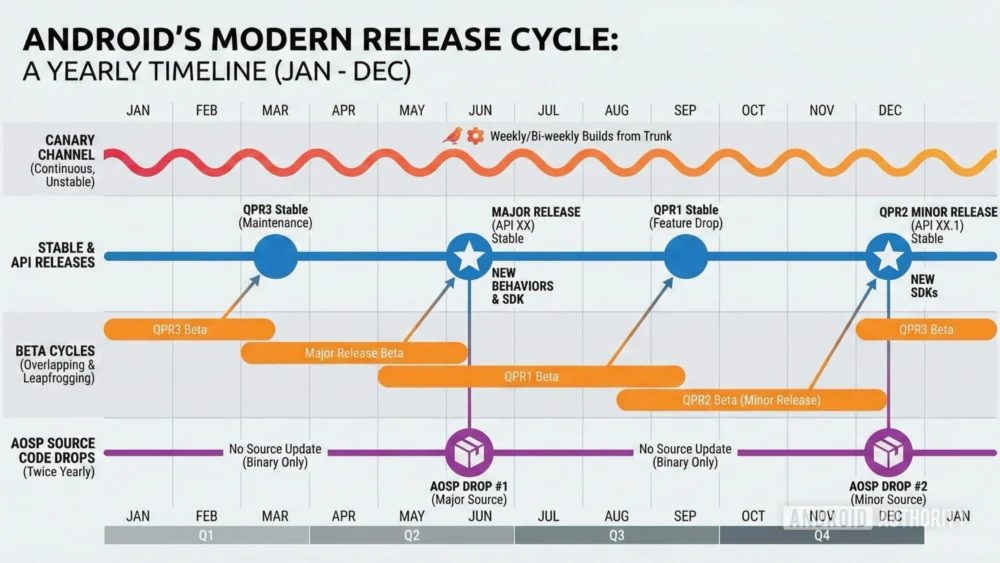
The global software development ecosystem is witnessing a predictable yet significant pivot as Google officially confirms the imminent arrival of Android 17 Beta 1. This confirmation, strategically timed with the release of what is described as the concluding maintenance patch for the current quarterly platform release—Android 16 QPR3 Beta 2.1—marks the formal initiation of the next major operating system development cycle. For technologists, developers, and power users, this moment signifies more than just a version number change; it represents the unveiling of the next foundational layer upon which the future of mobile computing will be built.
The cadence of Android development has become a finely tuned machine over the past several years. Google has moved away from purely annual, monolithic releases toward a more iterative, rolling model. The Quarterly Platform Releases (QPRs) serve to refine the existing stable build—in this case, Android 16—introducing incremental stability, performance tuning, and often previewing developer features intended for the subsequent major release. The transition to Android 17 Beta 1, therefore, is not a sudden leap but a logical continuation, inheriting the refined codebase of Android 16 QPR3. Google’s internal documentation indicates that this initial beta will focus heavily on cementing system stability and performance enhancements derived from the QPR testing phase, ensuring a more robust starting point for the new version’s feature introduction.
Contextualizing the Beta Timeline and Industry Implications
The immediate commencement of the Android 17 beta program underscores Google’s commitment to an aggressive, yet structured, development schedule. The internal tracking designation, "26Q2," strongly implies a target for the stable, public launch of Android 17 within the second quarter of 2026. This predictability is crucial for the entire mobile industry, from semiconductor manufacturers preparing chipsets optimized for the new API levels to Original Equipment Manufacturers (OEMs) planning their software skin integrations and deployment schedules.
The development cycle serves as a critical lead indicator. When the first beta drops, it forces ecosystem partners to accelerate their own internal testing and compatibility matrix updates. For developers targeting the vast Android user base, this signals the time to begin auditing existing applications against anticipated changes in permissions models, background processing limitations, and UI frameworks that are typically introduced in a new Android version. Early access allows for the mitigation of potential breaking changes long before the final stable release risks catastrophic failure on millions of devices.
Furthermore, this shift has profound implications for security architecture. Each major Android release typically brings significant under-the-hood security upgrades—changes to memory management, sandboxing, or cryptographic libraries. The beta period is when these changes are stress-tested by a community of engaged users and security researchers, allowing Google to patch zero-day vulnerabilities inherent in new code paths before they become exploited in the wild. The stability promised by building upon the QPR foundation suggests that the initial focus of Android 17 Beta 1 might be less about flashy new consumer features and more about hardening the kernel and core system services.
Navigating the Beta Exit Strategy: A Crucial Consideration for Testers
One of the most critical pieces of information accompanying the announcement pertains to current participants in the Android Beta Program who are running the Android 16 QPR3 beta builds. Google has laid out a precise protocol for managing the transition, highlighting the inherent risks associated with jumping between major development branches.
For users who wish to remain on the stable track and receive the final, polished Android 16 QPR3 release rather than immediately advancing to Android 17 Beta 1, immediate action is required. The fundamental rule of the beta program dictates that an enrolled device receiving a newer version cannot simply downgrade to an older version without a full factory reset.
To safely remain on Android 16 QPR3, users must first opt out of the beta program before the Android 17 Beta 1 update is offered or installed. Crucially, after opting out, testers must actively ignore the subsequent Over-The-Air (OTA) update labeled "Downgrade." This downgrade package is designed to revert the device to the last stable build, but installing it triggers a data wipe. By ignoring this specific package and waiting for the official public rollout of the stable Android 16 QPR3 build, users can transition cleanly off the beta channel without data loss.
The complexity escalates if a user has already received or installed Android 17 Beta 1. Once a device has taken the plunge into the next generation’s pre-release code, the pathway back to the current stable release without data erasure is severely restricted. Google explicitly warns that the next opportunity to exit the beta cycle without a mandatory data wipe will not occur until much later in the Android 17 testing trajectory, tentatively forecasted around June 2026, coinciding with the final Release Candidate or Release-to-Manufacturer (RTM) phase of Android 17. This reinforces the established wisdom in software testing: only enroll in early betas on devices containing data you are prepared to lose.
Deeper Dive: The Significance of "Cinnamon Bun"
While Google maintains a degree of public ambiguity regarding the formal dessert codenames until later in the release cycle, industry insiders have previously identified Android 17 with the internal moniker "Cinnamon Bun." This naming convention, following years of sweet-themed releases, speaks to Google’s ongoing, albeit sometimes playful, internal organization of its software roadmap.

The "26Q2" tracking code offers a more concrete timeframe. In Google’s development lexicon, this points directly to the second quarter of the year 2026. This alignment with historical release patterns—where the full feature set is frozen in late Q1 and the operating system reaches general availability in Q2 or early Q3—suggests a mature and well-trodden path for the next 18 months of development.
The structure of the development track looks something like this:
- Developer Previews (DPs): Early access, focused on fundamental API changes (already concluded for Android 16, setting the stage for 17).
- Beta 1 (Current Event): Introduction of initial features, heavy focus on system stability building from QPR findings.
- Subsequent Betas (Beta 2, 3, etc.): Feature refinement, testing of behavioral changes, and increasingly hardening of the platform.
- Release Candidates (RCs): Final builds tested for OEM readiness.
- Stable Release (Target: Q2 2026): Public availability.
Expert Analysis: The Evolution Beyond the Surface
The transition from a QPR cycle to a new major version beta often reveals philosophical shifts in Google’s approach to the mobile OS. Given the current technological landscape—dominated by on-device AI processing, heightened privacy concerns, and the proliferation of diverse form factors (foldables, tablets)—Android 17 is expected to address these vectors aggressively.
AI Integration at the Core: Android 16 likely solidified initial frameworks for generative AI features. Android 17 Beta 1 is expected to push these capabilities deeper into the OS kernel and core services. We anticipate a greater emphasis on efficiency for running large language models (LLMs) locally, potentially involving new schedulers or dedicated hardware abstraction layers (HALs) to optimize power consumption during intensive on-device computation. This moves AI from being an application feature to a fundamental operating system capability.
Privacy and Data Sovereignty: Following trends established in recent versions, Android 17 will almost certainly introduce more granular controls over data access and background telemetry. The beta testing phase will be crucial for developers to understand any new restrictions on accessing system identifiers or persistent background services. Expert analysis suggests a potential move towards stricter scoped storage enforcement and perhaps new APIs that abstract sensitive user data away from applications by default, requiring explicit, context-aware permission grants.
System Health and Performance: The fact that Beta 1 is inheriting stability from the QPR3 patch suggests that Google is prioritizing polish over radical overhauls at the start. This focus on "system stability and performance" implies deep dives into garbage collection routines, thread management, and how the system handles application lifecycle events under heavy load—all areas critical for maintaining the fluidity users expect from premium devices. Any latency introduced by new security features must be meticulously optimized out during this initial beta phase.
The Future Trajectory: What to Watch in Android 17
As developers begin to integrate with the early code of Android 17, several key areas will become focal points for industry speculation and analysis:
Connectivity Standards: With 5G maturation and the ongoing rollout of Wi-Fi 7, Android 17 will need optimized frameworks to manage heterogeneous network switching seamlessly. We should look for new APIs that allow the OS to make smarter, lower-latency decisions about whether to route traffic over cellular, Wi-Fi, or potentially emerging low-power mesh networks, especially crucial for IoT integration.
Developer Tooling and Kotlin Migration: Google continues its strong push toward Kotlin as the preferred development language. Android 17 is expected to leverage newer Kotlin features or introduce specific Android Runtime (ART) optimizations that benefit Kotlin-first applications disproportionately. Developers lagging in their migration from Java may find the barrier to entry for high-performance Android 17 development significantly higher.
The Wearables Ecosystem: As the gap between smartphones and accompanying wearable devices narrows, the next Android iteration must refine cross-platform communication protocols. Enhancements in power efficiency for Bluetooth LE communication and standardized interfaces for health data sharing between the phone and watch will be necessary to maintain momentum in the connected health space.
The launch of Android 17 Beta 1, signaled by the finalization of the Android 16 maintenance window, is a milestone that confirms the relentless pace of mobile software evolution. It initiates a months-long process of refinement, testing, and eventual standardization that will define the user experience across billions of devices heading into 2027. For those already enrolled, the arrival of the first build is imminent, bringing with it the opportunity to shape the next iteration of the world’s most widely deployed operating system. The meticulous management of the beta exit strategy, particularly for those currently on QPR3, remains the most pressing administrative concern for the early adopter community.