


The relentless pursuit of computational photography in the smartphone industry has long been characterized by an arms race focused on sheer quantity: more lenses, more megapixels, and more specialized sensors. This strategy, while yielding impressive results in specific scenarios, often introduced a secondary problem: inconsistency across the camera array. The arrival of the Xiaomi 17 Ultra, however, presents a compelling counter-narrative, suggesting that strategic reduction—fewer modules housing more complex, adaptable optics—might be the true path to premium imaging parity with traditional cameras. By replacing the previous generation’s dual-telephoto setup with a single, sophisticated variable-aperture, variable-focal-length periscope module, Xiaomi is betting that depth of engineering trumps breadth of hardware.
To fully appreciate this pivot, one must recall the trajectory of flagship smartphone camera development over the last half-decade. Initially, the focus was on adding an ultrawide lens, followed by the introduction of dedicated telephoto capabilities, usually at fixed magnifications like 3x or 5x. Flagship devices like the predecessor to the 17 Ultra sported a quad-camera layout, each sensor optimized for a distinct focal plane, often leading to noticeable shifts in color science, dynamic range, and noise characteristics when transitioning between the primary, ultrawide, and the two separate zoom lenses. For the dedicated mobile photographer, this necessitated conscious decisions about which lens to use, often resulting in jarring post-capture editing to harmonize disparate images.
The 17 Ultra’s architecture directly confronts this fragmentation. Instead of two distinct zoom sensors (e.g., a 3x and a 5x periscope), Xiaomi has integrated a mechanically complex single periscope unit capable of fluidly adjusting its focal length between 75mm and 100mm, simultaneously managing aperture settings between f/2.4 and f/3.0. This innovation is physically distinct from software-based digital cropping or the nascent variable aperture rumored for competitors, such as the upcoming Apple iPhone 18 Pro models, which are reportedly focusing variable aperture solely on the main sensor for light control and depth manipulation, not optical reach. Xiaomi’s approach targets optical flexibility within the often-neglected mid-to-long-range segment.
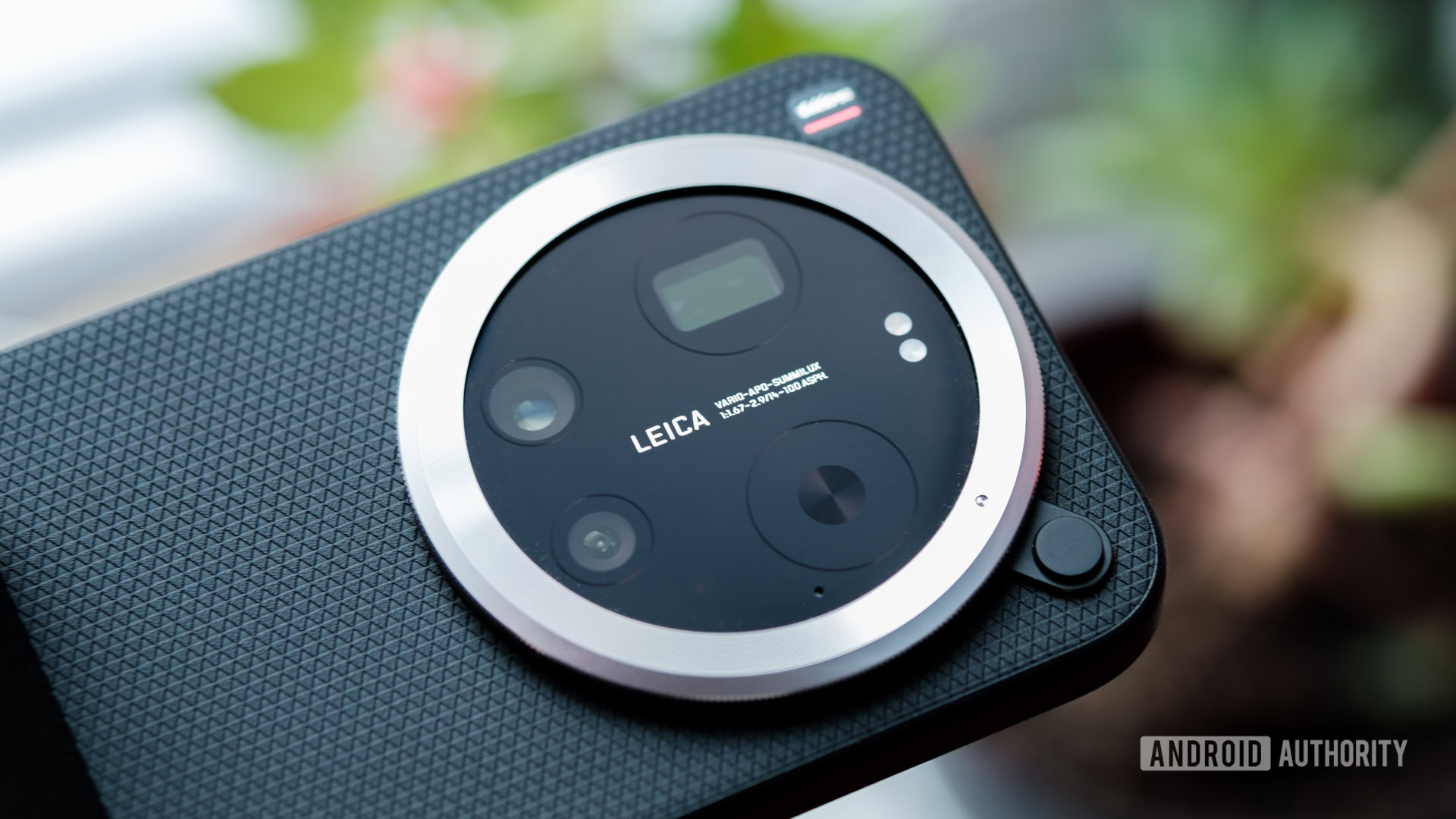
Initial hands-on impressions often reveal a dichotomy between the technical marvel and the practical application. Comparing this single variable lens to a professional mirrorless setup, such as a 17-70mm f/2.8 zoom lens, reveals the inherent constraints of mobile form factors. The Xiaomi module’s optical range is limited—spanning only 3.2x (75mm) to 4.3x (100mm) optically. Subjectively, this narrow band of optical variation can feel underwhelming. The change in field of view between 3.2x and 4.3x is subtle; the visual distinction is less dramatic than switching between, say, 1x and 3x on a standard dual-camera system. Furthermore, because the aperture shift is minor across this range, the expected change in natural bokeh or depth of field—a key theoretical benefit of mechanical aperture control—is similarly muted. For users accustomed to manual control over depth, this specific implementation may initially appear redundant, offering optical quality across a tight range that could, in some instances, be closely approximated by high-quality digital cropping from the 3.2x mark.
However, fixating solely on the narrowness of the optical zoom band misses the profound systemic benefit Xiaomi has engineered. The true value proposition is not the 30mm range itself, but the consistency it enforces across a crucial shooting envelope.
The Triumph of Consistency Over Quantity
The critical industry implication here lies in the resolution of the sensor paired with this new module. The 17 Ultra couples this sophisticated zoom mechanism with a substantial 1/1.4-inch, 200-megapixel sensor. In previous generations, the secondary telephoto lens utilized a smaller sensor, leading to an inherent degradation in image quality—color shifts, increased noise, and softer details—once the zoom exceeded the primary fixed lens’s optical limit.
By consolidating the 3.2x portrait range and the 4.3x moderate telephoto onto this single, large sensor utilizing the variable optical mechanism, Xiaomi guarantees superior image fidelity throughout. This is where the "fewer cameras are better" thesis gains traction. The user benefits from the inherent advantages of the 200MP sensor—superior light gathering (even with the smaller aperture), advanced multi-point PDAF, and optical image stabilization—being available across the entire operational range of the periscope.
This unification simplifies the entire imaging pipeline. Instead of forcing image processing algorithms to bridge the gap between a 50MP sensor at 3x and a 200MP sensor at 4.3x, the entire sequence—from portrait framing (around 70mm) to moderate telephoto applications (100mm) and even extended digital reach (cropped up to 17.2x using the sensor’s high resolution)—is handled by one unified hardware signature. Color reproduction, noise handling, and processing profiles remain identical, eliminating the visual "seams" that plague heavily multi-sensor systems. This consistency is invaluable for serious photographers who prioritize cohesive image sets.
Expert Analysis: Mechanical Complexity as a Bridge
The engineering required for this variable zoom system is substantial. It necessitates micro-mechanics capable of moving lens elements precisely while simultaneously adjusting aperture blades, all within the strict volumetric limitations of a modern smartphone chassis. This is a hardware solution tackling a software problem—the need to optically render high-quality, mid-range focal lengths.
This approach contrasts sharply with the current trend of relying heavily on computational stacking and high-resolution sensors for "lossless" zoom levels between fixed lenses. While computational techniques are incredibly powerful, they are fundamentally interpolating data. Xiaomi’s implementation, by achieving true optical variation across 70mm to 100mm, ensures the captured photons arrive at the sensor in the most optimized arrangement for that specific focal length. The resulting detail at 4.3x optical is inherently superior to a digitally derived 4.3x from a native 3.2x optical lens, even if the subjective field-of-view difference is minor to the casual observer.
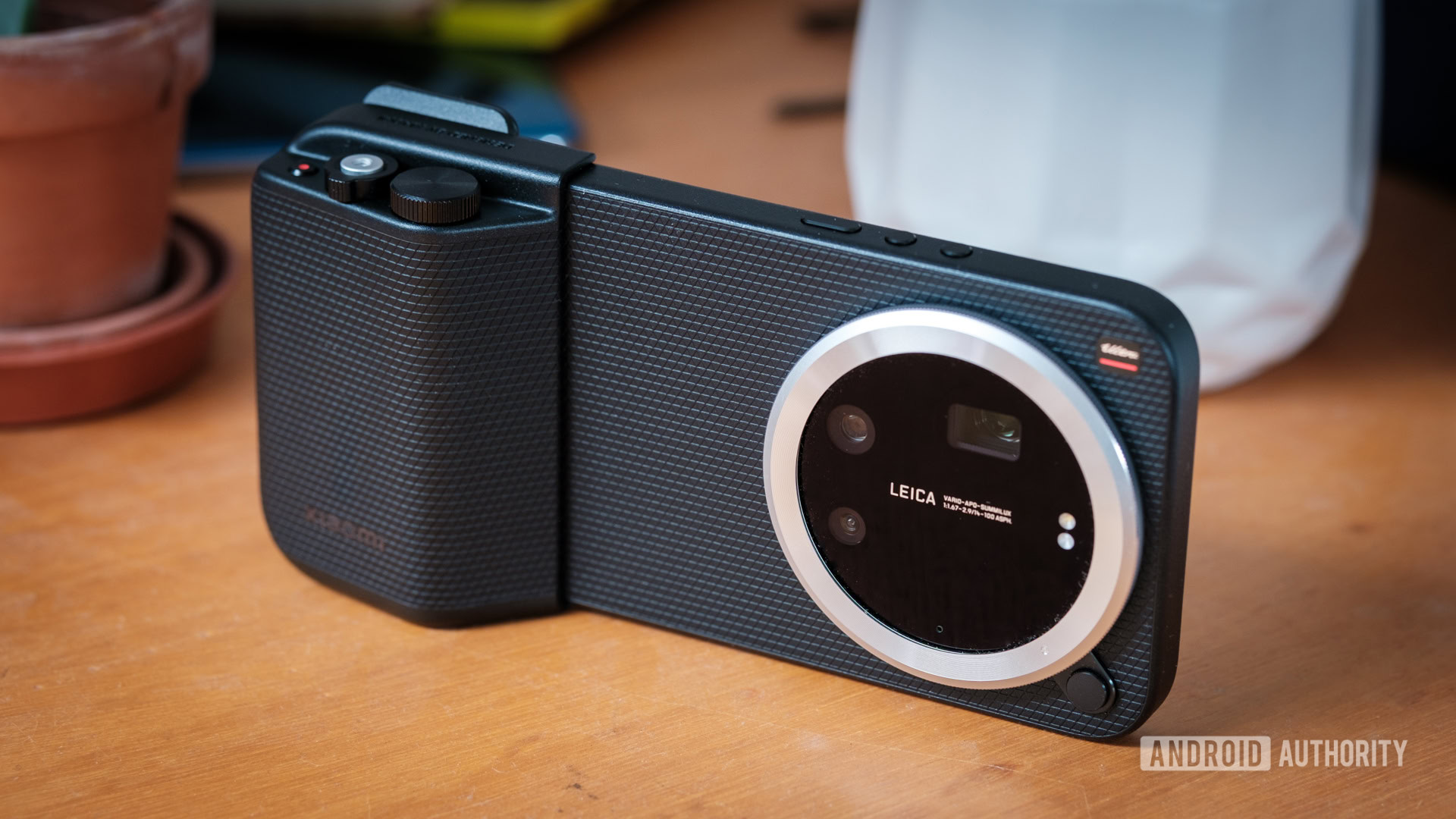
Furthermore, the integration with accessories, such as the dedicated camera kit accessory offering physical control for smooth zooming, transforms the experience from a tap-and-switch operation into something approaching traditional photographic control. The smooth mechanical transition reinforces the perception of optical continuity, something pure digital zooming cannot replicate.

Video Capabilities and Feature Parity
The benefits of hardware consolidation extend significantly into video capture, an area where multi-camera arrays frequently exhibit limitations. It is a long-standing frustration when 4K 60fps, high frame-rate slow motion (e.g., 4K 120fps), or specific cinematic modes are locked to only the primary lens or one of the fixed zoom levels.
The Xiaomi 17 Ultra addresses this by ensuring 4K60 and 8K30 recording is available across all three primary lenses (ultrawide, main, and the variable telephoto). While 4K120 recording is necessarily restricted—due to the immense bandwidth required to read out the pixel data from the large sensor at that speed—to the 1x primary and the 3.2x-4.3x optical module, the overall robustness of the video suite is dramatically improved. Fewer sensors mean fewer configuration silos, leading to a more predictable and versatile video capture experience across the entire zoom spectrum.
Future Impact and Industry Trajectory
The decision by Xiaomi to reduce the physical count from four to three modules highlights a maturing phase in mobile imaging. The industry is moving past the "more is more" mentality toward a "better integration is key" philosophy. This shift has major implications for competitors like Apple, Google, and Samsung.
For these market leaders, the challenge is twofold: maintaining differentiation while absorbing the technological complexity Xiaomi is pioneering. If the results from the 17 Ultra prove substantially better in consistency and low-light performance at intermediate focal lengths, it puts pressure on rivals who rely on less complex, fixed-focal-length periscopes or heavy reliance on computational upscaling.

The long-term viability of variable focal length hinges on overcoming the physical space limitations. As mentioned, achieving a 24mm to 200mm continuous optical zoom within a thin phone body is currently impossible without introducing an external element, potentially via a variable telephoto extender lens—a concept that could represent the next major leap in mobile optics. Until that miniaturization breakthrough occurs, the 75mm-100mm range, executed with a large sensor and variable aperture, represents the most effective compromise between optical fidelity, feature richness, and physical packaging.
The success of this strategy suggests that future flagship development will prioritize fewer, but far more capable, optical modules. We might see primary sensors adopting broader mechanical aperture controls (as rumored for Apple), while telephoto systems focus on achieving seamless optical transitions between two or three key focal points rather than relying on multiple, distinct fixed modules. This consolidation saves space, reduces cost in the long run (fewer components to source and calibrate), and fundamentally improves the user experience by guaranteeing consistent quality where it matters most: portraiture and moderate magnification.
The Xiaomi 17 Ultra, therefore, is more than just an iterative upgrade; it is a statement on engineering philosophy. By accepting a narrow optical zoom range in favor of leveraging one massive sensor across that range with mechanical adaptability, Xiaomi has demonstrated that strategic reduction can indeed lead to superior, more cohesive, and ultimately more powerful mobile photography tools, positioning itself firmly at the vanguard while major global competitors continue to iterate on established, multi-sensor paradigms. For the enthusiast seeking a device that minimizes the need to carry dedicated photographic equipment, this focus on high-utility consolidation marks a significant advancement.