

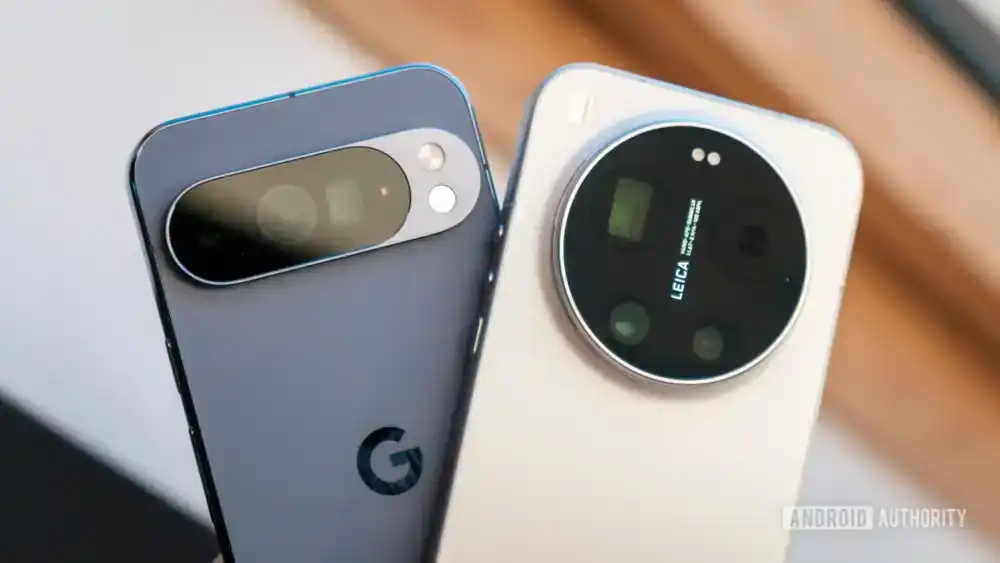
The trajectory of smartphone photography has long been defined by Google’s Pixel line. From the original Pixel’s groundbreaking HDR+ to the sophisticated computational feats of the Pixel 6 Pro and its successors, the narrative was clear: software mastery could compensate for, and even surpass, superior physical hardware. This philosophy catalyzed a significant shift in the industry, converting many long-time mobile photography enthusiasts, myself included, into staunch advocates for the Google ecosystem. The Pixel 10 series continues to market this computational prowess as its core value proposition. Yet, a critical reassessment of the current flagship landscape suggests that this reliance on algorithmic wizardry is reaching a point of diminishing returns, especially when confronted by hardware advancements emerging from other corners of the market.
The initial allure of the Pixel was its unparalleled reliability in everyday shooting scenarios. Point, shoot, and receive an image with impeccable dynamic range, balanced exposure, and pleasing, realistic color science—a genuine democratization of good photography. Even today, the Pixel maintains this baseline excellence. A skilled user can coax stunning results from the relatively modest sensor specifications that Google often employs, a testament to the sheer power of its Tensor-driven image processing pipeline. However, the gap between "good enough for social media" and "truly great" is widening, and it is in this gap that the Pixel is beginning to falter for the dedicated image maker.
My own recent experience has involved dedicating less time to my latest Pixel flagship and more to devices equipped with physically larger camera modules, or, increasingly, reverting to dedicated mirrorless systems. This shift stems from a meticulous examination—a process some might call "pixel-peeping"—that reveals the inherent limitations of a processing-heavy approach. While the computational gloss smooths over noise and balances tricky lighting for immediate sharing, these artifacts become unacceptable when considering high-resolution viewing, cropping, or physical printing. The tell-tale signs—grainy shadows, subtly mottled details in low light, and portraits where skin texture is simultaneously over-sharpened and yet lacks true micro-detail—are becoming harder to ignore when the device commands a premium price tag predicated on imaging excellence.
This growing dissatisfaction finds a sharp contrast in the capabilities of leading contenders, specifically devices like the Xiaomi 17 Ultra. Conducting direct A/B comparisons between the Pixel 10 Pro XL and the Xiaomi 17 Ultra quickly illuminates where the emphasis on pure optical engineering is paying dividends. While both devices excel at the baseline—offering excellent dynamic range and generally pleasing color profiles—the consistency advantage often tips toward the Pixel, as the Xiaomi can occasionally over-saturate or slightly underexpose scenes. But this minor inconsistency is a small price to pay for the vastly superior optical hardware.
The true chasm appears when examining telephoto performance and challenging low-light zoom shots. A scenario combining deep shadow with moderate optical reach acts as a brutal stress test for any smartphone camera. Viewed at full frame, both images may appear acceptable. However, a closer inspection reveals the Pixel’s struggle: significant noise intrusion and the smudging or outright loss of fine detail, even when leveraging advanced Night Sight algorithms. Conversely, the Xiaomi 17 Ultra often resolves detail that rivals, and sometimes surpasses, what even a seasoned enthusiast can achieve with a dedicated Fuji mirrorless camera in similar conditions. This superior fidelity is likely attributable to a combination of a significantly larger primary sensor and sophisticated multi-frame aggregation, possibly augmented by AI, resulting in an image that, while occasionally leaning toward an artificial aesthetic, fundamentally preserves more real-world information. For years, noise suppression and fine detail retention have been persistent Achilles’ heels for Google’s imaging pipeline, and this disparity is escalating as hardware evolves rapidly elsewhere.
Furthermore, portraiture remains a significant point of friction for Pixel users seeking photorealistic results. Despite Google’s continuous refinement of its ‘Pure Tone’ rendering and depth mapping, portraits frequently suffer from an unsettling dichotomy: skin textures appear overly processed and sharp at full resolution, yet disintegrate into an uncanny, plastic-like smoothness upon magnification. This is problematic for any user who intends to print their images for albums or framing, where the digital artifacts of software-based bokeh and texture smoothing become glaringly obvious.
In contrast, the Xiaomi’s implementation of a dedicated 75mm lens for portraiture offers a tangible, optical advantage. The resulting depth of field (bokeh) possesses a natural quality—a nuanced fall-off that software simulation inherently struggles to replicate accurately. The combination of hardware-derived subject separation and processing results in portrait details and background rendering that, in my estimation, currently sets the industry benchmark, matching the quality standards expected from professional-grade dedicated cameras.
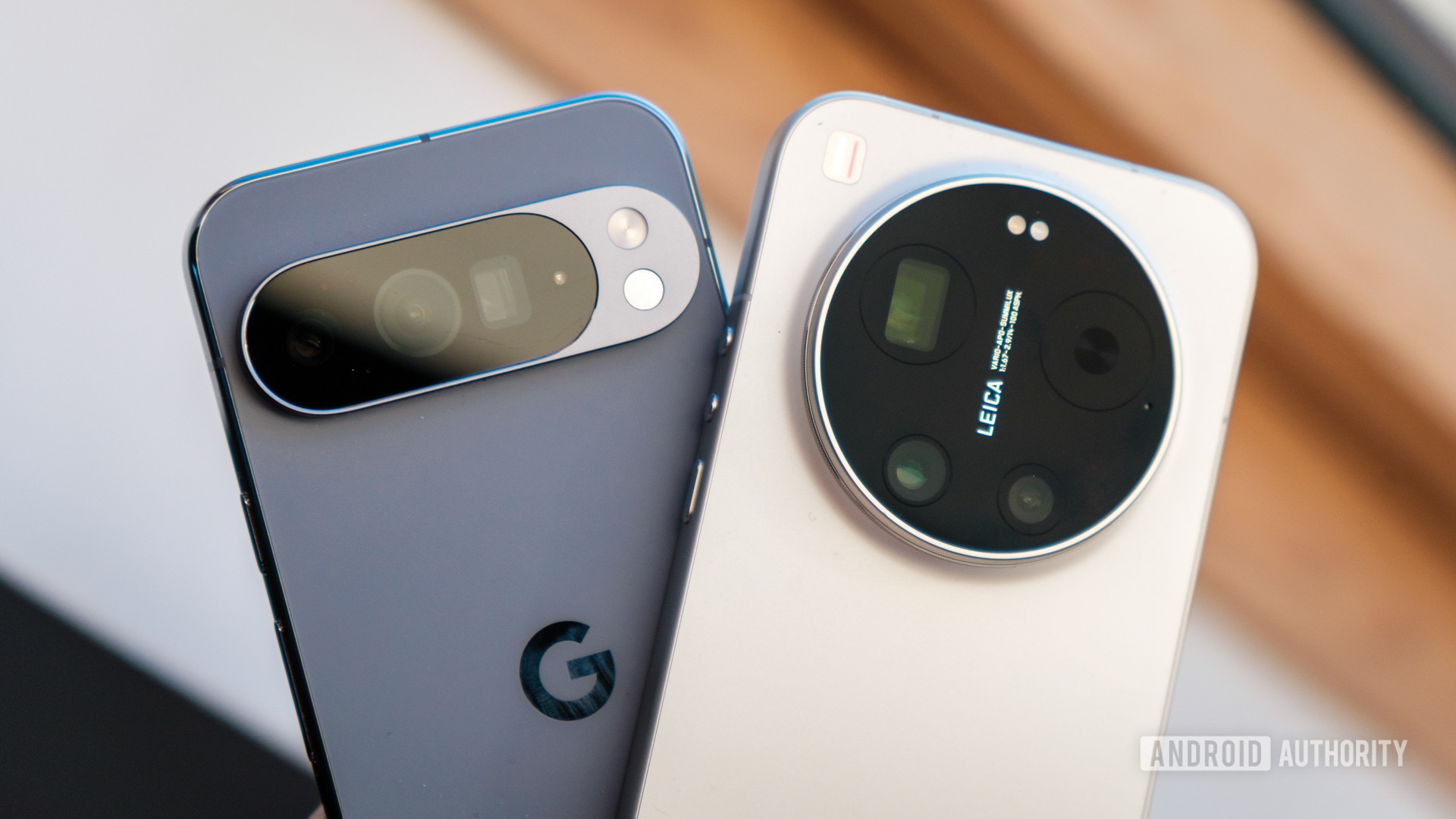
The divergence in zoom strategy further underscores this hardware versus software debate. Google has increasingly leaned into aggressive AI diffusion upscaling, notably with features like Pro Res Zoom, attempting to synthesize detail at extreme magnifications (30x and beyond). Xiaomi, on the other hand, has invested heavily in physical optics, utilizing a massive 200MP sensor paired with a variable focal length lens spanning 75mm to 100mm. This physical flexibility allows the sensor to capture intrinsically higher resolution data across key focal lengths.
At the lower end of the zoom spectrum (3x), the Xiaomi’s optical advantage is immediately clear. While the 5x to 10x range remains relatively competitive, beyond this threshold, the advantage shifts decisively toward the Chinese manufacturer. Where Google’s AI excels at reconstructing certain textures, it falters dramatically on others. Xiaomi’s approach, leveraging a larger sensor area for its long-range efforts, yields results that are consistently competitive with, if not superior to, Google’s AI-synthesized output in daylight scenarios. The core message emerging from this comparison is that relying on software to invent detail becomes increasingly transparent when compared to hardware capturing that detail directly.
This hardware superiority extends logically into the realm of macro photography. Xiaomi’s novel lens assembly allows for genuine close-focusing capabilities, delivering natural depth and bokeh without requiring the user to physically contort the phone inches from the subject. The Pixel’s 5x telephoto, incapable of this close focusing distance, must resort to digital cropping of the ultrawide or the main sensor, resulting in perspective distortion and a total lack of authentic depth separation. True optical versatility, particularly in specialized areas like macro, provides shooting options that software augmentation simply cannot replicate.
The fundamental issue facing the Pixel line is that Google’s initial competitive advantage—the "doing more with less" ethos of computational photography—has been largely neutralized by competitors who are now aggressively investing in superior sensor technology and sophisticated optical arrays. While Google deserves recognition for refining exposure metering, tone mapping, and night mode consistency, and for augmenting these with engaging utilities like Magic Editor, the raw image fidelity is demonstrably lagging behind the current hardware leaders. For the user whose primary metric for a premium smartphone is achieving the most lifelike capture possible, combined with maximum creative flexibility across focal lengths, the Pixel’s imaging pipeline is no longer the definitive choice.
This trend extends beyond Google, pointing to a broader market complacency. Apple and Samsung, the other titans of the mobile space, have also been criticized for years of iterative, rather than revolutionary, camera hardware upgrades. While there are whispers of meaningful sensor shifts for the upcoming Samsung Galaxy S27 Ultra, and Apple’s potential adoption of a variable aperture for the iPhone 18 Pro—an interesting feature for stylistic control—neither promises the fundamental leap in raw image quality seen in the current wave of global flagships that prioritize massive sensors and complex zoom mechanisms.
It is undeniable that the Pixel 10, or its contemporary rivals like the Galaxy S26, remain excellent, highly capable devices for general documentation—family events, casual travel logging, and quick social sharing. They provide a highly curated, reliable user experience. However, for the discerning photographer who values optical engineering, nuanced rendering, and the flexibility to heavily crop or print images without significant degradation, the calculus has changed. Devices championed by manufacturers like Xiaomi offer a level of physical capability that computational refinement alone cannot overcome.
The primary hurdle for enthusiasts seeking these hardware-forward alternatives remains market accessibility, particularly in regions like the United States, where distribution and carrier support for some Chinese flagships can be inconsistent or nonexistent. Nevertheless, as the mobile imaging arms race shifts from purely software optimization back toward sensor size, aperture control, and complex optical zoom systems, the industry implications are significant. If Google fails to pivot its hardware strategy to meet this new optical parity, its long-held status as the undisputed king of mobile photography will remain severely challenged, leaving its most dedicated photography-focused users increasingly looking elsewhere for their next pocket camera. The ecosystem benefits of the Pixel are compelling, but for the image-obsessed user, the tangible quality delivered by superior optics is becoming too compelling to ignore.