

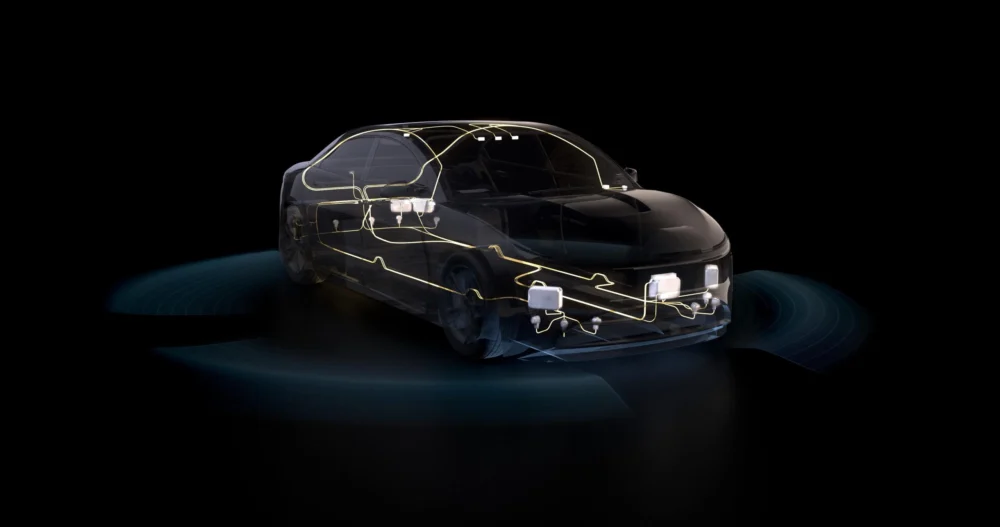
The trajectory of artificial intelligence has, until recently, been largely confined to the digital realm—a world of pixels, Large Language Models (LLMs), and generative art. However, a seismic shift is underway as these sophisticated neural networks begin to inhabit physical forms. At the forefront of this transition is Nvidia, the Silicon Valley titan that has evolved from a niche graphics card manufacturer into the indispensable backbone of the global AI economy. In its latest strategic unveiling, Nvidia has introduced the Alpamayo platform, a breakthrough in autonomous vehicle (AV) technology that the company’s leadership characterizes as the "ChatGPT moment" for physical AI. This development signals a departure from simple pattern recognition toward a new era of "deep reasoning," where machines do not merely react to their environment but logically comprehend it.
Founded in 1993, Nvidia has spent three decades positioning itself for this exact juncture. While the company’s hardware powers everything from data centers to high-end gaming rigs, its focus on the automotive sector represents the ultimate test of its "Physical AI" vision. Physical AI refers to the ability of a machine to understand, reason, and act within the constraints of the real world—a task infinitely more complex than generating text or images. In the digital world, a mistake results in a hallucinated fact; in the physical world, a mistake can have life-altering consequences. To address this, Nvidia’s Alpamayo platform utilizes advanced AI models and simulation tools designed to handle the unpredictable nature of road travel with human-like logic.
The core of the Alpamayo breakthrough lies in its capacity for "deep reasoning." Traditional autonomous systems rely heavily on massive datasets of "trained" scenarios. If a car encounters a situation it has seen a thousand times before—such as a stop sign or a highway merge—it performs admirably. However, the industry has long been haunted by the "long tail" of edge cases: rare, bizarre, or complex scenarios that are nearly impossible to program for individually. These might include a fallen tree blocking half a lane during a thunderstorm, or a traffic officer using non-standard hand signals. Nvidia claims that Alpamayo can process logical cause-and-effect scenarios even if it has never specifically been trained for them. By applying a reasoning layer over its perception layer, the vehicle can "think through" a problem, much like a human driver would, evaluating risks and explaining its driving decisions in real-time.

Jensen Huang, the founder and CEO of Nvidia, emphasized the magnitude of this shift during the announcement. According to Huang, we are witnessing the moment when machines move beyond being mere tools and become entities capable of navigating the complexities of reality. He noted that robotaxis are among the first to benefit from this technology, as Alpamayo provides the foundation for safe, scalable autonomy. By allowing vehicles to explain the "why" behind their actions, Nvidia is also addressing one of the primary hurdles to AI adoption: the "black box" problem. When an AI can provide a logical rationale for its maneuvers, it builds the trust necessary for regulatory approval and consumer confidence.
The automotive industry has responded to these advancements with a mixture of urgency and strategic investment. Legacy manufacturers and electric vehicle upstarts alike are racing to integrate these high-compute architectures into their fleets. Mercedes-Benz, a long-term partner of Nvidia, is a prime example of this evolution. Ola Kellenius, Chairman of the Board of Management at Mercedes-Benz Group AG, recently reflected on the long road to this point, citing "Project Prometheus" from the 1980s. That early initiative aimed to make driving safer through technology, but it was fundamentally limited by the lack of computational power and sensor sophistication available at the time. Today, the landscape is unrecognizable. Kellenius indicated that Mercedes-Benz is rapidly approaching what he calls "Level 2++" autonomy, with plans to roll out these enhanced capabilities to consumers as early as later this year.
For Mercedes-Benz and its peers, the goal is to bridge the gap between 99 percent reliability and the near-perfection required for full autonomy. While reaching the first 99 percent of real-world scenarios is a feat of engineering, the final one percent—the "long tail" experiences—requires the kind of cognitive reasoning that Alpamayo promises. This is the difference between a car that can stay in its lane and a car that can navigate a chaotic, rain-slicked intersection in a city it has never visited. Companies like Lucid and Jaguar Land Rover are also signaling their intent to leverage Nvidia’s DRIVE Hyperion architecture, a production-ready compute and sensor reference design that serves as the hardware "nervous system" for these advanced AI brains.
From a market perspective, the financial commitment to this infrastructure is staggering. Vivek Arya, Managing Director and Senior Research Analyst at Bank of America Securities, notes that while the tech industry has seen massive build-outs before—such as the internet, fiber optics, and 5G—the current AI surge is unique in its velocity and capital intensity. Over the last three years, more than $800 billion has been poured into AI infrastructure globally. Arya forecasts that this trend will continue, with nearly $600 billion in additional spending expected in 2026 alone. This level of investment suggests that, despite "bubble" talk in some corners of the financial media, the underlying shift in computing architecture is a fundamental transformation rather than a fleeting trend.

The rapid adoption of AI is further illustrated by the contrast between current technologies and previous cycles. When cloud computing first emerged, many enterprises were hesitant, taking years to migrate sensitive data to off-site servers. In contrast, the "ChatGPT moment" for software saw five billion people gain access to sophisticated AI services almost overnight. This seamless integration has set a high bar for physical AI. The expectation is that once the technology is ready, the rollout will be aggressive. Nvidia’s role as the primary provider of the chips (GPUs) and software stacks (CUDA, Alpamayo) required for this transition has made it one of the most valuable companies in history, reflecting the market’s belief that AI is the new "general-purpose technology," akin to electricity or the steam engine.
Looking toward the future, the implications of Nvidia’s advancements extend far beyond the passenger car. The "reasoning" capabilities developed for Alpamayo are directly transferable to other forms of physical AI, including humanoid robotics, automated logistics, and industrial manufacturing. If a car can reason its way through a complex traffic jam, a warehouse robot can reason its way through a cluttered floor, or a robotic arm can reason its way through a delicate assembly process. This cross-pollination of AI intelligence across different sectors is what Huang refers to as the "industrialization of AI."
However, the path to a fully autonomous society is not without its challenges. Regulatory frameworks are still struggling to keep pace with the technical reality. Insurance models must be rewritten to account for a world where the "driver" is a piece of software, and ethical questions regarding AI decision-making in life-or-death situations remain a topic of intense debate. Furthermore, the geopolitical dimension of AI cannot be ignored. As AI becomes a critical component of national infrastructure and economic competitiveness, the control over the hardware and software that powers it becomes a matter of national security. Nvidia’s dominance in this space places it at the center of a complex web of global trade and diplomatic relations.
Despite these hurdles, the momentum behind physical AI appears irreversible. The transition from "Level 2" (partial automation) to "Level 4" (high automation) and eventually "Level 5" (full automation) is no longer a question of "if," but "when." With the introduction of Alpamayo, Nvidia has provided the industry with a roadmap to navigate the most difficult aspects of that journey. By imbuing machines with the ability to reason, Nvidia is not just building better cars; it is redefining the relationship between humanity and the machines we create. As these "thinking" vehicles begin to populate our roads, the "ChatGPT moment" for the physical world will be remembered as the point where the line between digital intelligence and physical reality finally blurred, ushering in a new era of safe, scalable, and truly intelligent autonomy.