

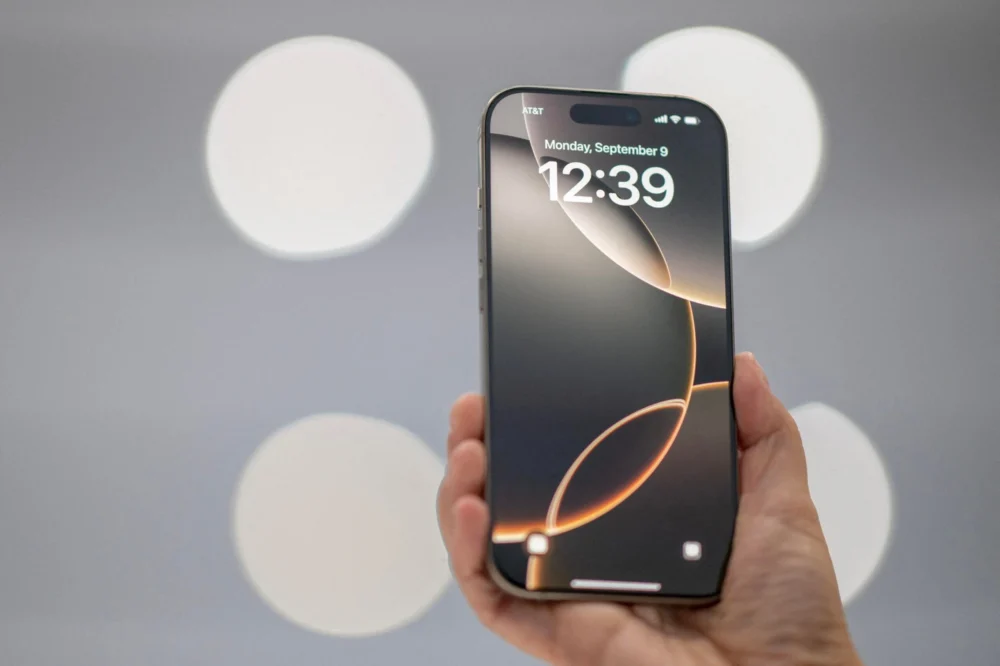
The digital storefront of Apple’s Certified Refurbished section has long served as a quiet barometer for the company’s supply chain health and inventory management strategies. Typically, the arrival of a previous generation’s flagship "Pro" hardware is a calculated, late-spring affair, designed to bridge the gap between the mid-cycle slump and the frenzy of the autumn launch. However, Apple has disrupted its own established timeline by reintroducing the iPhone 16 Pro and iPhone 16 Pro Max to its refurbished catalog significantly earlier than analysts anticipated. This move, while seemingly a boon for budget-conscious enthusiasts, signals a deeper shift in how the tech giant manages product lifecycles, regulatory pressures, and the burgeoning secondary market.
To understand why the appearance of a refurbished iPhone 16 Pro in February is a deviation from the norm, one must look at the traditional "Pro" lifecycle. Since the inception of the Pro tier with the iPhone 11 series, Apple has maintained a strict hierarchy. When new flagship models debut in September, the standard models of the previous year often remain in the lineup at a $100 discount, serving as an entry-level gateway. The Pro models, however, are summarily executed from the primary store. This is not due to a lack of capability; rather, it is a deliberate move to prevent the "Pro" of yesteryear from cannibalizing the sales of the "Pro" of today. If a consumer wants the triple-lens camera system and the highest-tier titanium finish, Apple’s sales strategy dictates they must purchase the latest model—until now.
The pricing structure for these newly listed refurbished units is particularly aggressive. Apple’s methodology for refurbished pricing involves a two-step devaluation process. First, the device is marked down to what its "new" price would have been had it remained in the lineup as a legacy device. Second, an additional percentage is shaved off to account for its status as a pre-owned, albeit factory-certified, unit. For instance, a high-capacity iPhone 16 Pro with 512GB of storage, which debuted at a premium of $1,299, sees an initial $100 reduction for being a "last-gen" device, followed by a substantial $180 "refurbished" discount. At a final price point of $1,019, the device enters a psychological sweet spot, undercutting the current base-model flagship Pro while offering superior storage and proven performance.
The acceleration of this rollout is not merely a coincidence. In previous years, the window for refurbished Pro models to reappear was reliably anchored in the late spring or early summer. The sudden shift began to manifest slightly with the iPhone 15 Pro series, but that was largely attributed to a unique regulatory crisis in Europe. In late 2024, the European Union’s mandate for a universal charging standard effectively outlawed the sale of new devices using the proprietary Lightning connector in 27 member states, plus Switzerland and Northern Ireland. This move decimated Apple’s legacy inventory in those regions, as the iPhone 14, 14 Plus, and the current iPhone SE became overnight contraband. To fill the resulting vacuum in the mid-range price tier, Apple accelerated the release of refurbished iPhone 15 Pro units—the first Pro models with USB-C—to provide European consumers with a viable alternative to the iPhone 16 series.
However, the current availability of the iPhone 16 Pro in the refurbished store is a global phenomenon, extending to the United States and other markets where the Lightning connector remains legal for legacy hardware. This suggests that the "EU factor" is no longer the sole driver of Apple’s refurbished strategy. Instead, we are seeing the maturation of the Apple Trade-In program. In recent years, Apple has become increasingly aggressive in incentivizing consumers to return their old hardware. Through high trade-in valuations and the seamless integration of the "iPhone Upgrade Program," Apple has secured a massive, reliable stream of high-quality, single-owner devices.
When a device is returned to Apple, it undergoes a rigorous restoration process that distinguishes "Apple Certified Refurbished" from the "used" or "renewed" stock found on third-party marketplaces. Each unit receives a brand-new battery—the component most prone to chemical aging—and a new outer shell, ensuring the device is aesthetically indistinguishable from a brand-new unit. The internal components are tested, cleaned, and, if necessary, replaced with genuine Apple parts. Perhaps most importantly, these devices come with a standard one-year warranty and are eligible for AppleCare+. By bringing this inventory to market earlier, Apple is effectively monetizing its trade-in pipeline faster than ever before, turning returned silicon back into liquid capital.

From an industry perspective, the early arrival of the iPhone 16 Pro in the refurbished store has significant implications for the broader smartphone ecosystem. Carrier partners, who often rely on "buy one, get one" deals or heavy subsidies on new hardware, now face competition from Apple’s own storefront. Furthermore, the resale value of the iPhone 16 Pro on the private market (platforms like Swappa or eBay) will likely see a downward adjustment. When Apple offers a "like-new" unit with a fresh battery and a full warranty, it sets a price ceiling that private sellers cannot easily ignore.
This move also reflects a broader trend toward the "circular economy." Tech companies are under increasing pressure from both regulators and ESG-focused investors to reduce electronic waste. By extending the life of an iPhone 16 Pro through a second or third owner, Apple reduces the carbon footprint associated with the device’s manufacturing and mining processes. The company’s "Apple 2030" goal—to be carbon neutral across its entire business, including the product life cycle—depends heavily on the success of these refurbishment programs. Every refurbished sale is a win for the environment, but it is also a strategic win for Apple’s Services division.
The hardware margin on a refurbished iPhone might be lower than that of a new iPhone 17 Pro, but the lifetime value of the customer remains the same. Once a user has an iPhone 16 Pro in their hand, they are part of the ecosystem. They are likely to subscribe to iCloud storage, pay for Apple Music, download apps through the App Store, and use Apple Pay. In the modern era of Cupertino’s business model, the hardware is often the delivery mechanism for a high-margin services suite. By lowering the barrier to entry for "Pro" hardware via the refurbished store, Apple expands its active install base of high-end users who are statistically more likely to spend on premium services.
Looking toward the future, this early release may signal a "new normal" for Apple’s product cadence. As hardware innovation reaches a plateau—where the difference between an iPhone 16 Pro and an iPhone 17 Pro becomes increasingly incremental for the average user—the value proposition of a discounted, high-end refurbished model becomes more compelling. We may be entering an era where the "refurbished" tier is treated as a formal product launch in its own right, strategically timed to capture consumers who are feeling the pinch of global inflation and are increasingly hesitant to cross the $1,000 threshold for a new smartphone.
For the consumer, the calculus is clear. The iPhone 16 Pro remains a powerhouse of mobile technology, featuring the A18 Pro chip, a highly capable 48MP Fusion camera system, and the dedicated Camera Control button. It is a device built for the long haul, with enough RAM and neural processing power to support "Apple Intelligence" features for years to come. For those who don’t require the specific, often niche, upgrades of the current flagship, the refurbished 16 Pro represents the peak of price-to-performance efficiency.
Ultimately, Apple’s decision to bring the iPhone 16 Pro back "sooner than expected" is a multifaceted chess move. It clears out trade-in inventory, counters the stagnation of the new-smartphone market, meets environmental goals, and bolsters the Services ecosystem. It is a reminder that in the world of big tech, the secondary market is no longer an afterthought—it is a vital, integrated component of the primary business strategy. As the lines between "new" and "certified refurbished" continue to blur, the real winner is the consumer who knows exactly where to look for a flagship experience without the flagship price tag.