

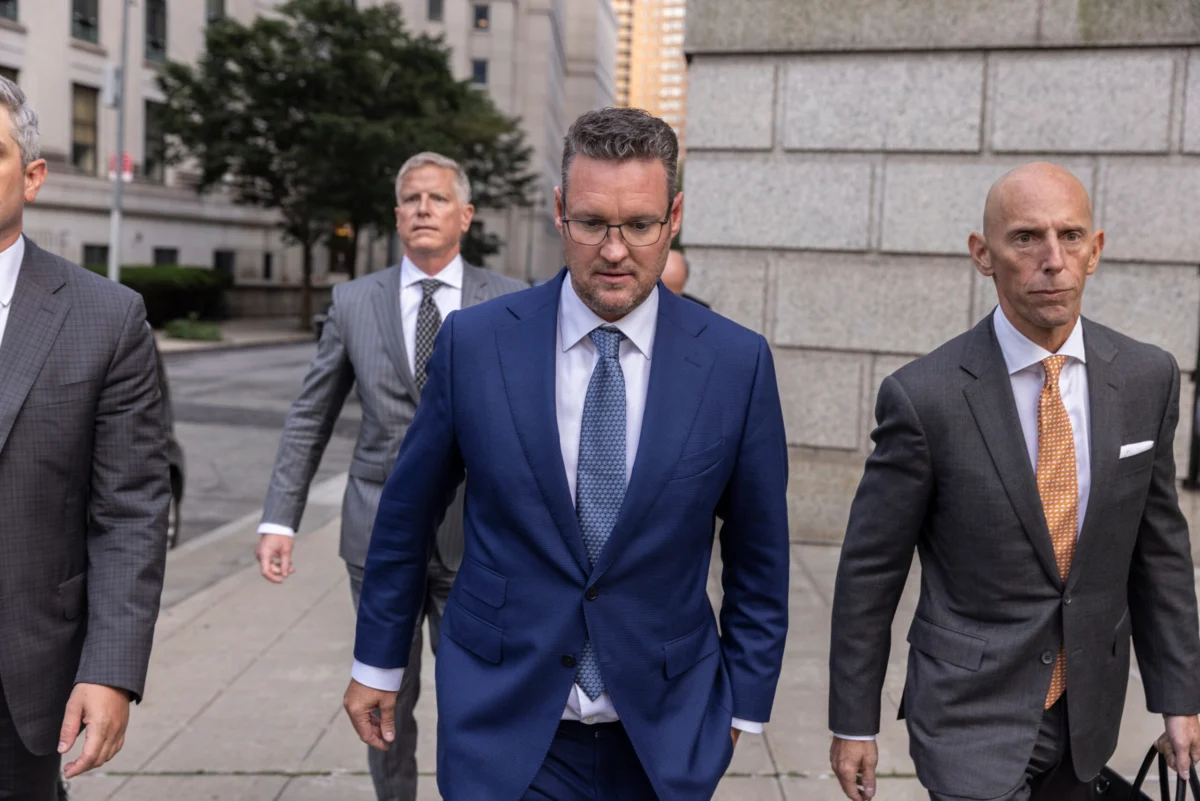
The trajectory of Trevor Milton has been anything but linear. From the meteoric rise of Nikola Corporation to a highly publicized conviction for securities fraud, and subsequently a full presidential pardon, Milton’s career has become a case study in the volatility of the modern industrial titan. Now, approximately one year after receiving a pardon from former President Donald Trump, Milton is attempting a return to the global stage—not on the highways, but in the stratosphere. His latest venture, a high-stakes pivot into autonomous aviation, seeks to raise $1 billion to transform a struggling aircraft manufacturer into a powerhouse of artificial intelligence and defense technology.
The centerpiece of this comeback is SyberJet Aircraft, a boutique aviation firm Milton and an associated investment group acquired late last year. SyberJet, known primarily for its SJ30 light business jet, has long occupied a niche corner of the aerospace market, praised for its performance specifications but hampered by financial instability and production delays. Milton’s entry marks a radical shift in the company’s mission. Rather than simply manufacturing airframes, the goal is to reinvent the very "brain" of the aircraft, leveraging artificial intelligence to create a new standard for autonomous or semi-autonomous flight.
The Shadow of Nikola and the Path to Redemption
To understand the magnitude of Milton’s new ambition, one must first look back at the collapse of his previous empire. Nikola Corporation was once the darling of the "green hydrogen" movement, promising a future where heavy-duty trucking would be emissions-free. At its peak, the company’s valuation rivaled that of legacy automakers like Ford, despite having yet to deliver a commercial product. The downfall was swift, triggered by a short-seller report that alleged the company’s demonstrations were staged—most famously, a video of a truck rolling down a hill to simulate a functional powertrain.
The legal fallout resulted in Milton’s 2022 conviction on multiple counts of fraud. However, the 2024 pardon cleared his legal slate, providing him with the opportunity to re-enter the corporate fray. While the pardon removes the threat of incarceration, it does not necessarily restore the trust of the institutional investment community. This reality makes his $1 billion fundraising target both audacious and essential. In the aerospace industry, where research and development costs are astronomical and regulatory hurdles are legendary, $1 billion is often considered the "table stakes" for meaningful innovation.
SyberJet: From Legacy Hardware to AI Software
The acquisition of SyberJet is a strategic move that provides Milton with an existing platform—a certified airframe. In aviation, achieving Federal Aviation Administration (FAA) type certification for a new aircraft can take a decade and cost billions. By acquiring SyberJet, Milton bypasses the initial design and certification phase of the physical plane, allowing him to focus resources on the "avionics stack."
Milton’s vision involves a ground-up redesign of avionics systems, integrating AI to handle complex flight maneuvers, predictive maintenance, and real-time situational awareness. The objective is to produce the world’s first light jet designed specifically for AI-driven flight. This isn’t just about convenience for corporate travelers; it is a direct play for the lucrative defense sector. The Department of Defense has shown increasing interest in "loyal wingman" programs and autonomous transport, where AI-piloted jets can perform high-risk missions without putting human pilots in danger.
To execute this vision, Milton is leaning on a familiar roster of talent. Reports indicate that "dozens" of former Nikola employees have joined the SyberJet effort. While this speaks to a high level of personal loyalty, it also raises questions about the transferability of skill sets. Automotive engineering and aerospace engineering, while sharing some commonalities, operate under vastly different safety protocols and regulatory regimes.
The $1 Billion Fundraising Challenge
Raising $1 billion is a formidable task for any startup, but for a founder with Milton’s history, it requires a unique pitch. Milton is reportedly looking toward the Middle East, specifically Saudi Arabia, for potential investment. This follows a broader trend of Saudi sovereign wealth funds, such as the Public Investment Fund (PIF), seeking to diversify the Kingdom’s economy through massive investments in Western technology and transportation sectors.
The fundraising effort is being supported by a significant lobbying push in Washington, D.C. Documents suggest Milton has spent hundreds of thousands of dollars on lobbyists to navigate the complex intersection of federal aviation policy and national security. For SyberJet to succeed in the defense space, it must not only prove its technology but also secure the political capital necessary to compete with established giants like Lockheed Martin, Boeing, and Northrop Grumman.
"Ten Times Harder Than Nikola"
In a rare moment of public reflection, Milton has acknowledged the sheer difficulty of his new venture, stating that building AI-powered planes will be "10 times harder" than his work at Nikola. This admission is grounded in the reality of aerospace physics and regulation. In the automotive world, a software glitch might result in a roadside stall; in aviation, the stakes are existential.
The technical challenges are three-fold:
- AI Reliability: Current AI models are often "black boxes," meaning their decision-making processes are not always transparent. The FAA requires "deterministic" systems—systems that will react the same way every time to a specific set of inputs. Reconciling the adaptive nature of AI with the rigid safety requirements of flight certification is one of the greatest hurdles in modern engineering.
- Weight and Power: Integrating high-performance computing into a light jet requires balancing the weight of the hardware and the power required to cool it, all while maintaining the aircraft’s range and speed.
- Market Competition: Milton is not alone in this race. Companies like Joby Aviation, Archer Aviation, and even legacy players like Garmin and Honeywell are pouring billions into autonomous and enhanced flight systems.
Industry Implications and the Future of Autonomous Flight
If Milton succeeds, the implications for the aviation industry could be profound. A truly autonomous light jet would disrupt the private aviation market by reducing the need for two-pilot crews, thereby lowering operating costs and making private flight accessible to a broader (though still wealthy) demographic.
More importantly, the move toward AI-centric avionics signals a shift in the value proposition of aerospace. We are moving away from an era where the airframe was the most important component, toward an era where the software defines the aircraft’s capability. This "software-defined aircraft" model mirrors the transition seen in the automotive industry with Tesla and, ironically, Nikola.
However, the "Milton Factor" remains the wildcard. The success of SyberJet depends on whether investors view Milton as a visionary who was unfairly maligned or a cautionary tale of over-promising and under-delivering. In the world of high-finance and high-altitude engineering, there is little room for error.
The Regulatory and Ethical Landscape
Beyond the technical and financial hurdles lies a complex landscape of ethics and regulation. The introduction of AI into the cockpit brings up the "pilot-in-the-loop" debate. Will the FAA allow a jet to fly without a human pilot ready to take over? Currently, the regulatory framework is geared toward "augmented" flight—AI assisting the pilot—rather than full autonomy. Milton’s quest for a "ground-up" AI system suggests he is aiming for the latter, which could put him on a collision course with regulators for years.
Furthermore, the defense applications of this technology raise ethical questions about autonomous systems in combat or logistics. As Milton courts Saudi investors and D.C. lobbyists, the dual-use nature of his AI jet will likely face intense scrutiny from international watchdogs and trade regulators.
Conclusion: A High-Altitude Gamble
Trevor Milton’s attempt to raise $1 billion for AI-powered planes is more than just a business venture; it is an attempt to rewrite his legacy. By taking on a challenge he admits is ten times more difficult than his previous work, he is positioning himself at the bleeding edge of aerospace innovation.
The coming months will be telling. Will the Saudi capital materialize? Will the former Nikola staff be able to adapt to the rigorous demands of flight certification? And most importantly, can the man who once famously "rolled a truck down a hill" actually make a jet fly itself? The aerospace world is watching with a mixture of skepticism and curiosity. In an industry defined by gravity, Trevor Milton is once again trying to defy it. Whether he reaches the stratosphere or faces another turbulent descent remains the most compelling drama in the tech sector today.