

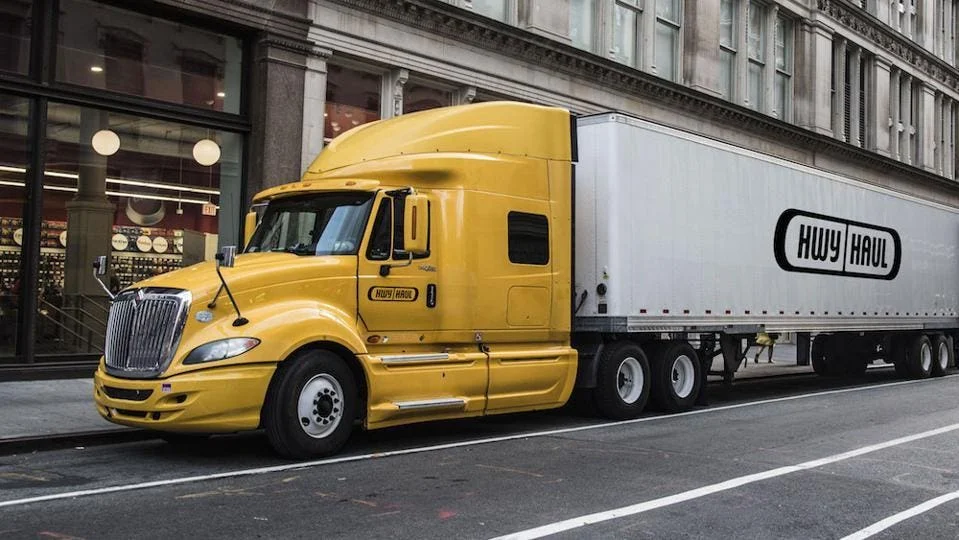
The global shipping and logistics sector is currently navigating one of its most turbulent periods in recent history. Characterized by a "freight recession" that has seen margins collapse and storied carriers shutter their doors, the industry is desperate for a structural transformation. Against this backdrop of economic instability, San Jose-based technology firm Hwy Haul has officially unveiled "Miles," an agentic AI platform designed to serve as an autonomous bridge between shippers, brokers, and carriers. By automating the dense web of manual interactions that define modern freight, the platform aims to do more than just digitize documentation; it seeks to fundamentally alter the profitability profile of an industry currently defined by its fragility.
To understand the significance of this launch, one must first look at the wreckage of the contemporary trucking market. The year 2023 was a period of brutal consolidation. According to data from CarrierOK, nearly 88,000 trucking companies and 8,000 freight brokerages ceased operations during that calendar year alone. This trend of insolvency has shown little sign of abating. In October 2024, the industry witnessed a wave of Chapter 11 and Chapter 7 filings from significant players, including G1 Transport, LLC, GEC Transport Solutions, and Montgomery Transport LLC. These closures are not merely the result of poor management but are symptomatic of a systemic misalignment between operational costs and market demand.

The roots of this crisis can be traced back to the volatility of the COVID-19 pandemic. In 2020, as global lockdowns shifted consumer spending from services to goods, the demand for freight exploded. This created an artificial "gold rush," drawing thousands of new entrants into the trucking space who were eager to capitalize on record-high spot rates. However, as the world reopened and inflationary pressures cooled consumer demand, the market became oversaturated with capacity. Shippers suddenly held all the leverage, dictating prices that often fell below the break-even point for many smaller operators. As Hwy Haul CEO Syed Aman observes, this "shippers’ market" forced carriers to accept low-margin loads just to keep their wheels turning and bills paid—a strategy that, for many, proved unsustainable in the long run.
In this environment, efficiency is no longer a luxury; it is a prerequisite for survival. Hwy Haul’s "Miles" platform enters the market with the promise of addressing the "hidden costs" of logistics—the massive amount of human capital expended on administrative tasks. Through extensive industry interviews, Hwy Haul identified a staggering inefficiency: the average freight load requires between 20 and 25 individual "touches" or manual interventions. These include everything from initial booking and carrier vetting to real-time status updates and delivery confirmation. Cumulatively, these tasks consume roughly four-and-a-half hours of human labor per load. For a large-scale broker or shipper handling thousands of loads monthly, these hours represent a massive drain on resources and a significant barrier to scaling operations.
The "Miles" platform is categorized as "agentic AI," a term that distinguishes it from traditional, reactive software. While standard digital platforms might offer a dashboard for data entry, agentic AI acts with a degree of autonomy. It is designed to "walk the walk and talk the talk" of a human logistics coordinator. This includes the ability to conduct voice-based check-ins with drivers, respond to complex email inquiries from shippers, and manage the nuances of carrier coordination through text. By deploying a suite of these autonomous agents, Hwy Haul claims that companies can reclaim up to 80% of the time previously lost to manual workflows. For an organization managing 100 loads per day, this equates to a daily saving of 75 man-hours, allowing existing staff to focus on high-level strategy and exception management rather than rote data entry.

The financial implications of this shift are profound. Beyond the reduction in payroll expenses, the platform is engineered to optimize rate execution and compliance. By utilizing AI to match loads with the most efficient and compliant carriers, shippers can realize margin improvements ranging from 10% to 50% on the same sets of loads. This is particularly critical in the produce industry, where the stakes of logistics are heightened by the perishable nature of the cargo.
Lipman Family Farms, a major Florida-based produce company, served as a primary testing ground for the platform. Over an 18-month period, the company integrated Hwy Haul’s AI into its operations, eventually transitioning to the "Miles" platform during its final development phase. The results, as reported by General Manager Ryan Focke, provide a compelling case study for the future of the sector. Focke noted that the platform reduced manual touches by 30% to 40% across booking and execution workflows. More importantly, it enabled the company’s planners to handle 1.3 to 1.5 times more load volume without increasing headcount. In an industry where labor is both expensive and difficult to retain, this level of scalability is a game-changer.
Furthermore, the AI’s ability to monitor compliance and risk in real-time led to a 20% to 30% reduction in interactions with high-risk or non-compliant carriers. In the world of freight, a "fall-off"—where a carrier fails to show up for a load—can trigger a catastrophic chain reaction, especially when moving temperature-sensitive goods. By automating the vetting process and maintaining constant communication with drivers, the AI mitigates these risks, protecting the service levels that downstream retailers and consumers depend on.

While the immediate benefits of "Miles" are felt by shippers and brokers, the long-term impact extends to the end consumer. The logistics "tax"—the cost of moving goods from farm or factory to the shelf—is a significant component of retail pricing. In the refrigerated freight sector, waste and spoilage due to delays add another layer of unnecessary cost. Syed Aman suggests that as these AI-driven efficiencies become standard, the resulting savings will eventually flow downstream. Reduced spoilage and lower transportation overhead should, in theory, translate to better availability and lower prices for consumers at the grocery store. However, he acknowledges that the realization of these consumer benefits ultimately depends on the business models of individual retailers and their willingness to pass savings along.
The launch of "Miles" also signals a broader technological trend: the transition from "Software as a Service" (SaaS) to "Agents as a Service." The platform’s subscription model is based on the type of agents utilized—whether voice, email, or text-based—and the volume of service minutes consumed. This allows companies to "hire" digital teammates that can work 24/7, covering after-hours and peak periods that would typically require expensive overtime or third-party dispatch services.
Looking ahead, the success of platforms like Hwy Haul will likely catalyze a wave of technological adoption across the supply chain. We are moving toward a future where the "digital twin" of a shipment is managed entirely by autonomous agents that can negotiate rates, reroute trucks around weather patterns, and resolve disputes without human intervention. This evolution will inevitably lead to a market where the competitive advantage lies not in the size of one’s fleet, but in the sophistication of one’s data stack.

However, this transition is not without its challenges. The logistics industry has historically been slow to adopt new technologies, often hampered by fragmented data and a reliance on legacy systems. For agentic AI to reach its full potential, there must be a greater emphasis on data interoperability and standardized communication protocols between different platforms. Moreover, as AI takes over more administrative roles, the industry will need to rethink the training and development of its human workforce, shifting focus toward roles that require emotional intelligence, complex problem-solving, and strategic oversight.
In conclusion, Hwy Haul’s "Miles" platform represents a significant milestone in the maturation of logistics technology. By addressing the chronic inefficiencies that have contributed to the industry’s current state of distress, it offers a blueprint for a more resilient and profitable future. As the "freight recession" continues to weed out the inefficient, the survivors will likely be those who embrace the autonomous frontier. In the high-stakes world of global shipping, the difference between bankruptcy and prosperity may soon be measured in the "Miles" covered by artificial intelligence.