

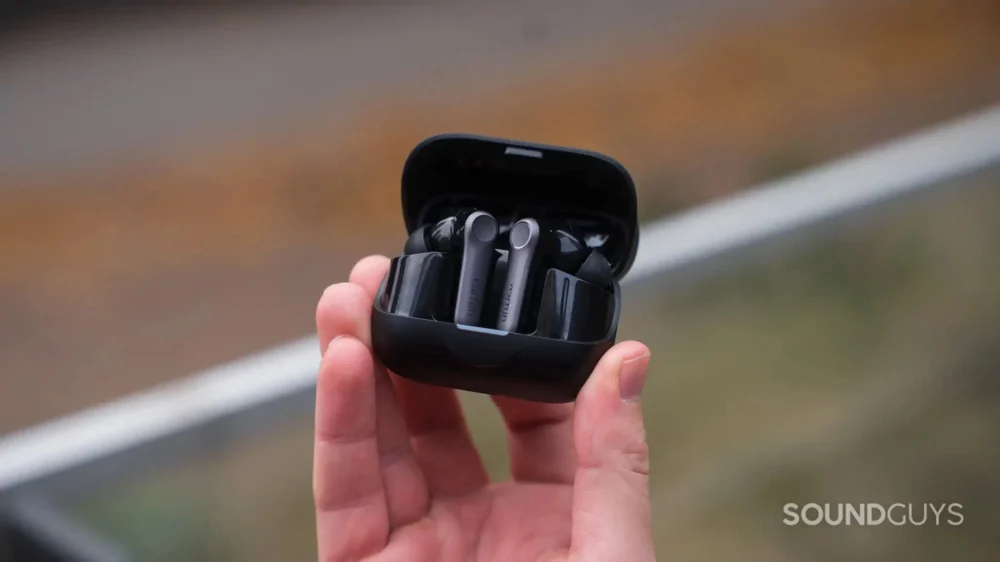
The consumer electronics landscape is perpetually characterized by a tension between cutting-edge innovation and accessible pricing. Nowhere is this dynamic more pronounced than in the True Wireless Stereo (TWS) earbud sector, where flagship models often command prices well into the triple digits. However, the market segmentation is increasingly blurring, exemplified by compelling offerings from brands like EarFun, which consistently challenge the established hierarchy. The current promotional availability of the EarFun Air Pro 4 Plus earbuds presents a fascinating case study in high-value engineering, demonstrating that premium features are no longer exclusive to the upper echelon of pricing tiers. At a discounted price point nearing the psychological barrier of $80, these earbuds offer a feature set that rivals devices costing substantially more, signaling a significant shift in consumer expectations for mid-range audio hardware.
Contextualizing the Value Proposition in the Modern Audio Market
To fully appreciate the significance of the EarFun Air Pro 4 Plus deal, one must consider the broader evolution of TWS technology. A few years ago, features like comprehensive codec support, robust battery endurance, and effective active noise cancellation (ANC) were hallmarks reserved for premium brands. The initial wave of affordable earbuds often necessitated significant compromises—either in sound fidelity, connectivity stability, or feature parity. EarFun, however, has carved out a niche by prioritizing the integration of high-end specifications into budget-conscious designs.
The significance of supporting standards like aptX Lossless and LDAC cannot be overstated. These high-resolution audio codecs are crucial for audiophiles seeking to maximize the quality of lossless streaming services. Historically, including support for both major high-fidelity codecs (Qualcomm’s aptX suite and Sony’s LDAC) within a sub-$100 device was virtually unheard of, as these implementations often involve higher licensing costs or more complex chipset integration. The inclusion of Bluetooth 6 connectivity, representing the latest advancement in wireless audio specifications, further positions the Air Pro 4 Plus as forward-looking hardware, prepared for emerging ecosystem capabilities.
Furthermore, the integration of Auracast technology marks a strategic move toward future-proofing. Auracast, the next generation of Bluetooth audio sharing, promises to revolutionize how users experience public audio—from airport announcements to shared music experiences in public spaces. While its widespread deployment is still nascent, manufacturers who adopt this standard early position their products favorably for future technological integration. For a device priced aggressively, embedding this nascent technology suggests a commitment to longevity beyond immediate sales metrics.
Expert Analysis of Performance Metrics
Independent evaluations, such as those conducted by specialized audio review outlets, provide critical, unbiased scrutiny of these value propositions. The general consensus surrounding the EarFun Air Pro 4 Plus points toward strong overall performance, particularly in areas typically associated with higher price tags. The sound signature is often described as well-balanced and engaging, meeting the expectations of the general consumer base who prioritize clarity and decent low-end response without excessive muddiness.
The battery performance detailed in testing is particularly noteworthy. Achieving over six hours of continuous playback with ANC actively engaged is a competitive metric, even against established premium competitors. When factoring in the recharging capacity of the accompanying case, yielding a total potential runtime approaching 54 hours, the endurance profile suggests these earbuds are suitable for extended travel or multi-day use without frequent tethering to a power outlet. This level of sustained operation directly addresses one of the primary pain points for TWS users: battery anxiety.
The inclusion of an IP55 rating provides robust protection against ingress from dust and water jets. This classification moves beyond the basic splash-proofing (IPX4) often seen in budget models, offering genuine peace of mind for users engaging in rigorous activity, such as running in light rain or using them in dusty environments. Durability standards, often overlooked in the rush for feature parity, are critically important for long-term product viability.
However, professional analysis also highlights areas where cost savings are demonstrably realized. The critique regarding Active Noise Cancellation (ANC) performance is perhaps the most significant trade-off. While the earbuds feature ANC, its efficacy is noted as being less effective than industry-leading solutions. This is a common area where budget manufacturers streamline investment; sophisticated ANC requires advanced computational processing and precisely tuned microphones, which drive up manufacturing costs significantly. For users whose primary requirement is near-total isolation from loud environments, this limitation is crucial to note. Conversely, for users seeking ANC primarily for mitigating low-frequency drone in office settings or on public transport, the existing implementation may still offer a satisfactory level of environmental mitigation.

The accompanying application suite also receives positive mention. In the budget segment, companion apps are frequently rudimentary, offering little beyond basic EQ adjustments or firmware updates. A well-developed app enhances the user experience by providing granular control over features like transparency modes, touch controls, and codec switching, thus elevating the perceived sophistication of the overall product ecosystem.
Industry Implications: The Compression of the Audio Stack
The success of products like the EarFun Air Pro 4 Plus has profound implications for the entire audio industry structure. It forces established market leaders to justify their premium pricing more aggressively. When a sub-$100 device offers Bluetooth 6, LDAC, and substantial battery life, consumers begin to question the incremental value provided by a $250 or $300 alternative.
This phenomenon drives innovation downward. Manufacturers must continuously find efficiencies in component sourcing and manufacturing processes to integrate advanced features at lower costs. This competition fuels a rapid depreciation of previously exclusive technologies. What was bleeding-edge connectivity five years ago is now standard expectation in the mid-range, directly benefiting the consumer.
Furthermore, this trend accelerates the commoditization of certain features. ANC, for instance, is transitioning from a premium differentiator to a baseline expectation, forcing premium brands to innovate further into areas like spatial audio processing, ultra-low latency gaming modes, or highly personalized sound tuning to maintain their price advantage.
The strategic pricing mechanism observed in this deal—combining an automatic discount with a manually clipped coupon—is a sophisticated retail tactic designed to maximize conversion rates on major e-commerce platforms. It leverages the immediate gratification of the automatic reduction while encouraging users to fully engage with the platform’s mechanics to unlock the final, deep discount, effectively capturing the price-sensitive yet engaged shopper.
Future Trajectories and Consumer Adoption
The trajectory of TWS earbuds suggests a future defined by hyper-personalization and seamless ambient computing. Devices will increasingly act as personal sound gateways, managing multiple audio streams (e.g., calls, music, environmental awareness) concurrently.
The inclusion of Auracast by EarFun positions them well for this future. As public infrastructure begins to broadcast standardized audio streams via Bluetooth LE Audio, users of these earbuds will be among the first to benefit without needing proprietary hardware or software from individual venues. This anticipatory engineering suggests a market view extending beyond the immediate competitive landscape.
Looking ahead, the expectation for sub-$100 devices will likely shift toward incorporating advanced biometric sensors for health tracking (heart rate, activity monitoring) and potentially improved spatial audio processing, leveraging head-tracking capabilities. The current performance baseline established by the Air Pro 4 Plus—excellent audio quality, strong connectivity, and high endurance—serves as the new floor, not the ceiling, for what consumers should expect from affordable audio gear.
The current promotional price of $79.99 (representing a substantial reduction from the standard MSRP) positions the EarFun Air Pro 4 Plus not merely as a budget alternative, but as a benchmark for feature density in value-oriented audio. While the compromise in ANC effectiveness prevents it from achieving true audiophile status, the package—especially the high-resolution codec support and future-facing connectivity—offers an undeniable technical advantage at this price stratum. This deal reinforces the narrative that discerning consumers no longer need to overspend to obtain a genuinely high-performing and feature-rich personal audio experience, a reality that continues to reshape the competitive dynamics of the global TWS market. The opportunity represents an intelligent acquisition for anyone prioritizing wireless fidelity and battery longevity over absolute noise cancellation supremacy. The slight deviation from its all-time lowest recorded price does not diminish its standing as an exceptional value proposition in the contemporary consumer electronics ecosystem. This level of feature integration at this cost basis demands serious consideration from both casual listeners and technology enthusiasts tracking the democratization of advanced wireless audio capabilities.