

The landscape of home entertainment is undergoing a subtle yet profound transformation. For decades, the flat-panel television reigned supreme as the undisputed centerpiece of the living room. However, recent advancements in projection technology, particularly when integrated with robust smart operating systems like Google TV, have shifted the calculus for many consumers. The question is no longer solely about replacing a primary TV, but rather recognizing the immense value a high-caliber projector brings as a versatile, dynamic secondary display. These modern projectors offer immersive screen sizes unattainable by consumer-grade televisions at comparable price points, and crucially, they are finally shedding the historical baggage of poor brightness and complicated setup.
The integration of Google TV is perhaps the single most significant catalyst in this shift. The platform transforms the projector from a niche AV component requiring complex configuration into an appliance that feels immediately familiar, offering streamlined access to the entire ecosystem of streaming services, personalized recommendations, and voice control via Google Assistant. Automated features such as instantaneous autofocus and algorithmic keystone correction eliminate the frustrating calibration rituals of previous generations, making deployment as simple as plugging in a streaming stick. This ease of use, combined with significant improvements in luminance and image fidelity, positions these devices not as mere substitutes, but as legitimate competitors for dedicated viewing spaces or supplementary entertainment hubs.
For the discerning technophile or the household looking to maximize screen real estate without the financial commitment of a massive OLED or QLED panel, selecting the right Google TV projector is key. The following analysis highlights four current market leaders that exemplify the cutting edge of this emerging category, balancing performance metrics, feature sets, and overall user experience.
The Evolution of Projection: Context and Industry Implications
To fully appreciate the current offerings, one must understand the trajectory of the projection market. Historically, projectors suffered from low ANSI lumen counts, necessitating dedicated dark rooms, and reliance on external streaming hardware (like a Chromecast or Fire TV Stick) which complicated the user interface. Furthermore, resolution and color accuracy were often compromises reserved for high-end, fixed-installation home theaters.
The contemporary market is characterized by several key technological shifts:
- Brightness Breakthroughs: The widespread adoption of laser-phosphor light sources, and in some premium models, triple-laser technology, has dramatically increased effective brightness (measured in ISO lumens, which is often more representative of real-world performance than traditional ANSI lumens for these devices). This allows projectors to function competently in rooms with moderate ambient light, directly addressing a primary historical weakness.
- Smart OS Integration: Google TV, alongside competitors like Roku or proprietary systems, has standardized the user experience. This convergence means consumers expect the same intuitive interface they use on their primary TV to function flawlessly on their projector, complete with official app support, including critical services like Netflix.
- Automated Calibration: Autofocus, auto keystone correction, and obstacle avoidance (projecting around light switches or decorations) are now standard expected features, democratizing high-quality image placement that once required manual adjustment or specialized mounting.
These innovations signal an industry pivot: projectors are moving from the basement theater niche into the mainstream living room, challenging the traditional dominance of large-format LCD and OLED displays, especially in scenarios where temporary setup or massive screen diagonals (100 inches and above) are desired.
Top Tier Contenders for the Modern Home
The following four devices represent the pinnacle of what the current Google TV projector ecosystem offers, each catering to slightly different priorities, whether it is raw performance, portability, or aesthetic integration.
1. Dangbei DBOX02 Pro: The Performance-to-Price Champion
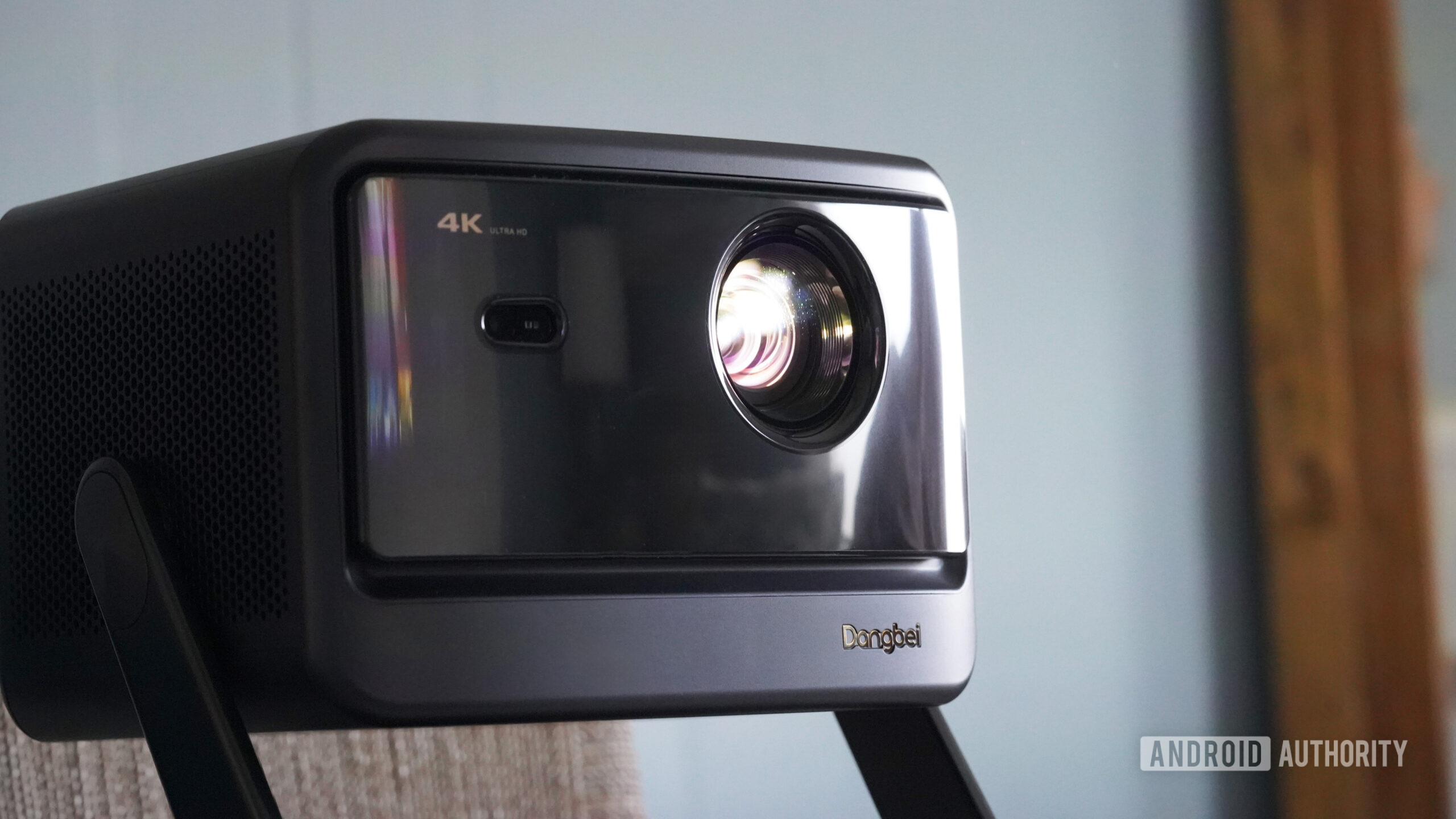
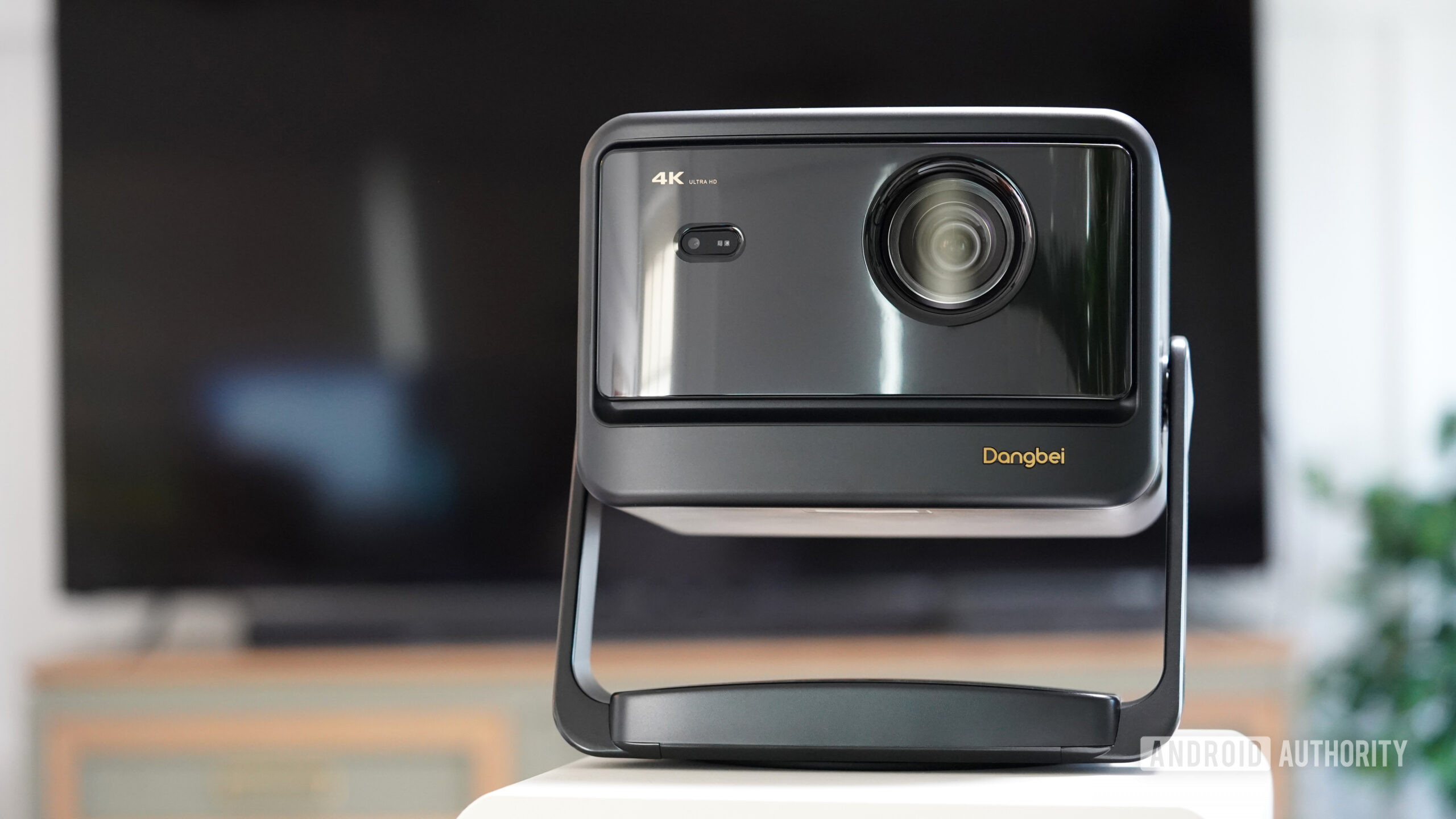
The Dangbei DBOX02 Pro immediately distinguishes itself by offering specifications that often command significantly higher prices elsewhere, making it a compelling proposition for users prioritizing visual punch. Its core strength lies in its laser-phosphor illumination, achieving approximately 2,000 ISO lumens. This level of luminance is crucial; it provides the necessary "punch" to maintain image saturation and detail even when daylight seeps around the edges of curtains or during brightly lit evening viewing sessions. Coupled with a native 4K DLP image and support for HDR10+, the visual impact is immediate and striking, offering depth and dynamic range that belies its relatively compact form factor.
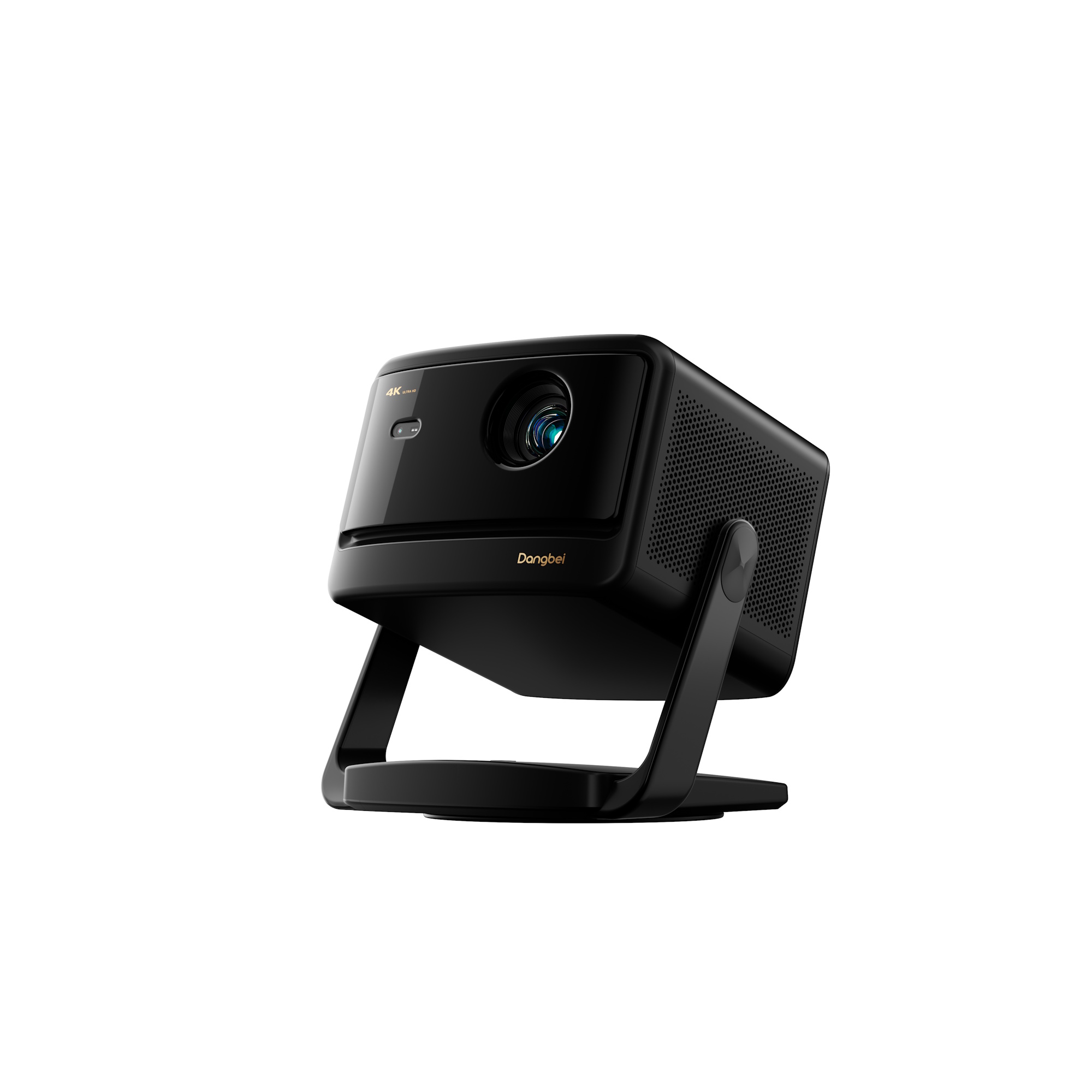
What elevates the DBOX02 Pro beyond a raw spec sheet is the execution of its user experience. The inclusion of Google TV ensures that the navigation feels fluid and immediately accessible. Furthermore, Dangbei has integrated thoughtful hardware features: a highly versatile, compact base that allows for easy tilting and rotation, minimizing placement headaches. The integrated audio solution is robust for a projector of this class, and the inclusion of automatic setup routines is flawless. The eye protection features and the unique one-click dust removal mechanism speak to a higher level of product refinement, suggesting a design philosophy focused on long-term, hassle-free ownership.
However, industry analysis suggests that this superior performance comes at a premium compared to lesser-specified LED models. Consumers must weigh the cost against the tangible benefits of laser brightness and 4K fidelity. For those seeking the best balance between cinematic quality and immediate usability in varied lighting, the DBOX02 Pro represents a significant investment that justifies its price tag through superior optical output.
2. XGIMI MoGo 4: The Ultimate in Flexible Entertainment
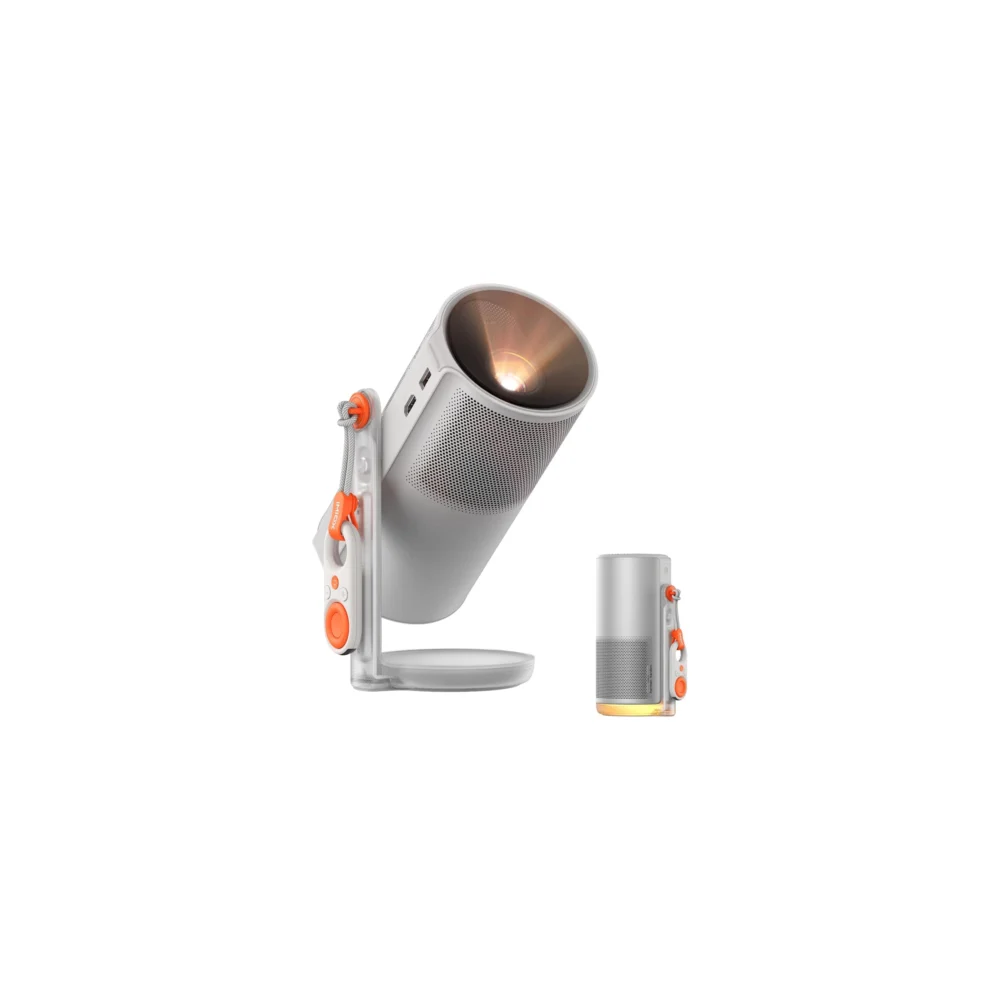
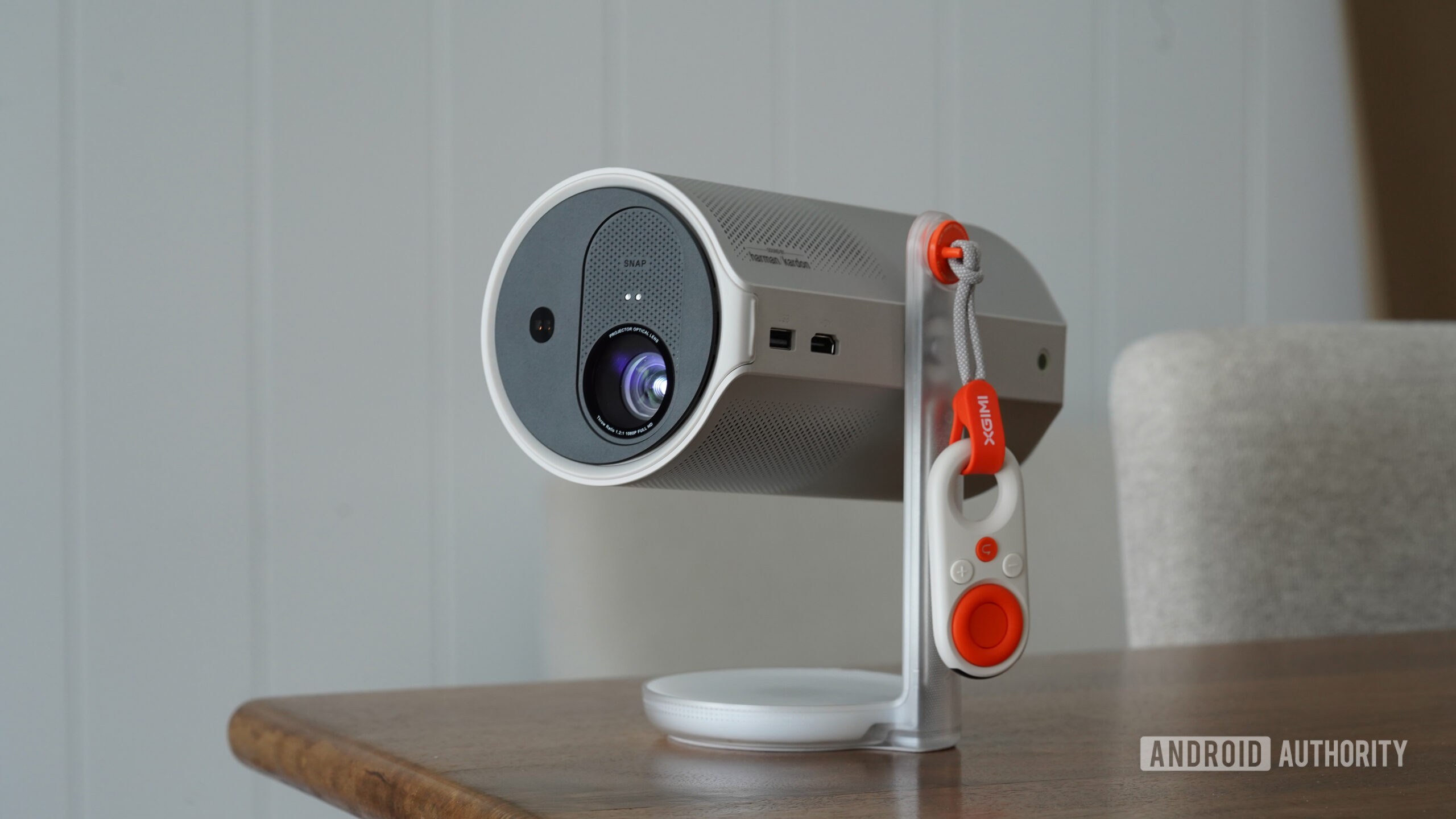
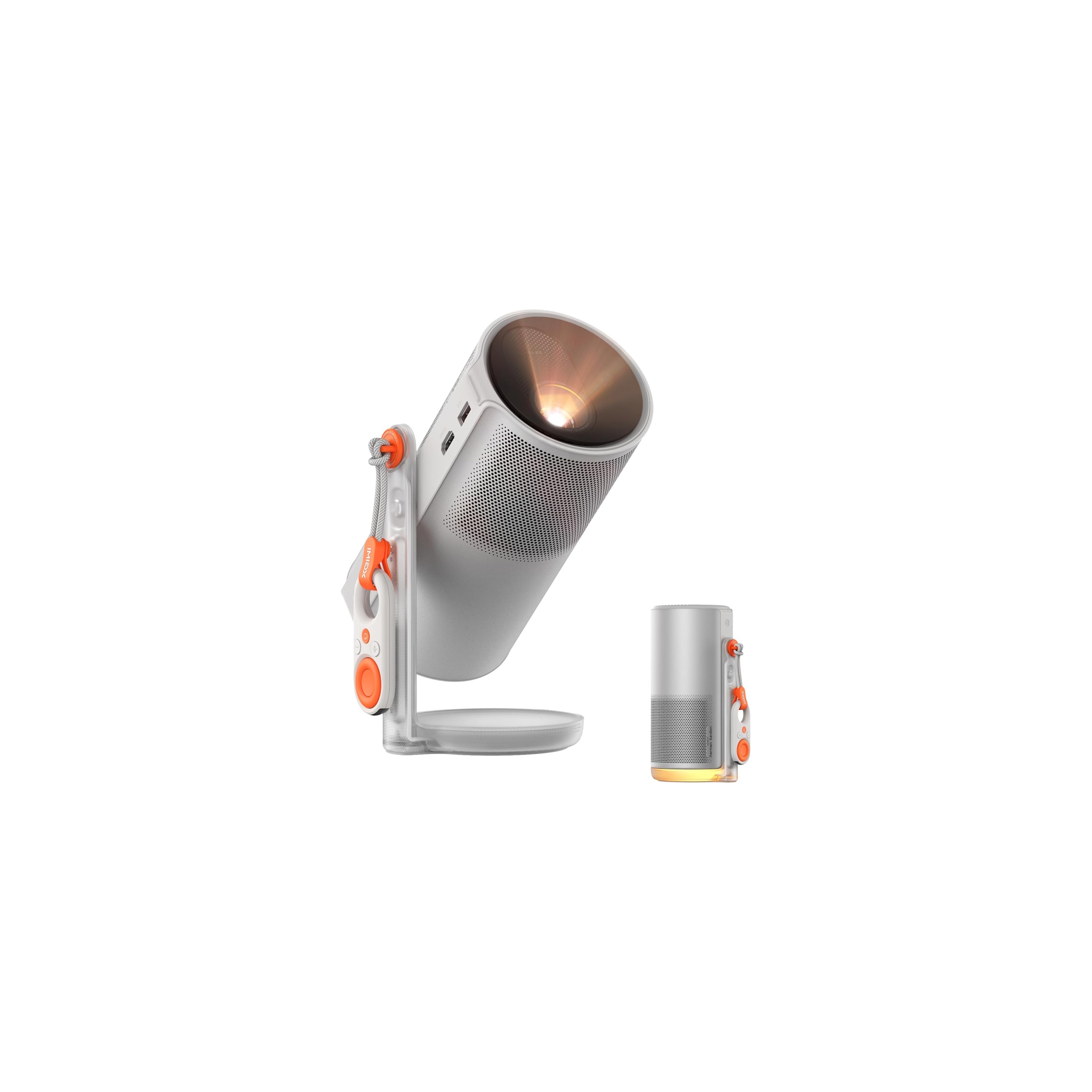
When the requirement shifts from a fixed second screen to a truly mobile entertainment solution, the XGIMI MoGo 4 emerges as the definitive choice. Its design ethos centers entirely around adaptability. It incorporates a powerful internal battery, liberating the device from constant tethering to a power outlet, and features a distinctive 360-degree rotating stand. This physical design allows users to project onto ceilings for bedroom viewing, onto side walls for impromptu gatherings, or outdoors for summer movie nights with minimal fuss.
The MoGo 4 delivers a crisp 1080p image driven by an LED light source. While this resolution benchmark is lower than the 4K offerings, the brightness (around 450 ISO lumens) is sufficient to produce a vibrant picture in low-light conditions, which is the typical environment for battery-powered projection. The inclusion of Google TV is seamless, and XGIMI adds value through unique accessory modes, such as utilizing the unit as a high-quality Bluetooth speaker when the display is off.
The primary trade-off for this supreme portability is reduced light output compared to mains-powered units, making daytime use challenging. Furthermore, the premium pricing reflects the engineering required for the integrated battery and advanced optics within such a small chassis. The MoGo 4 excels as a "room-hopping" device—a digital chameleon that provides cinema-scale viewing wherever the user happens to be, serving a fundamentally different need than a static TV replacement. The optional MoGo 4 Laser variant provides a significant step up in brightness (550 ISO lumens) for those who need better ambient light performance while retaining the core portability, albeit at a substantially higher cost.
3. Epson Lifestudio Flex Plus: Aesthetic Integration and Trusted Optics
Epson, a titan in the display industry known for its 3LCD technology, enters the smart projector fray with the Lifestudio Flex Plus, a device explicitly targeting consumers who value interior design as much as picture quality. The aesthetic is deliberately non-technical—a compact, fabric-wrapped enclosure that mimics modern home decor rather than industrial hardware. This "lifestyle projector" approach is a direct acknowledgment that for many, the device must blend into a curated living space.
Technically, the Flex Plus utilizes Epson’s proprietary 4K PRO-UHD pixel-shifting technology, which delivers an exceptionally sharp and artifact-free image. Epson’s 3LCD architecture inherently avoids the "rainbow effect" sometimes associated with single-chip DLP systems, appealing to sensitive viewers. With 1,000 lumens of brightness (rated across both color and white light), it performs admirably in environments with some controlled light, supported by the integrated Google TV interface.
The major constraint here is the lack of a built-in battery, anchoring it to a power source, which somewhat diminishes its ‘portable’ classification. Given its premium positioning, the cost is high for a non-battery unit. However, for users already invested in the Epson ecosystem or those seeking the most aesthetically harmonious projector that still delivers sharp 4K and smart functionality, the Flex Plus justifies its expense through design quality and optical reliability. The broader Lifestudio range demonstrates Epson’s commitment to this segment, offering smaller, lower-resolution options like the Pop series, though these often trade performance metrics for smaller footprints, sometimes resulting in high relative pricing for entry-level specs.
4. XGIMI Horizon 20 Max: Bridging the Gap to True TV Replacement
For those whose aspirations drift toward replacing their primary television entirely, the XGIMI Horizon 20 Max represents the most compelling argument for that leap. This device steps beyond simple portability and focuses squarely on delivering near-TV level performance in a flexible form factor. Its recognition with an IFA Award in 2025 underscores its market significance. The key differentiator is its adoption of a high-output triple-laser light engine, which pushes illumination levels to an impressive 5,700 ISO lumens. This massive boost in brightness fundamentally changes how the projector can be used, offering vibrant, high-contrast HDR content presentation even in moderately illuminated daytime settings.
The Horizon 20 Max is designed to anchor a primary viewing area. While it remains movable, its size and power requirements suggest a more permanent installation. The image quality derived from the triple laser system is lauded for its color accuracy and superior contrast ratios, moving the viewing experience firmly into the premium home cinema category. It runs Google TV natively, providing the expected smart platform functionality required for a primary display device.
This device sits at the intersection of ultra-short throw (UST) performance and traditional long-throw flexibility. It is not a budget device; its engineering demands a significant outlay. Yet, for a consumer looking to achieve a 120-inch-plus screen with superior brightness and color saturation that challenges high-end fixed displays, the Horizon 20 Max offers a dynamic alternative that avoids the inherent limitations of sheer screen size for conventional flat panels.
Future Impact and Trend Analysis
The current crop of Google TV projectors signals a clear acceleration in consumer acceptance of projection technology. The reliance on integrated smart platforms is de-commoditizing the hardware; the experience layer (Google TV) is now as important as the optics.

Looking forward, we anticipate several trends stemming from this market activity:
- The Luminosity Arms Race: As laser technology becomes more cost-effective, the 2,000 to 3,000 ISO lumen range will become the new baseline for "good" ambient light performance. Projectors that cannot achieve this will be relegated to strictly dedicated dark-room or ultra-portable niches.
- AI-Driven Calibration: The current auto-setup features are impressive, but future iterations will likely integrate more advanced AI to map room acoustics, learn viewing habits, and dynamically adjust picture settings based on the content genre and external lighting conditions in real-time, making the setup process completely invisible to the user.
- Miniaturization of Laser Tech: The push for smaller, battery-powered devices like the MoGo 4 will continue. The challenge remains integrating high-lumen laser sources without generating excessive heat or requiring bulky cooling systems, a hurdle that, once overcome, will make truly powerful, pocketable projectors a reality.
In conclusion, while the traditional television remains the standard for many, the modern Google TV projector has evolved into a formidable, flexible entertainment powerhouse. Whether seeking the raw performance of the Dangbei DBOX02 Pro, the portability of the XGIMI MoGo 4, the design elegance of the Epson Lifestudio Flex Plus, or the primary-display capability of the XGIMI Horizon 20 Max, consumers now have access to devices that deliver cinematic scale and smart convenience, fundamentally redefining secondary home entertainment options.