

The modern urban landscape is increasingly defined by the invisible threads of data and the unblinking eyes of high-definition lenses. In Chicago, this reality has manifested in one of the most comprehensive and integrated municipal surveillance networks in the Western world. With estimates suggesting upwards of 45,000 cameras monitoring the city’s streets, transit hubs, and public spaces, the "Windy City" has become a primary case study for the benefits and burdens of a high-tech security state. This network represents more than just a collection of hardware; it is a sophisticated ecosystem that aggregates data from disparate sources, including the Chicago Public Schools, the Chicago Park District, and the city’s public transportation infrastructure.
Perhaps most significant is the integration of private-sector data. Through partnerships with residential and commercial security providers, such as Amazon’s Ring, law enforcement agencies can now bridge the gap between public property and private doorsteps. Proponents of this vast monitoring apparatus argue that it serves as an essential tool for public safety, providing real-time intelligence that can deter crime and expedite emergency responses. They point to the system’s ability to use license plate readers to track stolen vehicles or identify suspects in high-profile incidents. However, for civil liberties advocates and many local residents, this level of scrutiny evokes the concept of the "panopticon"—a social engine where the constant possibility of being watched forces a chilling effect on human behavior, potentially violating fundamental guarantees of privacy and free speech.
The implications of such a system extend far beyond immediate security concerns. As Chicago’s network grows, it sets a precedent for other metropolitan areas grappling with the balance between safety and liberty. The future of urban living may involve an "algorithmic governance" model, where artificial intelligence analyzes surveillance feeds to predict criminal activity before it occurs. While this could lead to more efficient policing, it also raises the specter of baked-in bias and the erosion of the "right to be anonymous" in public spaces. The debate in Chicago is not merely about cameras; it is about the social contract in a digital age and whether the residents of a city can ever truly be "off-camera."
While the digital eye monitors the macroscopic movements of the city, a different kind of technological revolution is occurring at the microscopic and biomechanical level. For decades, the design of women’s undergarments—specifically bras—has remained remarkably stagnant, relying on traditional tailoring rather than rigorous scientific inquiry. This is beginning to change, thanks to the emergence of specialized fields like breast biomechanics. Joanna Wakefield-Scurr, a professor at the University of Portsmouth in the UK, has spent twenty years attempting to fill a massive gap in medical and engineering knowledge: how to properly support the human body during physical exertion.
Wakefield-Scurr’s 18-person Research Group in Breast Health is addressing a problem that has long been ignored by mainstream sports science. As more women participate in high-impact athletics, the physiological toll of inadequate support has become impossible to ignore. Improperly designed bras can lead to chronic back pain, tissue damage, and a significant "chilling effect" on female participation in sports. The challenge lies in the complexity of the movement itself; breasts do not move in a simple linear fashion but rather in a multi-planar "figure-eight" pattern. Designing a garment that can stabilize this movement without restricting breathing or causing chafing requires sophisticated motion-capture technology and a deep understanding of soft-tissue dynamics. The future of this industry lies in personalized engineering—using 3D body scanning and smart textiles that can adjust their tension based on the intensity of the wearer’s activity.
The shift toward science-backed apparel mirrors a broader trend in technology: the move away from "one-size-fits-all" solutions toward data-driven, individualized design. However, as we look at the broader landscape of technological implementation, we see that the same tools used for progress can also be weaponized or used for controversial social engineering. For instance, the expansion of the United States’ detention infrastructure has recently come under scrutiny following the discovery of metadata in government planning documents. These files revealed the identities of personnel involved in authorizing massive new detention centers for Immigration and Customs Enforcement (ICE). This leak highlights a growing tension in the public sector: the use of digital tools to manage populations and the inevitable "digital paper trail" that allows for public accountability.

This tension is also visible in the global theater of cybersecurity. The United Arab Emirates recently reported a wave of AI-backed cyberattacks targeting vital infrastructure. While the specific methods remain undisclosed, the incident signals a shift in the nature of digital warfare. AI is no longer just a tool for productivity; it is a force multiplier for malicious actors, capable of automating the discovery of software vulnerabilities and crafting highly convincing phishing campaigns. As AI becomes more integrated into the global economy, the surface area for these attacks grows, leaving small-scale defense suppliers and critical infrastructure particularly vulnerable.
The public’s perception of these advancements is increasingly polarized. While tech leaders remain bullish on the transformative power of AI, there is a burgeoning backlash among the general population. Social media platforms, which often reward extreme viewpoints, have historically amplified "AI boosterism," but they are now seeing a rise in skepticism regarding the ethical and environmental costs of these technologies. Sam Altman, CEO of OpenAI, recently attempted to contextualize the massive energy requirements of training large language models by comparing it to the energy required to "train" a human being over twenty years. While provocative, the comparison ignores the fundamental difference in scale: humans are a biological constant, whereas the energy demands of global AI clusters are growing exponentially, threatening to outpace the transition to green energy.
This energy hunger brings the digital world into direct conflict with the physical environment, as seen in the struggle over data center construction. Across the United States, farmers and rural landowners are increasingly finding themselves on the front lines of a battle against "Big Tech." Developers are offering millions of dollars for land that has been in families for generations, intending to build the massive server farms that power the cloud. While these centers are essential for the modern economy, they are often met with local hostility due to their immense water and power consumption, as well as their minimal contribution to local employment once construction is complete.
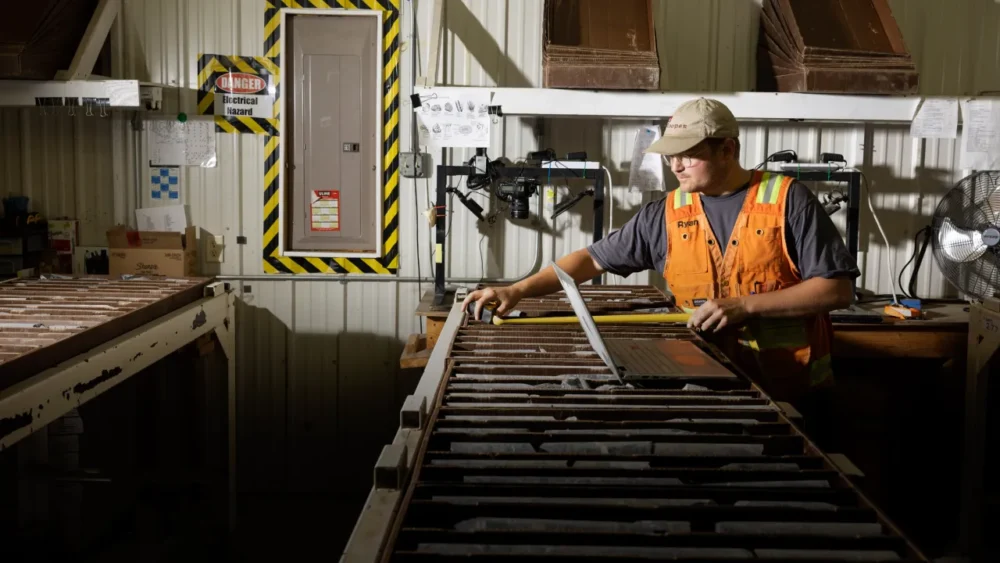
Despite these conflicts, technology remains the primary engine for addressing the climate crisis, though the path is rarely straightforward. In Minnesota, the Tamarack nickel mine project illustrates the complexities of the green transition. The mine represents one of the densest nickel deposits in the country, a critical component for the lithium-ion batteries that power electric vehicles (EVs). Under the Inflation Reduction Act, the mine could unlock billions in federal subsidies aimed at creating a domestic supply chain for EVs, reducing reliance on foreign adversaries. Yet, the project faces rigorous regulatory hurdles and environmental concerns, highlighting the paradox of "green mining"—the necessity of extracting minerals to save the planet from the effects of carbon emissions.
The complexity of our climate future is further muddied by the difficulty of modeling it. Meteorologists and climate scientists are currently struggling with "the ghost in the machine": clouds. Despite our advances in supercomputing, the behavior of clouds remains one of the greatest uncertainties in climate modeling. They can both trap heat and reflect sunlight, and their feedback loops are incredibly difficult to predict. As AI is deployed to help parse these complex datasets, it often runs into more mundane hurdles, such as its persistent inability to accurately "read" and interpret PDF documents—a reminder that for all its perceived brilliance, artificial intelligence still struggles with the legacy formats of the human world.
Even in the most intimate corners of human health, technology is asserting its presence. Researchers are now developing "smart underwear" equipped with sensors to analyze gastrointestinal health by monitoring flatulence—a "Fitbit for farts" that could provide early warnings for digestive disorders. Meanwhile, younger generations are processing their relationship with the modern world through the lens of "WorkTok," a TikTok subculture that both satirizes and romanticizes the daily grind of corporate life.
From the surveillance towers of Chicago to the biomechanical labs of Portsmouth and the nickel mines of Minnesota, the trajectory of technology is one of increasing integration and unavoidable friction. We are building a world that is more monitored, more engineered, and more data-dependent than ever before. Whether these tools lead to a more secure and efficient society or a more restrictive and exhausted one will depend not on the hardware itself, but on the ethical frameworks and public policies we build around them. As we navigate this landscape, the challenge remains to ensure that the "nice things" we create—from ancient Roman-style pizzas to gold-medal figure skating routines—are not lost in the noise of the digital panopticon.