

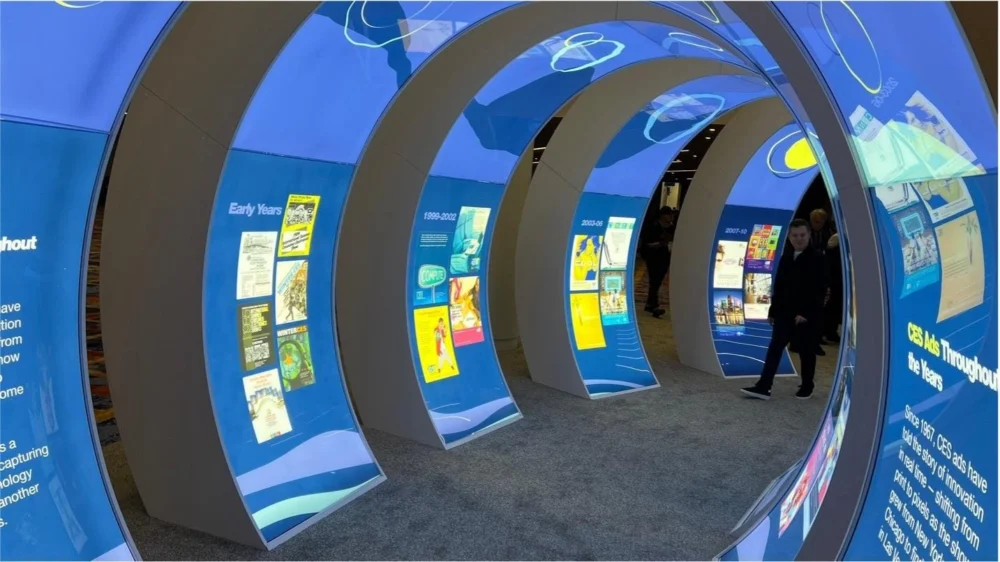
As the dust settles on the 2026 Consumer Electronics Show (CES), a clear narrative has emerged: the artificial intelligence revolution has moved past the "model" phase and into the "infrastructure" phase. While previous years focused on the capabilities of Large Language Models (LLMs) and generative algorithms, this year’s exhibition in Las Vegas shifted the spotlight to the physical silicon required to sustain them. In the high-stakes world of semiconductor evolution, the message is undeniable: AI is only as capable as the memory that feeds it and the storage that preserves it. From the massive data centers powering the cloud to the ultra-low-power microcontrollers in wearable smart rings, the industry is witnessing a total architectural overhaul of digital persistence.

The central theme of the event was the "Data Gravity" of AI. As models grow in complexity, the latency involved in moving data from storage to the processor becomes the primary bottleneck. Nvidia addressed this directly with the unveiling of its Inference Context Memory Storage platform. Utilizing the BlueField-4 Data Processing Unit (DPU), this technology aims to minimize the "memory wall"—the gap between processor speed and memory access time—by creating a specialized tier of memory specifically for inference contexts. This allows for near-instantaneous retrieval of the massive datasets required for real-time AI reasoning, a development that will likely redefine the efficiency of next-generation data centers.
However, the innovation was not limited to the enterprise sector. Consumer giants Samsung and LG dominated the conversation by outlining their roadmaps for integrating local AI across their entire product ecosystems. This "On-Device AI" movement represents a fundamental shift in how consumer electronics are designed. By moving inference away from the cloud and onto the device, manufacturers are placing an unprecedented demand on high-performance NAND and DRAM. If a refrigerator or a television is expected to perform real-time visual recognition or natural language processing, the underlying storage must be faster, more reliable, and more energy-efficient than ever before.

Kioxia, a perennial leader in the flash memory space, showcased the physical manifestation of this demand at the Venetian Conference Center. Their presentation of the BG7 client SSD series highlighted a growing industry trend: the rise of DRAM-less designs. By utilizing PCIe 4.0 and NVMe 2.0d compliance, the BG7 series achieves sequential read performance of up to 7GB/s and random read/write speeds of 1M IOPS. What makes this significant is the 67% improvement in sequential write performance over the previous generation. This leap is attributed to Kioxia’s proprietary CMOS directly Bonded to Array (CBA) technology. In a CBA architecture, the CMOS logic and the NAND memory cells are manufactured on separate wafers and then bonded together, allowing for independent optimization of both the logic and the memory density.
Beyond current-gen products, Kioxia offered a glimpse into the future of high-density storage with its 10th-generation BiCS NAND wafer. Featuring a staggering 332 layers, this technology represents the cutting edge of 3D NAND vertical scaling. As the industry pushes toward 400 and 500 layers, the challenges of structural integrity and thermal management become paramount. Kioxia’s Gen 10 BiCS promises not only higher capacities but also a significant reduction in power consumption per bit, a critical factor for the massive server farms that underpin the global AI infrastructure.

The branding landscape of storage also saw a major consolidation at CES 2026. Western Digital has officially pivoted its consumer-facing strategy, rebranding its enthusiast-grade WD_BLACK and WD Blue NVMe lineups under the "SanDisk Optimus" umbrella. This move appears to be an effort to leverage the strong professional reputation of the SanDisk brand across a wider spectrum of users. The new hierarchy—Optimus for creators, Optimus GX for gamers, and Optimux GX Pro for high-end AI workstations—suggests a market that is increasingly segmented by workload rather than just capacity. The GX Pro, in particular, is designed to handle the heavy read/write cycles of developers training local models on AI PCs, a niche that is rapidly becoming a mainstream category.
In the controller space, Phison demonstrated why they remain the "brains" behind many of the world’s most popular SSDs. Their E37T PCIe Gen5 controller is a masterclass in balancing performance with thermal constraints. While Gen5 storage has historically been plagued by high heat, the E37T is a DRAM-less design optimized for the compact M.2 form factors (2230 and 2242) found in handheld gaming consoles and ultra-portable notebooks. By reaching 4.8GT/s without the need for a dedicated DRAM chip, Phison is enabling Gen5 speeds in devices where space and cooling are at a premium.

For the creative professional community, Other World Computing (OWC) pushed the boundaries of external throughput with the introduction of the Envoy Ultra and the ThunderBlade X12 Expansion. Leveraging the massive bandwidth of Thunderbolt 5, the Envoy Ultra 8TB SSD provides a glimpse into a future where external drives match the speed of internal motherboards. Even more impressive was the ThunderBlade X12, a RAID-optimized powerhouse capable of housing up to 192TB of TLC NVMe storage. With sustained write speeds of 5.99GB/s, this device is targeted squarely at the 8K and 12K video production markets. OWC’s investment in the Strada peer-to-peer collaboration platform further underscores a shift from simple storage to integrated "data workflows," allowing editors to collaborate on massive local files in real-time across the globe.
The show also featured a surprising touch of industry nostalgia with the revival of the Conner brand. Originally a pioneer of the 3.5-inch hard drive in the 1980s, the new Conner has emerged as a provider of portable NAND flash products, including external SSDs and hybrid charging-storage devices. While it remains to be seen if the brand can reclaim its former glory, its presence at CES 2026 highlights the enduring value of legacy names in a crowded marketplace.

Perhaps the most technically significant developments occurred in the realm of "Emerging Memories"—non-volatile technologies that aim to bridge the gap between the speed of DRAM and the persistence of Flash. Magnetoresistive RAM (MRAM) and Resistive RAM (ReRAM) were major talking points. NXP Semiconductors demonstrated the real-world utility of MRAM in the automotive sector with its S32KS MCU. Built on a 16nm process, this microcontroller uses embedded MRAM to enable the "Software-Defined Vehicle" (SDV). In an automotive context, MRAM is superior to traditional Flash because it allows for faster over-the-air (OTA) updates and higher endurance, which is vital for the safety-critical systems involved in autonomous driving.
Ambiq, a leader in ultra-low-power silicon, took this a step further by integrating an ARM Ethos-U85 Neural Processing Unit (NPU) into its latest System-on-Chip (SoC). Designed for "AI at the Edge," Ambiq’s chips use Subthreshold Power Optimized Technology (SPOT) to run AI models on milliwatts of power. During the event, Ambiq revealed that while their 22nm products currently utilize 4MB of embedded MRAM from TSMC, their future, smaller-lithography chips will transition to TSMC’s RRAM (Resistive RAM) technology. This shift is a strong indicator that ReRAM is nearing the maturity required for mass-market consumer devices, particularly in the wearable and "smart ring" sectors where every micro-joule of energy counts.

The validation of ReRAM was further cemented by the announcement of a major licensing agreement between Weebit Nano and Texas Instruments (TI). This partnership will see Weebit’s ReRAM technology integrated into TI’s advanced process nodes. For the semiconductor industry, this is a watershed moment. Texas Instruments is a titan of industrial and automotive processing, and their adoption of ReRAM suggests that the technology is finally ready to move beyond the laboratory and into the global supply chain. ReRAM offers significant advantages over traditional embedded Flash, including lower voltage requirements and better performance in harsh environments, making it ideal for the industrial internet of things (IIoT).
Finally, the high-performance memory sector saw a significant update from SK hynix, which showcased its 48GB HBM4 (High Bandwidth Memory) modules. Featuring a 16-high DRAM die stack, HBM4 is the essential fuel for the GPUs that power the world’s most advanced AI training clusters. As the industry moves away from HBM3e, the transition to HBM4 represents a critical leap in memory bus width and power efficiency, ensuring that the next generation of AI accelerators will not be starved for data.

Looking forward, the innovations presented at CES 2026 suggest a future where the distinction between memory and storage continues to blur. We are entering an era of "Storage-Class Memory," where the persistence of a hard drive meets the speed of RAM. Whether it is through the vertical scaling of 3D NAND, the adoption of MRAM in our cars, or the integration of AI-specific memory tiers in our data centers, the infrastructure of the digital world is being rebuilt from the ground up. The AI revolution is no longer just about the brilliance of the code; it is about the resilience and speed of the silicon that holds it. As we move toward 2027, the companies that control the flow of data will undoubtedly be the ones that define the future of intelligence itself.