

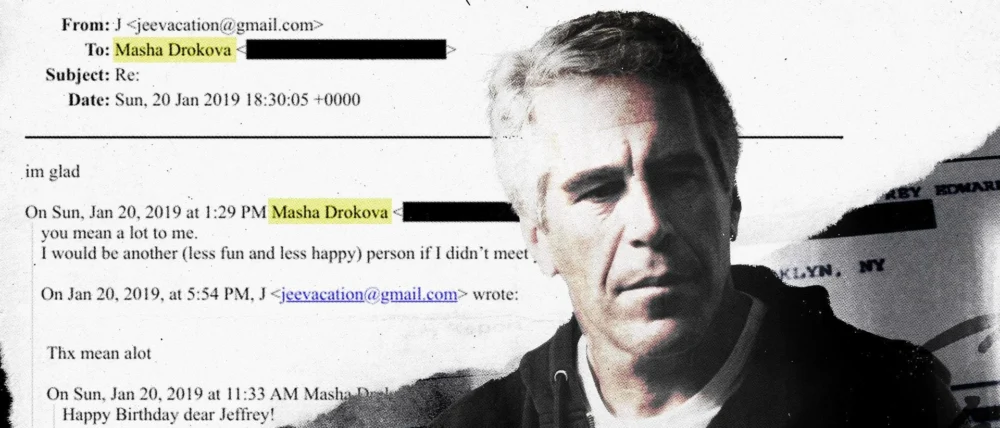
In the hushed, opulent corridors of a Manhattan Upper East Side mansion, the intersection of old-world wealth and new-age technology once took a chillingly tangible form. Under the gaze of a nine-foot-tall oil painting depicting a former U.S. President in a suggestive blue dress, a startup founder waited for a meeting that promised to be a turning point for his company. The meeting had been brokered by Masha Bucher, an investor who framed the host, Jeffrey Epstein, as a sophisticated philanthropist with a voracious appetite for scientific advancement. It was only during the transit to the townhouse that a cursory digital search revealed the host’s true, predatory history.
The subsequent encounter, as recounted by the founder under the veil of anonymity, was less a business pitch and more a performance of power. Epstein arrived late, brushed aside inquiries regarding his financial management career, and instead chose to flaunt his proximity to the titans of the digital age—Bill Gates and the founders of Google. The pitch was eventually derailed entirely when two young women entered the room, one taking a seat on Epstein’s knee as he leered at the founder, challenging him to guess their ages. This "radioactive" atmosphere, as the founder described it, was a microcosm of a much larger, more systemic web of influence that is only now being fully mapped through the release of millions of internal documents.
The revelation of these interactions, surfacing through a massive Department of Justice document dump mandated by the Epstein Files Transparency Act, has cast a long shadow over the career of Masha Bucher, the founder of Day One Ventures. The cache of 3.5 million emails and messages details a relationship that was far more than a passing acquaintance; it was a foundational partnership. Between 2017 and 2019, Bucher—then known by her maiden name, Drokova—acted as a bridge between the convicted sex offender and the Silicon Valley elite, facilitating at least nine high-level introductions while simultaneously receiving Epstein’s mentorship and financial patronage as she built her own venture capital empire.
The Genesis of Day One: Mentorship and Reputation Management
The relationship between Bucher and Epstein began in 2017, a period when Epstein was aggressively attempting to rehabilitate his public image following his 2008 conviction for sex trafficking involving minors. Bucher, a Russian-born publicist in her late 20s, was brought into his inner circle specifically to massage his reputation. The documents illustrate a transactional bond: she brokered meetings with technology journalists and scientific researchers, while he provided the luxury trappings of a high-flying New York life. Assistants were tasked with purchasing Prada handbags for her, booking appointments at the exclusive Fekkai Salon, and arranging stays at the Four Seasons, all on Epstein’s dime.
However, the influence went deeper than mere aesthetics. In a 2019 text message, Bucher credited Epstein with the very existence of her firm, Day One Ventures, stating she would never have created the fund without the "ideas and knowledge" he shared. This admission is particularly striking given Bucher’s meteoric rise in the venture capital world. Today, at 36, she oversees a fund that has raised over $450 million and claims early stakes in 22 "unicorns"—startups valued at over $1 billion. Her portfolio includes some of the most sensitive and high-profile companies in the world, such as Elon Musk’s xAI, Sam Altman’s World (formerly Worldcoin), and the nuclear reactor developer Valar Atomics.
For a Russia-born publicist with no previous track record in institutional investing or a stint at a prestigious Sand Hill Road firm, this level of success is an anomaly. The documents suggest that while there is no direct evidence of Epstein investing his own capital into Day One, he served as a strategic architect, offering introductions to "adequate Russian oligarchs" and advising her on the psychology of the exit. When one of her angel investments, Acquired.io, was sold in late 2018, she thanked Epstein for his earlier advice that "women are not great investors because they don’t sell," claiming the realization helped her secure the deal.
The Geopolitical and Reputational Context
Bucher’s background adds another layer of complexity to this narrative. Long before she entered the Manhattan social scene, she was a prominent figure in Russia as a leader of Nashi, a pro-Kremlin youth movement. Her proximity to power was literal; she was the subject of the 2012 documentary Putin’s Kiss, titled after an incident where she kissed the Russian President on the cheek. While she has since renounced her Russian citizenship and expressed regret over her past political affiliations, her history has invited persistent scrutiny, especially as she pivots Day One Ventures toward the defense and dual-use technology sectors.
The venture capital world is currently seeing a surge of interest in "Defense Tech," with a new hub emerging in El Segundo, California. Bucher has positioned herself at the center of this movement, backing companies like Rainmaker (cloud seeding) and Starpath (space infrastructure). However, the revelation of her ties to Epstein has caused friction within this community. Augustus Doricko, CEO of Rainmaker, recently stated that he severed ties with Bucher and Day One after investigating her background, expressing regret over the lack of initial due diligence regarding his investors.
Silicon Valley’s Selective Blindness
The Epstein files do more than implicate a single venture capitalist; they provide a searing critique of the culture of Silicon Valley and the broader financial elite. The list of names appearing in the documents reads like a directory of global power: from Donald Trump and Peter Thiel to Bill Gates and Reid Hoffman. While many of these figures have characterized their interactions as brief or purely professional, the sheer volume of correspondence suggests that Epstein’s townhouse was a hub for the kind of "off-the-books" networking that drives the tech industry.
The industry’s willingness to engage with Epstein, even after his status as a sex offender was a matter of public record, speaks to a phenomenon known as "reputational laundering." In this process, individuals with tainted backgrounds use their wealth to fund scientific research, philanthropic endeavors, and high-growth startups to buy back social legitimacy. For the founders and investors who accepted these introductions, the allure of "smart money" and high-level connections often outweighed the moral hazards.
Expert Analysis: The Ethics of Capital and the Future of Due Diligence
The fallout from the Epstein disclosures is likely to trigger a shift in how venture capital firms conduct their own internal audits. Historically, the "Know Your Customer" (KYC) and "Anti-Money Laundering" (AML) protocols in venture capital have been less stringent than those in traditional banking. The focus has primarily been on the viability of the technology and the pedigree of the founders, rather than the secondary and tertiary connections of the investors.
Industry analysts suggest that we are entering an era of "Radical Transparency." Limited Partners (LPs)—the institutional investors like pension funds and university endowments that provide the capital for VC firms—are increasingly demanding more rigorous background checks on the General Partners (GPs) who manage their money. The association with "toxic" figures is no longer just a PR headache; it is a fiduciary risk. If a fund manager’s reputation is compromised, it can lead to "key man" clause activations, where LPs can halt further investment or demand the dissolution of the fund.
Furthermore, the intersection of foreign influence and domestic defense technology is becoming a flashpoint for national security. As firms like Day One Ventures move into the development of nuclear reactors and AI-driven defense systems, the scrutiny from organizations like the Committee on Foreign Investment in the United States (CFIUS) will only intensify. The "Russia-born former publicist" narrative, combined with documented ties to a disgraced financier, creates a profile that is increasingly difficult to defend in a geopolitical climate defined by heightened suspicion.
Future Trends and Industry Implications
The long-term impact of the Epstein files will likely manifest in three key areas:
- The Professionalization of VC Reputation Management: We are likely to see the rise of specialized firms that conduct deep-dive forensic audits on the social and financial networks of emerging fund managers. The "gut feeling" approach to backing a new VC is being replaced by data-driven risk assessment.
- The Decentralization of Influence: The era of the "Manhattan Townhouse" power broker may be waning. As the tech industry becomes more geographically distributed and as digital transparency makes secret meetings harder to maintain, the traditional gatekeepers of influence are losing their monopoly.
- A Re-evaluation of "Founder-Friendly" Terms: For years, the mantra in Silicon Valley was that capital should be "founder-friendly," meaning fewer strings attached. However, the Epstein saga demonstrates that the source of capital and the nature of the network it brings can be a liability. Future founders may prioritize "clean capital" over the highest valuation.
As for Masha Bucher, her journey from a pro-Kremlin youth leader to a Manhattan publicist for a pedophile, and finally to a high-stakes venture capitalist, remains one of the most improbable arcs in modern finance. While she has previously stated that she regrets not doing more research into Epstein’s background, the newly released documents suggest a level of gratitude and professional reliance that contradicts a narrative of accidental association.
The story of Day One Ventures is not just a story about one woman or one disgraced financier. It is a cautionary tale about the permeability of the elite and the ease with which "radioactive" influence can be converted into institutional power. In an industry built on the promise of building a better future, the ghosts of the past—and the shadows of those who funded it—continue to haunt the ledger. The architectural lines of influence, once hidden behind the ornate doors of an Upper East Side mansion, are now being redrawn in the light of day, forcing a reckoning that Silicon Valley has long sought to avoid.