

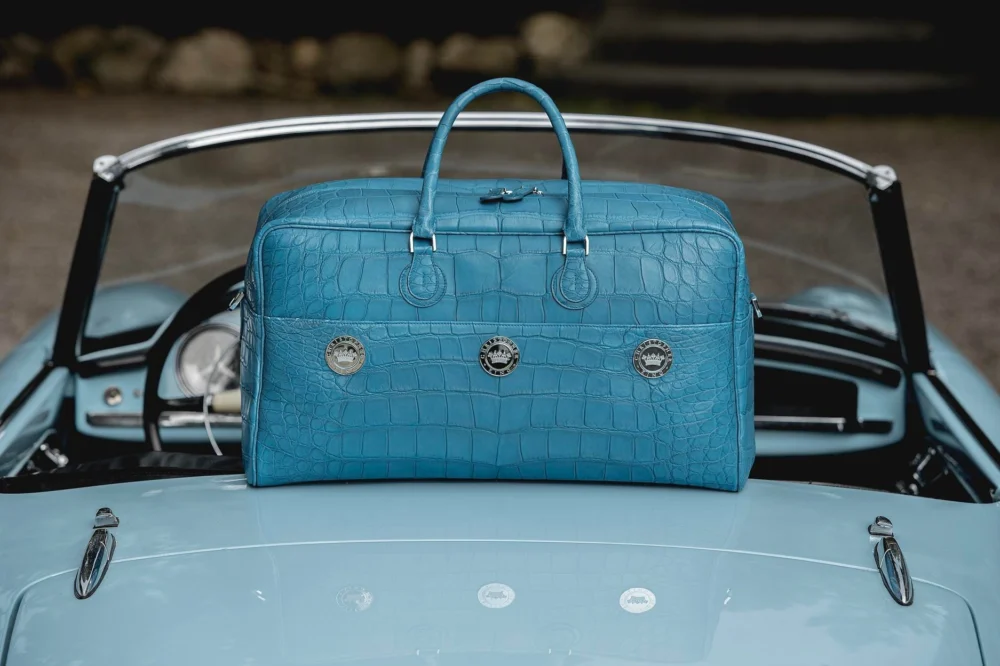
In an era defined by the rapid acceleration of "fast luxury"—a paradox where heritage brands often compromise on internal components to satisfy global supply chain demands—a radical counter-movement is beginning to take shape. At the center of this shift is Christopher King, a designer whose eponymous brand is less a fashion label and more a manifesto on the preservation of artisanal integrity. King’s approach to the creation of leather goods represents a departure from modern manufacturing norms, favoring a rigorous, almost obsessive adherence to natural materials and generational Italian craftsmanship. By stripping away the synthetic shortcuts that have become industry standards, King is attempting to redefine what it means to own an "investment piece" in the 21st century.
The genesis of King’s venture was born from a realization regarding the structural economics of the fashion industry. For decades, the most recognizable names in high fashion have operated on a model where the "art"—the runway collections and avant-garde designs—functions as a loss leader. These houses often sustain their financial viability through high-margin licenses, perfumes, and entry-level accessories that utilize lower-tier materials. King, however, sought a more direct path. Recognizing that leather goods are frequently the bedrock of a brand’s longevity, he chose to focus on the product itself as the primary vehicle for both profit and prestige. His goal was not merely to enter the market, but to establish a benchmark of quality so high that it would be "patently obvious" to anyone who examined the work on an incremental level.
The Philosophical Rejection of Synthetics
One of the most striking aspects of the Christopher King brand is its absolute prohibition of synthetic fibers. In a market where even the most expensive luxury handbags often utilize polyester linings, nylon threads, or plastic-based reinforcements (such as "bonded" leather or synthetic foams), King’s commitment to 100% natural materials is a logistical anomaly. He likens his design process to the culinary arts, suggesting that the quality of the final "meal" is entirely dependent on the purity of the raw ingredients.
This philosophy, which he calls the "circle of life," extends to the most hidden components of his bags. While a typical factory might line a leather handle with synthetic padding to maintain its shape, King utilizes medical-grade 100% cotton and natural latex molded on specialized farms. The threads are natural, and the linings are crafted from high-grade natural suede rather than the ubiquitous "micro-suede" (a form of polyester) found in many competitors. This insistence on natural provenance is not merely an aesthetic choice; it affects the "hand" of the product—how it feels to the touch and how it ages over time. Synthetic materials tend to degrade or peel, whereas natural fibers develop a patina and structural character that reflects the life of the owner.
The Italian Atelier and the 160-Component Duffle
The decision to manufacture in Italy was a strategic necessity rather than a marketing trope. King sought out families who have refined the leatherworking process over multiple generations, artisans who view their work through the lens of a historic legacy. To understand the complexity of this production, one need only look at King’s signature duffle bag. The item is composed of between 100 and 160 individual components, ranging from hand-cut leather panels to solid brass hardware plated in gold.
From an industry perspective, this level of complexity is a nightmare for mass production. Most brands look for ways to reduce component counts to minimize points of failure and labor costs. King has done the opposite, increasing the component count to ensure that every structural element—from the pipe stitching to the way the lining integrates with the frame—is optimized for both durability and visual harmony. He asserts that, pound for pound, the weight of the materials used makes his products among the most expensive in the world to produce. This "luxury with soul" approach prioritizes the artisan over the celebrity, a sentiment King reinforces by highlighting the specific craftsmen in his factory who bring his visions to life.
Heraldry and the Visual Identity of Power
In establishing the visual language of his brand, King reached back into history to find a symbol that matched the gravity of his materials. Eschewing the modern trend of minimalist, sans-serif logos designed by digital agencies, he sought out Neil Bromley, one of the few remaining heraldic artists in the world. Bromley’s work, traditionally hand-painted on vellum, brings a sense of British heritage and permanence to the brand.
The resulting logos—a distinct "King’s Crown" for the men’s line and a "Queen’s Crown" for the women’s—were created through a blend of ancient art and modern technology. The original hand-painted illustrations were captured using high-resolution scanners to ensure that every nuance of the artist’s brushstroke was preserved in the final vector drawings. This fusion of the medieval and the digital serves as a metaphor for the brand itself: a respect for the past powered by the logistical capabilities of the present.
Functional Innovation: The 6’3” Perspective
Beyond the materials and the branding, King’s work is informed by a pragmatic dissatisfaction with existing luxury goods. Standing at six foot three, the designer’s personal experiences with the lack of ergonomic consideration in high-end products—whether in the back seat of a luxury vehicle or the handle of a heavy bag—drove him to innovate. He approaches bag design from the perspective of an "end user" who demands utility as much as style.
A prime example is his redesigned toiletry bag. While most luxury toiletry kits are designed to be hidden away in a suitcase, King added a substantial, comfortable handle, transforming the item into a multifunctional day bag. The logic is simple yet effective: once a traveler arrives at their hotel and unpacks their grooming essentials, the bag becomes a stylish vessel for a camera, a backup battery, and a wallet for a day of exploring. This focus on "innovation through fate"—solving problems he encountered in his own life—ensures that the products are not just ornamental but essential tools for the modern traveler.
The Palette of Livorno: A Masterclass in Customization
The fashion industry largely operates on standardized color charts (such as Pantone), which can lead to a certain homogeneity across different brands. King rejected this "uninspirational" method, choosing instead to develop a bespoke palette inspired by the natural landscapes of Italy. During a pivotal walk through Livorno, King gathered flowers and greenery, using the organic hues of the Tuscan countryside as the basis for his dyes.
The resulting signature colors—Chestnut Terra, Siena Sand, Tuscan Olive, and Midnight Marina—are all custom-developed for the brand. This level of customization is rare, as it requires the designer to work closely with tanneries to achieve specific depths of color that cannot be found in a standard book. Furthermore, King offers an "audacious" level of custom design for clients, ranging from denim-textured ostrich leather to bespoke exotic skins. He views these collaborations not as a burden, but as the ultimate expression of luxury: the ability to create something that fits perfectly into a client’s specific world.
Industry Implications and the Future of Quiet Luxury
Christopher King’s emergence coincides with the broader "Quiet Luxury" or "Old Money" aesthetic trend, which prioritizes craftsmanship and subtle branding over loud logos. However, King’s work goes a step further by focusing on "Invisible Luxury"—the quality of components that the customer may never even see, such as the internal cotton padding or the precision of the hidden stitching.
As the global luxury market faces increasing scrutiny over sustainability and ethical manufacturing, King’s model offers a potential blueprint. By utilizing 100% natural materials and supporting small, generational ateliers, he addresses the growing consumer demand for products that have a clear provenance and a minimal environmental footprint compared to synthetic-heavy alternatives.
Looking forward, the impact of such a brand lies in its ability to challenge the planned obsolescence inherent in modern fashion. When a product is built with the highest possible grade of leather (the "GIA certified diamond" equivalent of the hide world) and natural components, its lifespan is measured in decades, not seasons. Christopher King is betting on the idea that in a world of fleeting digital trends, there is a permanent, growing market for the "best in the world"—products that possess a soul, a history, and an uncompromising refusal to accept anything less than perfection.