

The narrative of global economic development is often told through the lens of innovation and progress, but a darker, more forensic accounting is beginning to emerge in the world’s courtrooms. For over a century, the United States and the European Union have built their status as economic superpowers on the back of a carbon-intensive industrial model. By burning a wildly disproportionate share of the planet’s fossil fuel reserves, these regions effectively planted carbon "time bombs" in the atmosphere. Today, those bombs are beginning to detonate, and the fallout is landing most heavily on the doorsteps of those who contributed the least to the crisis.
The geography of climate consequence is a study in profound irony. Nations like the Solomon Islands, a low-lying archipelago in the Pacific, and Chad, a landlocked African nation grappling with desertification, have historical carbon footprints that are negligible on a global scale. Yet, due to their specific latitudes, precarious topographies, and limited financial cushions, they occupy the top ranks of the most climate-vulnerable nations. For these populations, the abstract concept of global warming translates into the visceral reality of devastating cyclones, lethal heat waves, systemic famine, and the literal disappearance of ancestral lands beneath rising tides.
As the physical toll of climate change mounts, the moral argument for compensation has become nearly unassailable. There is a growing consensus among ethicists and environmental economists that the entities—both sovereign and corporate—responsible for the current atmospheric chemistry owe a "climate debt" to the rest of the world. Estimates for this debt are staggering, with some researchers suggesting that reparations should approach the $200 trillion mark to account for lost lives, destroyed infrastructure, and the cost of necessary adaptation. However, translating this moral imperative into a legally enforceable reality has, until recently, been an exercise in frustration.
Historically, the legal barriers to climate justice were twofold: jurisdictional and scientific. On the jurisdictional front, nations are generally shielded from lawsuits originating in foreign courts through the principle of sovereign immunity. On the scientific front, early climate models were broad-brush instruments. While they could predict general warming trends, they lacked the resolution to trace the specific provenance of carbon molecules or to link a single weather event—like a specific hurricane or flood—to the historical emissions of a specific company or country. This "causation gap" allowed deep-pocketed corporations and their elite legal teams to argue that climate change was a tragedy of the commons for which no single actor could be held liable.
Now, the tide is turning. We are entering a new era of climate litigation characterized by a sophisticated convergence of "attribution science" and human rights law. Attribution science is a burgeoning field that uses high-resolution computer modeling to quantify the exact influence of anthropogenic warming on specific weather disasters. By comparing a "real-world" model of a disaster with a "counterfactual" model of a world without industrial carbon emissions, scientists can now determine, for instance, that a specific heatwave was 30 times more likely to occur because of human activity, or that a typhoon’s rainfall was 20% more intense due to warmer seas.
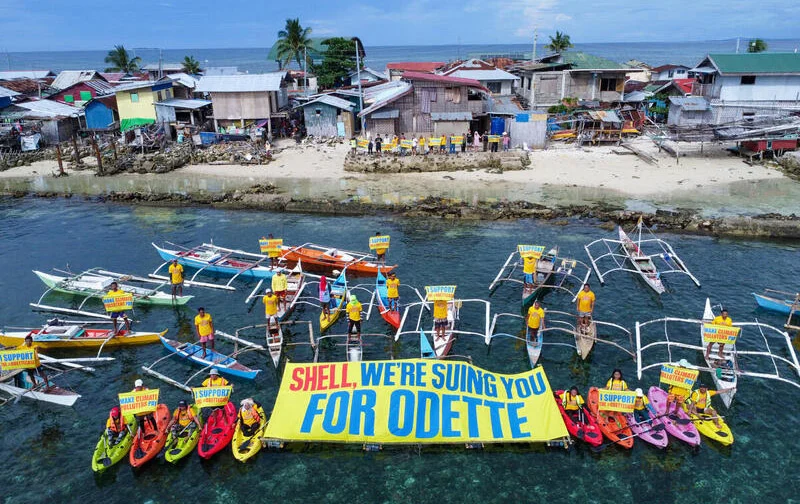
This scientific precision is providing the evidentiary backbone for a new wave of lawsuits, particularly in the Global South. Governments, NGOs, and citizen collectives are no longer just suing for general damages; they are bringing specific, data-backed claims to court. In the Philippines, a landmark case against the oil giant Shell centers on its role in intensifying Super Typhoon Odette in 2021, a storm that claimed over 400 lives and displaced nearly 800,000 people. The plaintiffs are utilizing attribution studies that suggest climate change made the extreme rainfall associated with Odette significantly more probable. This represents a shift from abstract grievance to forensic litigation.

The corporate defense against such suits has traditionally relied on the "Scope 3" argument. Fossil fuel companies argue that while they extract and refine the fuel, the actual emissions occur when third parties—individuals, power plants, and factories—burn it. In their view, they are merely suppliers of a legal product; the liability for the environmental "byproduct" lies with the end-user. However, this defense is being eroded by the emergence of internal documents showing that many of these companies were aware of the catastrophic potential of their products as early as the 1970s. This "they knew" narrative shifts the legal focus from simple supply-and-demand to a question of deceptive marketing, failure to warn, and aggressive lobbying against environmental regulations.
The legal landscape is also being reshaped by the European Court of Human Rights (ECHR). In a series of recent, high-profile determinations, the court has affirmed that states have a positive legal obligation to protect their citizens from the adverse effects of climate change as a matter of human rights. This elevates climate policy from a matter of political discretion to one of fundamental legal duty. While many of these cases target governments, they set a precedent that is quickly bleeding into the private sector. If a state is obligated to protect human rights, it must, by extension, regulate the industries within its borders that threaten those rights.
In Germany, the legal system is testing the limits of corporate liability in unprecedented ways. A Peruvian farmer, Luciano Lliuya, famously sued the German energy giant RWE, arguing that the company’s historical emissions contributed to the melting of an alpine glacier that now threatens to flood his town. While the case has faced numerous procedural hurdles, a German court made the groundbreaking determination that, in principle, a private company could be held liable for climate-related damages proportional to its share of global emissions. This "proportional liability" model is now being tested again by dozens of Pakistani farmers who have sued German power and cement firms following the catastrophic floods of 2022.
The implications for the global economy are profound. If the "proportional liability" model gains traction, it will fundamentally alter the risk profile of the fossil fuel industry. Insurance companies, which are already reeling from the costs of climate-related disasters, may begin to view carbon-intensive companies as uninsurable. Investors are already starting to factor "litigation risk" into their valuations, potentially leading to a massive divestment from coal, oil, and gas. This isn’t just about environmental activism; it’s about the hard-nosed math of the insurance and finance sectors.
Looking ahead, we can expect the focus to shift toward international bodies. The International Court of Justice (ICJ) is currently working on an advisory opinion regarding the obligations of states in respect of climate change. While not strictly binding, such an opinion would carry enormous weight in domestic courts around the world, providing a standardized framework for what constitutes a "climate crime." We may also see the rise of a "Master Settlement Agreement" for the fossil fuel industry, similar to the 1998 settlement with Big Tobacco, where companies pay into a global fund to cover the health and infrastructure costs of their products in exchange for protection from future litigation.
The transition from moral outrage to legal accountability is slow and fraught with complexity, but the momentum is undeniable. The era of "climate impunity" is drawing to a close. For decades, the world’s largest polluters operated with the full knowledge of the social and environmental costs of their business models, while simultaneously funding campaigns to sow doubt about the science. In a global society that prides itself on the rule of law, the principle of "polluter pays" is finally being applied to the greatest challenge of our time.
The science is no longer the bottleneck; the data is clear, and the attribution is precise. The failure to hold polluters accountable is now a failure of the legal system, not a lack of evidence. As the Global South continues to lead the charge in testing new legal theories and as human rights frameworks evolve to encompass ecological stability, the "carbon time bombs" planted by the industrial giants of the 20th century are being traced back to their source. In the courtrooms of the 21st century, the bill for the industrial age is finally coming due.