

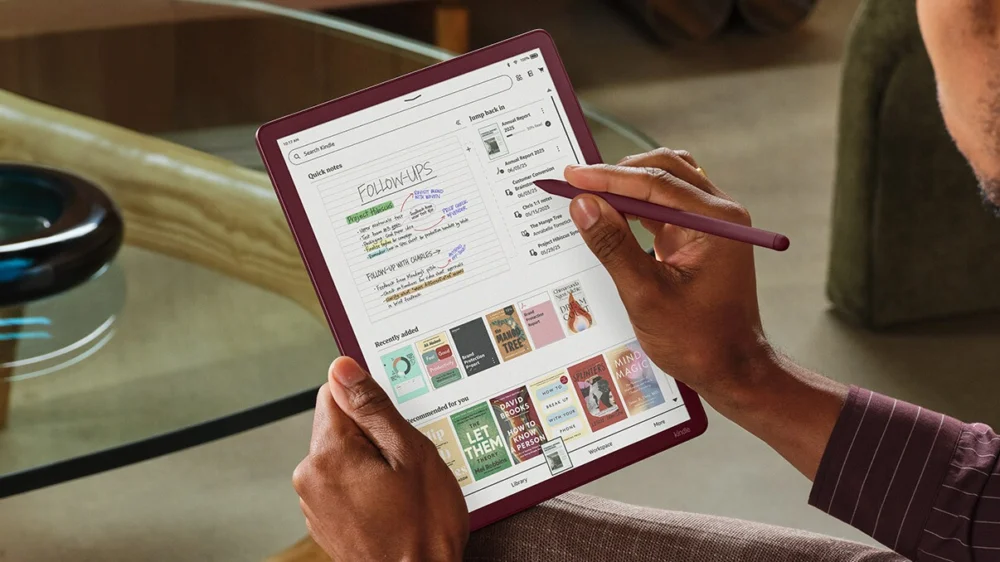
Amazon’s foray into high-end, color-enabled e-ink devices culminates in the release of the 11-inch Kindle Scribe Colorsoft, a sophisticated digital notepad engineered specifically for advanced annotation, highlighting, and document markup. Positioned at a premium price point beginning at $629.99, this device represents a strategic pivot for Amazon, moving the Kindle platform beyond pure content consumption and directly into the highly specialized productivity tablet market, currently dominated by rivals like reMarkable and competing against the ubiquitous versatility of the Apple iPad ecosystem.
For the vast majority of consumers who simply seek a comfortable, glare-free reading experience, the Scribe Colorsoft remains an unjustifiable luxury. Traditional monochrome Kindles or the Paperwhite offer exceptional value at significantly lower costs, typically ranging from $110 to $160. However, for a defined cohort of professionals, academics, and power readers who rely heavily on interacting with digital documents—marking up drafts, annotating academic papers, or structuring complex notes—the Colorsoft variant offers compelling, albeit expensive, feature upgrades over the standard Scribe model, which itself retails around $549.99 without color functionality.

The introduction of color to the E-Ink display is the most significant differentiator. The Colorsoft screen, utilizing an oxide-based e-ink panel, provides a writeable surface designed to replicate the friction and tactile feedback of writing on physical paper. This engineering choice is critical, mitigating the slippery feel often associated with writing on glass-backed LCD tablets and easing the transition for users habituated to analog note-taking. The subtle color palette is particularly useful for organization; book covers "pop" on the home screen, and the ability to highlight text using five distinct colors, or write notes using ten different hues, transforms dense documents into manageable, organized assets.
Initial testing confirms that Amazon has invested heavily in improving core performance metrics. The 2025 model boasts a reported 40% increase in responsiveness for fundamental actions like page turning and inking latency. This improved speed is vital for maintaining the illusion of analog writing, minimizing the frustrating lag often inherent in previous generations of e-ink technology. Furthermore, the E-Ink architecture ensures extraordinary endurance, with the device capable of operating for up to eight weeks on a single charge—a massive advantage over conventional LCD tablets that require daily or bi-daily charging.
However, the technology underpinning the Colorsoft display carries inherent limitations. While the glare-free surface and auto-adjusting brightness are excellent for extended reading sessions, the fundamental nature of e-ink means the color vibrancy is necessarily muted compared to the rich, backlit displays of LCD or OLED panels. For graphic designers or those needing true-to-life color reproduction, the Scribe Colorsoft is not a viable option. Moreover, despite the responsiveness improvements, the capacitive touchscreen still exhibits perceptible lag when performing complex gestures, such as the pinch-to-zoom action used for font resizing, a common drawback when comparing E-Ink against high-refresh-rate tablets.

Penetrating the Productivity Niche
Amazon’s strategic aim with the Scribe Colorsoft is clearly not to compete directly with the mass-market tablet segment dominated by Apple and Samsung. Instead, it targets a niche defined by focused, distraction-free digital paper functionality. This makes the device a strong contender for students juggling textbooks and research materials, researchers annotating complex data sets, or corporate users needing to review and mark up extensive technical documents.
The device facilitates a robust digital workflow. Users can easily import various file types—including PDFs, EPUBs, and Microsoft Word documents—directly via cloud services like Google Drive and Microsoft OneDrive, or through the proprietary Send to Kindle service. Notebooks created on the Scribe are also exportable to Microsoft OneNote, ensuring compatibility with established professional productivity suites.
The accompanying Premium Pen, which operates without requiring charging—a significant functional benefit over stylus competitors like the Apple Pencil—enhances the analog feel. The pen is designed with interchangeable tips that mimic different writing instruments, though the requirement for periodic tip replacement (a minor cost, but an additional management point) is a trade-off. The pen offers four distinct tool options (standard pen, fountain pen, marker, and pencil) with variable stroke widths, and includes a handy digital eraser activated by flipping the pen, mirroring the physical pencil experience.

A notable productivity enhancement is the ‘Active Canvas’ feature. When annotating within reflowable documents, Active Canvas intelligently adjusts the surrounding text, wrapping it around the handwritten note. This anchors the annotation precisely to the referenced text, ensuring that notes remain contextual even if the font size or page layout is subsequently modified. While this structured approach to annotation is highly effective for maintaining organization, it has generated some debate among users accustomed to free-form margin scribbling.
The Integration of Generative AI
Perhaps the most future-forward aspect of the Kindle Scribe Colorsoft is the deep integration of generative AI tools, signaling Amazon’s commitment to weaving large language models (LLMs) into their foundational hardware offerings. These features move the Scribe beyond being a passive receptacle for notes and position it as an intelligent assistant for knowledge workers.
Current AI functionalities include automatic handwriting refinement, which cleans up illegible scrawls and automatically straightens highlighting and underlining. While the handwriting refinement feature currently restricts users to selecting among several stylized handwritten fonts (like Cadia or Florio) rather than converting text to a standard typed font, it drastically improves the legibility and searchability of notes. The AI’s ability to successfully interpret highly variable handwriting, even amidst surrounding sketches, demonstrates solid machine learning capability, though occasional errors still occur, particularly with complex page layouts.

Crucially, the "Ask Notebooks AI" function transforms the user’s collected data into an active, queryable knowledge base. This feature allows users to search across their entire library of handwritten notes, enabling complex queries and connections between seemingly disparate ideas. This functionality is invaluable for researchers or students preparing for exams, allowing them to instantly retrieve and correlate information across dozens of separate notebooks.
Amazon is already signaling further ambitious AI expansion. Upcoming features include "Ask This Book," which permits users to highlight a passage and ask context-specific, spoiler-free questions about character motives or plot significance. Similarly, the "Story So Far" feature will provide concise, spoiler-free summaries for readers returning to a book after a hiatus. These AI enhancements represent a foundational shift in how readers interact with long-form digital content, leveraging LLMs not just for creation, but for deeply personalized contextual comprehension.
Industry Implications and Future Trends
The Kindle Scribe Colorsoft’s launch is a bellwether for the E-Ink industry. For years, color E-Ink technology struggled with saturation, refresh rate, and cost. Devices like the Scribe Colorsoft, retailing for over $600, demonstrate that the technology is maturing enough to command a premium, moving out of the experimental phase and into the mainstream high-end segment.

The competitive implication for dedicated E-Ink rivals, notably reMarkable, is severe. While reMarkable pioneered the distraction-free digital paper concept, Amazon possesses a vastly superior content ecosystem, robust cloud integration capabilities, and the financial leverage to aggressively integrate cutting-edge AI features. The Colorsoft’s color display, however subtle, provides a distinct advantage over reMarkable’s monochrome offerings, especially for users dealing with diagrams, charts, or colorful academic materials.
Meanwhile, the battle against the iPad remains one of philosophy rather than parity. The iPad’s strength lies in its ecosystem—thousands of apps, video streaming, powerful processing, and vibrant displays. It is a general-purpose computing device. The Scribe Colorsoft is, by contrast, a specialized tool built on the principle of minimal distraction and maximum endurance. Its value proposition hinges entirely on whether a user prioritizes the "paper feel" and weeks-long battery life over the versatile multimedia capabilities of a backlit tablet. For institutions like universities or corporate training centers, the Scribe Colorsoft could offer a focused, low-eye-strain, and cost-effective digital replacement for paper documentation that a general-purpose tablet cannot match.
Looking ahead, the success of the Colorsoft will determine the pace of E-Ink innovation. If this high-margin niche proves profitable, we can expect accelerated development in E-Ink speed and color fidelity, potentially closing the gap with LCD screens even further. The integration of advanced AI for handwriting recognition and contextual summarization sets a new standard for digital note-taking devices, transforming static annotations into dynamic, searchable knowledge graphs. This trend suggests that future E-Ink devices will be less about simple display technology and more about sophisticated software intelligence built around a high-fidelity writing experience.

The Kindle Scribe Colorsoft is available in Graphite (starting at $629.99 for 32GB) and a premium Fig color option ($679.99 for 64GB). While the necessary accessories, such as the dedicated cases, add an additional cost layer (around $139.99), making the total investment substantial, the device is clearly positioned for the specialized user who views digital note-taking and document interaction as a primary, professional workflow. For this discerning audience, the combination of advanced E-Ink technology, seamless pen interaction, and integrated artificial intelligence justifies the steep price tag, carving out a potent new category in the competitive tablet landscape.