

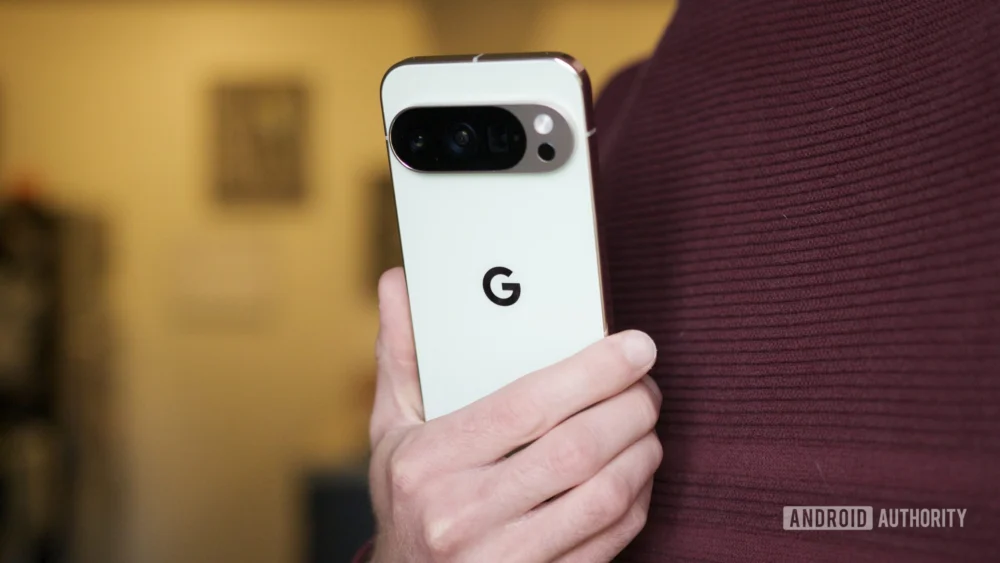
The digital ecosystem surrounding Google’s Pixel line of smartphones is currently grappling with a significant, unexpected wave of functional failures, centering around core connectivity and imaging hardware. Reports emerging across user forums and social platforms indicate a sudden and widespread degradation of essential services, primarily affecting Wi-Fi and Bluetooth modules, often accompanied by the complete inoperability of the integrated camera system. This disruption appears intrinsically linked to a recent software deployment, raising serious questions about the quality assurance protocols governing firmware updates for these flagship devices.
This phenomenon is particularly alarming because it strikes at the foundational utility of a modern smartphone. Wi-Fi and Bluetooth are not auxiliary features; they are the primary conduits for data transfer, peripheral connection (such as smartwatches, headphones, and car systems), and consistent internet access in fixed locations. When these systems fail concurrently, the device is instantly relegated to a less functional state, mirroring the experience of older feature phones.
Initial triage suggests that the epicenter of this instability is concentrated within the newest hardware generation—the Pixel 10 series—though reports are not exclusive to this line, with anecdotal evidence pointing toward similar, albeit perhaps less frequent, issues plaguing the Pixel 8 family. The immediate proximity of these failures to the rollout of the latest software build strongly implies a software-induced regression rather than random hardware attrition.
Deconstructing the Failure: The Google Play Services Hypothesis
While the symptoms—dead connectivity and camera failure—are clearly defined, the underlying cause remains under investigation by the affected user base. A critical clue has surfaced from detailed diagnostics shared within Google’s official Pixel support communities. One user, referencing the Pixel 8 Pro model, presented findings pointing toward a potential conflict within Google Play Services.
Google Play Services acts as the operational backbone for Android, managing APIs, permissions, and essential background synchronization across the operating system. The hypothesis suggests that the recent update may have inadvertently triggered a resource contention issue within this critical layer. Specifically, affected devices are reportedly entering a state characterized by an excessive number of concurrently open file descriptors or handles. In technical terms, if a system process rapidly opens and fails to properly close numerous files or system resources, it can exhaust the limits imposed by the operating system kernel for that specific process or thread. When the file descriptor table is full, the system cannot allocate new resources, leading to cascading failures in modules that rely on these resources—precisely what is observed with the connectivity stack (Wi-Fi/Bluetooth) and the camera subsystem, both of which require intense, rapid resource allocation for initialization and operation.
This specific type of failure—resource exhaustion due to an unoptimized background task—is a classic, though rare, consequence of rushed software integration or flawed memory management within system-level components. It underscores a significant vulnerability in how deeply integrated system services are updated alongside the core operating system.
Contextualizing the Crisis: Updates and User Trust
For Google, the Pixel line represents more than just a hardware offering; it is the purest expression of the Android vision, serving as the reference device for the entire platform. The promise of the Pixel experience hinges on delivering prompt, stable, and seamless software updates—the very feature often cited as the brand’s primary differentiator against competitors like Samsung or OnePlus, which often trail in receiving immediate OS versions.
When updates, intended to enhance security or introduce new features, instead cripple basic functionality, the erosion of user trust is immediate and substantial. For power users and professionals who rely on their device for tethering, constant communication, or high-quality media capture, the inability to use Wi-Fi or Bluetooth transforms the device from a productivity tool into a liability. This cycle of high expectation followed by functional regression presents a severe public relations challenge for Google’s hardware division.
Historically, major OS transitions (like the leap to a new Android version) are often associated with initial instability. However, the current issue appears to stem from a less significant, perhaps monthly or mid-cycle, maintenance patch. If fundamental system stability can be compromised by these smaller deployments, it suggests systemic weaknesses in the testing matrix applied to these incremental updates, especially concerning low-level hardware interaction drivers which are frequently bundled or modified within these patches.
Industry Implications: The Vendor Liability Threshold
This situation has broader implications for the broader mobile industry, particularly concerning the increasing complexity of software stacks. Modern smartphones are not monolithic entities; they are complex assortments of hardware components managed by highly specialized firmware, all layered beneath Android and Google Play Services.
When a vendor like Google pushes an update that disables connectivity, it highlights the fine line between optimization and destabilization. Competitors watching this incident will likely be scrutinizing their own internal testing protocols for similar resource management vulnerabilities. If the Play Services hypothesis proves accurate, it suggests that the dependency chain—where Google relies on its own core services to manage vendor-specific hardware drivers—is brittle. Any error in the contract between these layers can result in widespread failure across diverse hardware revisions (Pixel 8 vs. Pixel 10).
Furthermore, the time it takes for remediation is crucial. If Google takes several days or weeks to issue a hotfix, it forces users into uncomfortable workarounds, such as factory resets (which often fail to resolve software-level resource exhaustion bugs) or reliance on cellular data for tasks that should easily be handled by Wi-Fi. This delay directly impacts the perception of Google’s responsiveness and technical competency in maintaining its premium product line.
Expert Analysis: Kernel Space vs. User Space Conflicts
From a deeper architectural perspective, the reported symptoms—total failure of multiple, disparate hardware subsystems—often points toward a conflict occurring in the deeper layers of the operating system, potentially bridging user space applications (like Play Services) and kernel space drivers.
Wi-Fi and Bluetooth often rely on shared hardware abstraction layers or modem firmware interfaces. If a user-space process, through misallocation of resources, starves the kernel of necessary handling capacity, the modem and associated connectivity stacks can become unresponsive or enter a locked state. The camera, operating with its own dedicated drivers and memory buffers, failing simultaneously, suggests a generalized system exhaustion rather than a targeted driver failure for a single component. The file descriptor exhaustion theory aligns perfectly with this generalized impact, as the kernel uses these descriptors to track virtually every open resource, from network sockets to hardware buffers.
For engineers attempting a fix, the challenge lies in identifying which specific process spawned by the recent update is the culprit and ensuring that the rollback mechanism (if one is even possible without data loss) successfully cleans up the corrupted resource state left behind. Simply patching the offending service might not be enough if the system itself remains in a deadlock state until a hard reboot, and even then, the rogue process might re-establish the failed state upon its next initialization cycle.
Future Impact and Mitigation Strategies
The long-term impact of such high-profile instability compels a re-evaluation of software deployment methodologies. For Google, this likely means an increased reliance on staged rollouts with more granular telemetry monitoring before wider distribution. For users, it reinforces the cautionary advice against immediately accepting updates on critical hardware, especially when significant background system changes are involved.
One crucial area for future development involves containerization and sandboxing of critical system services. If Google Play Services could be more strictly isolated, resource exhaustion in one module would be less likely to cascade into the failure of unrelated core functions like the radio stack. While Android already employs robust isolation, the deep integration of Play Services often requires privileged access that makes absolute separation challenging.
Furthermore, the community’s ability to self-diagnose—identifying the Play Services resource issue—is both a testament to the engaged user base and a critique of the initial diagnostic tools provided by the manufacturer. Future Pixel updates should incorporate more user-accessible logging or diagnostic tools that can flag resource contention errors before they become catastrophic hardware outages.
In the immediate term, affected users are being advised to attempt standard troubleshooting steps, including clearing the cache partition and, as a last resort before official intervention, performing a full factory reset. However, based on the severity of the reports, these common fixes are unlikely to resolve a deep-seated resource management flaw introduced at the system level. The focus now shifts to Google’s engineering response timeline, as every hour a flagship device remains crippled by basic connectivity failure represents significant damage to the brand’s reputation for software excellence. The industry waits to see how quickly this foundational bug can be isolated, patched, and deployed without introducing further unforeseen complications. The stability of the entire Pixel platform hangs on the efficacy and speed of the impending hotfix.