

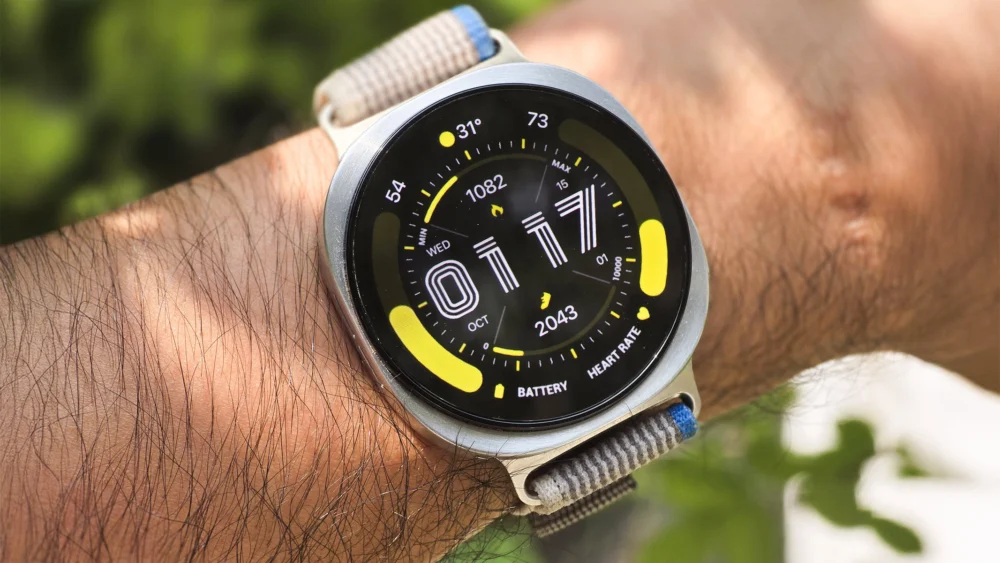
The digital canvas upon which smartwatch users depend for glanceable information is currently marred by a persistent graphical anomaly affecting two of the most prominent players in the Wear OS ecosystem: the Google Pixel Watch series and Samsung’s Galaxy Watch lineup. Following the rollout of Wear OS 6 and its iterative update, Wear OS 6.1, a subtle yet profoundly irritating rendering bug has emerged, specifically targeting watch faces developed by independent creators. This issue fundamentally compromises the primary utility of these wrist-worn computers by causing visual artifacts from the low-power Always-On Display (AOD) mode to bleed into the fully active interface.
The Mechanics of the Glitch: AOD Persistence
The core of the problem lies in the transition mechanism between the power-saving AOD state and the fully rendered, interactive watch face. Wear OS devices utilize AOD to provide essential timekeeping and complication data while minimizing battery drain. When the user raises their wrist or taps the screen, the system is supposed to smoothly render the rich, full-fidelity watch face. In the affected deployments of Wear OS 6 and 6.1, this transition is failing for third-party complications.
Users across both Google’s and Samsung’s official support channels have documented this phenomenon: after a period of use with a non-native watch face, ghostly, semi-transparent remnants of the AOD layout begin to overlay the active watch face. This visual superposition effectively muddies the display, obscuring crucial details, complicating the reading of the time, and frustrating the user experience intended by the original watch face design. The glitch is not immediate; it manifests after the device has cycled through AOD states several times, suggesting a state management error within the operating system’s display rendering pipeline.
Contextualizing the Wear OS Evolution
To understand the significance of this bug, one must consider the context of the Wear OS platform’s recent history. Wear OS 4, which underpinned the previous generation of smartwatches, was largely focused on stability and incremental improvements derived from the long-term collaboration between Google and Samsung. Wear OS 6, however, represents a more substantial update, often introducing foundational changes to core systems, including power management and display rendering protocols, which are critical for the unique hardware constraints of smartwatches.
The introduction of Wear OS 6 brought anticipated feature enhancements, but also necessitated deeper integration across diverse hardware architectures, notably the Exynos W series used by Samsung and the specialized chips powering the Pixel Watch line. The bug appears localized to how the OS handles the specific drawing layers for custom faces when transitioning away from the minimalist AOD representation. Pre-installed, or ‘stock,’ watch faces, which are deeply embedded within the system’s firmware or optimized for the specific OS version, do not seem susceptible to this overlay issue. This distinction strongly implicates a change in the standardized APIs or rendering hooks that third-party developers utilize to define their AOD states.
Industry Implications: The Developer Ecosystem Under Scrutiny
This software instability poses a significant challenge to the burgeoning third-party watch face market on Wear OS. Custom watch faces are a vital component of the smartwatch experience, offering personalization that manufacturers cannot possibly replicate through built-in options alone. Developers invest considerable time and effort adhering to Google’s guidelines, optimizing for legibility, battery consumption, and aesthetic appeal.
When a core OS update disrupts the functionality of these creations across the two leading Wear OS hardware platforms (Pixel Watch and Galaxy Watch), it erodes developer confidence. Developers rely on predictable rendering environments. A bug that causes visual corruption due to a specific OS version signals a potential instability in the platform itself. If users are forced to choose between using their preferred, highly customized faces and having a consistently functional display, many will revert to the safer, albeit less appealing, stock options. This chilling effect discourages innovation and limits the personalization potential that is a key selling point for premium smartwatches.
Furthermore, the acknowledgment of the issue by both Google (via an open IssueTracker case dating back to October) and Samsung indicates that the problem resides at the foundational OS level, requiring a coordinated fix. This dual acknowledgment highlights the symbiotic, yet sometimes complicated, relationship between Google (the OS provider) and Samsung (the primary hardware manufacturer implementing the OS).
Expert Analysis: Rendering Pipeline Dysfunction
From a technical standpoint, this specific type of graphical persistence often points to an issue with buffer management or display layer composition during screen state changes. In graphics programming, a screen refresh involves drawing the new frame onto a buffer, which is then presented to the screen.
- Layer Caching Failure: The OS likely caches elements of the AOD layer (which is intentionally kept minimal, often using static bitmaps or simplified vector graphics) to speed up reactivation. The bug suggests that upon unlocking, the system fails to fully clear the previous AOD buffer layer before compositing the new, full watch face layer on top of it.
- Asynchronous Updates: The transition from AOD to active mode is asynchronous. If the command to fully erase the AOD layer is queued incorrectly or delayed relative to the command to render the full face, the semi-transparent ghosting occurs.
- Third-Party API Implementation: While the root cause is likely in the OS kernel or display compositor, the specific trigger for third-party faces could be tied to how they request specific update frequencies or how they structure their AOD data relative to the full face data within the Wear OS framework for that particular version.
The fact that swapping faces temporarily resolves the issue strongly supports the buffer mismanagement theory: forcing a switch forces the system to tear down and rebuild all rendering layers associated with the display, effectively clearing the lingering artifacts.
User Mitigation and Current Status
For users currently experiencing this visual degradation, the temporary workaround involves cycling through different watch faces. Switching from the afflicted third-party face to a stock face, and then back to the desired custom face, often resets the rendering state, offering a brief reprieve. However, this is an unsustainable solution for daily use.
The prolonged duration since the initial reports—with the Google IssueTracker ticket active for months—suggests that a swift, high-priority patch has not yet been deployed, or that the fix is proving complex. Since the behavior spans both Pixel Watch and the latest Galaxy Watch models running the unified Wear OS 6 foundation, any effective solution must originate from Google, necessitating a platform-level update, likely through a subsequent Wear OS point release or a system component update pushed via the Play Store.
Future Impact and Trends in Wearable Software
This incident serves as a cautionary tale regarding the rapid deployment of major operating system iterations on resource-constrained, highly personalized devices like smartwatches. The graphical fidelity and responsiveness of the watch face are paramount to the user experience; a breakdown here signals a critical failure in the platform’s primary interface.
Looking ahead, this underlines several crucial trends:
- Increased Emphasis on AOD Optimization: As OLED displays become standard, the efficiency and accuracy of AOD rendering will only grow in importance. Future Wear OS versions will need more robust, hardware-accelerated methods for managing display layers to prevent such ghosting.
- Developer Tooling and Beta Programs: Google and Samsung must enhance their developer preview and beta programs to catch these deep-seated graphical rendering bugs before wide consumer release. The reliance on post-launch user reports for critical display issues is inefficient for maintaining platform quality.
- The Unified Platform Challenge: While the consolidation of the Wear OS codebase under a common foundation (post-Samsung collaboration) is beneficial for standardization, this bug demonstrates that platform uniformity means a single error can affect a massive, diverse installed base instantly.
Until Google issues a definitive patch targeting the Wear OS 6 AOD transition protocols, users seeking a pristine visual experience on their Pixel Watches or Galaxy Watches are advised to utilize the factory-installed watch faces, thereby bypassing the faulty logic governing third-party AOD integration. The industry awaits a stable resolution that restores the integrity of the wearable display environment.