

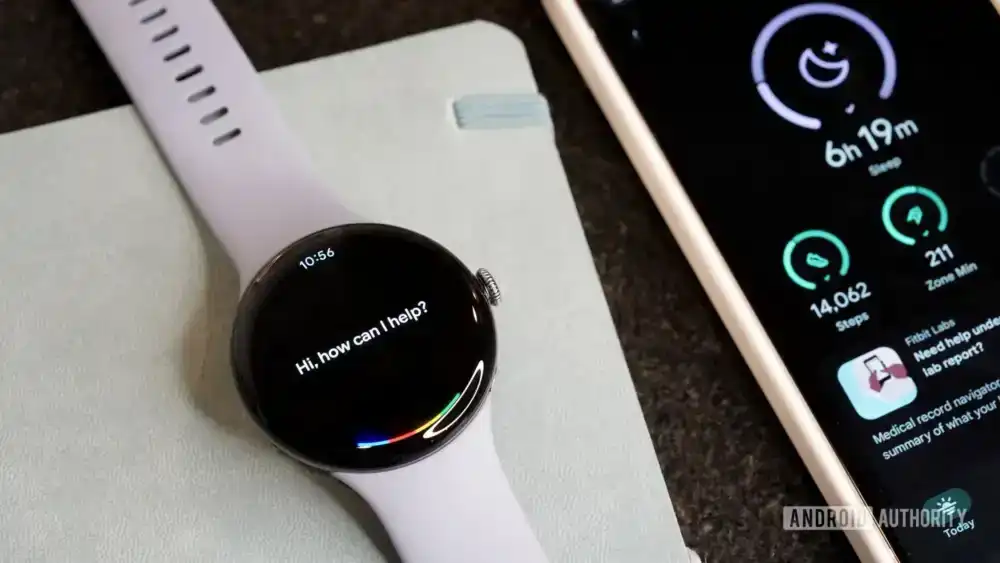
The recent rollout of Google’s monthly software update for the Pixel Watch ecosystem, specifically the March iteration, has inadvertently triggered a significant regression in core health monitoring capabilities across multiple generations of the device. Reports are rapidly accumulating from users across forums and community channels detailing a conspicuous absence of overnight data capture for two critical biometric indicators: Blood Oxygen Saturation (SpO2) and continuous Skin Temperature readings. This technical snag is particularly concerning as these metrics, typically requiring uninterrupted sleep for accurate measurement, are central to the value proposition of advanced smartwatches today. The scope of the disruption appears to affect the flagship Pixel Watch 4, but historical data suggests that users of the Pixel Watch 3 and the preceding Pixel Watch 2 are also experiencing the data blackout following the patch installation.
The Context of the Disruption: Software Updates and Biometric Sensitivity
Modern smartwatches have transitioned from simple notification hubs to sophisticated personal health monitors. Features like SpO2 and skin temperature tracking—which contribute to comprehensive sleep stage analysis and early illness detection—rely on highly complex, continuous data streams processed by proprietary algorithms. These algorithms are deeply integrated into the device’s operating system and the companion health application, often Fitbit, which Google acquired and integrated into its Wear OS experience.
When a significant system update, such as the monthly security and feature patch distributed in March, is deployed, it modifies kernel-level functions, sensor drivers, and application programming interfaces (APIs). In this scenario, the failure to capture nocturnal biometrics points toward a potential incompatibility or bug introduced at the driver level, specifically affecting the photoplethysmography (PPG) sensors responsible for SpO2 and the thermal sensors used for skin temperature. Because both metrics are exclusively recorded during periods identified as sleep, any underlying issue affecting the sleep detection mechanism itself could cascade into incomplete or entirely absent data for these secondary measurements.
Initial user accounts, aggregating over the recent weekend following the update’s widespread availability, paint a clear picture: users awaken to find gaps in their sleep dashboards where detailed SpO2 graphs and temperature variance charts should reside. The reports lack specific error codes, suggesting a silent failure where the device either fails to initiate the measurement sequence or successfully records the data but fails to synchronize it properly with the paired smartphone application.
Initial Troubleshooting Attempts and Their Limited Efficacy
In the immediate aftermath of such widespread technical glitches, the user community and official support channels often provide preliminary, low-level troubleshooting advice. In this instance, suggestions have centered on standard debugging procedures aimed at resolving application state corruption. One common recommendation, sourced from individuals designated as Product Experts on official support channels, involves a methodical clearing of the application cache. This process requires users to manually purge the cached data for the Fitbit application on both the smartwatch itself (if accessible) and the tethered Android phone, followed by a full system reboot of both hardware units.
However, anecdotal evidence suggests this cache-clearing regimen has proven ineffective for a significant portion of the affected user base. When a bug is rooted deeper within the operating system’s firmware or driver stack—which is highly probable given the timing immediately following a system-level update—simple application-level cache resets often fail to restore the underlying functionality. This suggests the fault is systemic rather than merely cosmetic or related to corrupted application state files.
More drastic measures have surfaced, including the nuclear option of a factory reset of the Pixel Watch hardware. Reports from some users indicate that reverting the watch to its out-of-the-box state successfully reinstated the functionality of the SpO2 and skin temperature sensors. This drastic solution, even when endorsed by official community representatives, highlights the severity of the software regression. A factory reset forces the device to re-download and re-initialize all necessary software components, potentially overwriting the corrupted component introduced by the March update. However, requiring users to perform a full reset—which involves re-pairing, re-downloading all apps, and losing historical local data—is an unacceptable burden for a routine monthly patch.
Industry Implications: Trust and the Health Ecosystem
This type of software failure carries significant implications beyond mere inconvenience; it erodes user trust, particularly in the highly sensitive domain of personal health technology. For Google, whose Wear OS strategy is heavily reliant on the Pixel Watch line to compete against established players like Apple, reliability is paramount.
When a device marketed for its comprehensive health tracking suddenly loses the ability to record key wellness metrics, the perceived value plummets. Consumers investing hundreds of dollars in these devices expect a baseline level of operational stability, especially concerning features that may be used for preventative health monitoring or tracking chronic conditions. A failure in SpO2 tracking, for instance, touches upon concerns related to respiratory health, a particularly sensitive area in the post-pandemic health landscape.
Furthermore, this incident underscores the inherent risk associated with tightly coupling hardware sales with rapid, frequent software updates. While agility in pushing patches and new features is often lauded in the software world, in medical-adjacent hardware, stability must take precedence. Every update becomes a potential point of failure for embedded sensors. Tech companies must dedicate significantly more resources to regression testing specific to sensor data pipelines before deployment, especially when those pipelines rely on complex, multi-layered software stacks involving the OS, the health service layer (Fitbit), and the hardware drivers.
Expert Analysis: The Challenge of Heterogeneous Sensor Fusion
Analyzing the technical nature of this bug requires an understanding of sensor fusion. The Pixel Watch relies on multiple sensors operating simultaneously: accelerometers and gyroscopes for sleep staging, optical sensors (PPG) for heart rate and SpO2, and specialized thermistors for skin temperature.
Skin temperature measurement, in particular, is notoriously difficult on wrist-worn devices because ambient temperature variations and poor skin contact can dramatically skew readings. To generate reliable overnight skin temperature data, the device must execute complex calibration routines and filter environmental noise, tasks that are managed by low-level firmware. SpO2 measurement, relying on the differential absorption of light by oxygenated versus deoxygenated blood, is also highly sensitive to motion artifacts and skin perfusion.
The March update likely introduced a change in how the operating system manages power states or sensor polling frequencies during deep sleep, the period when these measurements are most critical. If the update inadvertently placed the sensors into a lower-power mode that was too aggressive, or if a timing issue caused the necessary data windows to be missed between processing cycles, the resulting output would be blank or nonsensical, leading to the observed data void. The fact that factory resets sometimes fix it suggests the update may have corrupted configuration files stored in non-volatile memory that dictate sensor initialization parameters, files which are rebuilt correctly during a full device wipe and setup process.
Future Impact and Mitigation Trends
This event sets a precedent that Google must address proactively to maintain consumer confidence. The future of wearable technology is intrinsically tied to data accuracy and consistency. Users will increasingly demand transparency regarding the development pipeline for these health features.
Looking forward, several trends will be shaped by incidents like this:
- Increased Emphasis on Rollback Capabilities: While OS updates are critical, consumers and regulators may push for easier, non-destructive rollback options for specific functional components, such as health monitoring modules, allowing users to revert only the problematic segment without wiping the entire device state.
- Staged Rollouts with Health Monitoring Validation: Google and other manufacturers will likely need to implement more rigorous, staged rollout protocols specifically targeting health features. Instead of simply checking for core functionality, updates should be validated by a closed beta group whose primary focus is confirming the accuracy and presence of all biometric outputs post-update for several complete sleep cycles before general availability.
- Enhanced On-Device Diagnostics: To minimize reliance on community guesswork, future Wear OS updates should include better diagnostic tools accessible to users or support technicians. A simple screen showing "SpO2 Sensor Status: Active/Polling" during sleep would immediately differentiate between a hardware failure, a software bug, or user error.
For current owners of the affected Pixel Watch models, the immediate course of action remains triage: wait for an official acknowledgment and hotfix from Google, or proceed with the drastic factory reset if continuous sleep data integrity is a non-negotiable requirement. The incident serves as a potent reminder that the transition of smartwatches into credible health monitoring tools brings with it the heavy responsibility of software stability that matches the critical nature of the data being collected. The industry cannot afford software bugs that undermine the very reason consumers adopt these devices.