

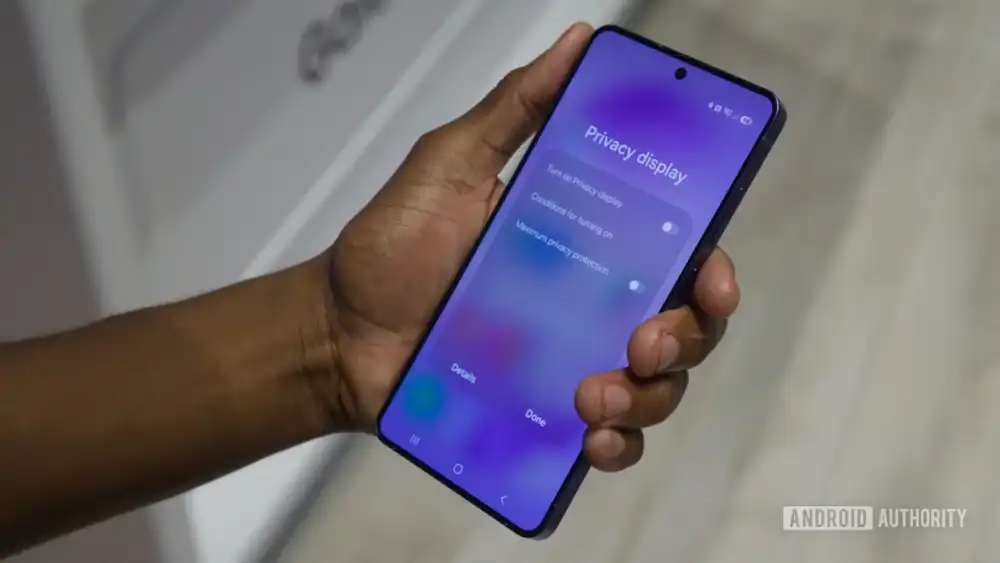
The introduction of Samsung’s proprietary Privacy Display technology on the Galaxy S26 Ultra represents a significant engineering pivot, aiming to address the growing consumer demand for on-the-go digital discretion. This feature, designed to severely limit viewing angles to protect sensitive information from prying eyes in public spaces, is fundamentally altering the underlying display architecture. However, early examinations and user feedback suggest that this bold innovation may come tethered to an unavoidable trade-off: a measurable degradation in overall visual fidelity, even when the privacy mode is deactivated. This situation forces a critical examination of whether enhanced security justifies even minor compromises to the premium viewing experience expected from a top-tier flagship device.
The Architectural Foundation of Digital Seclusion
To comprehend the potential visual artifacts, one must first understand the novel pixel configuration underpinning the Privacy Display. Traditional AMOLED panels rely on a uniform arrangement of subpixels optimized for maximum light output and color accuracy across the widest possible viewing spectrum. Samsung’s implementation in the S26 Ultra deviates from this standard by integrating two distinct classes of pixels within the display matrix.
These are categorized conceptually as "narrow" subpixels and "wide" subpixels. The "wide" elements function much like conventional display components, offering broad viewing angles suitable for casual observation from oblique positions. Conversely, the "narrow" subpixels are engineered with highly directional light emission properties, ensuring their illumination is primarily focused directly toward the user situated dead-center of the screen.
When the Privacy Display feature is toggled on via the quick settings, the device selectively powers down the wide subpixels. This action effectively constricts the visible image solely to the output of the narrow, forward-facing pixels, creating the desired visual occlusion for bystanders. The engineering challenge lies in fabricating a single panel capable of supporting both modes seamlessly.
The Inherent Trade-Off: Pixel Geometry and Fidelity
The core concern raised by early testers revolves around the static existence of the narrow subpixels, regardless of the Privacy Display’s active state. Since these narrow pixels are physically present and integrated into the overall pixel structure—even when the privacy mode is off—their presence alters the native geometry of the display subsystem.
When the device is operating in its default, non-private mode, both wide and narrow subpixels are intended to contribute to the final image. However, the inherent directional nature of the narrow elements means that their contribution to the overall light profile and color mixing is not perfectly uniform across all viewing vectors. While a user looking directly at the screen receives the combined benefit of both sets of pixels, any slight deviation from a perpendicular viewing angle introduces optical inconsistencies.
Microscopic comparisons between the S26 Ultra and its predecessor, the S25 Ultra (which lacks this specific dual-pixel architecture), reveal tangible evidence of this phenomenon. High-magnification images focusing on text rendering demonstrate a noticeable difference. On the S26 Ultra, fine lines, especially those defining sharp edges in black text or thin gray gradients, exhibit signs of jaggedness or "aliasing." This suggests that the combination of the two different pixel types—one optimized for front viewing, the other for wider angles—does not resolve into the perfectly clean, continuous lines that a homogenous pixel array can achieve.
Furthermore, analysis of grayscale and muted color blocks reveals potential color bleed or inconsistency along the edges of defined shapes on the newer model, even under ideal, head-on viewing conditions. In a standard display, color mixing is precise. In the S26 Ultra’s default state, the differing optical pathways of the two subpixel types appear to introduce minor interference or crosstalk, resulting in less pure color reproduction than traditionally expected from a flagship panel.
Industry Implications: Prioritizing Security Over Purity
Samsung’s aggressive pursuit of hardware-based privacy features signifies a major industry trend. As biometric security measures become standard, the next frontier for premium mobile devices is shielding the screen content itself. The Privacy Display is arguably the most advanced integrated hardware solution yet attempted in the mass market.
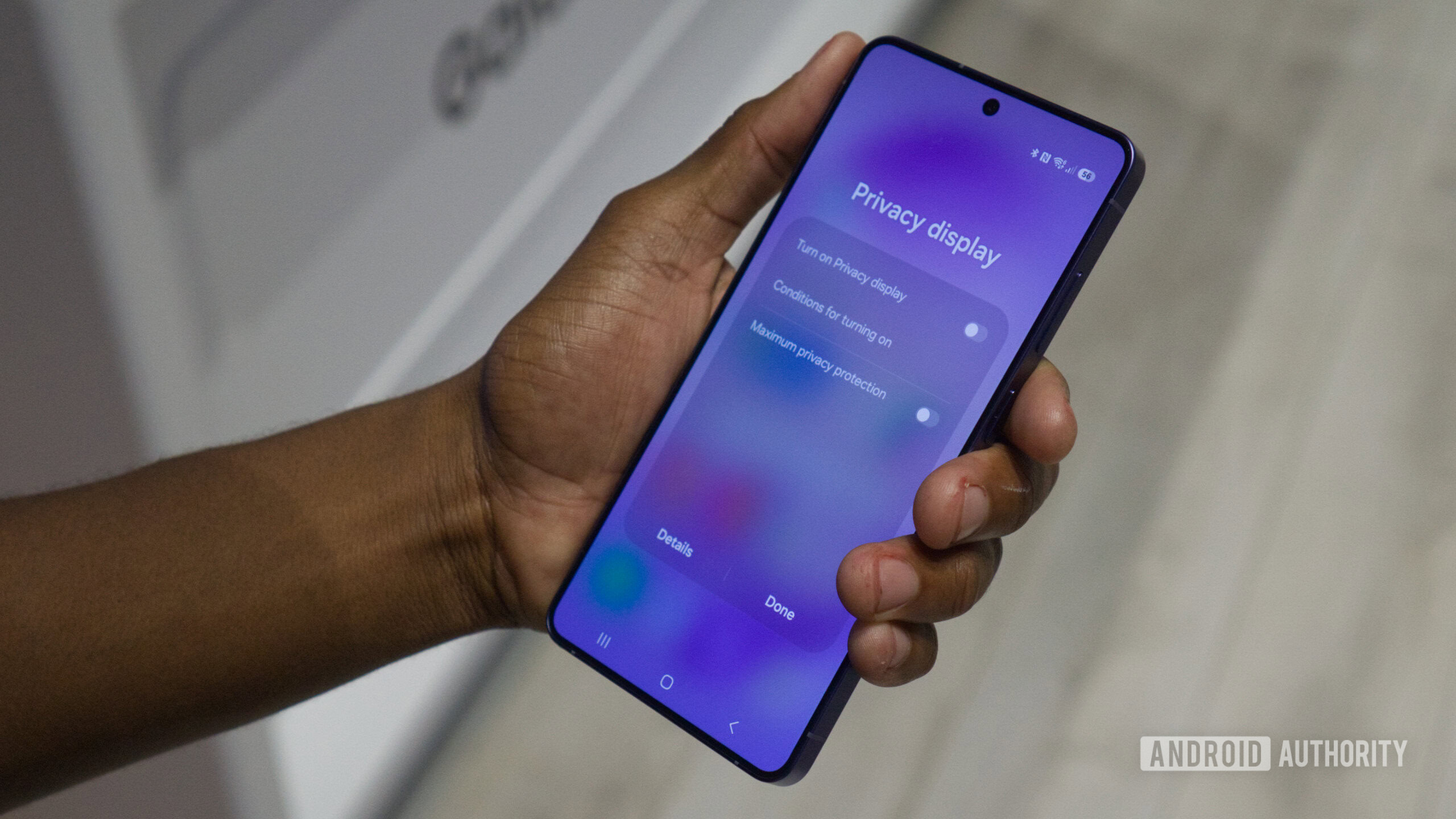
The industry has long flirted with software-based privacy filters, often implemented through screen dimming or enhanced fingerprint sensors that only unlock content when a specific finger is used. However, these methods are either cumbersome or easily circumvented. A hardware solution baked into the display layers offers superior security assurance.
The implication here is that device manufacturers may be willing to accept a measurable (albeit perhaps minor) reduction in baseline display quality—reduced peak sharpness, slightly muted color purity—as an acceptable cost for delivering a headline security feature that competitors cannot easily replicate without similar complex panel redesigns. This establishes a new benchmark: for the high-end market, cutting-edge security features may soon trump incremental gains in display panel perfection.
The Subjectivity of Perception: User Experience vs. Benchmarks
The central debate hinges on the practical visibility of these microscopic imperfections. At laboratory magnification, the artifacts are clear and quantifiable. However, the typical user interaction occurs at arm’s length, where the human visual system naturally smooths out minor pixel-level anomalies.
The initial reports highlight this dichotomy. Some users, particularly those possessing acute visual acuity or those accustomed to meticulously calibrated reference displays, report being significantly bothered by the subtle color shifts upon minor screen tilting, even when the Privacy Display is disabled. One user anecdote referenced on community forums detailed canceling a pre-order specifically due to this "weird effect" on solid color fields when the phone was angled slightly.
Conversely, the majority of consumers may never perceive these issues during routine operation. For the average user focused on streaming media, browsing social feeds, or general productivity, the benefits of having the option for total visual lockdown might far outweigh the minute loss of edge definition when the feature is dormant.
The updated evidence, including side-by-side comparisons with the privacy feature actively engaged, underscores the significant visual impact when the narrow pixels are solely responsible for the image. In this mode, the display dims noticeably, and the aliasing becomes more pronounced, particularly on fine UI elements like status bar icons. This confirms that the trade-off for maximal privacy is substantial darkening and reduced angular resolution.
Future Trajectory and Mitigation Strategies
The current findings suggest that Samsung is in an early iteration phase with this dual-pixel display technology. The challenge for future iterations (such as the speculated S27 Ultra) will be to refine the geometry and driving electronics of the narrow subpixels to minimize their optical interference when they are supposed to be blending harmoniously with the wide subpixels.
Several avenues for improvement exist for display engineers:
- Advanced Subpixel Compensation: Implementing more sophisticated calibration routines that dynamically adjust the voltage and timing delivered to the narrow pixels based on the current viewing angle, attempting to normalize their light output relative to the wide pixels even in non-privacy mode.
- Material Science Advancements: Developing new materials or deposition techniques that allow for greater angular confinement in the "narrow" pixels without introducing inherent spectral inefficiencies or internal reflections that manifest as color shifts.
- Software Optimization: While the issue is hardware-rooted, software could potentially mask minor artifacts. This might involve leveraging AI upscaling algorithms specifically designed to sharpen edges and reduce perceived aliasing when the device detects a standard, head-on viewing orientation.
Ultimately, the market reception to the S26 Ultra’s Privacy Display will determine the technology’s longevity. If the visual compromise proves too jarring for the premium segment, Samsung may need to pivot toward hybrid solutions—perhaps employing sophisticated micro-louver films that can be electronically engaged or disengaged, offering true optical isolation without permanently altering the underlying pixel structure’s base performance. Until such refinements arrive, prospective buyers of the S26 Ultra must weigh the unprecedented security offered by the Privacy Display against the documented, albeit subtle, reduction in absolute visual fidelity in standard operating modes. The decision rests on whether one prioritizes the ability to hide information over the perfection of displaying it.