

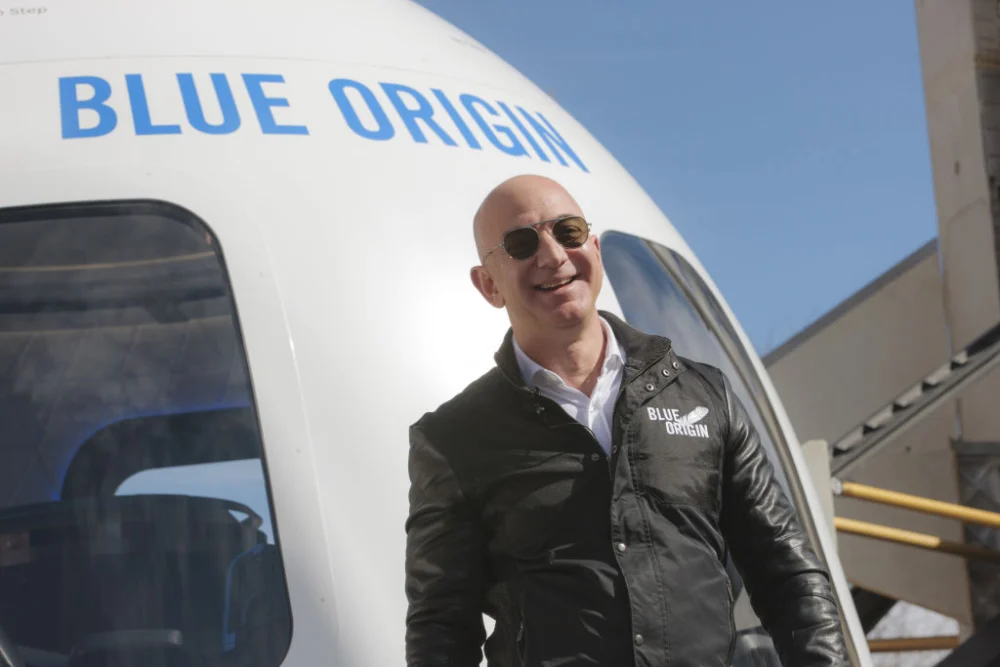
The foundational space tourism arm of Jeff Bezos’ aerospace enterprise, Blue Origin, is undergoing a dramatic strategic realignment, announcing a formal halt to all commercial human suborbital flights for a minimum duration of two years. This pivotal decision, communicated on Friday, dictates that the New Shepard program—the reusable rocket system responsible for ferrying high-paying passengers past the Kármán line—will be entirely sidelined to redirect engineering, manufacturing, and operational resources toward the company’s ambitious, high-stakes lunar exploration initiatives. The shift underscores a fundamental pivot away from the nascent leisure space market and towards the immensely lucrative, government-backed infrastructure development critical for the return of humanity to the Moon.
The Suborbital Chapter Closes Temporarily
For nearly five years, the New Shepard system has served as Blue Origin’s public-facing demonstration of reusability and commercial access to space. The vehicle, which utilizes a vertical takeoff and vertical landing (VTVL) approach, pioneered the concept of routine suborbital travel, offering passengers approximately four minutes of microgravity and views of Earth from above the internationally recognized boundary of space.
Since its initial successful flight demonstrations more than a decade ago—notably achieving the feat of launching a rocket into space and safely landing the booster back on Earth in 2015, establishing a key early milestone in the reusable rocket race—New Shepard’s utility has been strictly limited by its design. Unlike orbital-class boosters such as SpaceX’s Falcon 9, New Shepard was designed only for high-altitude, low-duration trips. Its primary function became twofold: a platform for microgravity science experiments (hosting over 200 scientific and research payloads) and, critically, high-end space tourism. To date, the program boasts an impressive operational record, having completed 38 missions and carried 98 unique individuals into space, including the company’s founder.
However, the operational rhythm of the New Shepard program has not been without significant disruption. The entire fleet was grounded for over a year following a high-profile anomaly in 2022, when an uncrewed booster suffered a mid-flight explosion. While the autonomous crew capsule successfully executed its abort sequence and parachuted safely back to the ground—validating the system’s critical safety mechanisms—the incident necessitated a prolonged engineering investigation and remediation effort. New Shepard only returned to flight readiness in late 2023, marking a triumphant, though delayed, resumption of operations. The newly imposed two-year hiatus, therefore, compounds the loss of continuity in the suborbital market, ceding operational momentum to competitors, most notably Virgin Galactic, which operates a distinct air-launched suborbital system.
The Pull of the Moon: Political and Financial Gravity
The abrupt suspension of a proven revenue-generating program highlights the immense gravity of the opportunity currently presented by the lunar frontier. Blue Origin’s official statement emphasized that the decision “reflects Blue Origin’s commitment to the nation’s goal of returning to the Moon and establishing a permanent, sustained lunar presence.” This national objective is not merely rhetorical; it is driven by aggressive political mandates that have fundamentally reshaped NASA’s procurement priorities.
Following the return of President Donald Trump to the Oval Office, significant pressure has been exerted on NASA to accelerate the timeline for placing American astronauts back on the lunar surface before the conclusion of his second term. This directive has translated into unprecedented funding opportunities and accelerated contracts for commercial partners under the broader Artemis program architecture.
This high-pressure, high-reward environment has created a critical window where success in government contracting vastly outweighs the relatively modest, highly volatile revenue stream derived from suborbital tourism. The shift indicates that Bezos and Blue Origin leadership view the Artemis-related contracts—which involve the development of large-scale infrastructure, Human Landing Systems (HLS), and in-space logistics—as the singular, defining mandate for the next half-decade of the company’s existence.
The competitive landscape for these deep-space missions is fierce. While SpaceX has secured significant contracts, including the initial HLS award, the renewed political urgency has explicitly cleared the path for other major players, including Blue Origin, to compete aggressively for follow-on contracts related to sustained lunar habitation, cargo delivery, and gateway construction. For Blue Origin, this means mobilizing its workforce, including engineers and technicians previously dedicated to New Shepard flight readiness and turnaround, to accelerate the development of the company’s heavy-lift orbital rocket and its accompanying lunar hardware.
Accelerating the New Glenn and Lunar Lander Pipeline
The resources now freed from the New Shepard program are being poured into Blue Origin’s two flagship lunar-focused projects: the New Glenn mega-rocket and the robotic lunar lander.
The New Glenn, a massive orbital-class rocket capable of lifting significant payloads, is central to Blue Origin’s future in both government and commercial satellite launch markets, as well as deep-space exploration. The company is currently anticipating the third launch of the New Glenn, slated for late February. While initial projections had suggested that this third launch might be utilized to send a demonstration version of the robotic lunar lander into deep space, the reality of hardware readiness suggests a more cautious approach. The robotic lander, a critical component of Blue Origin’s strategy to secure cargo delivery missions to the Moon, is still undergoing extensive, rigorous testing at NASA’s Johnson Space Center in Texas.
The reallocation of resources signifies an attempt to close the gap between the operational timelines of New Glenn and the qualification of the lunar landing vehicles. Developing a high-reliability, deep-space vehicle capable of precision landing on an extraterrestrial body requires exponentially greater engineering fidelity and testing cycles than a suborbital system designed for short hops. By pausing New Shepard, Blue Origin is essentially consolidating its top talent onto the critical path items required for Artemis—engine development (BE-4), structural integrity testing for New Glenn’s second stage, and the highly complex descent and ascent systems for the lunar lander variants.
Industry Implications and Expert Analysis
This move is interpreted by industry analysts not as a sign of financial strain or technical failure in the tourism division, but rather as a cold, strategic decision rooted in opportunity cost.
Dr. Eleanor Vance, an aerospace economist specializing in commercial space policy, notes that "Blue Origin is playing the long game, prioritizing infrastructure over immediate consumer revenue." She explains: "The suborbital tourism market, while glamorous, is inherently niche and low-volume, priced in the hundreds of thousands or millions per seat. Conversely, a single NASA contract for lunar logistics or habitation support can be worth billions. When faced with a political timeline requiring massive acceleration, a rational company will cannibalize its peripheral programs to ensure success in the core, highest-value market segment."
The decision underscores a key difference in philosophy between Blue Origin and its main orbital rival, SpaceX. While SpaceX uses the revenue and operational experience from Starlink and Falcon missions to fund its ambitious Starship development, Blue Origin has historically relied heavily on Bezos’ personal capital infusion. By pausing New Shepard, Blue Origin acknowledges that the internal development costs for New Glenn and the lunar systems are so significant that even a steady, if modest, stream of tourism revenue is insufficient justification for maintaining the operational overhead and personnel distraction required for routine suborbital flights.
The hiatus also carries significant implications for the nascent space tourism sector. While Virgin Galactic remains active, the temporary withdrawal of New Shepard eliminates a crucial competitive dynamic. This could potentially allow Virgin Galactic to consolidate market share among high-net-worth individuals seeking the suborbital experience, though it also reduces overall market exposure and the public perception of routine, repeatable access to space.
Furthermore, the operational expertise gained from New Shepard—specifically, the rapid turnaround and refurbishment of the booster for reuse—is highly valuable. Redirecting the teams responsible for these rapid operations to the complex, large-scale reuse requirements of the New Glenn booster is a logical step toward optimizing future orbital launch efficiency.
Operational Risks and the Road Ahead
While the strategic pivot is financially sound, it introduces distinct operational risks. A two-year pause in the New Shepard program means the highly specialized operational teams—the flight controllers, ground support personnel, and mission specialists—will be temporarily dispersed or redeployed to entirely different vehicle platforms. When Blue Origin inevitably seeks to reactivate the New Shepard program in 2028 or later, it will face the challenge of rebuilding operational proficiency, re-certifying personnel, and re-entering a potentially evolved regulatory environment. Maintaining operational readiness over a long hiatus is notoriously difficult in the aerospace industry.
Moreover, the success of this entire strategic shift hinges entirely on Blue Origin’s ability to successfully deliver its lunar systems on the accelerated timeline demanded by NASA and the White House. The competition for the Artemis lander contracts is intensely complex, requiring breakthroughs in autonomous navigation, thermal management in the harsh lunar environment, and human-rated safety protocols. Any significant delay or technical failure in the New Glenn or lander programs could jeopardize both the immediate lunar goals and the long-term credibility necessary to resume consumer-facing operations.
The stated goal of establishing a "permanent, sustained lunar presence" requires more than just launching a lander; it necessitates robust infrastructure, including power generation, life support, and long-duration habitats—all areas where Blue Origin is positioning itself as a key provider.
The Future Trajectory
Blue Origin’s decision signals a maturity in the private space sector where companies must choose between focusing on high-volume, low-margin activities (like satellite launch or low-Earth orbit services) or extremely high-value, high-complexity government infrastructure projects. By sacrificing the immediate gratification and public relations benefits of suborbital tourism, Blue Origin is staking its future on becoming a primary architect of deep-space infrastructure.
When the New Shepard program potentially returns to service after its hiatus, it will likely do so within a fundamentally different market context. By that time, if New Glenn has achieved operational reliability and Blue Origin has secured substantial lunar contracts, the New Shepard flights will no longer represent the company’s pinnacle achievement but rather a secondary, accessible entry point into a vast, established portfolio of lunar and orbital capabilities.
For now, the era of Bezos’ company regularly sending tourists above the Kármán line has concluded, at least until 2028. The collective attention of Blue Origin’s considerable resources is now fixed firmly on the Moon, a clear indication that the economic and political forces driving humanity’s return to celestial bodies have superseded the allure of recreational space travel. The immediate future of Blue Origin is no longer defined by the few minutes of weightlessness experienced by a handful of tourists, but by the complex, multi-billion-dollar effort to land hardware—and eventually astronauts—on the lunar south pole. This transformation from space leisure provider to crucial national defense and exploration partner represents the most significant strategic maneuver in the company’s history.