

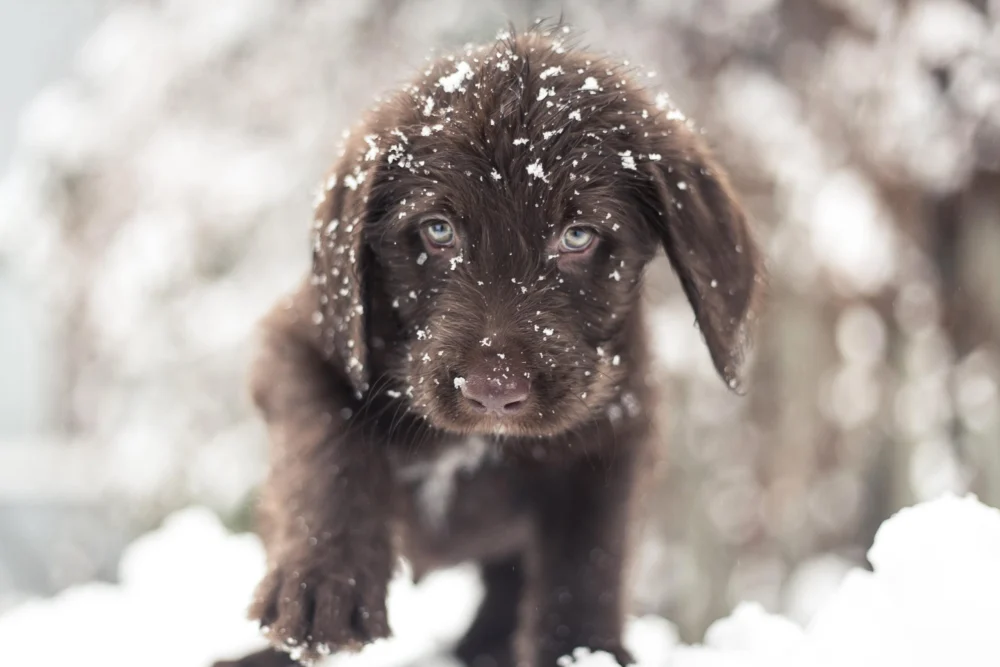
As a massive winter weather system prepares to sweep across the United States, placing approximately 180 million Americans across 33 states under various meteorological alerts, the focus on domestic animal welfare has reached a critical juncture. For pet owners, a storm of this magnitude—characterized by a volatile mix of heavy snowfall, freezing rain, and sub-zero wind chills—represents more than a mere inconvenience; it is a physiological emergency for companion animals. The convergence of rapid urbanization, changing climate patterns, and the deepening human-animal bond has transformed pet safety from a matter of common sense into a sophisticated discipline of veterinary preparedness and environmental management.
Dr. Page Mader, DVM, a prominent veterinarian and co-owner of Five Parks Animal Hospital in Arvada, Colorado, emphasizes that the risks of frostbite, hypothermia, and chemical toxicity scale exponentially as temperatures breach the freezing threshold of 32 degrees Fahrenheit. In an era where extreme weather events are becoming more frequent and intense, understanding the nuances of animal physiology and the industrial innovations available to mitigate environmental stressors is essential for any responsible pet owner.
The Physiology of Cold Exposure: Breed-Specific Vulnerabilities
The primary challenge during a severe winter storm is maintaining a pet’s core body temperature. While humans rely on external layers and climate-controlled environments, animals possess varying degrees of biological insulation. However, the common misconception that "fur equals protection" can lead to dangerous outcomes. Dr. Mader points out that the disparity between breeds is vast. A Siberian Husky or an Alaskan Malamute, equipped with dense, double-layered coats and specialized circulatory systems in their paws, may remain comfortable in conditions that would be lethal to other breeds.
In contrast, short-haired breeds such as the German Shorthaired Pointer, Boxers, or Greyhounds lack the subcutaneous fat and hair density required to retain heat. Furthermore, the surface-area-to-mass ratio plays a significant role; smaller dogs lose body heat much faster than larger ones. Senior pets and those suffering from chronic conditions like arthritis face additional hurdles. Cold weather causes joints to stiffen and increases pain levels, making the physical act of navigating snow both difficult and exhausting. For these vulnerable populations, the veterinary recommendation is clear: outdoor exposure must be strictly minimized.
Owners are urged to monitor "canine bio-feedback." Signs of distress often manifest as shivering, anxiety, or the lifting of paws to avoid direct contact with the frozen ground. Yet, Dr. Mader warns that some highly motivated dogs—those with high "ball drive" or work-oriented temperaments—may mask these symptoms in favor of continued play. In these instances, the owner must act as the "voice of reason," imposing time limits regardless of the animal’s perceived enthusiasm.
Environmental Engineering: Creating "Safe Zones" for Elimination
One of the most practical challenges during a blizzard is the simple necessity of bathroom breaks. For a small dog, a six-inch snowfall is the equivalent of a human wading through waist-deep drifts. To combat this, Dr. Mader suggests proactive environmental engineering. Before the first flakes fall, pet owners can lay down sheets of plywood or heavy cardboard over a designated area of the yard. Once the storm reaches its peak, lifting these covers reveals a dry, snow-free patch of grass, allowing the animal to relieve itself quickly without the stress of navigating deep snow or experiencing "snow blindness" from the wind.
In extreme cases, particularly for toy breeds or highly sensitive seniors, transitioning to indoor solutions such as absorbent pee pads may be the most humane option. This prevents the "hold it" behavior that can lead to urinary tract infections when pets are too terrified of the cold to venture outside.
The Rise of the Pet Tech and Apparel Industry
The pet industry has seen a surge in "protective wear" technology, moving far beyond aesthetic sweaters to high-performance gear designed for extreme conditions. Dr. Mader highlights the utility of "recovery suits" or full-body onesies that cover the trunk, undercarriage, and legs. These garments serve a dual purpose: they retain core heat and prevent the formation of "snow bells"—heavy ice balls that cling to long fur and cause skin irritation.
Footwear has also become a critical component of the winter kit. While dog paws are remarkably resilient, they are not impervious to the corrosive effects of sidewalk salt and chemical de-icers. These substances can cause chemical burns on sensitive paw pads and, more dangerously, can be ingested when a dog licks its paws after a walk. High-traction booties provide a physical barrier against both the cold and these chemical irritants. For dogs that refuse to wear boots, protective paw balms—formulated with waxes and oils—offer a secondary layer of defense, though they lack the thermal insulation of structured footwear.
Even ocular health is a consideration in high-wind scenarios. The "Doggles" or pet goggle industry has expanded to provide UV protection and a windbreak for the eyes, which is particularly useful for breeds prone to ocular dryness or those living in regions where "ground blizzard" conditions create abrasive, wind-blown ice crystals.

Cognitive Enrichment: Mitigating the Psychological Toll of Confinement
When outdoor activity is curtailed, the risk shifts from physical danger to psychological stagnation. "Cabin fever" is a documented phenomenon in high-energy domestic animals. To mitigate this, owners must pivot toward cognitive enrichment—mental exercise that can be just as exhausting as a mile-long walk.
Dr. Mader recommends interactive play and "nose work." For cats, this involves laser pointers, feather wands, or complex climbing structures. For dogs, it means engaging their scent-tracking instincts. Hiding treats around the house or using puzzle feeders requires the animal to problem-solve for their food. A popular veterinary-approved tactic is the use of frozen enrichment toys. Filling a rubber toy with peanut butter or wet food and freezing it provides a long-lasting activity that occupies the mind and provides a soothing sensory experience. This shift from physical to mental exertion is vital for maintaining a harmonious household during a multi-day "shelter-in-place" event.
The Critical Infrastructure of Outdoor Sheltering
While the consensus among veterinary professionals is that all pets should be brought indoors during a major winter storm, there are scenarios—such as working farm dogs or feral cat colonies—where this may not be feasible. In these cases, the "shelter" must meet specific industrial standards to ensure survival.
A proper outdoor shelter must be elevated off the frozen ground and equipped with a sloped roof to shed heavy snow loads. Insulation is non-negotiable; straw is preferred over blankets because blankets can hold moisture, freeze, and actually draw heat away from the animal’s body. Furthermore, the entrance should be shielded from the prevailing winds.
Hydration is a frequently overlooked aspect of winter safety. Animals require more calories and water in the winter to fuel their internal "furnace." Snow is not a substitute for liquid water; eating snow lowers the core body temperature and requires energy to melt. Heated water bowls are an essential investment for anyone managing outdoor animals, ensuring a constant supply of liquid hydration regardless of the ambient temperature.
Industrial Hazards: The Lethality of Antifreeze
The garage is often viewed as a safe middle ground for pets during a storm, but it harbors one of the most significant winter threats: ethylene glycol, or antifreeze. This substance has a sweet taste that is highly attractive to both dogs and cats, yet even a small amount can lead to rapid, irreversible renal failure and death.
As vehicle owners prep their cars for the storm, spills are common. Dr. Mader urges pet owners to ensure that all chemical containers are sealed and stored on high shelves and that any garage floors are thoroughly scrubbed. Furthermore, the "warm engine" hazard is a life-threatening reality for outdoor cats. Seeking the residual heat of a recently driven vehicle, cats will often crawl into wheel wells or engine compartments. The simple act of banging on the hood or honking the horn before starting the engine is a life-saving protocol that every driver should adopt during the winter months.
Future Impact and Trends in Animal Welfare
Looking ahead, the intersection of meteorology and animal welfare will likely see increased integration with "Smart Home" technology. We are already seeing the emergence of IoT-enabled dog houses with remote-monitored thermostats and wearable health trackers that alert owners when a pet’s vitals indicate the onset of hypothermia.
Furthermore, the legal landscape is shifting. Many municipalities are enacting stricter "tethering" laws that make it a criminal offense to leave animals outside in extreme weather. This legislative trend reflects a broader societal shift toward viewing pets as sentient family members requiring a duty of care that scales with environmental volatility.
As this weekend’s storm approaches, the message from the veterinary community is one of proactive management. By combining physiological understanding with tactical gear and environmental safety protocols, pet owners can ensure that their companions emerge from the winter blast healthy and unharmed. The storm provides a unique opportunity to strengthen the bond between humans and their animals through shared safety and the simple comfort of a warm, indoor environment. Stay vigilant, stay informed, and stay warm.