

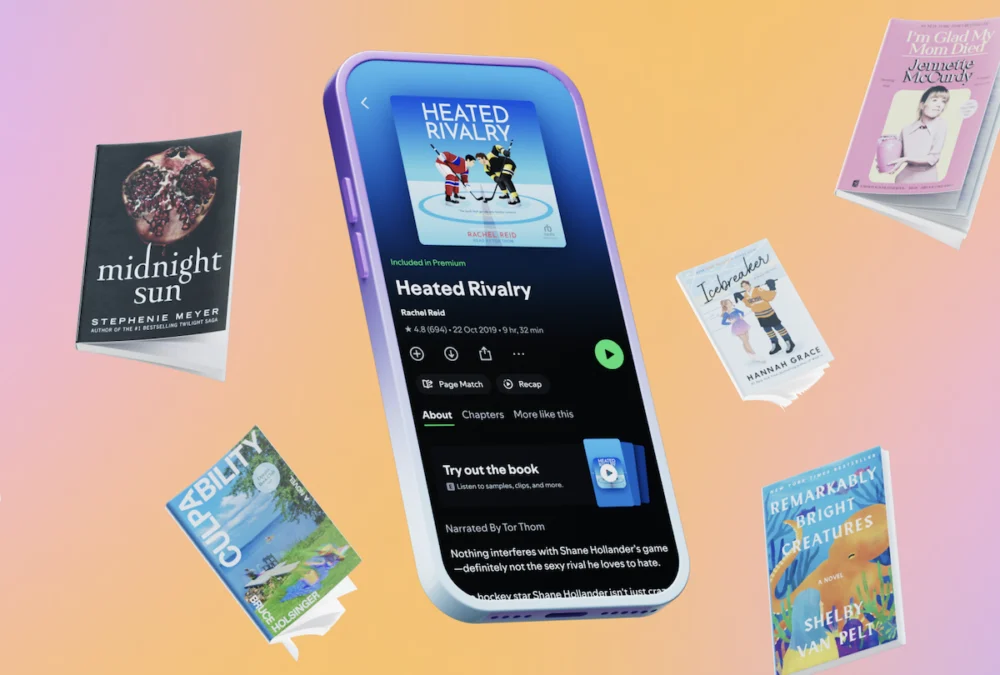
The digital streaming giant, Spotify, is executing a calculated and aggressive expansion into the publishing industry, fundamentally redefining its role from a pure audio distributor to a comprehensive literary retailer. Amid ongoing financial pressure that has recently culminated in yet another round of subscription price increases for users across key markets, the company has unveiled a sweeping set of enhancements for its burgeoning audiobook vertical. Most notably, Spotify is shedding its digital-only identity by introducing the direct sale of physical books through its application, initially targeting users in the United States and the United Kingdom. This strategic pivot signals Spotify’s commitment to bridging the persistent gap between analog and digital consumption habits, positioning the platform as a multimodal hub for all reading enthusiasts.
This foray into physical commerce is not merely an opportunistic diversification; it represents a direct challenge to established book distribution behemoths, primarily Amazon, which dominates both the physical (through Amazon Retail) and digital audiobook (through Audible) markets. By offering both print and audio formats within a single ecosystem, Spotify is striving to become the essential, one-stop destination for book consumers, recognizing that a significant portion of readers still prioritize the tactile experience of a physical volume, even if they utilize audio versions for convenience during commutes or exercise.
Strategic Context: Diversifying Beyond Music Margins
Spotify’s intense focus on audiobooks, first introduced with a robust catalog of 300,000 titles and now exceeding 500,000, is a necessary response to the structural economic limitations of music streaming. The music industry’s fixed royalty structures and high content acquisition costs severely restrict profit margins, making sustained, high-value growth difficult. Conversely, the audiobook market offers superior unit economics and a faster growth trajectory.
In the two years since launching the service, the results have been compelling: the platform reported in recent months that the number of active audiobook users surged by 36% year-over-year, accompanied by a 37% rise in total listening hours. Furthermore, over half of Spotify’s immense global subscriber base—which currently stands at 281 million Premium users—have engaged with an audiobook title. These statistics validate the investment and demonstrate that audiobooks are a vital vector for enhancing user engagement, justifying the platform’s increasingly high subscription fees. The new feature set and the introduction of physical sales are designed to capitalize on this momentum, reinforcing the perception of value as the cost of membership rises.
The Bookshop.org Partnership: A Values-Based Competitive Advantage
The mechanism by which Spotify is entering the physical retail space is particularly insightful. Rather than building its own costly fulfillment infrastructure, the company has forged a high-profile partnership with Bookshop.org. Bookshop.org operates as an online marketplace specifically designed to financially support local, independent bookstores.
This collaboration is a masterstroke of competitive strategy. It allows Spotify to instantly leverage an existing, efficient supply chain while simultaneously adopting a pro-independent stance that sharply contrasts with the monopolistic reputation of its primary rival, Amazon. Every physical book purchase initiated through the Spotify app, which will feature a button labeled “Add to your bookshelf at home” on the audiobook page, directly benefits local book communities. This ethical alignment appeals powerfully to segments of the reading demographic often critical of corporate consolidation, transforming what might otherwise be seen as a cold, transactional expansion into a community-supporting initiative.
The implementation is seamless for Spotify users in the U.S. and the U.K. Clicking the purchase button redirects the user to Bookshop.org’s website, which assumes responsibility for all logistical complexities: pricing, inventory management, fulfillment, and shipping. This structure minimizes operational risk for Spotify while maximizing the breadth of physical titles available, ensuring the platform can offer a comprehensive retail experience without significant capital expenditure on warehousing or distribution networks.

Technological Innovation: Bridging the Analog-Digital Divide
Central to Spotify’s strategy is the commitment to unifying the reading experience, acknowledging that modern consumption is rarely limited to a single format. To this end, the company has introduced a highly anticipated feature called Page Match.
Page Match is a sophisticated utility designed to solve the perennial inconvenience faced by hybrid readers: maintaining synchronization between the physical book and the audio version. This tool, powered by advanced computer vision and image scanning technologies—a combination of proprietary in-house development and third-party solutions—allows users to utilize their smartphone camera to scan a page from a physical book or even an e-book. The application instantaneously analyzes the text content, performs a rapid lookup against the corresponding audiobook script, and transitions the user to the exact spoken word moment within the audio file.
The feature effectively eliminates the friction involved in switching modalities, whether the user is transitioning from reading at home to listening during a commute, or vice versa. The interface includes intuitive controls: a "Scan to Listen" button initiates the audio playback, and a companion "Scan to Read" function ensures seamless return to the physical copy later.
Page Match is a critical component in increasing the ‘stickiness’ of Spotify’s ecosystem. It moves beyond simple content aggregation and ventures into genuine utility creation. Initially available to Premium subscribers, the feature is scheduled for a broader rollout to all audiobook users by late February, starting with the vast majority of English-language titles, with plans for rapid linguistic and catalog expansion.
Enhancing User Retention with Smart Recaps
In addition to Page Match, Spotify is enhancing fundamental usability with the broader deployment of Audiobook Recaps. This feature, which was previously confined to iOS devices, is scheduled to arrive on Android devices this spring. Audiobook Recaps provide succinct, algorithmically generated summaries tailored to the specific section of the book where the user last paused listening.
This capability is crucial for mitigating listener abandonment. Audiobooks, especially lengthy non-fiction or complex narratives, often suffer from high drop-off rates when listeners take extended breaks and forget contextual details. By providing bite-sized, relevant summaries, Spotify reduces the cognitive load required to re-engage with the content, thereby fostering greater completion rates and encouraging continuous use of the platform for audio consumption. This focus on improving the core user experience demonstrates an understanding that long-term success in the attention economy hinges on reducing friction points and maximizing user comfort.
Expert Analysis: The Battle for Ecosystem Control
Industry analysts view Spotify’s dual-pronged strategy—physical retail coupled with sophisticated digital synchronization tools—as an attempt to control the entire consumer lifecycle for books. This approach is highly disruptive to the established models of Amazon/Audible, which have historically focused on compartmentalizing the market: Kindle for digital reading, Amazon for physical fulfillment, and Audible for audio.
“What Spotify is doing is not just selling a product; they are selling a hybrid experience,” explains Dr. Elena Varga, a specialist in digital media convergence at the Institute for Global Tech Strategy. “Amazon thrives on silos. Spotify is breaking those down. By making the transition between reading and listening virtually instantaneous, they are appealing to the modern consumer’s demand for flexible, continuous media access. This dramatically raises the switching costs for users, making it harder to leave the Spotify ecosystem once they adopt these multimodal reading habits.”

The financial implications of this unified approach extend beyond direct sales revenue. The ultimate value lies in data aggregation. By tracking user behavior across physical purchases, audio listening patterns, and in-app synchronization habits, Spotify gains unprecedented insights into reading preferences. This rich data can then be leveraged to develop highly personalized recommendations, commission targeted original content (Originals), and optimize advertising revenue streams.
Competitive Landscape and Market Dynamics
The move into physical retail positions Spotify in direct competition with traditional booksellers like Barnes & Noble, but the primary target remains Amazon. Amazon’s control over the book market is often cited as a significant barrier to entry for competitors. However, Spotify’s partnership with Bookshop.org provides a strategic counter-narrative, mobilizing the independent bookstore movement against the market leader.
Furthermore, Spotify’s existing monetization model for audiobooks—often a la carte purchases or credits within a Premium subscription tier—differs from Audible’s heavy reliance on a strictly credit-based subscription model. By combining this flexible purchase model with physical sales, Spotify offers consumers more pathways to acquire and consume literature, potentially appealing to casual readers who might be intimidated by a fixed monthly credit system.
The sheer scale of Spotify’s user base—281 million paying subscribers—provides an unmatched funnel for cross-promotion. The millions of users who currently access music and podcasts are now being directly exposed to the audiobook catalog and, subsequently, the option to purchase physical books, creating a rapid acceleration engine for market penetration.
Future Impact and Trends
As Spotify prepares to release its critical fourth-quarter earnings results, the market will be closely scrutinizing the early impact of these strategic shifts. While the direct revenue generated by physical book sales may initially be modest compared to streaming subscription fees, the long-term impact on subscriber retention (churn rate reduction) and overall engagement hours will be key indicators of success. Higher engagement directly translates into a healthier, more defensible business model.
Looking ahead, this expansion into multimodal content distribution sets the stage for further technological convergence. Future trends could include:
- Exclusive Bundling: Spotify may begin offering exclusive bundles combining limited-edition physical copies of books with unique, bonus audio content (e.g., author commentary tracks or extended interviews), accessible only through the Spotify platform.
- AI-Driven Physical Curation: Leveraging the Page Match data and listening habits, AI could generate highly personalized, localized physical book recommendations, perhaps even integrating with independent bookstores in real-time to show in-store availability.
- Enhanced Original Content: Following its successful strategy in podcasting, Spotify is likely to commission more original audiobooks and, crucially, original print titles. By controlling both the physical publication and the audio narration, Spotify would achieve full vertical integration, maximizing margins and establishing exclusive content anchors to drive subscription loyalty.
In conclusion, Spotify’s expansion into physical book sales, augmented by the sophisticated technological integration of Page Match and the enhanced user experience provided by Audiobook Recaps, represents a seismic shift in the digital media landscape. It is a bold, high-stakes move to consolidate control over the entire literary consumption pipeline, transforming the company from a music platform that happens to offer audiobooks into a dominant, holistic content ecosystem ready to challenge the reigning titans of global retail and publishing.