

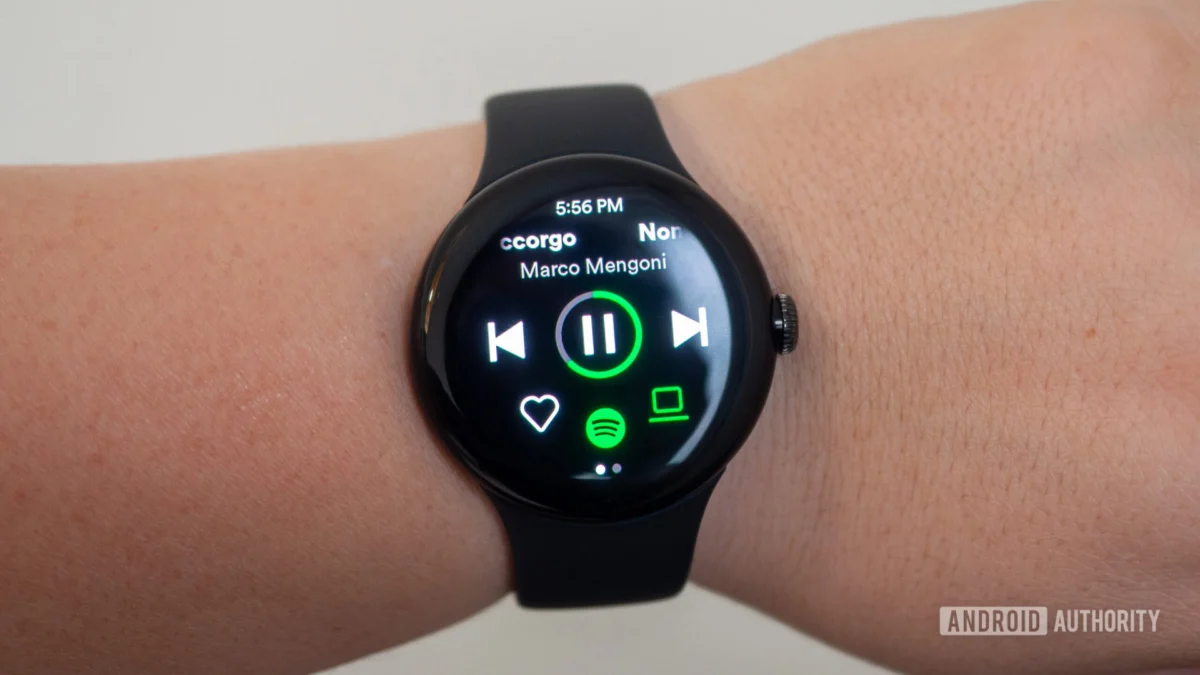
The digital audio landscape is characterized by relentless evolution, with major platforms continually optimizing experiences across an ever-expanding array of connected devices. In a significant move underscoring the maturation of the Wear OS ecosystem, Spotify is now deploying a comprehensive redesign of its application specifically tailored for Google’s smartwatch operating system. This update moves beyond mere functional parity, introducing a fundamentally new, gesture-driven interaction model that signals a strategic investment in the utility and immediacy of wrist-worn media consumption.
This rollout confirms earlier indications derived from application analysis, suggesting that Spotify’s internal roadmap prioritized refining the micro-interaction layer for wearables. The previous iteration of the Spotify Wear OS application, while functional, often suffered from the inherent limitations of small touch targets and sequential menu navigation common to early smartwatch software. The new paradigm seeks to leverage the strengths of modern smartwatch hardware—namely, high-resolution displays and sophisticated touch/swipe capabilities—to create a more fluid and less intrusive user experience.
The Mechanics of the Gesture Revolution
The core of this update centers on a radical simplification of navigation, replacing layered menus with intuitive physical gestures directly on the watch face or within the active app screen. This focus on physicality is crucial; the primary value proposition of a smartwatch music app is its ability to operate independently or as a superior controller while the primary phone remains pocketed or at home.
The primary entry point, or the landing screen, now serves as the nexus of control. A downward swipe initiates what Spotify terms an "immersive view." This view dramatically enlarges the displayed album artwork, prioritizing visual context over dense textual information. In a highly constrained visual environment, maximizing the aesthetic element enhances engagement. Control within this immersive mode is streamlined: a single tap functions as the universal play/pause toggle, while a distinct double-tap executes a skip forward command. This binary action set—tap for status change, double-tap for progression—is optimized for quick, often blind, execution during physical activity, such as running or cycling.
Conversely, the upward swipe from the landing screen opens the gateway to content discovery and management. This vertical navigation path consolidates essential navigational anchors: Home, Search, Your Library, and Downloads. For the user focused on controlling immediate playback, these options allow rapid switching between pre-curated content (Library, Downloads) and active discovery (Home, Search) without needing to return to the phone. Furthermore, this upward-swiping layer acts as a hub for secondary, yet critical, functions, including queue management, setting a sleep timer—a feature surprisingly useful for background listening before bed—and accessing an expanded context menu for deeper settings or sharing options.
Context and Industry Implications
The significance of this overhaul extends beyond mere feature enhancement; it reflects a broader industry reckoning with the true potential of the smartwatch form factor. For years, smartwatches were often relegated to notification mirrors or rudimentary fitness trackers. Platforms like Wear OS, particularly following Google’s integration with Fossil and Samsung’s adoption, have pushed hardware capabilities—better battery life, faster processors, and more accurate sensors. Spotify’s aggressive UI redesign validates this platform maturity.
Validation of Wear OS as a Primary Platform: When a global leader in digital media commits engineering resources to a complete user experience overhaul for a specific platform, it signals a long-term commitment. This isn’t a maintenance patch; it’s a structural reimagining. It implies that Spotify sees significant, addressable user engagement on Wear OS devices, moving beyond the early adopter phase into mainstream adoption, particularly as devices like the Pixel Watch and newer Samsung Galaxy Watches gain traction.
The Competitive Edge in Wearable Audio: In the audio streaming wars, user experience friction is a major determinant of churn. If accessing music on a run requires wrestling with a fiddly, non-intuitive interface, users default to downloaded MP3s or less feature-rich, though potentially faster, native music apps on their watches. By prioritizing gestures that mimic common physical interactions (like tapping for action), Spotify is positioning its offering as the superior, friction-free choice for on-the-go listeners, thereby strengthening its ecosystem lock-in against rivals like Apple Music, which maintains its own dedicated platform experience on watchOS.
The Move Toward ‘Glanceable’ Computing: This redesign is a textbook example of "glanceable computing." The entire philosophy is built around minimizing time spent interacting with the screen. The immersive album art maximizes information density (what’s playing) while the gestures allow for rapid command execution (skip, pause). Experts in human-computer interaction often argue that for wearables, the goal is less interaction, not more. Spotify appears to have internalized this principle, recognizing that excessive menu diving defeats the purpose of wearing a device designed for situational awareness.
Expert Analysis: Design Trade-offs and Technical Hurdles
From a technical standpoint, implementing gesture-based navigation across an entire application structure requires careful handling of touch event prioritization. The system must flawlessly distinguish between a "downward swipe to open immersive view," a "downward swipe to scroll within the immersive view" (if scrolling is later enabled), and accidental screen touches. This requires robust framework integration with Wear OS APIs.
Prioritizing Playback Over Discovery: The structural hierarchy—landing screen leading to immersive controls, with discovery features relegated to an upward swipe—is a deliberate design choice reflecting user intent. Data analysis almost certainly shows that the vast majority of active Wear OS Spotify sessions involve controlling already-playing content or quickly navigating to recently played items. Placing playback controls front-and-center (downward gesture) while pushing the more data-intensive Search and Library features (upward gesture) respects this usage pattern.
The Challenge of Offline Functionality: A key component mentioned is the integration of the ‘Downloads’ section via the upward swipe. For a smartwatch app to be truly independent, it must handle local storage effectively. This redesign implicitly demands that the underlying Wear OS app architecture efficiently manages downloaded content and metadata, ensuring that library browsing remains instantaneous even without a stable Bluetooth connection to the paired phone or Wi-Fi.
Future Trajectory: Integration and Expansion
Spotify’s commitment to Wear OS is unlikely to stop with this UI refresh. The company has simultaneously shown interest in other emerging form factors, such as developing an Android XR companion app and exploring playlist folder management on mobile. These disparate activities point toward a unified strategy: optimizing media delivery across every possible interface, regardless of screen size or input method.
Deeper Platform Integration: The next logical steps for Spotify on Wear OS will likely involve deeper integration with system-level features. This could include leveraging advanced biometric data from the watch—for example, adjusting music tempo or energy based on real-time heart rate zones detected during a workout, a level of contextual awareness that goes beyond simple playback control.
Expanding the Ecosystem Footprint: While this update focuses on the core music experience, we can anticipate Spotify continuing to build out ancillary features that leverage the watch’s unique capabilities. This might include more sophisticated integration with voice commands (Google Assistant on Wear OS) for hands-free track requests or playlist creation, further reducing the need to ever touch the phone.
The Long Game Against Ecosystem Lock-in: The ongoing development on Wear OS is also a strategic play against platform fragmentation. As Apple continues to refine watchOS and its native Music app, Spotify must ensure its offering remains compelling enough to dissuade dedicated Apple Watch users (or potential converts) from defaulting to Apple’s native solution. By delivering a best-in-class, gesture-optimized experience on Wear OS, Spotify fortifies the value proposition for the Android wearable segment, ensuring cross-platform accessibility remains a core competitive advantage.
The rollout, which is scheduled to propagate across the Google Play Store over the next few days, mandates that users manually update to the latest version of the Spotify on Wear OS application to access this significant user experience paradigm shift. Spotify has also confirmed that this is merely the opening salvo, promising further iterative improvements to the Wear OS experience in the forthcoming months, suggesting a sustained, strategic partnership with the Wear OS development community. This bold iteration signals that for Spotify, the wrist is no longer an afterthought, but a primary frontier for digital media interaction.