

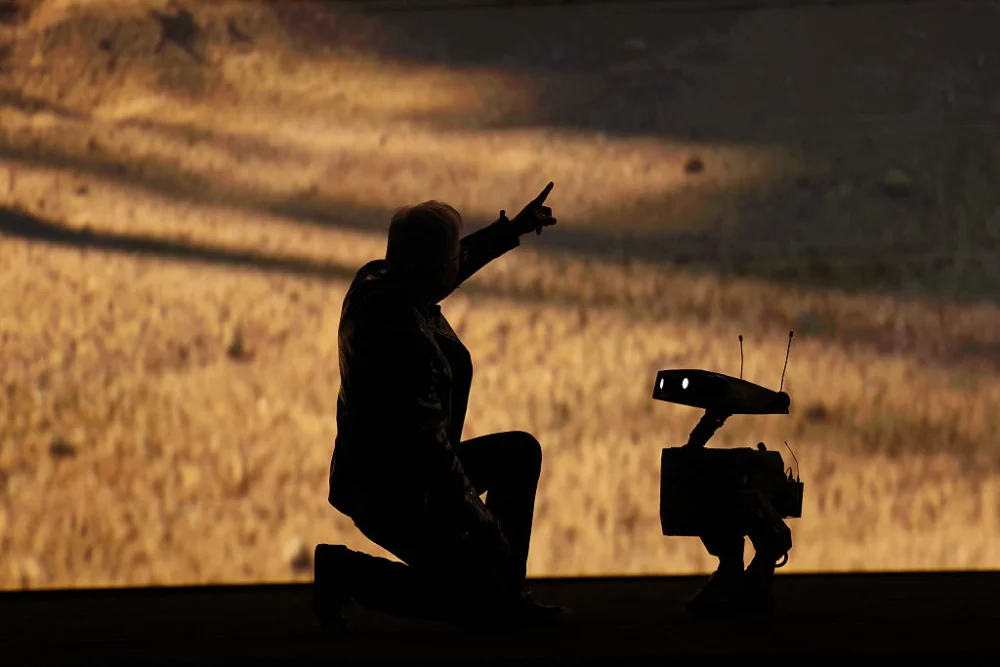
As the convention halls of Las Vegas empty, marking the close of CES 2026, the global technology industry is left to digest a week dominated not merely by futuristic concepts, but by concrete advancements cementing the transition of Artificial Intelligence from the digital cloud into the physical world. While the annual Consumer Electronics Show traditionally serves as a barometer for near-term consumer trends, this year’s exhibition acted as a profound inflection point, signaling a strategic industry pivot towards what has rapidly been termed "Physical AI" (P-AI). This paradigm shift involves AI systems designed to perceive, reason about, and directly manipulate the real environment using sophisticated hardware platforms.
For the third consecutive year, AI remained the indisputable center of attention. However, the narrative evolved significantly from the Large Language Model (LLM) hype cycle that characterized the previous two shows. If 2025 was the year of "agentic AI"—intelligent software capable of completing complex digital tasks—2026 demonstrated the industry’s collective effort to equip that intelligence with bodies and actuators, yielding a powerful focus on robotics and specialized edge computing hardware.
The Semiconductor Arms Race: Rubin and Ryzen Redefine Compute
At the heart of the Physical AI revolution lies the need for staggering computational power, a demand addressed head-on by the dueling keynotes from semiconductor titans Nvidia and AMD.
Nvidia CEO Jensen Huang utilized his presentation to not only celebrate the company’s continuing market dominance in training massive foundation models but also to unveil the foundational silicon for the next generation of AI adoption: the Rubin computing architecture. Scheduled to succeed the formidable Blackwell architecture in the latter half of the year, Rubin represents a critical escalation in the AI arms race. Expert analysis suggests that Rubin’s primary innovation lies not just in raw FLOPS increase, but in dramatic enhancements to memory bandwidth and interconnect efficiency. As AI models grow exponentially in size and complexity—moving beyond simple language tasks to encompass multi-modal, real-time sensory data processing required for robotics and autonomous systems—high-bandwidth memory (HBM) becomes the primary bottleneck. Rubin’s architectural refinements are specifically engineered to alleviate this bottleneck, ensuring that the increasingly complex training and inference workloads of P-AI systems remain feasible and efficient, thus maintaining Nvidia’s crucial infrastructure lead.
The company further solidified its ambition to become the underlying operating system for physical robotics, echoing the success of Android in mobile. This strategy was exemplified by the debut of the Alpamayo family of open-source AI models designed specifically for autonomous vehicles (AVs). Alpamayo aims to grant AVs human-like reasoning and decision-making capabilities, moving beyond reactive sensor processing to predictive, contextual understanding of driving environments. By offering this open-source suite, Nvidia seeks to embed its proprietary hardware and ecosystem (CUDA, Omniverse) deep into the automotive sector, making it the indispensable platform for robot developers, much like it has become for generative AI researchers.

Meanwhile, AMD, led by CEO Lisa Su, focused on democratizing AI compute, pushing intelligence away from centralized data centers and onto the endpoint devices. The unveiling of the Ryzen AI 400 Series processors signals a fierce commitment to the burgeoning "AI PC" segment. These processors integrate dedicated Neural Processing Units (NPUs) that significantly enhance local inference capabilities.
The industry implication of this move is profound. By shifting tasks like real-time summarization, video background removal, and personalized LLM interactions to the local PC, users gain massive benefits in privacy, responsiveness, and cost efficiency. Furthermore, this architectural shift will profoundly impact software development, encouraging a new wave of applications that leverage the continuous, low-latency intelligence of edge silicon. AMD’s keynote underscored this ecosystem approach by featuring high-profile partners, including OpenAI’s Greg Brockman and AI pioneer Fei-Fei Li, demonstrating that chip design is now inextricably linked to the software ecosystem it enables.
Robotics Takes Center Stage: The Embodiment of AI
If chips provided the brainpower, robotics provided the bodies. CES 2026 saw robotics move decisively out of the laboratory and into practical, industrial, and consumer applications, confirming the widespread adoption of P-AI concepts.
The most significant collaboration unveiled involved Boston Dynamics, Hyundai, and Google’s AI research lab, DeepMind. This partnership focuses on leveraging Google DeepMind’s generalist AI capabilities—specifically, reinforcement learning and large-scale synthetic data training—to improve the dexterity, mobility, and adaptability of the legendary Atlas humanoid robot. The goal is to move beyond pre-programmed routines toward genuinely intuitive, multi-task performance in unpredictable environments. This merging of Boston Dynamics’ world-class hardware expertise with DeepMind’s state-of-the-art control systems represents a pivotal moment in humanoid robotics development, potentially accelerating the timeline for deployment in logistics, manufacturing, and disaster relief.
On the industrial front, the collaboration between Caterpillar and Nvidia illustrated P-AI’s immediate economic impact. Their "Cat AI Assistant" pilot program brings advanced autonomy to construction equipment, starting with specialized excavator vehicles. By integrating Nvidia’s simulation environment, Omniverse, Caterpillar can create digital twins of construction sites, allowing human operators to plan complex excavation and building tasks virtually before execution, enhancing safety and dramatically improving project efficiency. This marks a clear trend: the highest value applications of P-AI in the near term will be in high-cost, high-risk industrial environments where efficiency gains translate into billions of dollars in savings.
The consumer robotics space, however, revealed the inherent complexity and remaining hurdles of P-AI. LG’s home robot, CLOiD, designed to be a prominent figurehead for domestic assistance, demonstrated the gap between marketing aspiration and current technological reality. Reports from the show floor highlighted CLOiD’s “sluggish” and highly deliberate movements during basic tasks like placing a shirt in a dryer or a croissant in an oven. This performance underscores a key challenge for consumer P-AI: handling the chaos and variability of a typical home environment requires sophisticated, real-time perception and motor control that remains extremely difficult to implement robustly and affordably. While the promise of a generalist home robot is compelling, the path to seamless, ubiquitous integration remains long, hampered by limitations in power efficiency, sensor fusion, and actuator precision.

The Consumer Edge: Ambient Intelligence and Nostalgic Hardware
Beyond the heavy hitters of silicon and industrial automation, CES delivered a slate of consumer products that hinted at how AI will reshape daily life, often through unexpected form factors.
Amazon further embedded its ecosystem deeper into the home with the rollout of Alexa+, its enhanced AI-centric assistant. The launch of Alexa.com and a revamped app for Early Access customers signifies Amazon’s strategy to transform Alexa from a voice interface confined to Echo devices into a general-purpose, web-accessible chatbot. This strategic move aims to retain relevance in a post-LLM world, where conversational AI is expected everywhere, regardless of the physical device. Concurrently, Amazon announced the Artline TVs and a significant revamp of Fire TV, both featuring deep Alexa+ integration, indicating that the intelligent assistant is becoming the unifying, ambient operating layer across all Amazon hardware. Ring also expanded its security ecosystem, debuting fire alerts and an application store to encourage third-party integration, moving the smart security platform toward broader home management capabilities.
The automotive sector followed suit, with Ford debuting its new AI assistant, slated for full vehicle integration by 2027. Built using off-the-shelf LLMs and hosted on Google Cloud, this assistant aims to streamline in-car experiences. However, the lack of granular detail provided at the debut regarding the specific functionalities that differentiate Ford’s offering from existing digital assistants highlights the challenge automakers face in justifying proprietary AI systems when powerful consumer LLMs are readily available via mobile device integration.
Perhaps the most culturally resonant consumer product reveal was the Clicks Communicator. This debut smartphone from Clicks Technology intentionally evoked the tactile efficiency of the classic BlackBerry, featuring a physical keyboard integrated into its design (and offered separately as a $79 accessory). In a world saturated with glass slabs, the Communicator’s popularity signals a counter-trend: a segment of users seeking superior tactile feedback and streamlined input mechanisms, particularly as they interact more frequently with complex text-based AI prompts. It suggests that even as AI dominates the software layer, hardware design is reacting by re-embracing physical, efficient interfaces.
The Conceptual Frontier and Market Oddities
CES remains a haven for the unconventional, providing a necessary glimpse into R&D concepts that may or may not reach mass production. Gaming peripherals giant Razer, known for its show-stopping, often bizarre concepts, delivered two AI-focused projects that illustrate the speculative edge of consumer P-AI.
Project Motoko proposes a unique form of wearable AI that functions similarly to smart glasses but removes the visual component entirely. This concept focuses on ambient, auditory interaction, suggesting a future where AI companionship and utility are constantly available but discreetly delivered without requiring screen time or overt visual hardware.

Even more speculative was Project AVA, an AI companion represented by a physical avatar on the user’s desk. While fundamentally a highly advanced chatbot interface, the embodiment of the AI as a desk fixture explores the psychological and human-computer interaction implications of living and working alongside persistent, personalized intelligence. Razer’s efforts, while conceptual, serve as critical market indicators, probing consumer appetite for persistent, embodied digital companions.
In the realm of personal manufacturing, the introduction of the eufyMake E1 UV printer at a competitive price point ($2,299) promises to democratize industrial technology. UV printing, traditionally limited to high-volume commercial operations, allows ink to be printed directly onto virtually any object (mugs, phone cases, customized components). By making this technology accessible to small businesses and individual creators, eufyMake is poised to fuel the growth of hyper-personalized e-commerce and creative entrepreneurship, directly impacting platforms like Etsy.
Future Trajectories and Expert Analysis
CES 2026 solidified two crucial trends for the coming decade. First, the convergence of digital and physical domains is now the central focus of technological innovation, driven by P-AI. Second, the battle for the foundational infrastructure that powers this convergence—the "silicon wars"—is escalating rapidly, requiring increasingly specialized and power-efficient architectures like Nvidia’s Rubin and AMD’s Ryzen AI series.
Expert analysis suggests that while the enthusiasm for P-AI is justified, the immediate future will be defined by the industry’s ability to solve two enduring problems: power efficiency and safety. Training massive foundation models for physical interaction requires enormous energy, and deploying autonomous systems (whether in vehicles, factories, or homes) demands unparalleled reliability and safety standards. The partnerships seen at CES, such as Google DeepMind with Boston Dynamics, are strategic moves designed to pool resources and tackle these complexity barriers collaboratively.
The broader implication for the workforce, highlighted during various breakout sessions, is the end of the "learn once, work forever" era. As AI rapidly automates rote tasks in sectors ranging from construction (Caterpillar) to logistics (robotics), continuous learning and adaptability will become non-negotiable professional requirements. The human role will shift increasingly toward managing, supervising, and debugging complex autonomous systems, rather than executing repetitive physical or cognitive tasks.
In summary, CES 2026 was not a show of marginal hardware improvements; it was a foundational demonstration of the infrastructure being built to support the next era of computing. The integration of high-performance chips, generalist AI models, and sophisticated robotic bodies is transforming the science fiction promise of intelligent machines into an imminent commercial reality, setting the stage for a decade defined by embodied intelligence.