

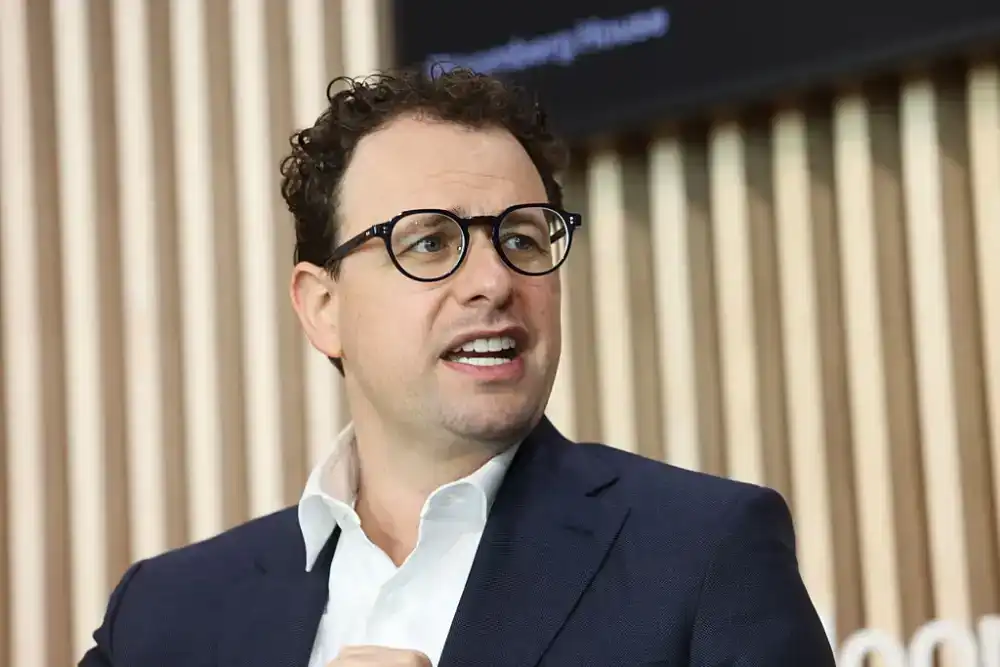
The burgeoning tension between the rapid militarization of artificial intelligence and the ethical frameworks of the companies building it has reached a legal breaking point. Dario Amodei, the CEO of Anthropic, confirmed this week that his firm intends to challenge the U.S. Department of Defense (DOD) in federal court. The move follows the Pentagon’s formal designation of Anthropic as a "supply-chain risk," a classification that effectively blacklists the company from a wide swath of lucrative government contracts and military integrations. Amodei has denounced the label as "legally unsound," setting the stage for a high-stakes judicial battle that could define the boundaries of government overreach in the age of generative AI.
The designation was finalized on Thursday, marking the culmination of a weeks-long ideological standoff between the AI startup and defense officials. At the heart of the dispute is a fundamental disagreement over the "rules of engagement" for AI in a military context. Anthropic, a company founded on the principle of "AI safety" and constitutional training methods, has long maintained that its Claude models should not be utilized for mass surveillance of American citizens or the operation of fully autonomous lethal weapons systems. Conversely, the Pentagon has pushed for "unrestricted access" to the technology, arguing that in a period of heightened global conflict, the military must be able to utilize all available tools for "all lawful purposes" without being hampered by private-sector ethical constraints.
The supply-chain risk label is a potent administrative weapon. Traditionally reserved for foreign entities or companies suspected of espionage, such as Huawei or Kaspersky, its application to a prominent American AI lab represents a significant escalation. For Anthropic, the designation is not merely a reputational blow; it is a structural barrier that prevents the company from serving as a direct contractor for the Pentagon or its sprawling network of defense subcontractors.
In a statement addressing the crisis, Amodei sought to reassure the company’s broader commercial base, noting that the vast majority of Anthropic’s enterprise customers remain unaffected. He clarified that the DOD’s designation is narrow in its legal application, specifically targeting the use of Claude as a direct component of Department of War contracts. It does not, he argued, prevent defense contractors from using Anthropic’s tools for their own internal business operations unrelated to their specific government mandates.
Anthropic’s legal strategy appears to be coalescing around the "least restrictive means" doctrine. Amodei pointed out that the law governing supply-chain safety requires the Secretary of War to protect the government using the narrowest possible interventions. By labeling the entire firm a risk rather than negotiating specific usage terms, Anthropic will argue that the government has overstepped its statutory authority. "It exists to protect the government rather than to punish a supplier," Amodei stated, suggesting that the DOD’s move was retaliatory rather than a genuine security necessity.
The path to this legal confrontation was paved with diplomatic failures and leaked communications. For several days, Anthropic and the DOD were reportedly engaged in productive, albeit tense, negotiations. However, those talks were derailed by the leak of an internal memo authored by Amodei. In the document, the CEO was blunt in his assessment of the defense landscape, characterizing the recent partnership between rival OpenAI and the Pentagon as "safety theater." The memo suggested that OpenAI had compromised its ethical standards to secure a government foothold, a charge that has intensified the already fierce rivalry between the two San Francisco-based labs.
The fallout from the leak was immediate. Shortly after the memo’s contents became public, a series of events unfolded with rapid-fire succession: a presidential social media post signaled Anthropic’s removal from federal systems, Defense Secretary Pete Hegseth formalized the supply-chain risk designation, and the Pentagon announced a sweeping new deal with OpenAI to fill the void left by Anthropic.
Amodei has since apologized for the tone of the memo, describing it as a product of a "difficult day" written in the heat of the moment. He clarified that the memo was an "out-of-date assessment" and did not reflect his "careful or considered views." Despite the apology, the damage to the relationship between Anthropic and the current administration appears profound. The company now finds itself in the awkward position of supporting active U.S. operations—specifically in the Iranian theater—while simultaneously being labeled a risk to the nation’s supply chain. Amodei committed to providing Anthropic’s models to the DOD at "nominal cost" during a transition period to ensure that national security experts are not left without critical tools in the midst of ongoing combat operations.
The broader industry implications of this rift are significant. For years, Silicon Valley has wrestled with its role in the "military-industrial-complex 2.0." While some firms, like Palantir and Anduril, have embraced defense work as a core mission, others have faced internal revolts over military contracts. Anthropic’s refusal to grant the Pentagon unrestricted access reflects a growing "principled" faction within the AI sector that believes developers must retain some level of control over how their intellectual property is weaponized.
However, the legal hurdles for Anthropic are formidable. The lawsuit will likely be filed in Washington, D.C., where federal judges are notoriously hesitant to second-guess the executive branch on matters of national security. The laws governing procurement and supply-chain safety grant the Pentagon broad discretion. To win, Anthropic will need to prove that the DOD’s decision was "arbitrary and capricious" or that it lacked a factual basis—a high bar to clear when the government can simply invoke "classified interests" to justify its actions.
Dean Ball, a former White House adviser on AI, noted that while the bar is high, it is not impossible to clear. He pointed out that the treatment of Anthropic has raised eyebrows even among those who support a strong military. If the government can label a domestic company a "risk" simply because it insists on ethical guardrails, it creates a precedent that could stifle innovation and discourage other startups from working with the state.
The transition of the Pentagon’s AI focus to OpenAI also brings its own set of complications. Reports indicate that OpenAI’s staff is already expressing backlash over the deal, mirroring the internal strife seen at Google years ago during "Project Maven." If OpenAI is seen as the "pliant" alternative to Anthropic’s "principled" stance, it may face its own talent drain, as researchers committed to AI safety seek employment elsewhere.
Looking forward, the Anthropic-DOD lawsuit could trigger a fracturing of the AI market. We may see the emergence of two distinct tiers of AI development: "Defense-First" labs that integrate deeply with government requirements and "Neutral" labs that prioritize commercial and ethical standards at the cost of federal revenue. This bifurcation could slow the adoption of cutting-edge AI in government, as the most advanced models may come from firms that the Pentagon has deemed "uncooperative."
Furthermore, the dispute highlights the lack of a clear national framework for AI ethics in warfare. Without a legislative consensus on what constitutes "lawful purpose" for AI, the burden of setting these boundaries has fallen to individual CEOs and unelected defense officials. This vacuum of policy ensures that future conflicts between Silicon Valley and the Pentagon are inevitable.
As Anthropic prepares its legal filings, the company is positioning itself as a defender of both corporate autonomy and global safety. Amodei’s gamble is that the courts will see the "supply-chain risk" label for what he believes it is: a political tool used to coerce a private entity into surrendering its ethical core. Whether the judiciary will agree, or whether it will defer to the Pentagon’s definition of security, will be the defining story of the AI industry in the coming year. For now, the "nominal cost" support Anthropic is providing to the front lines serves as a reminder of the complex, often contradictory, relationship between the titans of code and the architects of war.