

The global smartphone industry has long been characterized by a narrative of saturation and incrementalism. For the better part of a decade, the consensus among market analysts was that the era of explosive growth for established titans had concluded, replaced by a grueling war of attrition over razor-thin margins and replacement cycles. However, the performance of the sector throughout 2025 has fundamentally challenged this premise. In a year defined by shifting consumer loyalties and macroeconomic recalibrations, Apple has emerged not merely as a market leader, but as the fastest-growing major smartphone manufacturer on the planet.
According to the latest industry data, Apple secured a commanding 20% share of the global market in 2025, underpinned by a 10% year-over-year growth rate. To put this in perspective, achieving double-digit growth at such a massive scale is a feat rarely seen in mature consumer electronics categories. While competitors struggled to maintain momentum amidst fluctuating component costs and geopolitical tensions, the Cupertino-based giant managed to harmonize its high-end brand equity with a more aggressive and successful expansion into previously untapped demographics.
The Emerging Market Engine
The catalyst for this unexpected surge was not limited to the traditional strongholds of North America and Western Europe. Instead, the narrative of 2025 was written in the rapidly developing economies of India, Southeast Asia, and parts of Latin America. For years, Apple was viewed in these regions as a luxury niche player—a brand for the elite that held significant aspirational value but lacked the volume to challenge local leaders or budget-friendly Chinese OEMs (Original Equipment Manufacturers).
In 2025, that dynamic shifted. A combination of more flexible financing options, trade-in programs, and a strategically tiered product mix allowed Apple to capture the burgeoning middle class in these territories. The iPhone 16, despite being a year old by the time the fourth-quarter figures were tallied, remained a powerhouse in Japan, India, and across Southeast Asian markets. By maintaining the iPhone 16 as a high-performance, slightly more affordable alternative to the flagship line, Apple effectively created a "mid-to-high" tier that cannibalized sales from competitors who had previously owned that price bracket.
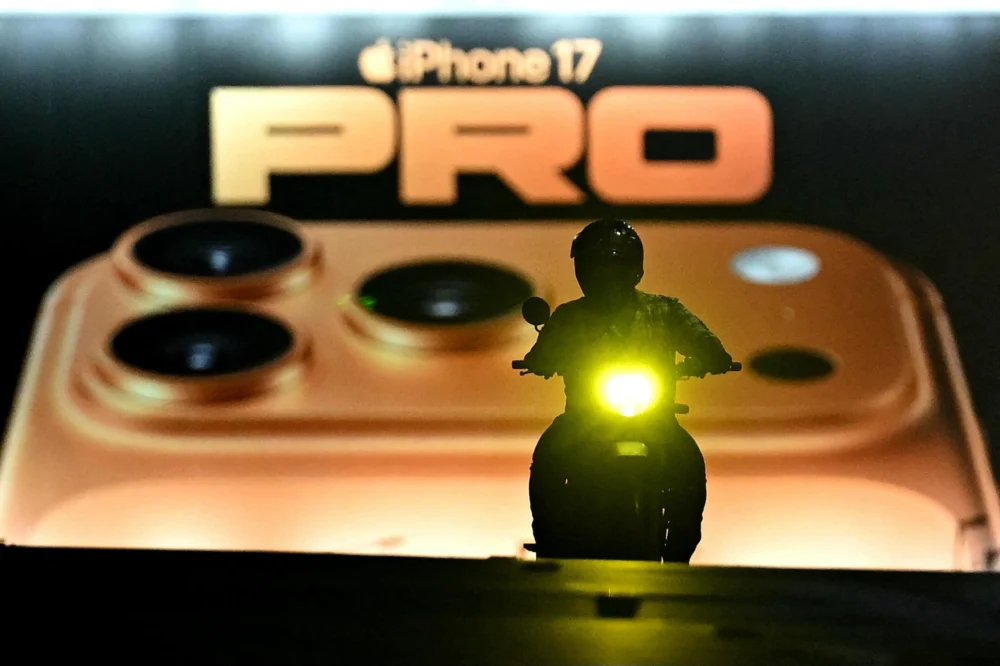
The fourth quarter of 2025 saw the introduction of the iPhone 17 series, which acted as a secondary booster for the company’s annual performance. The launch was met with significant traction, particularly in urban centers within emerging markets where the demand for the latest hardware remains a status symbol as much as a functional necessity. This "dual momentum"—the sustained relevance of the previous generation alongside the rapid adoption of the new—provided Apple with a unique resilience.
The COVID-Era Upgrade Cycle Reaches Its Zenith
Beyond geography, a temporal factor played a massive role in Apple’s 2025 success. The industry reached what analysts call an "inflection point" regarding the replacement cycle. During the height of the global pandemic in 2020 and 2021, there was a massive spike in consumer electronics purchasing as the world moved toward remote work and digital-first lifestyles.
Because high-end smartphones typically have a functional lifespan of four to five years before battery degradation and software requirements necessitate an upgrade, 2025 became the "year of the replacement." Millions of users who had purchased devices during the early 2020s found themselves due for an upgrade. Apple, with its industry-leading software support and high resale value, became the primary beneficiary of this cycle. Consumers who may have experimented with other brands during the pandemic returned to the iOS ecosystem, seeking the longevity and integration that have become the hallmarks of the brand.
The Competitive Landscape: Samsung and the Chinese Giants
While Apple celebrated a 10% growth rate, its closest rival, Samsung, faced a more complicated year. Samsung remains a formidable second in the global rankings, holding a 19% market share. However, its growth was measured at a more modest 5% year-over-year. While Samsung continues to dominate in terms of sheer variety—offering everything from entry-level A-series devices to the experimental Galaxy Z Fold and Flip lines—it has faced increasing pressure on two fronts. At the high end, it is battling Apple’s brand loyalty; at the low-to-mid end, it is being squeezed by the efficiency of Chinese manufacturers.
The "Big Three" of Chinese manufacturing—Xiaomi, Vivo, and Oppo—together accounted for nearly 30% of all global shipments in 2025. These companies have perfected the art of high-spec, low-cost hardware, making them the dominant force in domestic China and significant players in the European and African markets. Their ability to iterate rapidly and integrate new technologies, such as ultra-fast charging and advanced camera sensors, keeps them at the forefront of the value proposition.

However, the "Others" category also yielded some of the year’s most interesting stories. While the giants fought for percentage points, smaller, more agile players found ways to disrupt the status quo. Google’s Pixel line, for instance, saw a remarkable 25% year-over-year growth in units shipped. This suggests that a segment of the Android user base is increasingly moving away from third-party skins in favor of the "clean" Google experience and the company’s superior AI-driven photography.
Similarly, Nothing, the London-based challenger brand, solidified its position as the industry’s most "unique" manufacturer. By focusing on design transparency and a distinct aesthetic language, Nothing has managed to capture a younger, tech-savvy audience that feels alienated by the utilitarian designs of the major players. Their 2025 flagship was widely cited by critics as a breath of fresh air in a market that often feels derivative.
The 2026 Forecast: The Shadow of the AI Boom
Despite the celebratory tone of 2025’s growth figures, the horizon for 2026 appears significantly more clouded. The smartphone industry is currently on a collision course with the broader technology sector’s obsession with Artificial Intelligence.
The unprecedented demand for AI-capable hardware has triggered a global data center boom. To power the Large Language Models (LLMs) and generative AI tools of the future, tech giants are investing billions into server infrastructure. This infrastructure requires massive amounts of DRAM (Dynamic Random Access Memory) and NAND flash storage—the same essential components found in every smartphone.
As we move into 2026, memory manufacturers are increasingly prioritizing high-margin AI data center contracts over consumer electronics. This shift in supply chain priority is already leading to skyrocketing component prices. For smartphone makers, this presents a "triple threat": parts are becoming harder to source, they are becoming more expensive, and the cost of research and development for on-device AI features is rising.
Industry experts predict that the global smartphone market will "soften" in 2026 as a direct result of these supply constraints. Price hikes for the end consumer are no longer a theoretical possibility; they have already begun to surface in several regions. When the cost of bill-of-materials (BOM) rises, manufacturers are forced to either absorb the cost—thinning their already tight margins—or pass the cost to the consumer, which inevitably cools demand.
The Survival of the Scalable
In this looming era of scarcity, the advantage shifts back to the giants. Apple and Samsung possess a level of supply chain leverage that smaller manufacturers simply cannot match. Because of their massive order volumes and premium pricing structures, they can afford to pay the "AI tax" on components while still maintaining profitability. Furthermore, their long-standing relationships with chip and memory fabricators like TSMC and Samsung Foundry ensure they are at the front of the line when supply is limited.
For Apple specifically, the "walled garden" ecosystem serves as a powerful hedge against market volatility. While a price hike might deter a casual buyer from a budget Android device, the Apple user is often more "sticky," tied to the platform by iCloud, iMessage, and a suite of interconnected devices. This brand insulation, combined with the momentum gained in 2025, positions Apple to weather the upcoming supply chain storms better than perhaps any other company in history.
As we look back at the data from 2025, it is clear that the smartphone market is not the stagnant pond many assumed it to be. It is an ecosystem in constant flux, where legacy power can be revitalized by smart geographic expansion and where new challengers can still find room to breathe. Apple’s 10% growth is a testament to the fact that even at the top of the mountain, there is still room to climb—provided you have the right mix of product, timing, and market insight. However, as the industry prepares for the "AI-driven" shortages of 2026, the real test of that supremacy is only just beginning.