

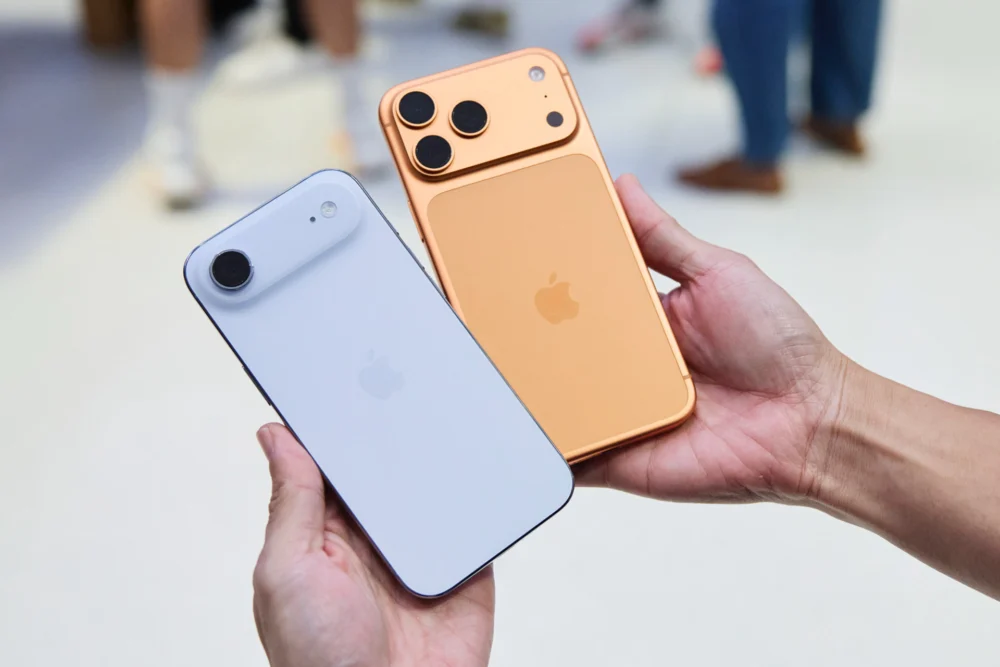
For decades, the technology industry has operated under a predictable gravitational pull exerted by Cupertino. The "Apple Event" became a cultural and economic phenomenon: a singular, highly choreographed keynote delivered from a stage in California that would ripple across global markets, dictate retail trends, and send competitors scrambling to respond. However, as the spring of 2026 approaches, the world’s most valuable consumer electronics company appears to be dismantling its own playbook. By pivoting toward a "special Apple experience" scheduled for March 4, the company is signaling a transition from the centralized, cinematic keynote toward a decentralized, immersive, and multi-day rollout strategy that prioritizes local engagement and sustained media momentum.
This shift is not merely a change in venue; it is a fundamental reimagining of how a global titan communicates value in an era of fragmented attention spans and hyper-local market demands. Reports indicate that instead of a solitary presentation, Apple is preparing a three-day "flurry" of announcements. This sequence of digital reveals will reportedly culminate in a series of synchronized physical events in three of the world’s most influential cities: New York, London, and Shanghai. By choosing these specific hubs, Apple is positioning its latest hardware not just as gadgets, but as integral components of the global financial, creative, and consumer landscapes.
The Death of the Monolith: Why the Keynote is Evolving
The traditional Apple keynote, perfected by Steve Jobs and refined by Tim Cook, was designed for a different media environment. In the early 2000s and 2010s, the goal was to consolidate all "heat" into a single two-hour window to dominate the news cycle. Today, the "attention economy" functions differently. A single event, no matter how spectacular, can be digested and discarded by social media algorithms in a matter of hours.
By moving to a three-day announcement cycle, Apple effectively triples its "news life." Each day allows for a dedicated focus on specific categories—perhaps Macs on day one, iPads on day two, and the iPhone 17e on day three—preventing smaller updates from being overshadowed by flagship releases. This "drip-feed" strategy ensures that Apple remains the primary topic of conversation for an entire business week, maximizing SEO impact and consumer mindshare.
Furthermore, the decision to hold simultaneous "experiences" in New York, London, and Shanghai addresses a growing logistical and cultural challenge. Silicon Valley is no longer the sole arbiter of tech culture. By bringing the products directly to the press and influencers in their home regions, Apple is fostering a more intimate, hands-on relationship with the media. This allows for higher-quality "first look" content, as journalists in different time zones can produce localized coverage without the fatigue of international travel to California.
The Hardware Horizon: A Multi-Front Assault
The substance of these announcements is as significant as the style. Rumors suggest a massive refresh across several key product lines, aimed at capturing both the high-end professional market and the increasingly important "value-conscious" segment.
The Low-Cost MacBook: Reclaiming the Classroom and the Coffee Shop
Perhaps the most anticipated reveal is the rumored low-cost MacBook. For years, Apple has ceded the entry-level laptop market to Google’s Chromebooks and affordable Windows machines. While the MacBook Air has been a massive success, its price point remains a barrier for many students and emerging markets.
A more affordable MacBook could be a strategic masterstroke. By leveraging older chassis designs or more efficient manufacturing processes for its M-series silicon, Apple can offer macOS performance at a price point that aggressively targets the education sector and budget-conscious consumers. This isn’t just about hardware sales; it’s about ecosystem onboarding. A student who starts on a budget MacBook is significantly more likely to subscribe to iCloud, use an iPhone, and eventually upgrade to a MacBook Pro later in life.
iPhone 17e: Redefining the "Mid-Range"
The "e" suffix for the upcoming iPhone 17e suggests a new tier in the smartphone lineup. Historically, the iPhone SE served as the entry point, but its aging design often felt out of step with the modern "all-screen" aesthetic. The iPhone 17e is expected to bridge this gap, offering modern internals and a contemporary design at a sub-flagship price. This move reflects a maturing smartphone market where consumers are holding onto devices longer and are increasingly looking for "essential" high performance without the "Pro" price tag.
The M4 iPad Air and the Entry-Level Tablet Refresh
The iPad lineup is also due for a significant calibration. The integration of the M4 chip into the iPad Air would bring professional-grade power to a thinner, more colorful frame, further blurring the lines between the Air and the Pro models. Simultaneously, a refresh of the entry-level iPad ensures that Apple maintains its dominance in the tablet market, which has seen a resurgence as hybrid work and digital creativity become the norm.
Industry Implications: The Ripple Effect on Competitors
Apple’s move toward a multi-city, multi-day launch sends a clear message to the rest of the industry: the era of the "static launch" is over. Competitors like Samsung and Google have already experimented with decentralized events, but Apple’s scale brings a different level of gravity to the concept.
Industry analysts suggest that this new approach may be a response to the "leak culture" that has plagued tech companies. When a single keynote is the only source of information, a single leak can ruin months of marketing preparation. However, a multi-day rollout allows Apple to pivot and adapt its messaging in real-time. It also forces competitors to compete for a much longer window of media coverage, making it harder for them to "counter-program" with their own announcements.
Moreover, the focus on "experiences" over "presentations" highlights a shift toward experiential marketing. In a world where technical specifications are often incremental, the feeling of the device—the haptics, the screen quality, the weight—becomes the primary selling point. By facilitating high-touch demos in Shanghai, London, and New York, Apple is betting that physical proximity to the product will drive more persuasive coverage than a pre-recorded video stream ever could.
Regional Significance: Why Shanghai, London, and New York?
The choice of these three cities is a calculated geopolitical and economic statement.
- Shanghai: Despite shifting supply chains, China remains Apple’s most critical manufacturing hub and its most competitive consumer market. With the rise of domestic rivals like Huawei and Xiaomi, Apple needs a strong, localized presence to maintain its premium status in the region. A dedicated Shanghai event signals commitment to the Chinese consumer.
- London: As the creative and financial capital of Europe, London serves as the gateway to the EMEA (Europe, Middle East, and Africa) market. It is a hub for the designers, developers, and artists who form the core of the "Pro" user base.
- New York: While California is the home of the engineering, New York is the home of the media and global finance. Holding an event in Manhattan ensures maximum visibility with the world’s most influential news outlets and investors.
Future Impact: Is the "Keynote" Dead?
As we look toward the future of technology marketing, the March 4 "experience" may serve as a blueprint for the eventual launch of the iPhone 18 and beyond. We are likely seeing the sunset of the traditional, singular "big bang" event in favor of a "constellation" of smaller, high-impact interactions.
This evolution also mirrors the way software is now delivered. In the past, software came in big, yearly "boxed" updates. Today, it is a continuous stream of "point" releases and cloud updates. Apple is now applying this "continuous delivery" logic to its marketing.
The long-term impact on the tech journalism landscape will be profound. The "Special Apple Experience" suggests a future where the role of the journalist is less about transcribing a speech and more about interpreting a physical interaction. It demands a higher level of critical analysis and local context, moving away from the homogenized coverage that has dominated the last decade.
Conclusion: A New Era of Engagement
Apple’s anticipated March 4 strategy represents a sophisticated maturation of its brand. It recognizes that in 2026, a global company cannot rely on a localized event in a California theater to speak to the world. By diversifying the announcement window and decentralizing the physical experience, Apple is ensuring that its message is not just heard, but felt, across different cultures and time zones.
Whether this new format will become the permanent standard remains to be seen, but the intent is clear: Apple is no longer content to just make the news; it wants to own the entire week. As the "three-day flurry" begins, the tech world will be watching closely, not just for the new silicon and glass, but for the masterclass in modern communication that Apple is about to deliver. The products—from the budget-friendly MacBook to the high-performance iPad Air—are the stars, but the stage is now the entire planet.