

The foundational economic calculus that has underpinned the smartphone industry for the better part of fifteen years—the assumption of ever-decreasing component costs—is reportedly collapsing. Carl Pei, co-founder of the design-focused electronics firm Nothing, has recently issued a stark warning indicating that 2026 will mark a significant inflection point, one that necessitates a fundamental shift in product strategy across the entire sector. This impending realignment, driven primarily by an unprecedented surge in memory module pricing, suggests that consumers should prepare for an era where annual flagship iterations arrive with stabilized or even constrained hardware specifications, accompanied by commensurately higher retail prices.
This declaration arrives amid broader industry anxieties. Major players, including Samsung and Xiaomi, have already signaled headwinds regarding pricing structures for their 2026 device lineups. Pei’s commentary, disseminated across professional networking platforms and social media, crystallizes this concern into a strategic narrative for his own company and, by extension, the industry at large. He explicitly framed 2026 as the moment the so-called "specs race"—the relentless pursuit of higher RAM counts, faster chipsets, and incremental camera improvements, often achieved through cheaper components—reaches its natural, economically imposed conclusion.
Pei’s assertion is particularly resonant given Nothing’s unique positioning. Since its inception, the company has deliberately prioritized aesthetic differentiation and a clean, distinctive software experience (Nothing OS) over raw performance benchmarks. He articulated this philosophy, stating, "2026 is the year the ‘specs race’ ends. As the industry resets, experience becomes the only real differentiator. That is exactly what Nothing was built for. The era of cheap silicon is over. The era of intentional design is just beginning."
The Historical Context: A Decade of Deflationary Tech
To fully appreciate the gravity of this shift, one must look back at the smartphone boom era. From roughly 2011 through the early 2020s, the semiconductor industry operated under a consistent deflationary pressure. Moore’s Law, while evolving, ensured that process nodes shrank, increasing density and efficiency, which in turn drove down the unit cost of crucial elements like DRAM (Dynamic Random-Access Memory) and NAND flash storage. This predictable cost decline acted as a subsidy for annual innovation. Manufacturers could integrate 2GB more RAM, upgrade the display resolution, or deploy a more advanced System-on-a-Chip (SoC) generation without needing to raise the baseline price of their mid-range or even premium devices. Consumers came to expect an implicit hardware upgrade cycle as standard.
This cycle was particularly evident in memory. DRAM, essential for active processing tasks, saw steady price erosion. When supply tightened temporarily, the market generally corrected downwards. However, current market indicators suggest a systemic change in the supply-demand equilibrium for memory fabrication capacity, exacerbated by AI acceleration demands which consume vast quantities of high-bandwidth memory (HBM) and high-density LPDDR chips. This shifts consumer-grade memory pricing upward, directly impacting the cost structure of every smartphone manufacturer.
Industry Implications: The Strategic Pivot
For established titans like Apple and Samsung, absorbing moderate price increases for components is manageable, given their massive economies of scale. They can negotiate fiercely for volume discounts that smaller players simply cannot access. Yet, even these giants face the dilemma of whether to maintain price parity by absorbing the cost increase (thereby reducing margins) or passing the expense onto the consumer (risking market resistance).
The challenge is far more acute for challenger brands like Nothing. Companies operating on thinner margins and lower shipment volumes cannot command the same favorable procurement terms. If the cost of the 12GB LPDDR5X module jumps 30%, that 30% increase hits Nothing’s Bill of Materials (BOM) far more aggressively, percentage-wise, than it impacts a company shipping 250 million units annually.
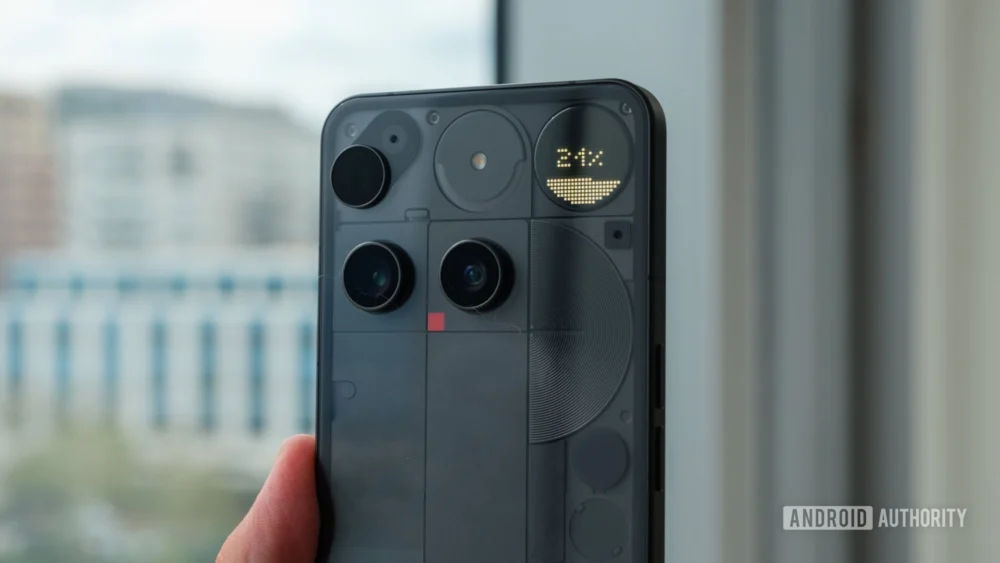
Pei’s statement suggests that Nothing is preparing to lean into this new reality by doubling down on its core differentiator: the holistic user experience. If the hardware gains are flattening due to cost constraints, the battleground shifts to software polish, industrial design language, and ecosystem integration. This means the visual identity, the Glyph Interface, and the tactile quality of Nothing’s devices become even more critical selling points than the processor clock speed.
This forces a strategic pivot for consumers too. The expectation that the "Phone 4" will be objectively better than the "Phone 3" across every metric—speed, battery life, camera resolution—may need to be tempered. Instead, the upgrade proposition might shift to receiving a refinement of the existing experience, potentially with a new chipset that offers marginal performance improvements but perhaps sacrifices a high-cost component like a periscope lens or ultra-fast charging to keep the final MSRP manageable.
Expert Analysis: The Design Economy Versus the Silicon Economy
The current situation spotlights the tension between two distinct economic models in tech: the Silicon Economy, driven by rapid advancements in semiconductor physics, and the Design Economy, focused on usability, aesthetics, and user interface. For years, the Silicon Economy subsidized the Design Economy; rapid chip improvement made almost any phone feel fast enough, allowing designers breathing room.
With the silicon cost structure hardening, the Design Economy must now stand on its own merits. Nothing’s emphasis on "intentional design" suggests they believe this is achievable. However, there are inherent hurdles. While Nothing’s interface is visually clean, rivals benefit from years of accumulated feature depth in their software layers. Samsung’s One UI, for instance, offers an enormous suite of productivity and customization features built up over a decade. For Nothing to truly differentiate based solely on experience, they must rapidly close this feature gap without alienating their current user base with bloat.
Furthermore, the perceived value proposition of a smartphone is intrinsically tied to its perceived technological ceiling. Consumers have been conditioned to view cutting-edge specifications as proof of value. Convincing a customer that a phone priced at $799 offers superior value because of its unique materials and notification lights, rather than its benchmark scores, requires significant marketing muscle and product maturation.
This economic environment might also prompt a divergence in product tiers. We may see the market split more clearly: a high-end segment where manufacturers begrudgingly pass on the full cost of premium components (resulting in $1,400+ base prices), and a competitive mid-range where brands like Nothing must become masters of component substitution—perhaps sticking with the previous generation’s fastest RAM standard if the cost delta to the new one is unsustainable, or prioritizing camera sensor quality over display refresh rates where the visual difference is less pronounced to the average user.
Future Impact and Emerging Trends
The end of the perpetual hardware cost decline suggests several long-term industry trends:
1. Commoditization of Flagship Performance: If the most expensive components (like top-tier memory) stabilize or increase in price, the performance gap between the current year’s flagship SoC and the previous year’s will become less significant in real-world use. Consumers will likely see longer viable lifecycles for their existing devices, as marginal performance gains no longer justify an annual upgrade. This directly challenges the high-volume sales models reliant on annual refresh cycles.
2. Software Longevity Becomes Paramount: With hardware stagnation looming, manufacturers will be incentivized to provide extended, high-quality software support. If a user is paying more for a device that won’t see massive internal upgrades, they will demand security patches and OS updates for a longer duration (perhaps five to seven years). This pressure will favor companies with robust software engineering departments, like Google and Apple, forcing others to invest heavily in their software infrastructure.
3. Re-evaluating the Mid-Range: The traditional mid-range segment, often the primary beneficiary of last year’s flagship components trickling down, will face pressure from both ends. If high-end component costs rise, the cost of these "trickle-down" parts will also increase, pushing mid-range prices upward. This could lead to a compression of the feature set in this tier, potentially resulting in devices that feel less like budget flagships and more like optimized, dedicated tools.
4. Design as Investment Insurance: For companies like Nothing, this environment validates their initial strategy. Design becomes the primary lever for retaining user interest when silicon advancements slow. We can anticipate increased focus on sustainable materials, modularity (though complex to implement), and novel interaction methods that transcend simple screen tapping. The Glyph Interface, for instance, offers a unique value proposition that persists regardless of RAM pricing.
Carl Pei’s prognosis serves as an early alarm bell for the industry. It signals a transition from an era defined by technological abundance and deflation to one characterized by managed scarcity and premium pricing for core components. The smartphone market is shifting from a hardware arms race to an experience refinement battleground, demanding that manufacturers justify their asking price through intangible, yet valuable, attributes like superior industrial design and cohesive user interface execution. The next few product cycles will reveal which companies are truly prepared to lead in the age of intentional design rather than relying on the declining cost of commodity silicon.