

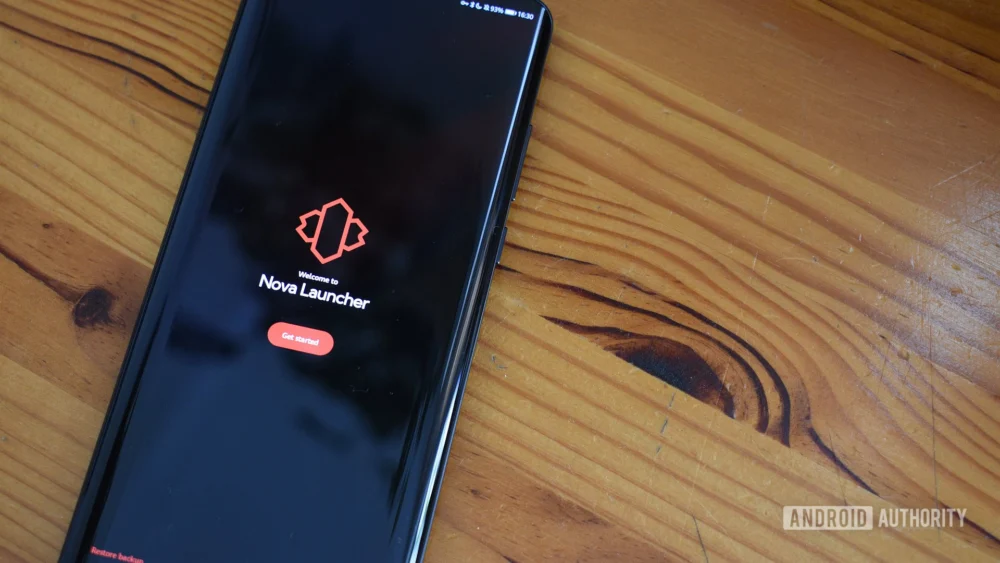
The Android customization ecosystem is characterized by perennial tension between user desire for deep personalization and developer necessity for sustainable revenue generation. Few applications encapsulate this dynamic better than Nova Launcher, a third-party home screen replacement that has long served as the gold standard for power users seeking to transcend the aesthetic and functional limitations imposed by Original Equipment Manufacturer (OEM) skins. However, the application is currently at an inflection point following its acquisition by Instabridge, a transition that signals potential seismic shifts in its monetization strategy. For long-term devotees and newcomers alike, the current pricing structure for Nova Launcher Prime—the application’s premium, feature-unlocked tier—represents a critical window of opportunity to secure lifetime access before anticipated pricing adjustments or a shift toward recurring subscription models take effect.
Nova Launcher’s journey has been storied, marked by periods of unparalleled stability and innovation, punctuated recently by turbulence. The transfer of ownership to Instabridge, while ostensibly intended to ensure the continued development and viability of the platform, has simultaneously introduced uncertainty regarding future financial commitments required to utilize its advanced feature set. Instabridge has publicly indicated intentions to "evaluate other pricing options or tiers," a corporate euphemism that almost invariably foreshadows increased costs, the introduction of usage tiers, or the complete migration to a subscription-based service. For an application historically favored for its low, one-time purchase cost, this transition mandates immediate consideration from those who rely on its advanced capabilities.
The existing commitment from Instabridge to honor all prior purchases made before the ownership change or the implementation of a new fee structure provides a narrow window for proactive users. Currently, Nova Prime is available at a price point, often cited around $3.99, which, while representing a modest outlay, may prove to be significantly more economical than any prospective recurring fee. This situation isn’t merely about saving a few dollars; it is about locking in a perpetual license for a mature, deeply integrated system component against the backdrop of an evolving digital services economy where perpetual licenses are increasingly rare commodities. While this current price may not match the deepest promotional discounts seen in the application’s past, it stands as the last bastion of predictable, one-time expenditure.
The Enduring Value Proposition of Nova Prime
Nova Launcher’s sustained popularity, evidenced by its consistent favorable polling among dedicated Android enthusiasts, stems from its unwavering commitment to user control and its deep customization capabilities. The free tier offers a capable, stable environment, but the premium "Prime" unlock is where the application truly distinguishes itself. Key features gated behind this purchase—such as advanced gesture controls (e.g., swiping gestures on app icons or the dock), enhanced folder customization beyond basic visual alterations, and granular control over the app drawer and icon layout—are not mere cosmetic additions. They are productivity enhancements that fundamentally alter the efficiency and aesthetic interaction a user has with their mobile operating system.
The loyalty exhibited by long-term Prime users speaks volumes about the return on investment. Anecdotal evidence from the community consistently highlights years of uninterrupted service following a single purchase. For example, users recounting purchases made nearly a decade ago on legacy devices like the Nexus 5 demonstrate the longevity of the software and the perceived value of the initial transaction. This history contrasts sharply with the modern software trend toward feature depreciation or mandatory ongoing payments for basic utility.
Furthermore, community discourse reveals a strong ethical underpinning to these purchases. Many dedicated users view the Prime acquisition not just as a personal upgrade but as a necessary act of patronage. They recognize that supporting a developer through a direct purchase is vital for maintaining the quality and independence of a utility that enhances the core functionality of their chosen platform. In a market saturated with OEM software that prioritizes data collection and manufacturer-specific aesthetics, Nova Launcher Prime represents a tangible vote for user agency and quality engineering. As one commentator noted, supporting developers who create superior products ensures those products continue to exist and evolve.
Industry Implications: The Fate of Third-Party Android Utilities
The potential pricing restructuring at Nova Launcher carries broader implications for the entire third-party Android utility sector. Android, by its open nature, fosters a robust market for launchers, icon packs, and system modification tools. However, these applications often struggle with the "freemium paradox": a large user base that benefits from the free version but is hesitant to pay for enhancements, coupled with increasing development costs and platform fragmentation.
When a dominant player like Nova Launcher signals a necessary pivot toward more aggressive monetization—be it through higher one-time fees or the inevitable move to subscriptions—it sets a precedent. It suggests that the era of feature-rich, perpetually licensed utilities on Android may be drawing to a close, forcing smaller, independent developers to adopt similar models to survive. This shift impacts user expectations across the board, potentially eroding the perception of customization tools as one-off purchases.
For Instabridge, the challenge is balancing the imperative to generate revenue—especially given the operational costs associated with maintaining compatibility across numerous Android versions and device manufacturers—with preserving the goodwill accumulated over years. A poorly executed transition, particularly one perceived as abandoning the one-time purchase model, risks alienating the very core user base that values the application’s legacy of independence. The industry watches closely, recognizing that Nova’s success in navigating this transition will influence the viability models for competing launchers and modification suites.
The Ad Tracker Controversy and Prime as a Sanctuary
A significant motivator for securing Nova Prime immediately relates to the controversial introduction and testing of advertisements within the application’s environment. While Instabridge has confirmed that the Prime version is currently ad-free—a critical differentiator—the uncertainty surrounding future pricing tiers includes the potential erosion of this sanctuary. Historically, one-time purchases have provided a clean break from intrusive advertising; a shift to subscription models often opens the door for tiered advertising structures or necessitates a re-evaluation of what "ad-free" truly means under new ownership.
Adding complexity to this situation are reports suggesting the presence of Meta and Google ad trackers even within the current Prime build. Instabridge has acknowledged a commitment to data collection for operational improvements but has pledged against selling this data to external third parties. This presents a nuanced dilemma: users seeking maximal privacy might find the inclusion of major platform trackers concerning, even if the data usage is purportedly limited.
From a consumer perspective, the immediate purchase of Prime acts as an insurance policy against the most tangible negative change: the appearance of advertising across the user interface, including the homescreen and app drawer. While the tracker issue demands clearer communication from the new owners regarding data handling protocols, the presence of visual advertisements is an immediate, universally disruptive downgrade. Locking in Prime now guarantees the current, ad-free experience, irrespective of how the monetization strategy evolves for new entrants. Should the subscription model ultimately include advertising for lower tiers, the one-time Prime purchase retains its superior value proposition.
Expert Analysis: The Economics of Perpetual Software
From a software economics standpoint, the value of Nova Prime at its current price is exceptionally high when analyzed using a Discounted Cash Flow (DCF) model applied to user utility. If a user anticipates using Nova Launcher for even three more years, the cost per year is negligible. If they use it for five or ten years, the effective annual cost approaches zero. Contrast this with a subscription model, which, even if set at a modest $1.50 per month, totals $18 annually. Over five years, that subscription costs $90, dwarfing the one-time Prime fee.
The current pricing strategy, whether intentional or temporary, heavily favors the user who commits now. It represents a final opportunity to purchase utility based on past development quality rather than anticipated future revenue generation strategies. For sophisticated users who understand the mechanics of software licensing, this is a classic arbitrage opportunity—acquiring a durable good at a price point established under a previous business model, before the market corrects to reflect the perceived long-term value under new stewardship.
Furthermore, the longevity of the user base suggests a high switching cost. Users who have meticulously configured their Nova setups—custom icon packs, complex gesture mappings, specific grid layouts—face significant inertia when considering migrating to a competitor. This inertia increases the perceived value of maintaining access to their existing configuration via the Prime license, making the current investment even more rational.
Future Trajectories and User Action
The trajectory for Nova Launcher, post-acquisition, will likely involve either a gradual feature separation between free and paid tiers (potentially introducing some Prime features to the free version to attract more ad-viewers) or a definitive shift to recurring billing. Given the recent instability and the need for Instabridge to establish a profitable footing, the latter is more probable in the medium term.
Users who value an uncompromised, highly tailored Android experience must recognize that the decision window is closing. Waiting for official announcements regarding the new pricing structure will invariably mean encountering higher entry costs, either through increased one-time fees or the unavoidable burden of recurring payments. For those who have benefited from Nova Launcher’s excellence for years, or for new users seeking the definitive customization platform without being tethered to a monthly bill, securing the Prime license now is the most prudent financial and functional decision. It is an investment in digital autonomy before the marketplace potentially imposes new financial barriers to entry. The current price represents not just a feature unlock, but an exit strategy from anticipated future monetization pressures.