

The trajectory of personal audio has, for the better part of a decade, been defined by a race toward commoditization. As true wireless stereo (TWS) technology matured, the market became saturated with iterative updates that prioritized incremental battery gains and software gimmicks over fundamental acoustic excellence or longevity. However, the launch of the Bang & Olufsen Beo Grace in September 2025 signals a decisive pivot away from this disposable culture. By merging a century of Danish engineering heritage with a radical approach to material science and battery intelligence, Bang & Olufsen is not merely releasing a new pair of earbuds; they are attempting to establish a new category of "heirloom electronics."
At a time when most premium earbuds hover between the $250 and $450 price points, the Beo Grace enters the fray with a staggering $1,500 valuation. This positioning places the device less in competition with consumer tech giants like Apple or Sony and more in the company of Swiss horology and bespoke leather goods. To justify such a premium, the Beo Grace relies on a design language that Bang & Olufsen describes as "wearable sculpture," a philosophy that draws heavily from the brand’s 1925 origins and its longstanding commitment to the marriage of form and function.
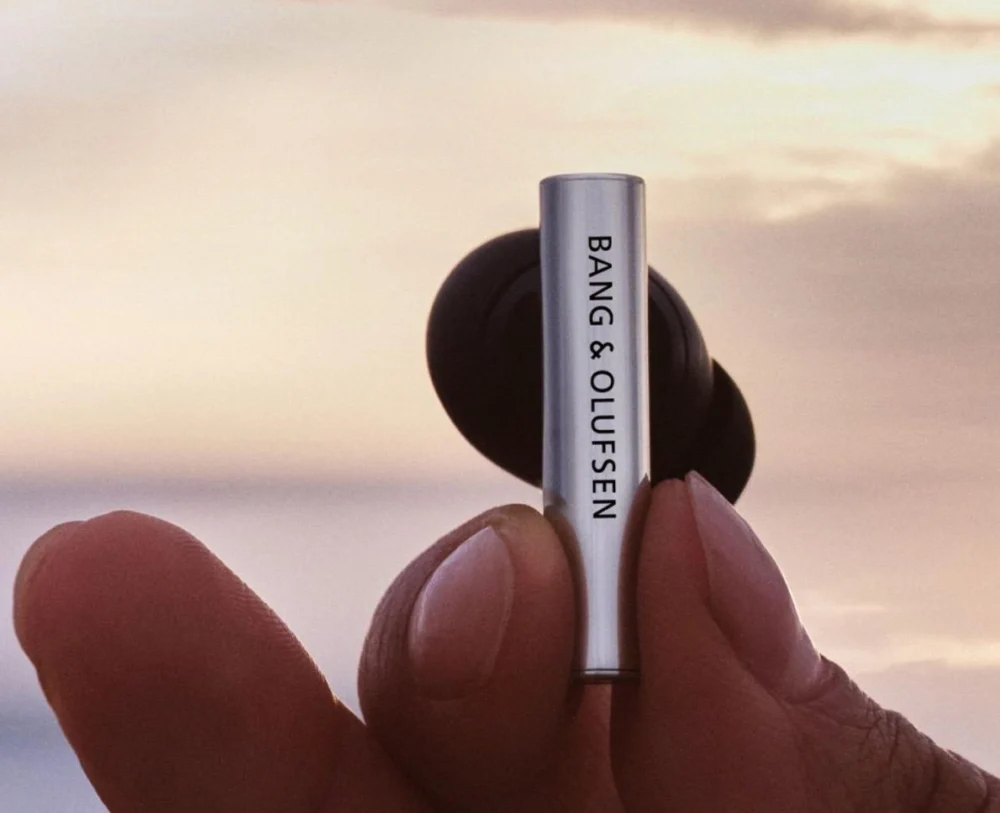
The physical presence of the Beo Grace is a testament to the brand’s mastery of aluminum. Each earbud is meticulously crafted from polished metal, featuring a distinctive stem that serves as a visual bridge to the past. Specifically, the design harks back to the iconic A8 wired earphones—a product that defined the brand’s portable audio identity for decades. This is not nostalgia for nostalgia’s sake; the aluminum stems house sophisticated force sensors that replace the often-finicky touch controls found on plastic competitors. By utilizing force sensors, the Beo Grace provides a tactile, mechanical "click" sensation that offers a level of intentionality and feedback rarely found in the TWS category.
The charging case further elevates the experience, drawing inspiration from the fluid, organic silver jewelry of legendary Danish silversmith Georg Jensen. The pearl-blasted natural aluminum case is more than a battery reservoir; it is a tactile object designed to be felt and admired. Its seamless construction, featuring a hidden charging window and a precision-engineered hinge, reflects a level of industrial design usually reserved for high-end interior architecture. For those seeking further customization, the brand offers an optional $400 leather pouch available in Infinite Black, Cranberry Red, and Seashell Grey, emphasizing the product’s status as a fashion accessory as much as a piece of audio equipment.
Underneath the sculptural exterior lies a sophisticated acoustic architecture. The Beo Grace is powered by 12mm titanium drivers, a choice of material that offers the necessary rigidity to minimize distortion while remaining light enough to respond to the most delicate micro-details in a recording. These drivers are positioned behind precision-milled aluminum grilles, a design choice that echoes the "inside-out" philosophy of Bang & Olufsen’s flagship home speakers. The sound profile was tuned by the company’s renowned "tonmeisters," the acoustic engineers tasked with ensuring that every product maintains the brand’s signature "Bang & Olufsen Signature Sound"—characterized by a wide, open soundstage and a neutral, high-fidelity reproduction of the original recording.
One of the most significant technical hurdles in earbud design is the implementation of Spatial Audio without compromising the integrity of the stereo image. The Beo Grace addresses this by supporting advanced virtualization for Dolby Atmos content. Unlike many competitors that apply a generic "hall effect" to audio, the Beo Grace utilizes the brand’s new Amadeus platform to optimize stereo content for a more natural, loudspeaker-like experience. This creates a sense of "out-of-head" localization, making the listener feel as though the music is originating from the room around them rather than from drivers millimeters away from their eardrums.

The technological centerpiece of the Beo Grace, however, is the EarSense technology. This system represents the next evolution in Adaptive Active Noise Cancellation (ANC). While standard ANC uses external microphones to invert ambient noise, EarSense goes a step further by detecting the unique acoustic signature of the wearer’s ear canal in real-time. By measuring how sound reflects within the specific anatomy of the user, the earbuds can calibrate both the ANC and the frequency response to ensure a consistent listening experience regardless of fit or environment. Bang & Olufsen claims this results in a four-fold increase in effective noise cancellation compared to their previous flagship models, all while eliminating the "pressure" sensation or audible hiss that often plagues high-gain ANC systems.
Voice communication is handled by an array of six studio-grade microphones, three in each earbud. This hardware is augmented by advanced wind-reduction algorithms and the brand’s TrueTransparency feature. Derived from the technology found in the Beoplay H100 over-ear headphones, TrueTransparency aims to make the outside world sound completely natural when the user needs to remain aware of their surroundings. By processing ambient sound with ultra-low latency and high fidelity, the Beo Grace avoids the "robotic" or "digitized" quality of most transparency modes, allowing for seamless transitions between deep focus and social interaction.
Perhaps the most disruptive aspect of the Beo Grace is its approach to battery longevity—a traditional Achilles’ heel for the TWS industry. Most wireless earbuds are essentially "timed-death" devices; because their tiny lithium-ion batteries are soldered in and subjected to high-stress charging cycles, they typically lose significant capacity within two to three years. To combat this, Bang & Olufsen partnered with Breathe, a specialist in battery intelligence. The result is a custom-designed battery management system that has surpassed 2,000 charge cycles in internal testing. Given that the industry standard for consumer electronics is closer to 500 cycles, the Beo Grace is engineered to last four times longer than its peers. This focus on longevity, combined with the upgradable Amadeus software platform and a three-year warranty, marks a significant step toward a more circular and sustainable electronics economy.
The battery performance itself is balanced between portability and power. While the 4.5 hours of playback with ANC enabled (extending to 17 hours with the case) may seem modest compared to some budget-oriented models that prioritize quantity over quality, the Beo Grace makes up for it with efficiency. A five-minute "NearTap" fast charge provides 2.5 hours of playback, ensuring the device is ready for use even during short windows of downtime.
User interaction is another area where Bang & Olufsen has innovated. The NearTap feature allows for volume adjustment by tapping the area in front of the ear—the temple—rather than the earbud itself. This reduces the discomfort of pressing an earbud deeper into the ear canal while adjusting levels. It is a subtle but profound shift in user experience design, prioritizing human comfort over traditional hardware limitations.
The market implications of the Beo Grace are significant. By launching a $1,500 earbud, Bang & Olufsen is testing the ceiling of what consumers are willing to pay for "invisible" technology. It challenges the notion that earbuds are a utility and asserts that they can be a luxury investment. This move likely paves the way for other high-end audio brands—such as Devialet, Bowers & Wilkins, or McIntosh—to explore even higher tiers of the portable market. Furthermore, the emphasis on battery durability (the 2,000-cycle benchmark) sets a new competitive standard that may force the broader industry to reconsider the planned obsolescence of their battery-powered products.
As we look toward the future of wearable sound, the Beo Grace serves as a blueprint for the "post-gadget" era. It suggests that as our digital and physical lives become increasingly intertwined, the objects we wear must meet a higher standard of craftsmanship. The Beo Grace is not just a tool for listening to music; it is an expression of a century-long commitment to acoustic ingenuity. It represents a belief that even in a world of rapid technological turnover, there is still a place for beauty, permanence, and uncompromising quality. For the audiophile who views sound as an essential part of their environment, the Beo Grace offers a personalized escape that is as much a triumph of art as it is of engineering.