

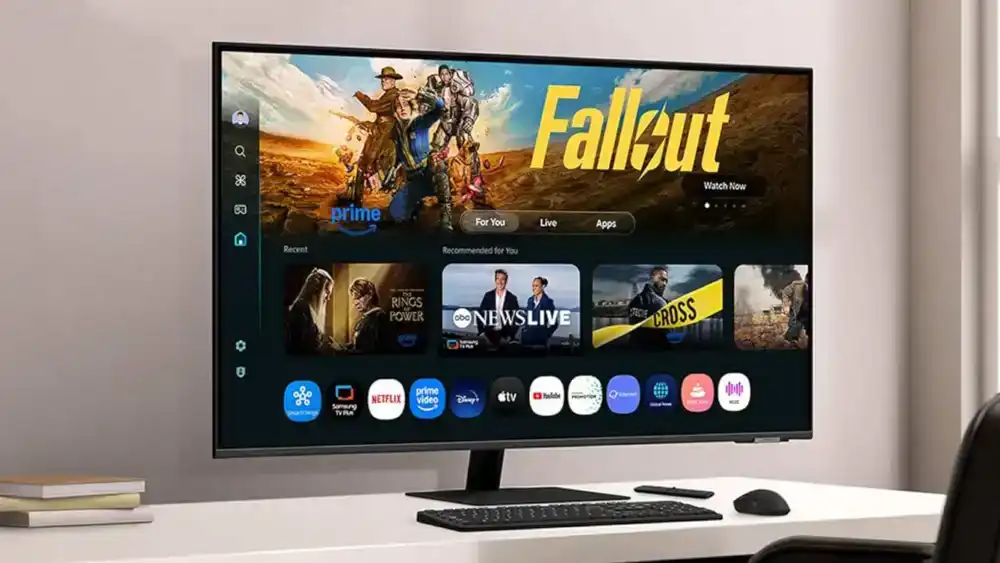
The contemporary digital workspace is undergoing a profound metamorphosis. Driven by persistent remote and hybrid work models, the line separating dedicated professional equipment and sophisticated home entertainment hardware has significantly blurred. Consumers are increasingly demanding devices that offer uncompromising performance across disparate use cases—a single piece of technology that can seamlessly transition from managing complex spreadsheets to streaming high-fidelity content without sacrificing screen real estate or integrated functionality. Amidst this technological convergence, Samsung’s Smart Monitor M7 series, specifically the expansive 43-inch M70F model, represents a compelling architectural solution to these modern demands. Currently available through limited-time promotional pricing on major e-commerce platforms such as Amazon, this device offers a substantial discount, positioning it as an exceptionally high-value proposition for professionals and media consumers alike.
The significance of this particular offering lies not merely in the immediate monetary saving—reportedly $100 off the standard price—but in the holistic utility it brings to the desktop environment. For individuals tethered to their desks for the majority of their waking hours, whether for software development, graphic design, extensive data analysis, or simply managing communication streams, screen size is paramount. The M70F’s 43-inch panel dwarfs traditional 27-inch or 32-inch office monitors, immediately offering a massive canvas. This scale translates directly into enhanced productivity through superior window management; users can confidently run three or four full-sized application windows side-by-side without resorting to cumbersome virtual desktop switching or constant minimizing/maximizing. This physical screen real estate minimizes cognitive load associated with context switching, a known drain on efficiency.
Delving into the core specifications reveals a robust foundation engineered for visual fidelity. The display boasts native 4K Ultra High Definition (UHD) resolution. This pixel density, when spread across 43 inches, ensures sharp text rendering, critical for extended reading sessions, and vibrant detail reproduction essential for visual creatives. While the 60Hz refresh rate firmly anchors it outside the realm of elite competitive gaming, the inclusion of a 4ms response time ensures motion clarity sufficient for casual gaming and smooth general desktop use, preventing noticeable ghosting during typical video playback or interface navigation. Furthermore, the incorporation of HDR10 compatibility signifies an elevated color and contrast profile compared to standard office displays, allowing users to appreciate media consumption—be it cinematic content or HDR-enabled creative proofs—with greater dynamic range.
The true disruptive element of the M7 line, however, is its inherent "smart" capability. Samsung has integrated its proprietary Tizen operating system directly into the monitor’s firmware, effectively transforming the display into a standalone smart television without requiring an external streaming stick or PC connection. This dual-purpose design philosophy addresses the growing trend of minimalist setups, particularly relevant in urban apartments, micro-offices, or college dormitories where space optimization is a critical design constraint. The Tizen platform grants immediate access to the full spectrum of major streaming services—Netflix, Disney+, Hulu, and others—allowing users to pivot from a work session to leisure viewing instantly, using the included remote control rather than booting up a secondary device. The inclusion of Samsung TV Plus further enhances this by offering free, ad-supported live television channels, adding utility without recurring subscription costs.
From an expert analysis perspective, this integration signals a maturing market realization: the computer monitor is evolving beyond a simple passive output peripheral. It is becoming an active computing endpoint in its own right. This trend challenges traditional segmentation in the consumer electronics market. Manufacturers are increasingly betting that users prefer consolidation—fewer boxes, fewer cables, and unified software experiences. For Samsung, the M7 acts as a powerful vector to push its Tizen ecosystem, building user familiarity and habit outside the traditional television market segment.
The gaming utility, while secondary to its productivity focus, warrants specific attention. The integration of Samsung’s Gaming Hub is a significant feature for the modern hybrid user. This cloud gaming platform aggregates services like Xbox Cloud Gaming, NVIDIA GeForce NOW, and others, allowing users to stream high-fidelity, demanding titles directly to the monitor using only a paired controller and a stable internet connection. This circumvents the need for a dedicated, expensive gaming PC occupying desk space, further reinforcing the M7’s role as an all-in-one command center. The user experience here is predicated on low latency, and while the 60Hz panel might cap the visual frame rate, the fundamental ability to access AAA titles without hardware overhead is a major draw for space-constrained users.
Connectivity architecture is another area where the M70F demonstrates thoughtful design for the modern workflow. Recognizing the dominance of USB-C in contemporary laptops, the inclusion of a dedicated USB-C port is vital. This port typically supports power delivery (allowing the user to charge their laptop while transmitting video and data over a single cable), DisplayPort Alt Mode for high-resolution video signals, and data transfer. This single-cable solution dramatically declutters the desk, a major aesthetic and practical advantage. Complementing this are dual HDMI inputs, accommodating legacy devices or secondary workstations, alongside three standard USB-A ports, providing convenient downstream hubs for peripherals like webcams, external drives, or charging accessories. This robust I/O configuration ensures compatibility across a wide range of existing hardware ecosystems.
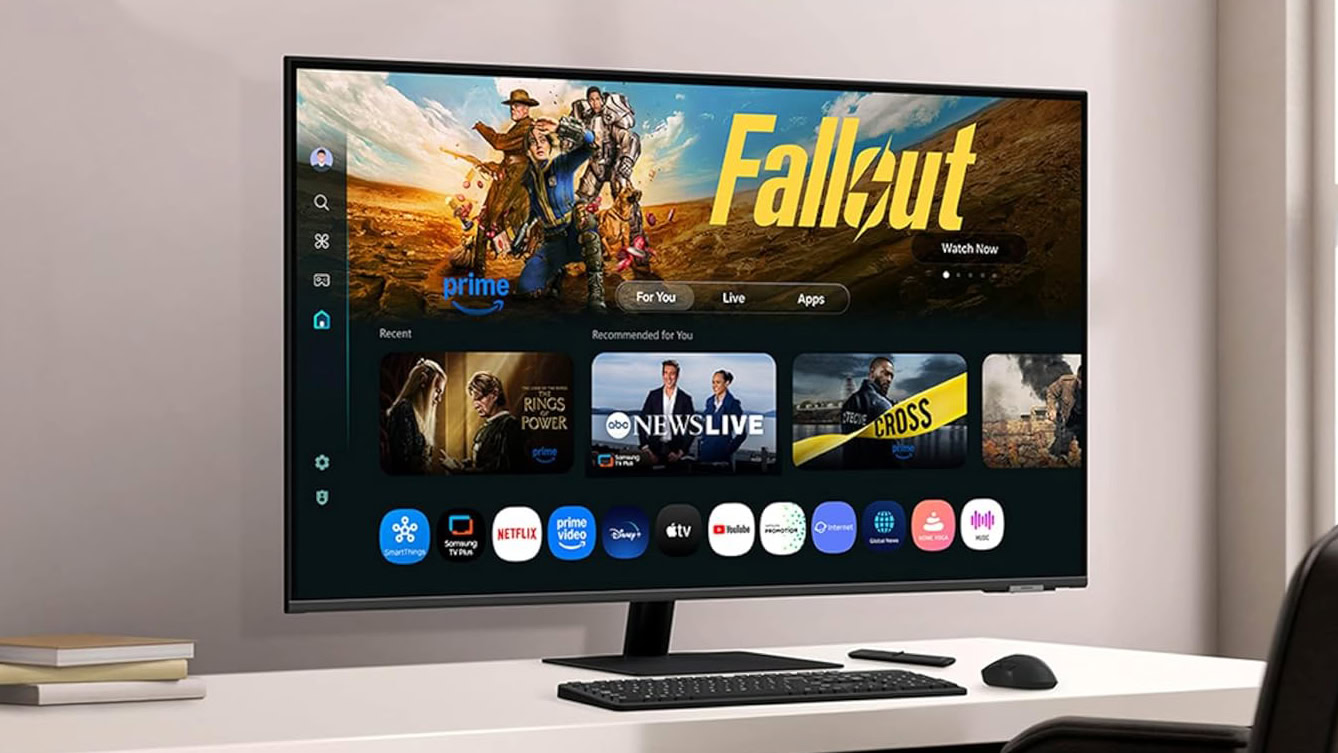
Moreover, the monitor integrates advanced connectivity features that speak directly to its smart hub aspirations. Built-in Wi-Fi and Bluetooth ensure seamless wireless integration, not just for streaming but for peripherals. Crucially, the support for Samsung SmartThings positions the M7 not just as a screen, but as a genuine component of the connected smart home. Users can manage lights, thermostats, security devices, and other compatible IoT products directly through the monitor’s interface, often without needing to locate a smartphone or dedicated hub device. In an era where the desktop is the center of the user’s digital universe, having environmental controls accessible from the primary visual interface streamlines daily routines.
The integrated audio solution—a 20W speaker system—is another feature designed to minimize external hardware clutter. While audiophiles will always prefer dedicated bookshelf speakers, a 20W stereo setup within a monitor chassis is generally far superior to the thin, tinny speakers found in most traditional office displays. This provides adequate volume and fidelity for video conferencing, background music during work, and casual movie watching, again contributing to a cleaner desk aesthetic.
Industry Implications and Future Trajectory
The success of the Samsung Smart Monitor line, exemplified by the current promotional offering on the M70F, is forcing a recalibration within the display industry. For years, monitors and televisions occupied distinct product silos, differentiated primarily by input lag, integrated operating systems, and speaker quality. The M7 aggressively challenges this segmentation. Its appeal to the "prosumer"—the user who demands professional-grade utility alongside seamless consumer features—indicates a significant market shift toward multifunctionality.
This trend has profound implications for peripheral manufacturers. If the monitor itself contains the smart operating system, integrated speakers, and a decent I/O hub (including USB-C charging), the market for dedicated docking stations, basic streaming boxes, and entry-level soundbars shrinks, particularly for users operating in smaller environments. Manufacturers must now justify the cost and complexity of these separate components against the convenience of the all-in-one solution.
Looking forward, the future impact of devices like the M70F points toward increased display autonomy. We anticipate seeing further integration of higher-performance processors within displays, enabling more sophisticated on-device application hosting, perhaps moving toward lightweight desktop environments accessible via cloud services without needing a constant PC tether. As Wi-Fi speeds increase and cloud computing latency drops, the monitor could become the primary interface for many white-collar workers, connecting only via a keyboard and mouse, with the heavy lifting done remotely.
Furthermore, the adoption of large-format displays (38 inches and above) in the non-gaming office segment is accelerating. While 4K on 43 inches offers excellent density, the next logical step involves exploring QD-OLED or Mini-LED backlighting in these larger formats to compete with professional reference monitors on color accuracy and contrast, while retaining the Tizen smart platform. The M7 represents a crucial stepping stone in normalizing the "Big Screen Productivity" paradigm.
The current $100 price reduction is strategically timed to capitalize on seasonal purchasing habits, but its true value is in lowering the barrier to entry for adopting this multifunctional paradigm. For the consumer operating in a constrained physical space—such as a compact home office carved out of a living area or a densely packed dorm room—the M7 effectively replaces a television, a desktop monitor, and a streaming box with one streamlined unit. This consolidation of function represents not just a cost saving on the purchase price, but a long-term reduction in energy consumption and physical footprint. It is a tangible example of how hardware manufacturers are responding to the evolving spatial and functional demands of the modern, digitally integrated lifestyle. The deal is transient, but the architectural shift it facilitates in the home office setup is likely permanent.