

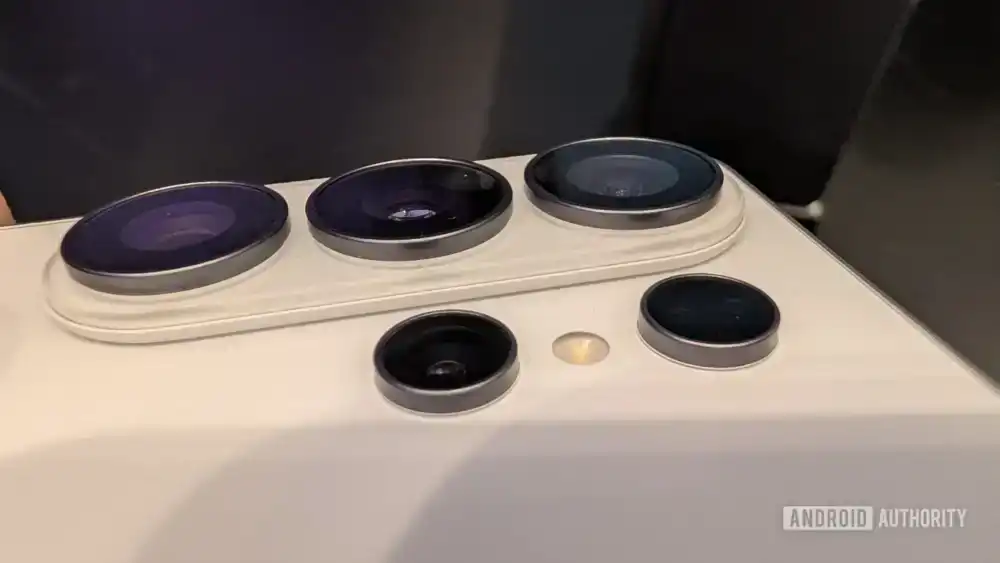
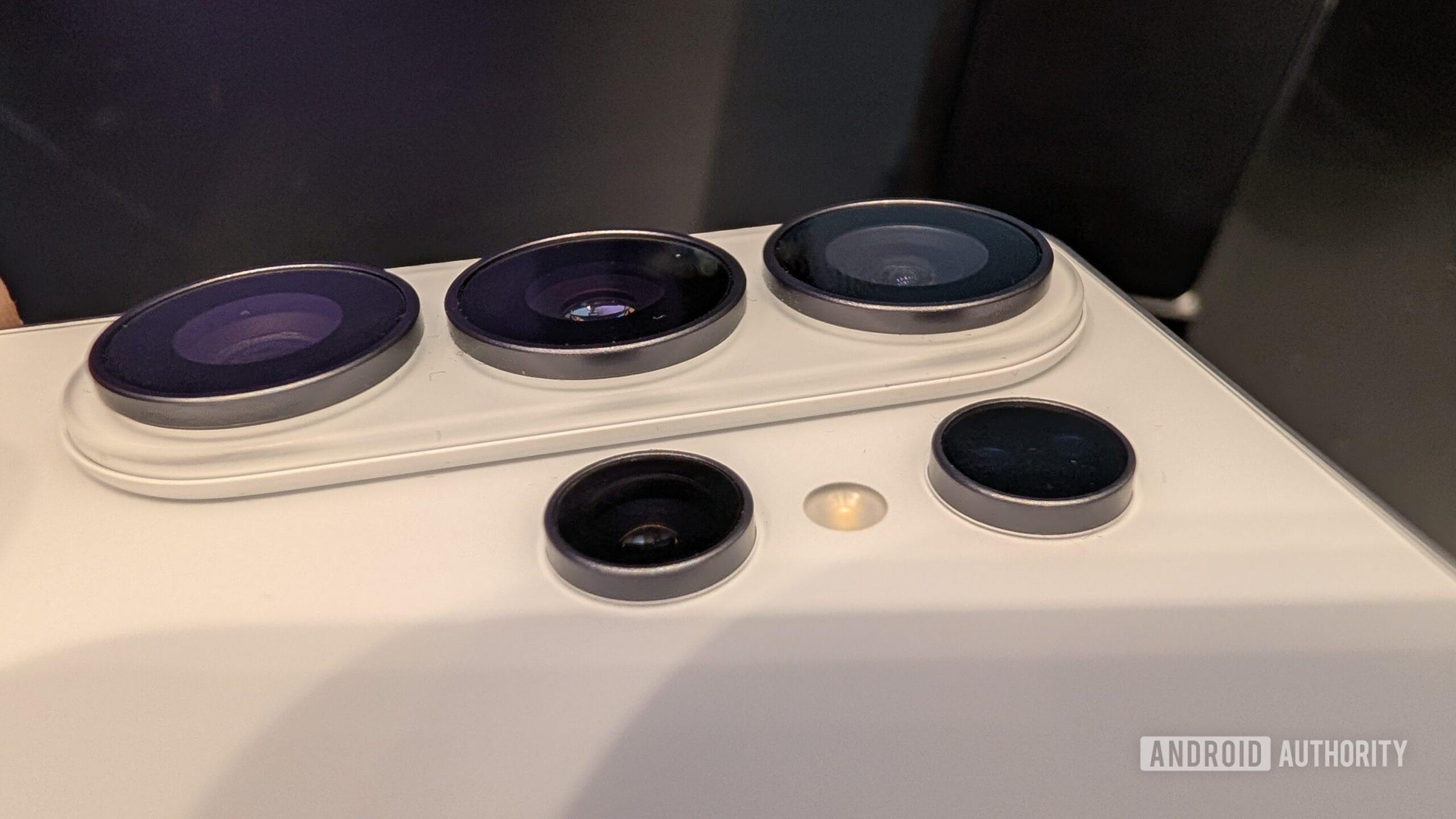
Confirmation Update: March 6, 2026 (9:12 PM ET): Following initial analysis and industry speculation, Samsung has officially acknowledged in a direct statement to SammyGuru that the optical configuration powering the 5x zoom on the Galaxy S26 Ultra integrates the proprietary ALoP (All Lenses on Prism) technology. This verification resolves lingering questions surrounding the precise hardware underpinning the latest Ultra flagship’s telephoto capabilities.
The launch of the Samsung Galaxy S26 series positioned the Ultra variant as the primary recipient of photographic advancements, including notable refinements to both the main wide-angle sensor’s aperture and the dedicated 5x telephoto unit. However, a subtle yet significant hardware evolution in the telephoto module has drawn intense scrutiny from imaging analysts: the apparent abandonment of the traditional periscope lens structure in favor of an alternative optical pathway. This shift suggests a calculated engineering pivot aimed at optimizing space, light capture, or perhaps both, within the increasingly constrained chassis of premium smartphones.
Deconstructing the Optical Architecture: Periscope vs. Traditional Folded Systems
For several generations, Samsung’s Ultra flagship line has relied on a folded optics design, commonly referred to as a periscope lens, for its extended optical zoom capabilities. This mechanism ingeniously addresses the physical limitations of smartphone thickness by utilizing a prism—typically positioned at a 90-degree angle relative to the main sensor plane—to bend incoming light. This allows the lens elements to be stacked horizontally, parallel to the phone’s rear panel, while the image sensor remains perpendicular to the light path. The Galaxy S25 Ultra, for instance, featured a 5x optical zoom lens that excelled in its ability to focus closely, reportedly achieving sharp images at distances as near as 26 centimeters. This close focus capability was a distinct advantage for users employing the telephoto lens for mid-range macro or detailed close-up work.
Initial reports circulating in the tech sphere, notably from GSMArena, highlighted that the Galaxy S26 Ultra deviates from this established pattern. Instead of the familiar periscope mechanism, the S26 Ultra appears to employ what is being described as a "traditional" lens design for its 5x optical magnification. In this context, "traditional" implies a configuration where the primary lens elements and the image sensor are largely aligned along the same axis, parallel to the phone’s body, a setup historically associated with shorter focal lengths before the proliferation of folded optics.
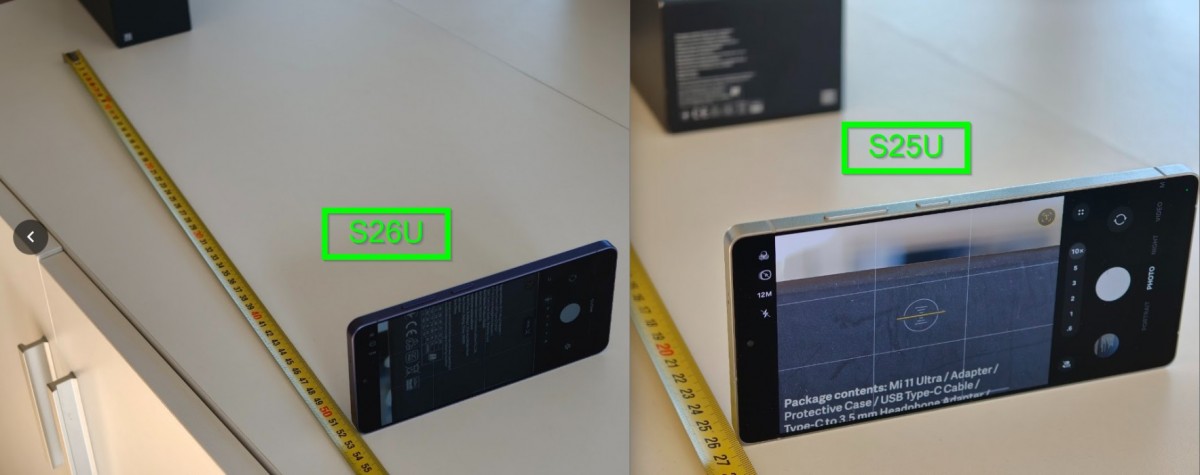
The immediate, tangible consequence of this architectural change is evident in the minimum focusing distance. The S26 Ultra’s 5x optical path exhibits a significantly longer minimum focus distance, measured at approximately 52 centimeters. For consumers who leverage the telephoto lens not just for distant subjects but also for intermediate-range framing—say, isolating details on a nearby object—this doubling of the minimum focus distance represents a functional downgrade in versatility compared to its predecessor. While the vast majority of telephoto usage remains centered on distant subjects, this regression in near-field capability cannot be overlooked when benchmarking iterative hardware improvements.
The Bokeh Signature: A Tell-Tale Sign of Optical Change
Beyond focus metrics, the physical characteristics of the lens assembly leave an indelible mark on the resulting image aesthetics, most notably in the rendering of background blur, or bokeh. Optical engineers understand that the shape of an aperture—or, in this case, the shape dictated by the light entry point—is imprinted onto out-of-focus light sources.
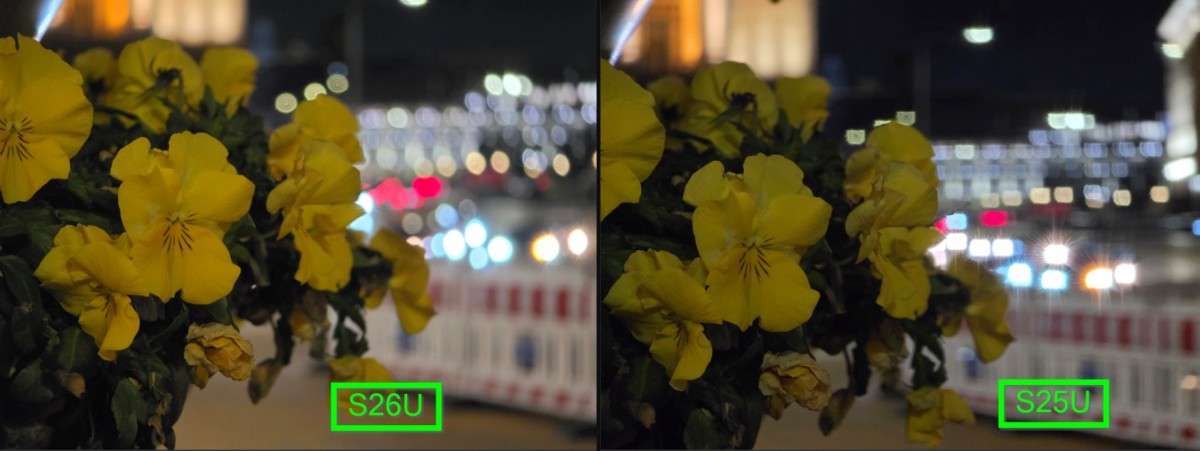
The Galaxy S25 Ultra, utilizing its standard periscope system, produced a bokeh profile characterized by distinctively rectangular shapes when rendering point light sources. This geometric artifact is a direct consequence of the light passing through the specific arrangement of internal optics, including the 90-degree bending prism.
Conversely, preliminary photographic evidence from the S26 Ultra suggests a marked shift toward a more naturally oval or circular bokeh pattern. This aesthetic shift strongly correlates with an optical pathway where the light is not subjected to the restrictive geometry of the S25 Ultra’s prism placement as the primary light-bending element, or where the prism’s role is fundamentally altered. This observation further supports the conclusion that the internal optical stacking has been reconfigured away from the classic periscope blueprint.
The ALoP Hypothesis: A Strategic Re-engineering of Folded Optics
The puzzle surrounding the S26 Ultra’s 5x module centers on the terminology Samsung employs—or, more accurately, avoids. Official specifications and marketing materials for the S26 Ultra omit the explicit designation of a "periscope" lens, a term prominently featured in the S25 Ultra’s documentation. This deliberate omission fueled intense speculation that Samsung had adopted its emerging ALoP (All Lenses on Prism) technology for the 5x module.
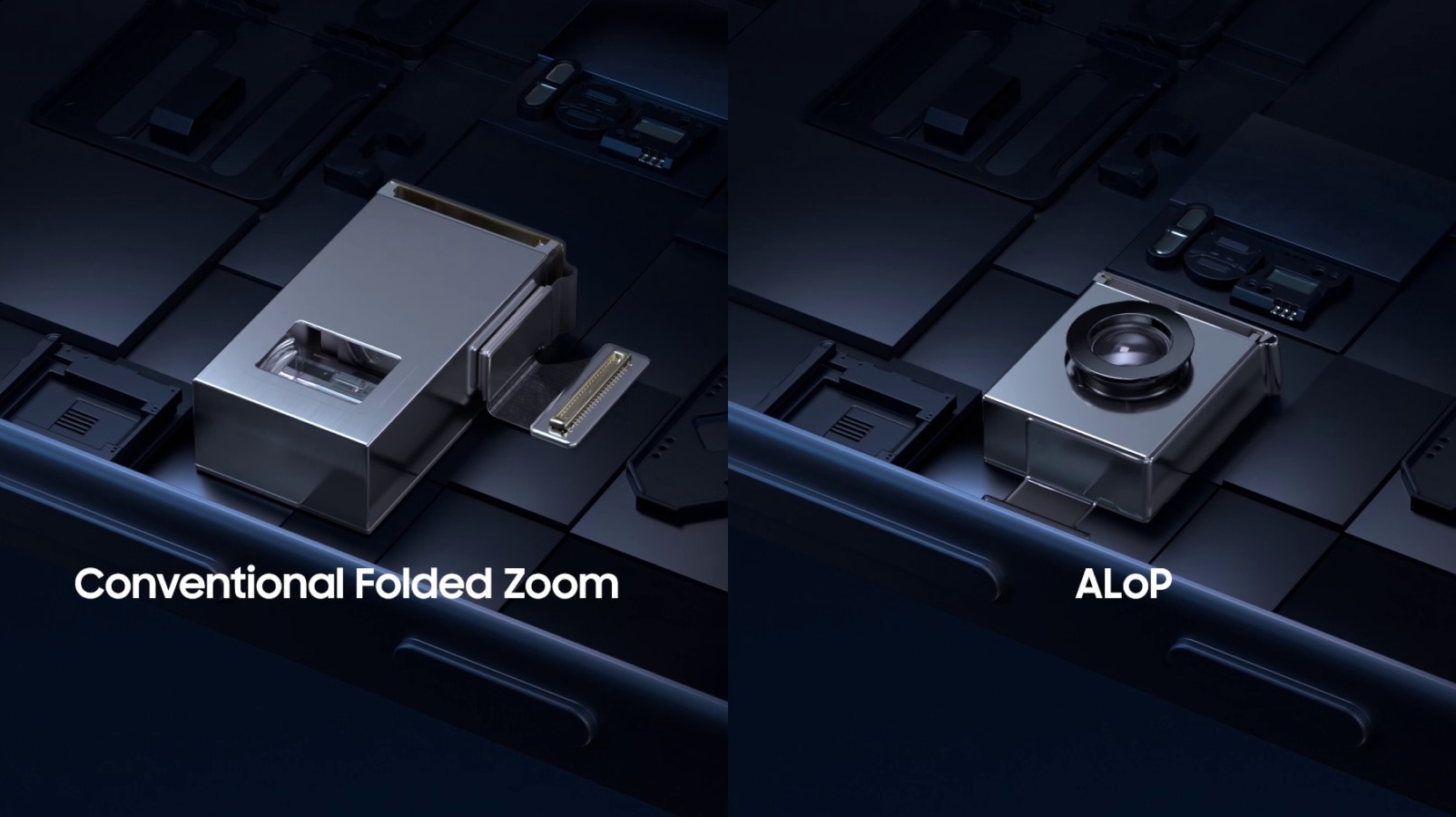
ALoP represents a sophisticated evolution within the realm of folded zoom systems. While it retains the core principle of using a prism to redirect light—thereby achieving a folded, space-saving form factor—it strategically repositions the lens elements. In a conventional folded zoom (periscope), the lens stack sits between the prism and the sensor, perpendicular to the sensor plane. In the ALoP architecture, the sensor remains perpendicular to the overall light path, but the lens elements are situated on top of the prism, oriented parallel to the phone’s main surface.
This architectural innovation offers compelling engineering advantages. By placing the lens elements directly onto the prism surface, ALoP can significantly reduce the overall height of the camera module compared to traditional folded designs, freeing up critical internal space. Crucially, ALoP is also engineered to accommodate faster apertures—a feature Samsung highlighted for the S26 Ultra’s primary camera and, by extension, likely applied to the telephoto module. The faster aperture (wider opening) allows more light to reach the sensor, improving low-light performance and contributing to shallower depth of field.
The ALoP structure also provides a compelling explanation for the observed change in bokeh. Since the light does not first pass through the rectangular profile of the prism housing in the same manner as the conventional design, the resulting out-of-focus highlights are less prone to geometric distortion, leading to the observed circular rendering.
Navigating Semantic Confusion: When is a Periscope Not a Periscope?
The core ambiguity arises from the classification itself. Technically, any camera system that uses a prism or mirror to fold the light path 90 degrees to achieve an optical zoom length longer than the device’s thickness qualifies as a "periscope" system. The ALoP technology, by incorporating a 90-degree light bend via a prism, inherently satisfies this technical definition.
However, Samsung Semiconductor’s public discourse, and increasingly, the marketing language used by the Mobile division, seems to draw a distinction. They appear to reserve the "periscope" label for the specific, older architecture—the conventional folded zoom where the lens elements are sandwiched around the prism. ALoP, therefore, might be internally categorized as a distinct, next-generation folded zoom technology, even if it shares the core light-folding principle.
This semantic dance is symptomatic of the rapid evolution in mobile optics. As manufacturers refine these complex stacking mechanisms, new proprietary terms emerge to distinguish incremental, yet significant, improvements in compactness, light transmission, or image quality. Samsung’s decision not to label the S26 Ultra’s 5x module as a periscope suggests a conscious effort to position ALoP as a superior or fundamentally different approach, even if the functional difference for the end-user is subtle—like the change in minimum focus distance versus the benefit of a faster aperture or thinner module.
Industry Implications and Competitive Landscape
This hardware change in the Galaxy S26 Ultra carries significant implications for the broader smartphone imaging industry. Samsung has historically set the benchmark for optical versatility, often leading the charge in multi-focal-length systems. The shift away from the established periscope design suggests several strategic drivers:
-
Internal Component Consolidation: The pursuit of thinner profiles remains relentless. If ALoP allows Samsung to shave even a fraction of a millimeter off the critical camera bump area, this space can be repurposed for larger batteries, advanced cooling solutions, or other internal components that enhance the overall device proposition. The benefit of a slightly better minimum focus distance on the S25 Ultra’s telephoto might have been deemed an acceptable trade-off for achieving this physical reduction or enabling the wider aperture across the board.
-
Supply Chain Maturity: ALoP technology may represent a more mature or cost-effective solution for Samsung’s vertically integrated supply chain than continually iterating on the older periscope design to meet new aperture requirements. By standardizing on ALoP for its folded zoom, Samsung simplifies procurement and manufacturing complexity for its high-volume flagships.
-
Focus on Computational Photography: The slight downgrade in minimum focus distance implies Samsung is leaning more heavily on software algorithms to bridge minor optical gaps. In modern smartphones, the raw optics provide a foundation, but computational stacking, fusion, and post-processing often determine the final image quality, especially in complex scenarios like close-up telephoto shots. The S26 Ultra’s improved primary lens aperture suggests a focus on maximizing light capture, perhaps compensating for any perceived shortcomings in the auxiliary lens system via processing power.
Competitors, particularly those challenging Samsung’s telephoto dominance, will closely monitor the real-world performance of the ALoP system. If ALoP delivers comparable or superior overall zoom fidelity while offering better internal space utilization, other Android OEMs may accelerate their adoption or development of similar prism-reconfigured folded optics.
Future Trajectories: The Evolution of Compact Zoom
The Galaxy S26 Ultra’s hardware configuration points toward a future where the nomenclature surrounding mobile optics becomes increasingly nuanced. The traditional binary—standard lens vs. periscope—is blurring into a spectrum of folded optical solutions.
The next frontier for mobile zoom is not just achieving higher magnification (e.g., 10x optical) but doing so without adding significant bulk or sacrificing near-focus capabilities. ALoP addresses the thickness issue directly. Future iterations are likely to focus on:
- Variable Apertures in Folded Systems: Integrating variable aperture mechanisms directly into the folded path, a challenge complicated by the tight tolerances required.
- Sensor-Shift Stabilization Integration: Combining the benefits of ALoP with sensor-shift stabilization across multiple focal lengths, which is easier to implement in certain module geometries.
- Hybrid Optical Zoom: Utilizing the ALoP system not just for 5x but as a platform for more seamless optical blending between 3x and 10x, potentially involving multiple ALoP units or advanced computational switching.
Samsung’s confirmation that the S26 Ultra utilizes ALoP technology solidifies this emerging architectural path. While the initial change results in a quantifiable trade-off—a doubling of the minimum focus distance for the 5x lens—it is clear that this maneuver was executed to unlock other strategic benefits, most likely related to module thinning and optimizing light intake via a wider aperture. The ongoing narrative around the S26 Ultra’s camera will now shift from what lens it uses to how effectively Samsung’s computational framework manages the characteristics inherent in this newly configured optical engine. The industry is watching to see if this strategic sacrifice yields greater dividends in overall device design and performance metrics.